Devotions, Women's Devotionals

🌿 Women’s Devotional — Day 119

Christ Alone Is the Way

📖 “I am the way, the truth, and the life. No one comes to the Father except through Me.”
—John 14:6 (NKJV)

Jesus’ declaration that He is the way is both comforting and confronting. It is comforting because it removes uncertainty—you do not have to construct your own path to God. It is confronting because it eliminates alternatives. Christ does not present Himself as one spiritual option among many; He presents Himself as the only way to the Father.

As a woman navigating a world filled with competing beliefs and philosophies, this truth may feel countercultural. Yet Jesus speaks clearly. Relationship with God is not achieved through personal effort, moral striving, or spiritual exploration alone. It is granted through Christ’s finished work. He is the bridge, the access, and the life that reconciles you to the Father.

Knowing Christ means resting in His sufficiency. You do not have to earn proximity to God or prove your worthiness. The way has already been made. Your role is not to create access but to receive it through faith and walk in obedience. His truth steadies your convictions, and His life sustains your hope.

Walking in the way of Christ may require courage in conversations and clarity in belief. Yet you are not standing alone. Through the Holy Spirit, Jesus strengthens your confidence and anchors your heart in truth. In Him, the path is secure, the destination is certain, and the journey is guided by grace.

Prayer:
Jesus, thank You for being the only way to the Father. Help me stand firm in Your truth with humility and confidence. Teach me to rest in Your sufficiency and walk faithfully in the path You have prepared for me. Amen.

Kingdom Archives, Kingdom Discipleship

The Spread of the Gospel Before Nicaea

How did the gospel go from a small band of disciples in Jerusalem to a global movement spanning empires—all without political power, printing presses, or large buildings? Before the Council of Nicaea in AD 325, Christianity had already spread like wildfire across the known world. But it didn’t spread the way religions do today—it spread through persecution, love, and uncompromising obedience to Christ.

From Jerusalem to the Ends of the Earth

Jesus’ final command was clear:

“You will be my witnesses in Jerusalem, and in all Judea and Samaria, and to the ends of the earth.”
Acts 1:8

By the end of the book of Acts, the gospel had already reached Rome. But that was only the beginning. The first three centuries of Christianity were marked by relentless expansion—not through organized missions boards or campaigns, but through ordinary believers living out their faith in the marketplaces, fields, prisons, and homes of the Roman Empire.


Evangelism Through Persecution

Persecution was fierce and constant in many regions during this period. Yet this didn’t slow the gospel—it accelerated it.

“The blood of the martyrs is the seed of the church.”
Tertullian, Apology 50

Rather than scare believers into silence, persecution emboldened them. Their courage, joy, and refusal to recant made the world take notice. Many came to faith after watching Christians face lions, fire, and swords with peace on their faces and forgiveness on their lips.


House to House, Village to Village

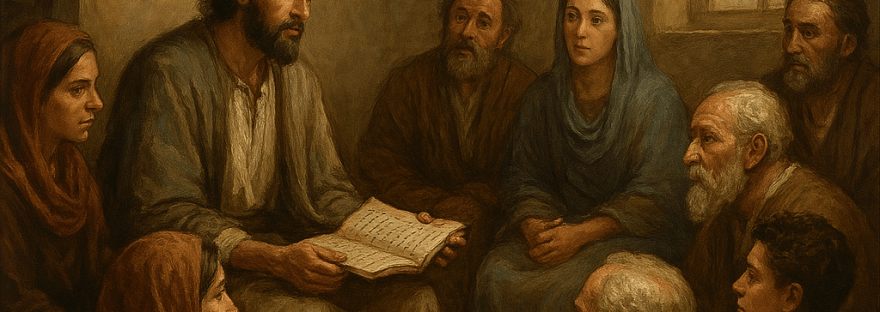
The church grew underground, yet it wasn’t hidden. Christians met in homes (Romans 16:5), shared meals, and welcomed strangers. As they traveled for work or trade, they carried the gospel with them. No church buildings. No budgets. Just transformed lives and the Word of God.

Eusebius writes that churches could be found in nearly every city and village of the empire by the early 300s:

“The word of salvation was zealously preached… churches were multiplied and grew from small beginnings.”
Eusebius, Church History 8.1


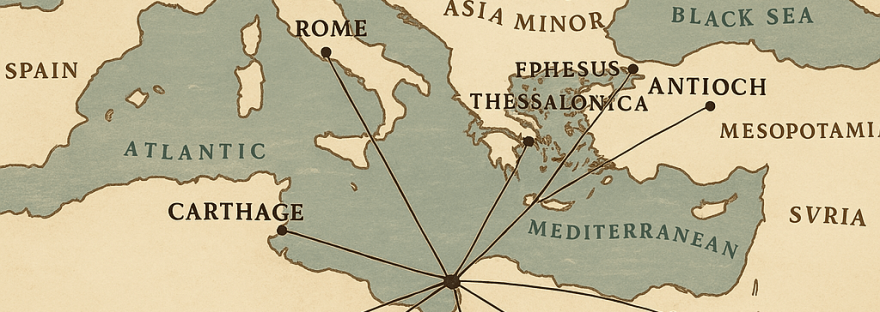
Geographical Reach by the 3rd Century

Here’s a glimpse of how widespread the Church became by AD 300:

  • Italy & Rome – thriving despite intense persecution
  • North Africa – home to Tertullian, Cyprian, and others
  • Egypt & Alexandria – a major center of early Christian teaching
  • Asia Minor – vibrant churches from Paul’s time, many still active
  • Gaul (modern France) – early martyrdoms like those in Lyon
  • Germany & Britain – evidence of Christian communities by late 2nd to 3rd centuries
  • Persia, Armenia, and beyond – reaching into the East before Rome ever recognized Christianity

The gospel was already global before it was ever legal.


Carried by the Faithful, Not the Famous

The Church’s expansion wasn’t led by celebrity pastors or state-sponsored missionaries. It was carried on the backs of slaves, merchants, mothers, soldiers, and widows—men and women who understood they were part of something eternal.

“Christians are not distinguished from the rest of mankind by country, language, or customs… yet they display to us a wonderful and confessedly striking method of life.”
Letter to Diognetus, c. AD 130–200

They preached by their actions. They discipled by example. And they evangelized by love.


What We Learn Today

  1. You don’t need a platform to spread the gospel. You need obedience.
  2. The Spirit leads the willing. Many early Christians didn’t plan to evangelize—they simply refused to hide Christ.
  3. The gospel is not bound by borders. Even in places where persecution raged, the church thrived.
  4. We must recover the simplicity and power of everyday witness. Before there were systems, there were saints who walked with Christ and changed the world.

Sources:

  • The Holy Bible — Acts 1:8; Romans 16:5
  • Tertullian, Apology 50
  • Eusebius of Caesarea, Church History, Book 8
  • Letter to Diognetus, c. AD 130–200
  • Stark, R. (1996). The Rise of Christianity. HarperOne
3–4 minutes

Leave a comment

Kingdom Archives, Kingdom Discipleship

Who Were the Ante-Nicene Christians?

The term Ante-Nicene Christians refers to the followers of Jesus who lived between AD 33 and AD 325—after Christ’s ascension but before the institutionalizing of Christianity under Emperor Constantine at the Council of Nicaea. This was the church in its purest, most persecuted, and Spirit-dependent form. While they are rarely mentioned in modern pulpits or popular Christian media, these believers carried the torch of the gospel through some of the most hostile times in history.

Disciples of Disciples

These were not isolated believers forming new traditions. They were disciples of the Apostles’ disciples, following the oral teachings and written Scriptures handed down to them by men like Paul, Peter, and John. Polycarp was taught by the Apostle John. Clement of Rome knew Paul. These early leaders passed on not only the Scriptures but the example of holy living, humility, and sacrificial love.

“Let us then draw near to Him in holiness of soul, lifting up pure and undefiled hands unto Him, loving our gracious and compassionate Father…”
Clement of Rome, 1 Clement 29

Led by the Holy Spirit

They had access to the Scriptures, but they didn’t interpret them through man-made systems or evolving theology. They believed the Holy Spirit—who authored the Word—was also the One who illuminated its meaning. Through prayer, fasting, and faithful obedience, they relied on God to understand and live out His Word (John 14:26; 1 John 2:27).

They saw themselves not as theologians building doctrines, but as bondservants of Christ obeying what had already been revealed.

Rooted in the Language and Culture of Christ and the Apostles

The Ante-Nicene Christians spoke Koine Greek, the very language in which the New Testament was written. Their cultural framework was the same as that of the Apostles. They understood context not through archaeology or seminary study, but through daily life. Their faith wasn’t filtered through centuries of Western philosophy—it was lived in the streets and homes of the first-century Roman world.

The Gospel Spread Without Institutional Power

By the early 300s, Christianity had reached nearly every corner of the Roman Empire—and beyond. From North Africa to Gaul, from Asia Minor to Rome, local house churches were springing up without centralized leadership or political clout. They had no government funding, no church buildings, and no legal protection—only their testimony, the Word of God, and the Spirit of God.

“The doctrine of the apostles is known to all who wish to know the truth.”
Irenaeus, Against Heresies 1.10.2

Unified but Decentralized

Despite being scattered geographically, they were united in doctrine. Their unity came not from creeds or councils, but from the Scriptures and the indwelling Holy Spirit. They met in homes (Acts 2:46; Romans 16:5), shared their possessions, prayed for one another, and lived in sacrificial community. No denominations. No institutional hierarchy. Just a common Lord and a shared obedience to His Word.

Marked by Sacrificial Love

Their most powerful witness was not their arguments, but their love—for one another and even for their persecutors.

“See how they love one another… and how they are ready to die for each other.”
Tertullian, Apology 39

“They love one another… they do not hesitate to risk their lives for the name of their Messiah.”
Letter to Diognetus, c. 130–200 AD

They endured imprisonment, torture, confiscation of property, and martyrdom with joy—not as victims, but as victors in Christ. Their lives proved the power of the gospel.

Not Infallible, but Faithful

It’s important to remember: their writings were not Scripture. These were human beings, subject to error like the rest of us. But they didn’t seek to create systems—they sought to remain faithful to what was handed down (2 Thessalonians 2:15). Their goal was not theological innovation, but faithful preservation.

They didn’t live to become heroes—they lived to glorify Christ. And their lives echo through history as reminders of what the Church looks like when it is fully dependent on the Holy Spirit, rooted in the Word, and surrendered to the Kingdom of God above all else.


Sources:

  • Clement of Rome. 1 Clement. (c. AD 95)
  • Irenaeus. Against Heresies. (c. AD 180)
  • Letter to Diognetus. (c. AD 130–200)
  • Tertullian. Apology 39. (c. AD 197)
  • Eusebius of Caesarea. Church History
  • Scripture: John 14:26; 1 John 2:27; Acts 2:46; Romans 16:5; 2 Thessalonians 2:15
3–4 minutes

Leave a comment