
From the Series: Ordinary Saints: Lessons from the Ante-Nicene Church
Scripture quotations are from the New King James Version®. Copyright © 1982 by Thomas Nelson. Used by permission. All rights reserved.
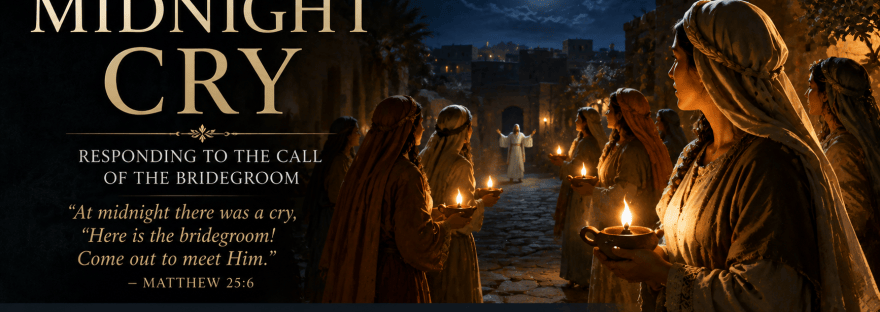
Announcements can change everything in an instant. A room may be quiet. People may be resting. The hours may have passed uneventfully. Then a voice breaks the silence, and suddenly everyone is moving. Jesus placed such a moment at the center of His parable of the ten virgins. Ten young women had gone out with their lamps to await the bridegroom. Five had prepared wisely, bringing additional oil. Five had not. But the bridegroom did not arrive when they expected. He was delayed. Eventually, Jesus tells us, “they all slumbered and slept” (Matthew 25:5). Then, in the darkness, everything changed. “And at midnight a cry was heard: ‘Behold, the bridegroom is coming; go out to meet him!’” (Matthew 25:6). The cry awakened everyone. All ten virgins arose. All ten trimmed their lamps. All ten had been waiting for the same bridegroom. But only five were ready. That distinction takes us to the heart of Jesus’ warning. The problem with the foolish virgins was not that they had fallen asleep. The wise virgins slept too. Nor were the wise virgins saved by somehow predicting the precise moment of the bridegroom’s arrival. They could not. What distinguished them was that they had prepared for his coming before the cry was heard. When the decisive moment arrived, preparation could no longer be postponed. The foolish said to the wise, “Give us some of your oil, for our lamps are going out” (Matthew 25:8). But the wise could not supply what the others had failed to bring. While the foolish went to obtain oil, the bridegroom arrived. Jesus continues: “And those who were ready went in with him to the wedding; and the door was shut” (Matthew 25:10). The words are sobering precisely because the opportunity to prepare had existed for so long. Until suddenly, it didn’t.
Jesus then gives His own interpretation: “Watch therefore, for you know neither the day nor the hour in which the Son of Man is coming” (Matthew 25:13). This is where the parable speaks directly into every generation of the Church. Jesus did not tell His disciples to determine the hour. He told them they would not know it. The appropriate response to uncertainty about the timing of His return is therefore not speculation but readiness. That distinction is particularly important whenever Christians become intensely interested in prophecy. Wars, political upheaval, technological developments, natural disasters, cultural changes, and events involving Israel can easily lead believers to examine every headline for evidence that the final countdown has begun. Jesus calls His people to something both simpler and more demanding. Be ready before the cry comes. That does not mean Christ’s return should feel distant or unimportant—quite the opposite. The New Testament repeatedly teaches believers to live in expectation of Him. Paul told Christians in Rome: “And do this, knowing the time, that now it is high time to awake out of sleep; for now our salvation is nearer than when we first believed” (Romans 13:11). Paul was not announcing that Matthew’s midnight cry had begun. He was calling Christians to recognize the significance of the age they already lived in. Christ had come. Christ had died. Christ had risen. Christ had ascended. And Christ would come again. Therefore, believers were to live differently. Paul immediately explains what awakening looks like: casting off “the works of darkness,” putting on “the armor of light,” walking properly, refusing sinful indulgence, and “put[ting] on the Lord Jesus Christ” (Romans 13:12–14).
Biblical wakefulness is profoundly practical. It reaches into the way we speak to people. The things we allow into our minds. The grudges we refuse to release. The compromises we excuse. The way we handle money. The way we behave when nobody is watching. The way we use the time God has given us. The way we love one another. The way we remain faithful when following Christ becomes costly. For the Christians living during the Ante-Nicene centuries, the waiting could feel very long indeed. Imagine being part of a Christian household in the late second century. Perhaps your grandparents had also followed Christ. You had heard the promise of His return since childhood. Believers before you had expected Him. Some had died in faith. Others had suffered persecution. Still the Roman Empire continued around you. Christ had not forgotten His promise. But He had not yet returned. What should Christians do while they waited?
The surviving writings of those centuries show believers repeatedly wrestling with perseverance, holiness, false teaching, suffering, repentance, and the danger of spiritual carelessness. They did not always answer every question correctly, nor did they agree about everything. Their writings must be tested by Scripture just as ours must. But their circumstances make the problem of waiting remarkably relatable. They too had to learn how to follow Christ when His return did not occur according to human expectation. Some lived faithfully. Some compromised. Some became afraid—some needed correction and restoration. Generation after generation eventually faced the same responsibility: Remain faithful to Christ and pass the faith to those who come after you. That may be one of the most important lessons of the midnight cry. You prepare for the unexpected moment by being faithful during the ordinary ones.
A Christian who has walked with Christ faithfully for decades has not wasted those years because Jesus did not return. The parent teaching Scripture to a child is preparing. The believer turning away from secret sin is preparing. The Christian forgiving someone who caused genuine hurt is preparing. The exhausted saint who continues praying is preparing. The employee choosing integrity when dishonesty would be easier is preparing. The believer sharing the gospel with a neighbor is preparing. The congregation encouraging one another to persevere is preparing. Not because these works purchase entrance into the wedding feast. Salvation is God’s gift through Christ. Rather, faithful living belongs to the life of those who are His. There is another sobering truth in Jesus’ parable. Readiness cannot simply be borrowed at the final moment.
The foolish virgins recognized that the wise possessed something they lacked and asked them for oil. But whatever significance we might be tempted to assign specifically to the oil, Jesus does not define it for us. We should therefore resist building doctrines upon an interpretation He did not provide. His larger point, however, is unmistakable. When the bridegroom arrived, each person’s preparedness was revealed. No one else’s faithfulness could substitute for another’s unreadiness. Being surrounded by Christians is not the same as belonging to Christ. Knowing Christians who pray does not replace prayer. Hearing Scripture does not replace responding to Scripture. Having faithful parents does not substitute for personal faith in Christ. Attending a faithful congregation does not make someone faithful merely by proximity. Jesus’ warning ultimately brings the question home to each hearer: Am I ready for Him? That question should produce neither panic nor obsession.
For those who belong to Christ, His return is our hope. Paul called it “the blessed hope and glorious appearing of our great God and Savior Jesus Christ” (Titus 2:13). Jesus told His disciples that He was going to prepare a place for them and promised, “I will come again and receive you to Myself; that where I am, there you may be also” (John 14:3). The Bridegroom’s coming is not bad news for the Bride. It is what she has been waiting for. That changes the emotional character of Christian readiness. We do not watch like frightened servants wondering whether an angry master might catch us unprepared. We wait for Someone we love. We repent because we belong to Him. We pursue holiness because we want to please Him. We serve because He has entrusted work to us. We proclaim the gospel because the invitation remains open. We encourage one another because waiting can become difficult. And when another year passes, and He has not yet come, we do not abandon our hope. We remain faithful. One generation of Christians has done this after another. The apostles waited. The Ante-Nicene believers waited. Christians through centuries of upheaval, persecution, prosperity, reformation, war, revival, disappointment, and ordinary life have waited. Now the responsibility belongs to us. One day, however, waiting will give way to arrival.
There will be no need to wonder whether this event or that headline means the Bridegroom is finally near. The Bridegroom Himself will come. Until then, the midnight cry of Matthew 25 is not ours to manufacture. Our responsibility is to heed the warning Jesus has already given. Watch. Not because we know the hour. Because we don’t. Live faithfully when nothing dramatic seems to be happening. Follow Christ when the waiting feels long. Keep doing what He has commanded. And be ready before the cry comes. For one day the words from Jesus’ parable will point beyond the story to the reality for which His people have waited: The Bridegroom has come.
Prayer
Lord Jesus, teach me to wait for You faithfully. Guard me from both spiritual carelessness and fruitless speculation. Help me live according to what You have revealed rather than becoming consumed with what You have not. Search my heart, strengthen my faith, and teach me to obey You in the ordinary moments of life. When the waiting feels long, remind me that Your promise has not changed. May I be found belonging to You, trusting You, and faithfully serving You when You come. Amen.
Discover more from Rooted & Raised
Subscribe to get the latest posts sent to your email.

