
The Legacy of the Ante-Nicene Christians
From the Series: Ordinary Saints: Lessons from the Ante-Nicene Church
Scripture quotations are from the New King James Version®.
Copyright © 1982 by Thomas Nelson. Used by permission. All rights reserved.
History often celebrates emperors, generals, and philosophers. Their names fill textbooks, their monuments still stand, and their accomplishments are remembered centuries later. Yet one of the greatest movements in history was not built by emperors or politicians. It was built by ordinary people. They were merchants and fishermen, widows and slaves, soldiers who left the army after coming to Christ, craftsmen who worked with their hands, and parents raising children in a culture increasingly hostile to their faith. They owned no cathedrals, commanded no armies, and held little political influence. Many lived under the constant threat of imprisonment or death. Yet within just a few generations, these ordinary believers helped carry the gospel throughout the Roman Empire. How? The answer was not superior education, political power, or organizational genius. It was lives transformed by Jesus Christ.
The Christians who lived between the time of the apostles and the Council of Nicaea in AD 325 are often called the Ante-Nicene Christians. They were not perfect, nor were they inspired in the same way as the writers of Scripture. Like believers today, they faced disagreements, false teachers, and cultural pressures. But they also occupied a unique place in history. Many learned from men who had been taught by the apostles themselves. They worshiped in the same cities Paul had visited. They spoke the common Greek language of the New Testament and lived in the cultural world in which the gospel first spread. While we must always test their writings by Scripture, they offer a valuable window into how the earliest generations of Christians understood and practiced their faith.
Imagine gathering with believers after a long day’s work. There is no church building waiting for you, no sound system, no comfortable auditorium. Instead, you quietly enter a family’s home where brothers and sisters have assembled to pray, sing, read the Scriptures, and encourage one another. Outside, neighbors may mock you. Authorities may be watching. If persecution breaks out, someone in that room may never return. Still, you gather. Not because it is safe. Because Christ is worthy. That was the rhythm of life for many early Christians.
Jesus had promised that the Holy Spirit would teach His followers and bring His words to remembrance (John 14:26). John reminded believers that the Spirit would guide them in the truth they had received (1 John 2:27). The early church devoted itself to the apostles’ teaching, carefully preserving the faith “once for all delivered to the saints” (Jude 3). Their confidence rested not in new revelations but in the unchanging gospel entrusted to them.
What made these believers remarkable was not merely what they believed but how they lived. One of the strongest testimonies about the early church did not come from Christians praising themselves. It came from the people who opposed them. Around AD 197, Tertullian defended Christians against false accusations in his Apology. Describing what unbelievers observed, he wrote, “See how they love one another.” That reputation was earned through sacrificial care for widows, orphans, the poor, prisoners, and even abandoned infants. Justin Martyr and Aristides likewise described communities known for generosity and compassion.
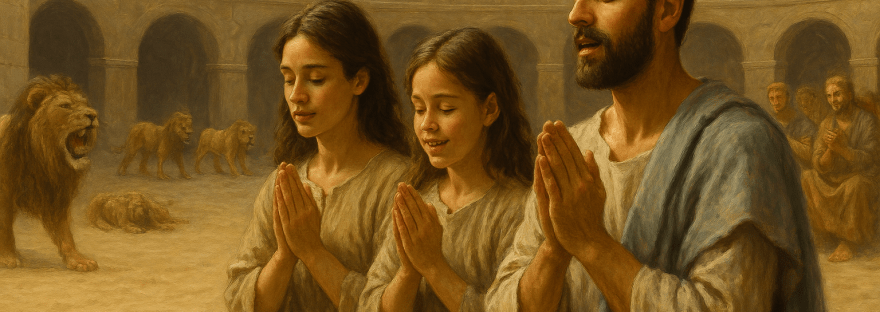
More than a century later, even Emperor Julian, who sought to restore paganism—could not ignore what he saw. Frustrated by the church’s influence, he admitted that Christians cared not only for their own poor but for pagan neighbors as well. Their love had become impossible to dismiss. This was exactly what Jesus had said would happen. “By this all will know that you are My disciples, if you have love for one another” (John 13:35). Their witness extended beyond acts of compassion. They saw themselves as servants of Christ before they were citizens of Rome. Paul called believers “slaves of God” (Romans 6:22). Peter described them as “sojourners and pilgrims” (1 Peter 2:11). They understood themselves to be ambassadors for Christ (2 Corinthians 5:20), representing another Kingdom while living within the Roman Empire. Because of that allegiance, they refused to worship Caesar, even when a pinch of incense could have spared their lives. Many accepted imprisonment, torture, and execution rather than deny the Lord who had died and risen for them. Their courage did not grow from human determination. It grew from their conviction that Jesus truly meant what He taught in the Sermon on the Mount. Loving enemies, forgiving those who persecuted them, seeking first the Kingdom of God; these were not lofty ideals reserved for exceptional Christians. They were the normal pattern of discipleship. That may be the greatest challenge they leave for us today.
The modern church possesses resources that the early believers could scarcely have imagined. We have church buildings, seminaries, Bible software, podcasts, conferences, and instant access to Scripture in countless translations. Yet the question remains: Are we as captivated by Christ as they were? The purpose of this series is not to romanticize the Ante-Nicene Christians or place them on a pedestal. They were sinners saved by grace, just as we are. Their authority is not equal to Scripture, and where they departed from biblical truth, Scripture must always correct them. But their lives invite us to ask honest questions. What did they understand about following Jesus that produced such courage? Why were even their enemies astonished by their love? What can we learn by comparing their lives, not uncritically, but carefully, with the teaching of God’s Word?
Over the coming weeks, we’ll explore their writings, worship, evangelism, view of discipleship, and the Scriptures that shaped them. Throughout this journey, the Bible will remain our final authority. The Ante-Nicene Christians are not our standard; Christ is.
If their story teaches us anything, it is this: God has always changed the world through ordinary saints who were completely surrendered to an extraordinary Savior.
Discover more from Rooted & Raised
Subscribe to get the latest posts sent to your email.

