
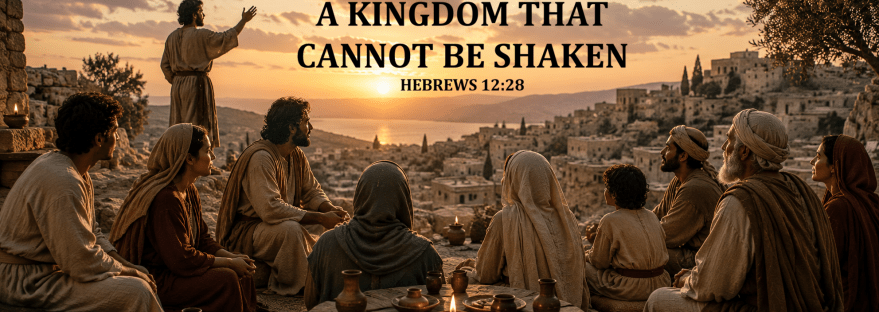
From the Series: Ordinary Saints: Lessons from the Ante-Nicene Church
Scripture quotations are from the New King James Version®.
Copyright © 1982 by Thomas Nelson. Used by permission. All rights reserved.
From the moment Jesus ascended into heaven, the early Church lived with a steady and unwavering expectation: He is coming back. This was not merely a theological position tucked away in doctrine; rather, it shaped how they lived, how they suffered, and how they viewed the world around them. Their eyes were not fixed on political power, cultural influence, or earthly security. Instead, their hearts were anchored in the certainty that their King would return.
Scripture records the promise spoken at His ascension:
“Men of Galilee, why do you stand gazing up into heaven? This same Jesus… will so come in like manner as you saw Him go into heaven.” (Acts 1:11)
The early believers did not treat this promise casually, but instead, they lived in light of it.
What is striking is that they lived in readiness, not speculation. Rather than being consumed with predicting dates or endlessly arguing about timelines, their focus was not on satisfying curiosity but on remaining faithful. Because they believed Christ could return at any moment, they sought to live with clean hearts, steady hands, and burning lamps.
Jesus Himself said:
“Therefore, you also be ready, for the Son of Man is coming at an hour you do not expect.” (Matthew 24:44)
This readiness was not passive. Instead of withdrawing from the world or sitting idle waiting for escape, they labored. They served. They preached the gospel. The expectation of Christ’s return motivated them toward faithfulness, not inactivity.
You may pause here and recognize a tension. “I think about His return, but sometimes it either feels distant or overwhelming.” That struggle is understandable, and the early Church did not carry this hope as fear-driven speculation. Rather, they carried it as steady anticipation. The return of Christ was not meant to produce panic, but perseverance. When fear or doubt crept in, they remembered the words spoken by Jesus: “Let not your heart be troubled; you believe in God, believe also in Me.” (John 14:1) Even in their hardest moments, believers encouraged one another to hold fast to hope, trusting that God is faithful to complete what He has promised. If you find your heart wavering, remember the countless times in Scripture God gently urges His people, “Do not fear, for I am with you.” You are not alone in your struggle. God’s presence and promises are sure, even when your feelings are not.
Their hope in His coming also shaped their pursuit of holiness.
“And everyone who has this hope in Him purifies himself, just as He is pure.” (1 John 3:3)
Anticipation of the King transformed their lives. They endured persecution with joy, forgave rather than retaliated, and stood firm against compromise, desiring to be found faithful when Christ returned.
This raises an important question: What is my hope producing in me? Is it leading me toward holiness, deeper obedience, and greater trust in Christ? Or has it become something distant and disconnected from daily life? Genuine hope in Christ’s return shapes the way we live each day. It may look like choosing to forgive when wronged, resisting temptation when no one is watching, seeking reconciliation, being generous with your resources, or taking time to serve someone in need. Every act of obedience, large or small, flows from the anticipation that our King could return at any moment, and we desire to be found living faithfully.
The early Church saw prophecy not as entertainment, but as preparation. And even though they understood that judgment would come, their focus was not on the fear of destruction. Their attention was fixed on the hope of redemption. To them, the return of Christ meant justice for the oppressed, resurrection for the righteous, reward for the faithful, and the restoration of all things under the reign of the King. They witnessed to the world, proclaimed hope, and lived for what was eternal.
You may quietly wonder, “How do I live faithfully in a world that feels increasingly unstable?” The answer the early Church gives is simple, though not easy: anchor yourself in the Kingdom that cannot be shaken. This anchoring happens in our ordinary days, through intentional practices. Pray daily, speaking honestly with God and listening for His guidance. Spend time in Scripture, allowing God’s truth to shape your mind and encourage your spirit. Let worship, whether in song, gratitude, or quiet moments, lift your heart above your circumstances. Serve others in practical ways, reflecting Christ’s love to those around you. Seek out a Christian community to encourage and be encouraged. In these habits, our hearts remain steady, and we learn to live faithfully even when the world feels unsteady.
Earthly systems rise and fall. Cultures shift. Nations tremble. But the Kingdom of God remains unmoved. And those who belong to Christ belong to that Kingdom. There is deep assurance in this. The certainty of Christ’s return does not rest on human events aligning perfectly or on our ability to understand every detail. It rests on the faithfulness of God Himself. The same Jesus who ascended will return. His promises do not fail, and we are not called to wait alone.
The early believers encouraged one another with this hope. They strengthened one another in suffering, reminded one another of what was coming, and lived together as citizens of another Kingdom. In the same way, the Body of Christ today is meant to help one another remain watchful, faithful, and steadfast. This happens in practical ways: meeting in small groups, forming prayer partnerships, sharing testimonies of how God is at work, and supporting each other through acts of kindness. When we choose to listen, pray, and walk alongside one another, we create a community where hope is strengthened. Consider reaching out to someone who could use encouragement, joining a study group, or simply sharing what God has done in your life. These practices foster genuine connection and help us carry one another through both joyful and difficult seasons.
This hope is not meant to isolate us from the world. Instead, it is meant to steady us within it.
The main takeaway from the early Church is unmistakable. Christ’s return anchors our hope. We are to remain always ready, letting this hope lead us into deeper holiness instead of fear. Prophecy is preparation, not speculation. And above all, remember this core truth: live now as a citizen of that unshakable Kingdom with faithful hands, a steadfast heart, and eyes fixed on the returning King.
Discover more from Rooted & Raised
Subscribe to get the latest posts sent to your email.

