
From the Series: Ordinary Saints: Lessons from the Ante-Nicene Church
Scripture quotations are from the New King James Version®.
Copyright © 1982 by Thomas Nelson. Used by permission. All rights reserved.
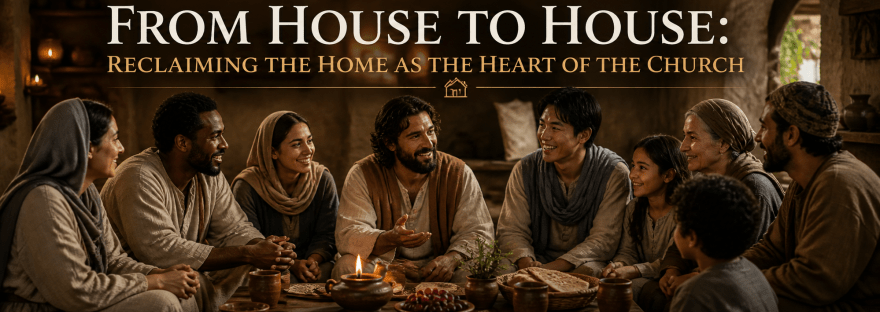
Before there were church buildings or institutions, the Kingdom of God moved quietly and powerfully through homes. The early Church was not sustained by structures. Instead, it thrived through lives surrendered to Christ within households. The home became both a sanctuary and a training ground. It was a place where faith was taught, seen, practiced, and passed on. Scripture gives us this picture:
“So continuing daily with one accord in the temple, and breaking bread from house to house…” (Acts 2:46)
This was daily life. Faith shaped the ordinary. Meals were shared with gladness, prayers lifted together. The Word was spoken in teaching, conversation, correction, and encouragement. What happened at home shaped the Church as it became.
When I consider this, I see that the household was not secondary; it was central. Christian homes were marked by a distinct way of living, intentional and devoted. Fathers led in spiritual care. Mothers nurtured and instructed with wisdom. Children were immersed in the life of faith, watching and learning from devoted lives. Paul’s words reflect this reality:
“Likewise greet the Church that is in their house.” (Romans 16:5)
With this in mind, the Church was not something people attended; it was something they embodied, beginning within their own homes.
You might feel the weight of that truth: “My home doesn’t feel like that. It feels busy, distracted… ordinary.” But this is where the story of the early Church meets our reality. They did not live in ideal conditions, but by daily rhythms we know: meals, responsibilities, relationships. The difference was intention, not perfection. A home becomes a place of Kingdom life when Christ is honored within it, even in small, consistent ways.
Simple daily practices make faith tangible at home: praying together before meals, reading a Bible verse at breakfast, or sharing one way you noticed God at work. Offering encouragement, singing a hymn, or blessing your children before bed are small actions with a meaningful impact. These steps, in the midst of ordinary days, help make Christ central in family life.
Hospitality was another defining mark of these households. This was a way of life, not just an event. Doors were open. Tables were shared. All were welcomed: the stranger, the poor, and the believer. In doing so, families demonstrated the heart of the Kingdom. They met needs beyond what was required.
“Do not forget to entertain strangers, for by so doing some have unwittingly entertained angels.” (Hebrews 13:2)
This kind of hospitality may feel unfamiliar today. You might think, “I don’t have the space, time, or resources for that.” But biblical hospitality is about willingness, not abundance, and it is not about impressing others, but about making room. Even simple acts of welcome are meaningful: inviting a neighbor for coffee, hosting a meal, or helping a single parent. A greeting, a homemade treat, or a listening ear can open the door to a deeper connection. Hospitality is possible for any household, even amid busy lives.
In addition to hospitality, discipleship was not confined to structured settings. It happened in the flow of daily life. As it is written:
“You shall teach them diligently to your children, and shall talk of them when you sit in your house, when you walk by the way, when you lie down, and when you rise up.” (Deuteronomy 6:7)
Faith was integrated into everything. Conversations at the table, prayers before bed, and guidance in decision-making passed on truth and reinforced daily life. Children can participate through simple activities that make faith real: leading a prayer before a meal, choosing a worship song, and sharing daily gratitude. Older children might read a Bible verse or help lead a discussion about faith in daily situations. Age-appropriate practices invite children to weave faith naturally into family life.
Reflecting on this, you may think, “I’ve relied on Church programs to teach what I should be modeling.” That realization is not meant to bring guilt, but clarity. The Church gathers to strengthen and equip, but the home is where faith is continually formed.
Before the Church grew outwardly, it grew inwardly, starting inside everyday homes.
“Every day… in every house, they did not cease teaching and preaching Jesus as the Christ.” (Acts 5:42)
Long before the Church became visible to the world, it was vibrant within homes. Families discipled families. Households became Kingdom outposts. Private beginnings shaped what was seen in public, bringing encouragement and responsibility.
Encouragement comes because Kingdom work does not require platforms or perfect conditions. It begins where we are with the people God places in our lives. Responsibility remains because what happens at home shapes the next generation. None of this is meant to be carried alone. The Body of Christ supports this work. As families walk together in faith and believers encourage one another, impact multiplies. Connecting with other families by joining or forming Church small groups can offer additional encouragement and support. These groups provide a space to share burdens and victories and grow together in faith. Homes connected in Christ become a network of living testimonies, quietly advancing the Kingdom.
So, as we draw these threads together, what do we learn? The home is not separate from ministry; it is the first place of it. Hospitality is not optional; it is an expression of Kingdom life. Faith is best passed on through daily rhythms, not isolated moments, lived in Christ.
The Church did not begin in buildings. It began in homes. And it still flourishes wherever homes are surrendered to Him.
Discover more from Rooted & Raised
Subscribe to get the latest posts sent to your email.

