Kingdom Archives

Come, Lord Jesus

A Call to the Kingdom Life

This is not the end. It is only the beginning.

Throughout this series, we’ve journeyed through the Kingdom—its nature, its call, its power, and its people. We’ve looked to our King and learned what it means to live as citizens of heaven while still walking the earth. And now, as every disciple must do, we look ahead.

The King is returning. And until He does, we are to live ready, love deeply, stand boldly, and pass the truth faithfully.

“The Spirit and the Bride say, ‘Come!’”
Revelation 22:17


The Kingdom Life Is Now and Not Yet

We live in the tension between the already and the not yet. The Kingdom has come in power—but its fullness is still to come in glory. And so we labor, not in vain, but in hope.

“Seek first the Kingdom of God and His righteousness…”
Matthew 6:33

“Live as if the Kingdom is already among you—for it is.”
Ignatius of Antioch, Letter to the Philadelphians


The Call Is Urgent, Holy, and Beautiful

This world is not our home. We are pilgrims, priests, ambassadors, soldiers, and servants. The King is calling His Church to rise in holiness and humility, to shine as a light in a dark world, and to prepare the way of the Lord.

“Let your loins be girded and your lamps burning.”
Luke 12:35


We Leave a Legacy by Living Faithfully

Every generation must decide: will we live for this world, or will we live for His Kingdom? Will we compromise, or will we consecrate? We pass on the Kingdom by living it—with tears, truth, trials, and triumph.

“Be steadfast, immovable, always abounding in the work of the Lord…”
1 Corinthians 15:58


The Bride Must Be Ready

We are not called to build empires—but to prepare the Bride. Our homes, churches, and hearts must be made ready. Because our Lord comes swiftly.

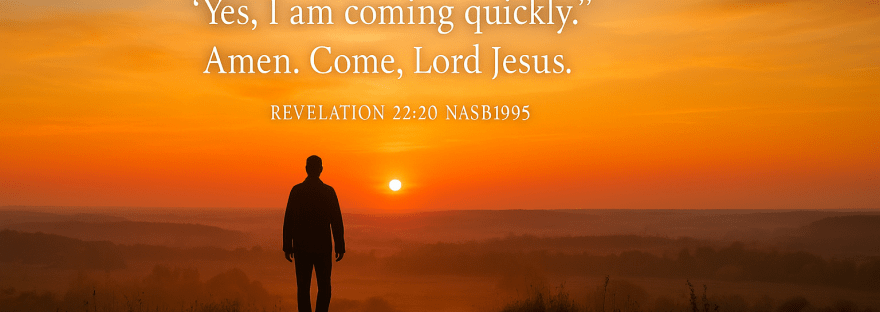
“Surely I am coming soon.”
Revelation 22:20
“Amen. Come, Lord Jesus.”


Until Then…

  • Seek the Kingdom
  • Live as citizens of heaven
  • Make disciples
  • Love not your life, even unto death
  • And watch the skies

Sources:

  • The Holy Bible — Revelation 22:17–21; Matthew 6:33; Luke 12:35–40; 1 Corinthians 15:58; Hebrews 10:23–25
  • Ignatius of Antioch, Letter to the Philadelphians
  • Clement of Rome, 1 Clement 50
  • Didache, ch. 16
  • Hermas, Mandate 13

2–3 minutes

Leave a comment

Kingdom Archives

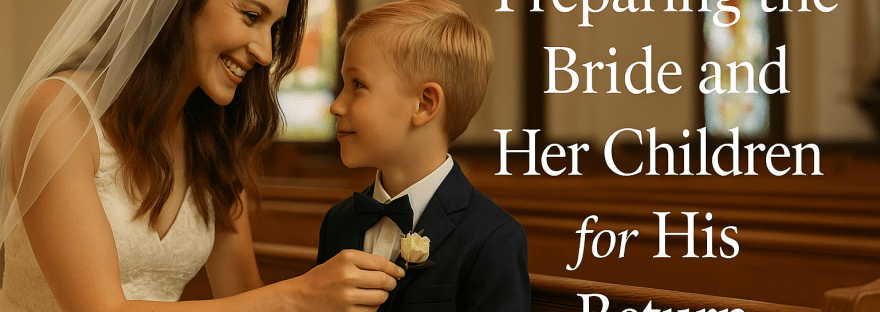
Preparing the Bride and Her Children for His Return

Passing on a Living Hope and Holy Anticipation

We are not just raising children—we are preparing the Bride. Kingdom legacy is more than good values or sound doctrine; it is preparation for a holy wedding. Christ is coming for a people ready, radiant, and faithful, and it is our joyful task to pass on that expectancy to those who come after us.

“Let us rejoice and exult and give Him the glory, for the marriage of the Lamb has come, and His Bride has made herself ready.”
Revelation 19:7


We Prepare by Living Watchful Lives

The early Church lived in expectation, often greeting one another with “Maranatha”—Come, Lord Jesus! Their lives were marked by urgency, holiness, and longing for His return.

“Keep your lamps burning… for the Son of Man is coming at an hour you do not expect.”
Luke 12:35–40


We Teach Our Children to Long for the King

We don’t just teach them how to live—we teach them why: because the King is returning. That truth gives weight to obedience, urgency to our days, and hope to our suffering.

“The Spirit and the Bride say, ‘Come!’”
Revelation 22:17

“Train the children not only to live well but to die ready—to greet the coming King without shame.”
Hermas, Mandate 13


We Model Readiness, Not Complacency

Kingdom legacy means watching together. It means preparing hearts, not just calendars. Our homes must echo with a hopeful cry: “Even so, come, Lord Jesus.”

“Let the Bride remain pure, for the time is short and the crown is near.”
Clement of Rome, 1 Clement 50


The Legacy We Leave Is the One We Live

Faithfulness in this hour prepares the next generation for that Day. When Christ returns, may He find a generation raised to know Him, love Him, and long for His appearing.


What We Can Learn

  1. The Church is a Bride being made ready for the King.
  2. Children must be discipled in hope, not just morals.
  3. Readiness is modeled in how we live today.
  4. Legacy ends with longing: “Come, Lord Jesus.”

Sources:

  • The Holy Bible — Revelation 19:7–9; Revelation 22:17; Luke 12:35–40; Titus 2:11–13; 2 Timothy 4:8
  • Hermas, Mandate 13
  • Clement of Rome, 1 Clement 50
  • Didache, ch. 16
  • Ignatius of Antioch, Letter to the Philadelphians

2–3 minutes

Leave a comment

Kingdom Archives

The Fruit of Generational Faithfulness

How Legacy Is Measured Not in Success, but in Steadfast Obedience Over Time

In a world that values instant results and visible achievement, the Kingdom of God measures fruitfulness differently. The true mark of a disciple-maker isn’t popularity or power—but faithfulness over time, especially in how the truth is carried forward to the next generation.

“His faithfulness continues through all generations.”
Psalm 100:5


Fruit Grows Slowly, But Surely

Faithful discipleship takes time. Seeds must be planted, watered, and tended—often in hidden, unseen places. We may not always see the harvest, but we are called to sow in hope and obedience.

“Let us not grow weary in doing good, for in due season we will reap, if we do not give up.”
Galatians 6:9

“Let the farmer be your example—he labors not only for himself, but for his children.”
Clement of Rome, 1 Clement 19


Legacy Is Not Measured in Numbers, but in Depth

Some teach many. Others raise one faithful child. Both are Kingdom work. The goal is not to impress others, but to pass on the faith uncorrupted, full of love and truth.

“You, however, continue in what you have learned… knowing from whom you learned it.”
2 Timothy 3:14


We Stand on the Faithfulness of Those Who Came Before

None of us walks alone. We are the fruit of others’ labors—of mothers, fathers, pastors, friends, and saints who prayed, taught, and suffered for our sake. We now become that bridge for those after us.

“We are surrounded by so great a cloud of witnesses… let us run with endurance the race set before us.”
Hebrews 12:1


The Fruit of Faithfulness Remains

Faithfulness is never wasted. It leaves a fragrance in families, churches, and cultures that outlasts the disciple-maker. Even when forgotten by man, it is remembered by God.

“The righteous will be remembered forever.”
Psalm 112:6


What We Can Learn

  1. Faithfulness is the foundation of legacy.
  2. Depth, not visibility, defines lasting fruit.
  3. We carry the baton from those before—and must pass it onward.
  4. God honors steady obedience over flashy success.

Sources:

  • The Holy Bible — Psalm 100:5; Psalm 112:6; Galatians 6:9; 2 Timothy 3:14–17; Hebrews 12:1–2
  • Clement of Rome, 1 Clement 19, 58
  • Hermas, Mandate 10
  • Didache, ch. 15
  • Ignatius of Antioch, Letter to the Magnesians

2–3 minutes

Leave a comment

Kingdom Archives

Teaching the Way of the Kingdom

Biblical Instruction, Spiritual Discipline, and Modeling the Life of Christ

True discipleship is more than passing on facts—it is teaching the way of the King. This means instructing others not just what Jesus said, but how He lived—and calling them to follow in that same pattern. We are called to teach with our words, lives, and love.

“Go therefore and make disciples… teaching them to observe all that I have commanded you.”
Matthew 28:19–20


Biblical Instruction Is Foundational

The early Church rooted their children and disciples in Scripture and the teachings of Christ. They believed the Word was clear, sufficient, and Spirit-breathed—able to equip all believers for every good work.

“From childhood you have known the sacred writings which are able to make you wise for salvation.”
2 Timothy 3:15

“Let each one be diligent in the reading of Scripture, and do not twist it according to your own desire.”
Didache, ch. 4


Teaching Requires Living the Message

You cannot pass on what you do not live. Children and new believers need to see the Word in action. Faithfulness, forgiveness, humility, holiness—these are caught as much as they are taught.

“Set the believers an example in speech, in conduct, in love, in faith, in purity.”
1 Timothy 4:12


Spiritual Discipline Cultivates Depth

Teaching the Way includes helping others practice prayer, fasting, Scripture reading, worship, and obedience. These disciplines root believers deeply in Christ and guard against shallow, fruitless faith.

“Teach the young to pray always and to fast with gladness, for in these things they learn the nearness of God.”
Hermas, Mandate 12


The Goal Is Christlikeness

Discipleship is not about creating followers of us—but followers of Jesus. The aim is to see His life formed in theirs, to make true Kingdom citizens who obey the King from the heart.

“Let every teaching lead to the imitation of Christ.”
Ignatius of Antioch, Letter to the Ephesians


What We Can Learn

  1. Teaching the Kingdom begins with teaching Scripture.
  2. Disciples need models, not just messages.
  3. Spiritual disciplines are tools for transformation.
  4. The goal is not behavior management—it’s Christlikeness.

Sources:

  • The Holy Bible — Matthew 28:19–20; 2 Timothy 3:15–17; 1 Timothy 4:12–16; Colossians 1:28
  • Didache, ch. 4
  • Hermas, Mandate 12
  • Ignatius of Antioch, Letter to the Ephesians
  • Clement of Rome, 1 Clement 48

2–3 minutes

Leave a comment

Kingdom Archives

From House to House

The Role of Families and Households in the Early Church

Before cathedrals and church buildings, the Kingdom of God grew from house to house. The early Church met in homes, prayed in homes, broke bread in homes, and discipled the next generation at home. The household was both the sanctuary and the training ground of the faith.

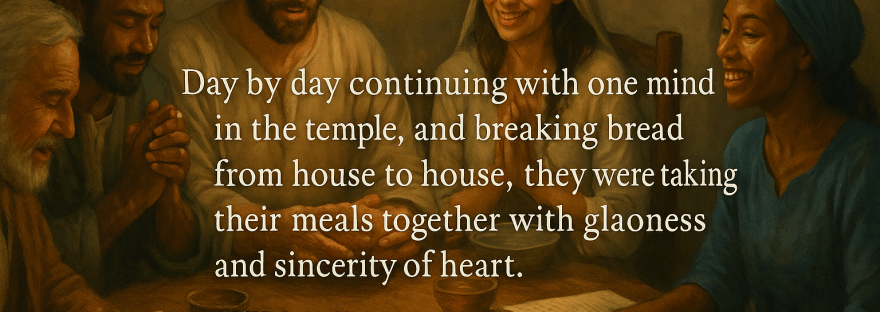
“Day by day… breaking bread in their homes, they received their food with glad and generous hearts.”
Acts 2:46


The Household Was the Center of Kingdom Life

Christian homes were marked by prayer, hospitality, teaching, and witness. Fathers led in spiritual care, mothers in nurture and instruction. Children grew up immersed in the rhythms of faith, watching and imitating lives devoted to Christ.

“The Church in your house sends you greetings.”
Romans 16:5

“Let every house be a church, and every table an altar.”
Hermas, Mandate 4


Hospitality Was Discipleship

Welcoming the stranger, feeding the poor, and making room for the Church was how families modeled Kingdom values. Hospitality was not an event—it was a lifestyle.

“Do not neglect to show hospitality to strangers, for thereby some have entertained angels unawares.”
Hebrews 13:2


Faith Was Taught in the Daily Rhythm

Discipleship didn’t depend on church services or Sunday school. It happened at mealtimes, around chores, during Scripture reading, and in prayer before bed. It was ordinary and sacred.

“Teach them when you rise, when you lie down, when you walk by the way…”
Deuteronomy 6:7


The Church Grew in Homes Before It Grew in Numbers

“They met from house to house, with one heart and one mind.”
Acts 5:42

Long before the Church became public, it was personal and powerful. Families discipled families. Homes became outposts of the Kingdom.


What We Can Learn

  1. Homes are the first and most powerful place for discipleship.
  2. Hospitality is a ministry of Kingdom legacy.
  3. Faith is best passed on through everyday rhythms.
  4. The Church began in homes—and still thrives where homes are surrendered to Christ.

Sources:

  • The Holy Bible — Acts 2:42–47; Acts 5:42; Romans 16:5; Deuteronomy 6:4–9; Hebrews 13:2
  • Hermas, Mandate 4
  • Didache, ch. 10
  • Ignatius of Antioch, Letter to the Smyrnaeans
  • Clement of Rome, 1 Clement 38

1–2 minutes

Leave a comment

Kingdom Archives

Taking Every Thought Captive

Renewing the Mind in Truth

Spiritual warfare doesn’t begin in the sky—it begins in the mind.

Every thought is a seed. If left unchallenged, a lie can grow into a stronghold. But Scripture doesn’t tell us to entertain, tolerate, or ignore these thoughts—it tells us to take them captive and make them obey Christ.

“We take every thought captive to obey Christ…”
2 Corinthians 10:5


The Battlefield Is the Mind

“Do not be conformed to this world, but be transformed by the renewal of your mind…”
Romans 12:2

Our thoughts shape our emotions, our decisions, and our faith. If Satan can control your thoughts, he can steal your peace, distort your identity, and dull your hunger for God.


Captivity Means Surrender to Truth

To take a thought captive means to arrest it, test it against the Word, and submit it to the Lordship of Jesus.

Ask:

  • Is this thought true?
  • Is it from God’s Word or the world’s voice?
  • Does it lead to faith or fear?
  • Does it glorify Christ or self?

“Let the Word dwell richly in your minds, so that it becomes your judge and not your memory alone.”
Clement of Alexandria, Stromata


The Early Church Trained Their Minds in Truth

They read aloud, memorized Scripture, sang Psalms, and filled their minds with what was holy. For them, meditation was not emptying the mind—it was filling it with God’s Word.

“Let Scripture be your counselor. Speak it to your soul until your mind is renewed.”
Hermas, Mandate 10


The Spirit Is Our Teacher

“The Helper, the Holy Spirit… will teach you all things and bring to your remembrance all that I have said to you.”
John 14:26

We do not renew our minds alone. The Spirit helps us discern lies, remember truth, and think like Christ.


What We Can Learn

  1. Every battle begins with a thought.
  2. Renewing the mind is not optional—it’s essential.
  3. Truth must be spoken, meditated on, and obeyed.
  4. The Spirit empowers transformation from within.

Sources:

  • The Holy Bible — 2 Corinthians 10:3–5; Romans 12:1–2; Philippians 4:8; John 14:26; Psalm 1:2
  • Hermas, Mandate 10
  • Clement of Alexandria, Stromata
  • Didache, ch. 4
  • Ignatius of Antioch, Letter to the Magnesians

1–2 minutes

Leave a comment

Kingdom Archives

Prepared People, Glorious King

A Vision of the Ready Bride and the Coming Kingdom

The return of Christ is not a myth. It is not symbolic. It is not far off in some unreachable realm. It is the blessed hope of the Church—and the King is coming for a prepared people.

“Behold, I am coming soon. Blessed is the one who keeps the words of the prophecy of this book.”
Revelation 22:7

History is not spiraling toward chaos—it is moving toward a wedding and a Kingdom. The Bride who waits in purity will be clothed in glory, and the King who comes in power will dwell with His people forever.


The Prepared Are Not Caught Off Guard

“But you are not in darkness… for that day to surprise you like a thief.”
1 Thessalonians 5:4

The faithful may not know the hour, but they are not sleeping. They are:

  • Watching and praying
  • Repenting and refining
  • Serving and shining
  • Hoping and proclaiming

“Let us be found ready, lest shame cover us when the King appears.”
Hermas, Mandate 9


The Glory of the King Will Outshine Every Trial

“When Christ who is your life appears, then you also will appear with Him in glory.”
Colossians 3:4

Every tear, every loss, every moment of faithful waiting will be swallowed up in glory. He will wipe away every tear. He will reign. And we will reign with Him.

“The coming of the King will make radiant all who have kept the faith.”
Clement of Rome, 1 Clement 50


The Bride and the Kingdom Are One

The prepared people are not spectators—they are heirs. They will inherit the Kingdom prepared for them. And they will shine like the sun in the Kingdom of their Father.

“Then the righteous will shine like the sun in the Kingdom of their Father.”
Matthew 13:43


What We Can Learn

  1. The King is coming—live like you believe it.
  2. The prepared Bride will be clothed in eternal glory.
  3. The Kingdom belongs to those who are faithful in the waiting.
  4. Hope is not wishful—it is certain. The wedding is real.

Sources:

  • The Holy Bible — Revelation 22:7; 1 Thessalonians 5:4–8; Colossians 3:4; Matthew 13:43; Revelation 21:3–4
  • Hermas, Mandate 9
  • Clement of Rome, 1 Clement 50
  • Ignatius of Antioch, Letter to Polycarp
  • Didache, ch. 16

2–3 minutes

Leave a comment

Kingdom Archives

Praying Like the Early Church

Bold, Unified, Spirit-Empowered Prayer

When we read the Book of Acts, we don’t find a passive or powerless church. We find a people devoted to prayer, filled with the Holy Spirit, and unafraid to ask God for boldness, miracles, and guidance. Their prayers shook buildings, healed bodies, and transformed cities.

The early Church didn’t just believe in prayer—they were built upon it. Their lives were formed in secret places and their power was released in public places. They prayed as if God listened and responded—because He did.

“They all joined together constantly in prayer…”
Acts 1:14


They Prayed Together

From the beginning, prayer was not just personal—it was corporate. They gathered as one body, crying out with one voice.

“When they had prayed, the place where they were gathered together was shaken…”
Acts 4:31

  • Their unity wasn’t manufactured—it was Spirit-born
  • They prayed in agreement, with a shared burden
  • They waited together, expecting God to move

This kind of prayer brought supernatural results. It aligned hearts, dissolved fear, and stirred courage.


They Prayed Boldly

The early Christians didn’t whisper safe prayers. They prayed in danger. They asked for boldness when threatened. They requested miracles in a skeptical world.

“Grant to Your servants to continue to speak Your word with all boldness…”
Acts 4:29

They didn’t shrink back. They pressed in.


They Prayed in the Spirit

They didn’t pray from religious duty—they prayed from spiritual power. The Holy Spirit led their prayers. He groaned with them. He gave them words when theirs ran out.

“Praying at all times in the Spirit, with all prayer and supplication.”
Ephesians 6:18

Their prayers were:

  • Fueled by Scripture
  • Directed by the Spirit
  • Anchored in faith
  • Saturated in worship

They Prayed Until Something Happened

They didn’t rush. They didn’t give up. They continued steadfastly in prayer (Acts 2:42). They fasted, they watched, they waited, and they listened.

This wasn’t desperation—it was devotion. They weren’t trying to move God’s hand as much as align their hearts with His.

“He who prays much will be much heard. He who prays without ceasing will grow in grace.”
Tertullian, On Prayer


What We Can Learn

  1. Kingdom prayer is unified, bold, and Spirit-filled.
  2. The Church was birthed in prayer and must live by prayer.
  3. God honors steadfast, Scripture-rooted, worship-saturated prayer.
  4. Revival comes when the Church returns to its knees.

Sources:

  • The Holy Bible — Acts 1:14; Acts 2:42; Acts 4:29, 31; Ephesians 6:18
  • Tertullian, On Prayer
  • Didache, ch. 8–10
  • Clement of Rome, 1 Clement 59–61
  • Origen, On Prayer

2–3 minutes

2 responses to “Praying Like the Early Church”

Leave a comment

Kingdom Archives

Who Is the Holy Spirit?

And Why the Church Can’t Function Without Him

The Holy Spirit is not a force. He is not a concept. He is not a feeling or a theological accessory added to the Christian life. The Holy Spirit is God. He is the third Person of the Trinity—eternal, holy, and active in every part of redemptive history. He is the life of the Church, and without Him, there is no Church.

Yet today, in many Christian circles, the Holy Spirit is either misunderstood, replaced with intellectual theology, or relegated to emotional experiences detached from biblical truth. In others, He is almost entirely ignored.

It was not so in the early Church.


The Spirit of God from the Beginning

“In the beginning… the Spirit of God was hovering over the face of the waters.”
Genesis 1:2

From creation, the Holy Spirit was present—active, powerful, and creative. Throughout the Old Testament, He empowered judges, prophets, and kings. But the prophets spoke of a coming day when the Spirit would be poured out on all flesh—young and old, sons and daughters (Joel 2:28).

That day came at Pentecost.


The Spirit Given to the Church

“You will receive power when the Holy Spirit has come upon you, and you will be My witnesses…”
Acts 1:8

The Church was born not in a strategy meeting, but in a prayer meeting—and with the arrival of the Spirit. Tongues of fire rested upon them. They spoke boldly. They preached with power. Thousands believed. The Holy Spirit did what no man could manufacture: He breathed life into the Body of Christ.

From that day forward:

  • He filled believers with courage and joy
  • He convicted hearts of sin and truth
  • He guided decisions and planted churches
  • He spoke through ordinary men and women
  • He comforted the persecuted
  • He led discipleship, mission, and unity

The Early Church’s Relationship with the Spirit

The early believers didn’t just believe in the Spirit—they depended on Him. They didn’t have seminaries, creeds, or commentaries—they had Scripture, prayer, and the indwelling presence of God.

They didn’t ask: “What do the theologians say?” They asked:

“What is the Spirit saying to the churches?”
Revelation 2:7


When the Spirit Is Replaced

In later centuries, as the Church began to elevate hierarchy, tradition, and intellect, the living voice of the Spirit was increasingly replaced with systems. Doctrine was debated in councils, but personal reliance on the Spirit was often diminished.

This is still true today:

  • Some treat the Spirit as a theological label, not a present Person.
  • Others reduce Him to mystical encounters devoid of discernment.
  • Still others ignore Him entirely in favor of academic clarity or church tradition.

But a church without the Holy Spirit is like a body without breath.


Who Is the Holy Spirit?

  • He is God (Acts 5:3–4)
  • He is a Person, not a force (John 14:16–17)
  • He is the Spirit of Truth (John 16:13)
  • He teaches, guides, convicts, comforts, speaks, and empowers
  • He is the indwelling presence of Christ in the believer (Romans 8:9–11)

What We Can Learn

  1. The Church cannot function without the Holy Spirit.
  2. We must know Him as a Person, not an idea.
  3. The Spirit leads us into truth, never apart from Scripture.
  4. We are commanded to walk by the Spirit—not by flesh or intellect.

Select Scriptures

  • “Now the Lord is the Spirit; and where the Spirit of the Lord is, there is liberty.” (NKJV, 2 Corinthians 3:17)
  • “And the Spirit of God was hovering over the face of the waters.” (NKJV, Genesis 1:2)
  • “And it shall come to pass afterward that I will pour out My Spirit on all flesh…” (NKJV, Joel 2:28)
  • “But you shall receive power when the Holy Spirit has come upon you; and you shall be My witnesses…” (NKJV, Acts 1:8)
  • “And when He has come, He will convict the world of sin, and of righteousness, and of judgment.” (NKJV, John 16:8)
  • “He will guide you into all truth… He will take of what is Mine and declare it to you.” (NKJV, John 16:13-14)
  • “He who has an ear, let him hear what the Spirit says to the churches.” (NKJV, Revelation 2:7)
  • “Sanctify them by Your truth. Your word is truth.” (NKJV, John 17:17)
  • “But if anyone does not have the Spirit of Christ, he is not His.” (NKJV, Romans 8:9)
  • “Your word is a lamp to my feet and a light to my path.” (NKJV, Psalm 119:105)“Walk in the Spirit, and you shall not fulfill the lust of the flesh.” (NKJV, Galatians 5:16)“But the fruit of the Spirit is love, joy, peace, longsuffering…” (NKJV, Galatians 5:22-23)
  • “But one and the same Spirit works all these things, distributing to each one individually as He wills.” (NKJV, 1 Corinthians 12:11)

Sources:

  • The Holy Bible — Genesis 1:2; Joel 2:28; Acts 1:8; Acts 5:3–4; John 14:16–17; John 16:13; Romans 8:9–11; Revelation 2:7
  • The Didache, ch. 10 (Spirit-led worship and teaching)
  • The Shepherd of Hermas, Similitude 9
  • Clement of Rome, 1 Clement 63 (Spirit speaks through prophets and teachers)

3–5 minutes

Leave a comment

Kingdom Archives

A Kingdom That Cannot Be Shaken

From the moment Jesus ascended into heaven, the early Church lived with one clear expectation: He’s coming back.

This wasn’t just a theological hope—it was a daily reality that shaped how they lived, how they suffered, and how they prioritized their time. Their eyes were not fixed on empires, comfort, or cultural influence. Their hearts were anchored in the certain return of their King.

“Men of Galilee, why do you stand looking into heaven? This Jesus… will come in the same way as you saw Him go into heaven.”
Acts 1:11


They Lived in Readiness, Not Speculation

The early Christians didn’t obsess over timelines or charts. They didn’t build doctrines to argue about dates. Instead, they lived with urgency, believing that Christ’s return could happen at any moment. They kept their lamps burning, their hearts pure, and their hands busy with the work of the Kingdom.

“Be ready, for the Son of Man is coming at an hour you do not expect.”
Matthew 24:44

They weren’t passive watchers—they were active laborers, motivated by the thought of being found faithful when the King returned.


Hope in His Coming Fueled Holiness

They believed that the return of Jesus should purify, not paralyze.

“Everyone who thus hopes in Him purifies himself as He is pure.”
1 John 3:3

This is why they endured persecution with joy, forgave their enemies, and refused to compromise. They wanted to be found worthy of the Kingdom when the trumpet sounded.


Their Focus Was the Kingdom, Not the World’s End

While they acknowledged that judgment would come, their focus wasn’t on fear of destruction, but on hope of redemption. The return of Jesus meant:

  • Justice for the oppressed
  • Reward for the faithful
  • Resurrection of the righteous
  • Restoration of all things

They didn’t hide from the world—they witnessed to it. They didn’t panic—they preached. They didn’t cling to the temporary—they longed for the eternal.


What About Today?

Much of the modern Church has lost its sense of anticipation. We either become distracted by the world or consumed by speculation. But Kingdom citizens are called to live as if the King could return today—with clean hearts, faithful hands, and steadfast hope.


What We Can Learn

  1. Christ’s return is certain—our readiness must be constant.
  2. Hope in His coming should lead us to greater holiness.
  3. The purpose of prophecy is preparation, not prediction.
  4. The Kingdom is coming in fullness—live like a citizen now.

Sources:

  • The Holy Bible — Acts 1:11; Matthew 24:44; 1 John 3:3; Titus 2:13; Revelation 22:12
  • Epistle of Barnabas, ch. 4
  • Shepherd of Hermas, Vision 1
  • Clement of Rome, 1 Clement 23–24

2–3 minutes

Leave a comment