
Representing Christ to the World
From the Series: Ordinary Saints: Lessons from the Ante-Nicene Church
Scripture quotations are from the New King James Version®. Copyright © 1982 by Thomas Nelson. Used by permission. All rights reserved.
Most Christians have experienced the moment. A coworker asks why you have hope when life falls apart. A neighbor quietly shares that their marriage is crumbling. A family member wants to know why you continue to forgive someone who has hurt you. In those moments, we often wonder, What should I say? Yet before we ever speak, God has already given us our calling.
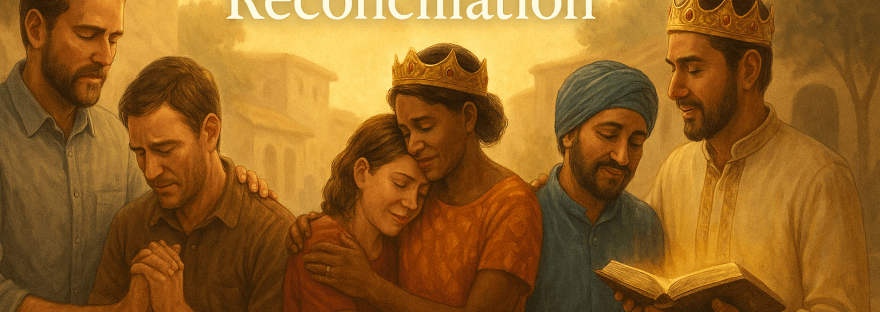
The apostle Paul writes, “Now all things are of God, who has reconciled us to Himself through Jesus Christ, and has given us the ministry of reconciliation” (2 Corinthians 5:18). Notice what Paul does not say. He does not reserve this ministry for pastors, missionaries, or church leaders. He gives it to every believer. The moment God reconciled us to Himself through Christ, He entrusted us with the privilege of inviting others to be reconciled to Him. This is the work of the royal priesthood.
Under the Old Covenant, priests stood before God on behalf of the people. They offered sacrifices, interceded in prayer, and taught God’s commands to Israel. Their ministry pointed forward to the coming of Jesus Christ, our perfect High Priest, who offered Himself once for all as the final sacrifice for sin. Because His work is complete, our priestly ministry looks different. We do not offer sacrifices for sin. We proclaim the One who already has.
Paul continues, “We are ambassadors for Christ, as though God were pleading through us: we implore you on Christ’s behalf, be reconciled to God” (2 Corinthians 5:20). An ambassador does not represent himself. He represents the king who sent him. That truth shaped the lives of the earliest Christians. The believers of the Ante-Nicene Church understood that they belonged to another Kingdom. They did not seek influence through political power or social status. Instead, they represented Christ wherever He placed them, in homes, marketplaces, workshops, prisons, and even courtrooms. Their witness extended far beyond their words. They cared for widows who had no family. They welcomed abandoned infants whom Roman society had discarded. They fed the hungry, visited prisoners, and prayed for those who persecuted them. When sickness swept through their cities, many remained behind to care for the suffering while others fled. Their lives became visible demonstrations of the Gospel they proclaimed. Tertullian described the remarkable effect this had on the surrounding world. Even unbelievers observed the Christians’ extraordinary love for one another. Their compassion, humility, and peace became powerful evidence that Christ had truly transformed them. This reminds us that reconciliation is more than explaining the Gospel. It is living in such a way that people catch a glimpse of the Savior we proclaim.
Jesus said, “Let your light so shine before men, that they may see your good works and glorify your Father in heaven” (Matthew 5:16). Sometimes that means speaking the truth with gentleness. Sometimes it means offering forgiveness when revenge seems justified. Sometimes it means sitting beside someone who is grieving, serving quietly without recognition, or extending kindness where none is expected. Every act of faithful obedience reflects the character of our King. That does not mean everyone will respond positively. Many of the early Christians were rejected, imprisoned, and even martyred for their testimony. Yet they refused to answer hatred with hatred because they remembered that they, too, had once been enemies of God until His grace reached them.
Their goal was never to win arguments. It was to faithfully represent Christ. That remains our calling today. Every conversation, every act of kindness, every word of truth, and every expression of mercy provides an opportunity to point someone toward the God who reconciled us to Himself through His Son.
We cannot change another person’s heart. Only God can do that. But we have the privilege of faithfully representing the One who can. As members of God’s royal priesthood, we are not merely recipients of His grace. We are ambassadors of His Kingdom, entrusted with the beautiful ministry of reconciliation until our King returns.
Discover more from Rooted & Raised
Subscribe to get the latest posts sent to your email.

