
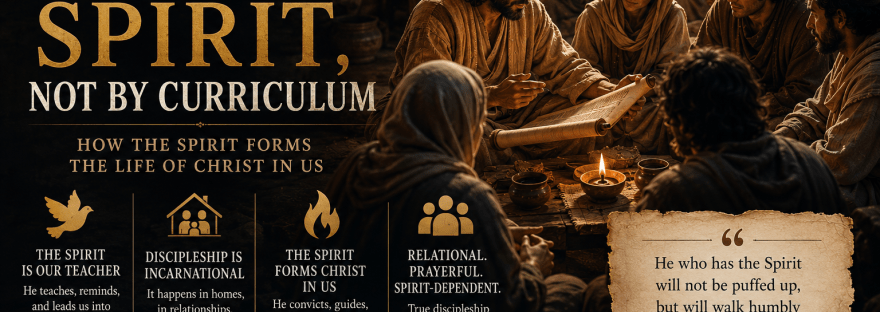
How the Spirit Forms the Life of Christ in Us
From the Series: Ordinary Saints: Lessons from the Ante-Nicene Church
Scripture quotations are from the New King James Version®.
Copyright © 1982 by Thomas Nelson. Used by permission. All rights reserved.
Discipleship is not just about workbooks, programs, or structured courses. While these tools have value, true discipleship is a deeper, lifelong process led by the Spirit. It involves being transformed into the image of Jesus Christ through surrender, obedience, and daily abiding in Him. But what does this look like in everyday life? Simple daily practices can help. You might begin your morning by inviting the Spirit to guide your words and actions. Pause regularly to pray or recall Scripture throughout your day. Choose to obey a gentle prompting to serve someone in need or forgive someone who has hurt you. End your day by reflecting in prayer, asking God to reveal where you need to grow and giving thanks for His presence. Practicing small acts of surrender, obedience, and trust creates space for the Spirit to shape you into Christ’s likeness. This distinction matters because it is possible to gather information about Christ through programs yet remain untransformed by Him, whereas Spirit-led discipleship leads to real change.
The early Church knew this truth well. They had no printed study guides or official discipleship systems. They did not depend on complex programs. Yet they raised courageous, holy, and faithful believers who were rooted in Christ. Why? Their discipleship was grounded in Scripture, shaped by the Spirit, and lived out through daily surrender and obedience.
Jesus promised His followers:
“But the Helper, the Holy Spirit, whom the Father will send in My name, He will teach you all things…” (John 14:26)
The Holy Spirit is essential, not optional, in discipleship. Without the Spirit, discipleship can become about information rather than transformation. Knowledge may grow, but the heart can stay the same. Someone might learn biblical words, memorize doctrine, and participate in church activities, yet remain spiritually immature. The Spirit brings conviction, humility, obedience, and real change.
You may pause here and recognize something deeply personal. “I’ve learned a lot about Christianity, but sometimes I still feel unchanged inside.” That realization can feel discouraging, but it is also important. Feeling this way is a normal part of the journey, and you are not alone. When you notice this gap between what you know and how you feel, take it to God in prayer and ask Him to keep shaping your heart. If needed, consider reaching out to a trusted friend or spiritual mentor to pray with you and offer support. Scripture never presents discipleship as mere intellectual growth. God’s goal is not simply informed minds, but transformed lives.
The Spirit shapes our hearts in ways the world never could. He does not just give information. He forms Christ within His people. He reminds them of Jesus’ words, convicts them of sin, strengthens them in their weakness, and leads them into the truth through God’s Word.
John writes:
“But the anointing which you have received from Him abides in you… and His anointing teaches you concerning all things…” (1 John 2:27)
This does not mean teachers are unnecessary. God sends pastors, elders, and teachers to help the Church. But good teaching always points people to trust Christ and depend on the Holy Spirit, not just human systems.
The early Christians understood this balance well. They valued instruction, but they recognized that the Spirit was the true Teacher behind every faithful word spoken. Their discipleship was also deeply relational.
Today, discipleship can become institutionalized. Classes, schedules, and programs often contain it. But in the early Church, discipleship happened during daily life. It took place in homes with meals and prayer. It happened during suffering and hardship. Mature believers walked with younger ones, showing faithfulness day by day. They learned Christ not only through sermons but through watching one another endure suffering, extend forgiveness, practice hospitality, and remain steadfast in prayer.
You may reflect, “I long for that kind of authentic discipleship.” Many believers feel that tension today. While programs can organize information, they cannot create the spiritual family, shared burdens, or Spirit-filled relationships that come from true discipleship. Discipleship is formed through proximity, humility, patience, and genuine care within the Body of Christ.
One way to foster this kind of community is to participate in small groups that meet regularly for prayer, sharing, and mutual encouragement. Opening your home for meals, joining accountability partnerships, or gathering a few people to study Scripture and pray together can help deepen relationships. Serving together on ministry teams, visiting those in need, or simply spending time with others outside of formal church events builds real connection. Creating space in church life for honest conversations and shared prayer helps nurture authentic spiritual friendships and provides practical support for the journey of faith. This is why the early Church emphasized character so strongly.
The Spirit does not produce prideful, self-exalting disciples. He forms humility, servanthood, and love within believers. As the Shepherd of Hermas observed:
“He who has the Spirit will not be puffed up, but will walk humbly and serve others.”
The evidence of spiritual maturity is not merely knowledge; it is Christlike character.
Paul expressed this beautifully when he wrote:
“My little children, for whom I labor in birth again until Christ is formed in you…” (Galatians 4:19)
That is the true goal of discipleship: Christ formed within His people.
The Holy Spirit works with patience in believers. He shapes the life of Jesus in them. He convicts sin, renews the mind, grows spiritual fruit, and gives power to obey. He teaches not only Christ’s words, but His ways.
No curriculum alone can produce love, joy, peace, patience, kindness, goodness, faithfulness, gentleness, or self-control. While programs may impart biblical concepts, only abiding in Christ produces spiritual fruit, contrasting external teaching with internal transformation. Only abiding in Christ through the Spirit can.
You may quietly wonder, “Why does spiritual growth sometimes feel slow?” Discipleship is not instant. Formation takes time. Slow growth is not a sign of failure but rather a normal and purposeful part of God’s process. The Spirit often works deeply and patiently. Even in seasons when change feels slow, God is still at work below the surface, shaping believers through ordinary obedience, hidden prayer, trials, correction, and perseverance. Remember how God formed Joseph in the darkness of prison before raising him into leadership, or how Moses spent years in the wilderness before stepping into his calling. Growth is seldom as dramatic as people expect, but just as in Scripture, God faithfully brings fruit in His timing. Over time, though, the evidence becomes visible. And importantly, believers are not meant to walk this process alone.
The Spirit forms disciples in the Body of Christ. The early Church prayed together, corrected and encouraged one another, and carried each other’s burdens. Spirit-led discipleship thrives in communities where believers truly pursue Christ and help each other stay faithful. If you are seeking to experience this kind of community, consider joining a prayer group at your church or starting a regular gathering with a few friends to pray, study Scripture, and encourage one another. You might also form an accountability partnership with someone you trust, meeting regularly to share honestly, pray, and support each other in your walk with Christ. Taking these steps can help make the communal aspect of discipleship more accessible and real in your own life.
Here is great comfort for the restless heart. Transformation does not depend on our strength or perfect systems. The same Spirit who empowered the early Church indwells believers today, faithfully completing His work in us.
What the early Church teaches us is deeply needed today. True discipleship is Spirit-led, not merely driven by schedules. The Holy Spirit is our Teacher, Comforter, and Transformer. Programs may inform, but only the Spirit forms Christ within us. And discipleship must remain relational, prayerful, humble, and dependent upon God. Because the goal has never simply been to educate Christians. The goal is for people who increasingly look like Jesus.
Discover more from Rooted & Raised
Subscribe to get the latest posts sent to your email.

