
From the Series: Ordinary Saints: Lessons from the Ante-Nicene Church
Scripture quotations are from the New King James Version®.
Copyright © 1982 by Thomas Nelson. Used by permission. All rights reserved.
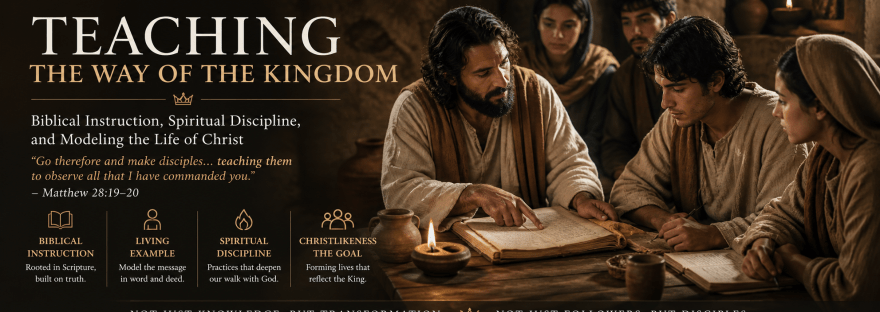
The heart of true discipleship is not the transfer of information, but the formation of a life in alignment with the Way of the Kingdom. The aim is not merely to communicate facts, but to cultivate transformation. Discipleship means leading others not only into what Jesus said but also into how He lived, calling them beyond knowledge into obedience and beyond understanding into transformation. This approach moves teaching beyond words alone, extending it into what we say, how we live, and how we love. For example, life-formation often takes place through mentoring, where a mature believer walks alongside someone new in faith, sharing wisdom and encouragement in real-life situations. It also happens in small groups as believers study Scripture, pray, and support one another through everyday challenges. Serving together offers opportunities to practice humility and love, and to learn together what it means to follow Jesus in daily life. These settings help bring discipleship out of the classroom and into daily experience.
Jesus made this clear when He commanded: “Go therefore and make disciples of all the nations… teaching them to observe all things that I have commanded you…” (Matthew 28:19–20). This call draws us beyond sharing knowledge to inviting others into a practicing, living faith, guiding them into a way of life as they learn to follow Christ in their daily decisions. This is at the heart of discipleship.
In pursuit of this kind of discipleship, it’s important to notice how, from the beginning, the early Church understood that this work had to be grounded in Scripture. They did not build discipleship on ideas or philosophies, but on the Word of God itself. They trusted it to be clear, sufficient, and able to shape every area of life.
The early Church rooted their children and disciples in Scripture and the teachings of Christ. They believed the Word was clear, sufficient, and Spirit-breathed, and able to equip all believers for every good work.
“From childhood you have known the Holy Scriptures, which are able to make you wise for salvation through faith which is in Christ Jesus.” (2 Timothy 3:15)
“Let each one be diligent in the reading of Scripture, and do not twist it according to your own desire.” (Didache, ch. 4)
The Word transforms. Following the early Church, Scripture reveals truth, corrects error, and directs the heart toward God. Without it, discipleship loses its foundation.
A reader might pause here and think, “I don’t feel equipped to teach Scripture.” Recognizing this is a natural part of the process. But teaching does not begin with mastery; it begins with submission. As we sit under the authority of the Word and allow it to shape us, we become able to pass on what we are learning. Faithfulness in what we know opens the door to deeper understanding over time. For those just beginning, it can help to start simply. Share a favorite passage that has been meaningful to you, read a short section of Scripture with someone, or lead a brief devotional thought with your group. Even inviting others to reflect on a verse together or discussing how God’s Word applies to daily life are valuable first steps. Taking small, practical actions like these can build confidence as you begin sharing Scripture with others.
So, while a foundation in Scripture is vital, it is not enough on its own. Scripture must also be embodied in life. Discipleship requires not just instruction but also demonstration. Those we disciple observe how truth is lived out, how we respond under pressure, how we forgive, how we show humility, and how we pursue holiness.
“Be an example to the believers in word, in conduct, in love, in spirit, in faith, in purity.” (1 Timothy 4:12)
This can feel weighty. A reader may quietly wonder, “What if my life doesn’t fully reflect what I’m teaching?” That awareness is not meant to discourage; it is meant to lead us into greater dependence on God. Discipleship is not about presenting perfection, but about walking in genuine obedience. Even our repentance, when we turn back to God, becomes part of what we model. Consider the apostle Peter, who denied Jesus three times but, after repenting, was restored and became a foundational leader in the early Church. His story shows that imperfection can be redemptive and that growth often happens through our willingness to acknowledge failure and receive forgiveness. As leaders, being honest about our need for grace can encourage those we disciple to do the same.
Alongside teaching and example, the early Church cultivated spiritual discipline, a further step in holistic discipleship. Practices such as prayer, fasting, Scripture reading, worship, and obedience deeply grounded believers in Christ. These practices do not earn God’s favor, but they shape the heart to seek Him. They guard against a shallow faith that knows truth but does not live it.
“Teach the young to pray always and to fast with gladness, for in these things they learn the nearness of God.” (Hermas, Mandate 12)
You may think, “I struggle to stay consistent in these areas.” That struggle is common, and it reflects the ongoing process of spiritual growth. Spiritual discipline is not about rigid performance; it is about intentional pursuit. Growth often happens quietly, through repeated choices to turn toward God. What matters is not flawless consistency, but a heart that continues to seek Him. For those desiring practical ways to grow in discipline, start simply. Set aside a regular time each day for short prayer and Scripture reading, even just a few minutes. Use a journal to record prayers or insights, helping you track your spiritual journey. Find an accountability partner, a trusted friend or fellow believer, to check in weekly and encourage each other. Choose one spiritual practice to focus on for a season, such as memorizing a verse, fasting once a week, or serving in a small way. Small, sustainable steps make realistic growth in discipline, helping you and those you lead remain rooted in Christ.
As these elements work together, Scripture, example, and discipline, they point us toward a singular aim. Discipleship is not about producing followers of ourselves or building something around our influence. The goal is Christlikeness: to see the life of Christ formed within those we teach. This is the standard that governs everything. To teach the Way of the Kingdom is to point continually back to Him, His words, His example, His sacrifice, and His authority. It is to help others become citizens of His Kingdom, learning to obey Him from the heart.
From this perspective, it becomes clear that this calling is not meant to be carried alone in this work. We strengthen one another, correct one another, and walk alongside one another. Discipleship happens in relationship, within a community shaped by truth and love.
To foster this kind of community, consider forming small discipleship groups where people can study Scripture, pray, and share life together. Peer mentoring is another practical way to encourage growth, as believers support and guide each other through regular check-ins and honest conversations. Creating intentional spaces for connection, such as shared meals or service opportunities, helps deepen relationships and makes it easier for everyone to participate in the journey of discipleship. These steps can help turn the value of community into a lived experience, making sure no one walks this path alone.
This reflection naturally leads to a searching question: are we simply sharing information, or are we forming lives? Because there is a difference. What we learn is both simple and profound: teaching the Kingdom begins with Scripture, is strengthened by a life that reflects it, is deepened through spiritual discipline, and aims for inward transformation into the image of Christ.
“Let every teaching lead to the imitation of Christ.” (Ignatius of Antioch, Letter to the Ephesians)
To teach the Way of the Kingdom is to walk it. Let us each take intentional steps this week to teach the Way of the Kingdom through Scripture, through our example, and through spiritual discipline, inviting others to walk with us as we follow Christ.
Discover more from Rooted & Raised
Subscribe to get the latest posts sent to your email.

