
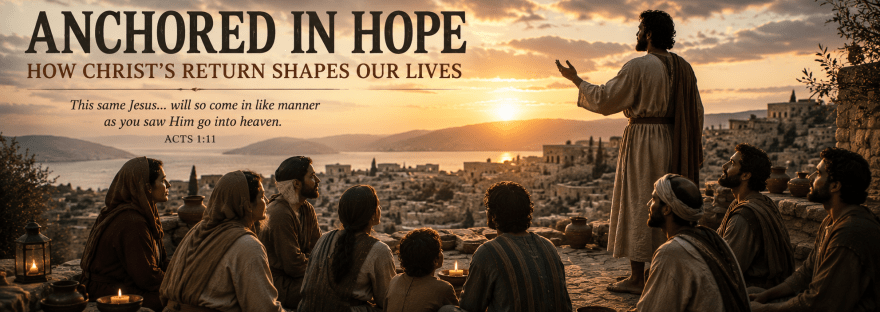
From the Series: Ordinary Saints: Lessons from the Ante-Nicene Church
Scripture quotations are from the New King James Version®.
Copyright © 1982 by Thomas Nelson. Used by permission. All rights reserved.
From the moment Jesus ascended into heaven, the early Church carried one unwavering expectation: He is coming back.
This was not a distant theological concept reserved for discussion or debate. It was a living reality that shaped how believers endured suffering, set their priorities, and walked through daily life. Their attention was not ultimately fixed on earthly kingdoms, cultural acceptance, or personal comfort. Their hearts were anchored in the certainty that their King would return.
Scripture records the promise spoken at His ascension:
“Men of Galilee, why do you stand gazing up into heaven? This same Jesus… will so come in like manner as you saw Him go into heaven.” (Acts 1:11)
The early Christians lived in light of that promise. What is striking is how they lived in expectation. They did not become consumed with speculation or endless arguments about dates or prophetic systems. Instead, they lived with readiness.
Jesus had warned them:
“Therefore, you also be ready, for the Son of Man is coming at an hour you do not expect.” (Matthew 24:44)
So they kept their lamps burning, sought purity of heart, and labored faithfully in what God gave them. Expectation did not produce passivity—it produced perseverance. They were not idle watchers, but active servants, longing to be found faithful at the King’s return.
At this point, you may recognize a tension: “Sometimes I either become distracted by the world or overwhelmed trying to understand prophecy.” This struggle is understandable. The early Church reminds us that prophecy’s purpose is faithful preparation, not endless speculation. Christ called His people to readiness, not obsession.
Their hope in His coming also shaped their pursuit of holiness.
“And everyone who has this hope in Him purifies himself, just as He is pure.” (1 John 3:3)
They understood that anticipation of the King should transform the servant’s life. Hope was not meant to paralyze them with fear, but to purify them in obedience. This is why they endured persecution with joy, forgave those who harmed them, and refused to compromise with the systems around them. They longed to be found faithful when Christ appeared.
This invites a personal question: What is my hope producing in me? Is it leading me toward deeper holiness, greater surrender, and stronger trust in God? Or has it become disconnected from how I actually live? One way to connect hope with daily living is to take practical steps: dedicate time each day for prayer and reflection on Christ’s return, choose acts of service for others as a way to express kingdom values, and seek out opportunities to encourage fellow believers with this hope. Setting aside intentional moments for gratitude, reading passages about Christ’s coming, and asking God to grow faithfulness in specific areas can all build a deeper expectation into ordinary routines.
This expectation comes alive in simple, real-life moments: a hug and prayer with your family before you head out the door, sending an encouraging text to a coworker who is discouraged, or choosing forgiveness when a friend disappoints you. It can shape how you listen to someone who needs comfort, or how you pause at dinner to thank God for His promises. Expectation can also inspire decisions like choosing integrity at work, offering to help a neighbor, or taking time to share words of hope with someone facing hardship. In these everyday ways, the hope of Christ’s return transforms ordinary moments into acts of faithfulness.
The early believers focused not on the world’s destruction, but on a greater hope of redemption. While they accepted that judgment would come, their eyes looked to the return of Christ, which meant justice for the oppressed, resurrection for the righteous, restoration of all things, and reward for faithfulness.
Because of this, they did not retreat from the world. They witnessed it. They did not panic; they proclaimed the gospel. They did not cling tightly to temporary things; they lived with their hearts fixed on eternity.
You may naturally wonder, “How do I live with expectation without becoming fearful or consumed?” It is common to feel anxiety or apprehension about the unknown or to worry over the challenges ahead. Yet God’s intention for us is not fear, but hope. Scripture repeatedly reassures us: “Do not be afraid.” When anxious thoughts arise, we can turn to God in prayer, asking Him to replace fear with His peace and courage. The early Church’s answer is straightforward: live faithfully today. Readiness is achieved not through fear-driven urgency, but in daily obedience to Christ.
There is also deep assurance in this hope.
The certainty of Christ’s return does not rest on our understanding of every prophetic detail. It rests on God’s faithfulness. The same Jesus who ascended will return. His promises cannot fail. And believers are not meant to carry this hope alone.
The early Church strengthened each other with His promise. They reminded each other to endure, stay steadfast, and keep their eyes on the coming Kingdom. Similarly, today’s Body of Christ should encourage faithfulness and hope. This encouragement can take many forms, such as gathering in prayer groups to intercede for one another, sharing testimonies of God’s faithfulness to inspire hope, sending notes or messages of encouragement, or meeting together to discuss Scripture and pray for daily endurance. Offering a listening ear, celebrating answered prayers as a community, or simply reminding each other of Christ’s promises all help foster a supportive, hope-filled environment where every believer is built up in expectation. As a church, consider establishing a monthly hope-focused gathering, where the congregation comes together for worship, encouragement, testimony sharing, and discussion about living in readiness for Christ’s return. Ministries or small groups might collaborate on community service projects or prayer initiatives, intentionally connecting acts of service to the hope of the coming Kingdom. By initiating regular, intentional events centered on hope and expectation, the whole congregation can grow together in faithfulness and perseverance.
Expectation was never meant to isolate believers from the world; it was meant to steady them within it.
What the early Church teaches us is clear. Christ’s return is certain; our readiness should be continual. Hope in His coming should lead us toward holiness, not fear. Prophecy was given to prepare the believer, not to feed endless speculation.
Remember the central takeaway: Our hope and readiness for Christ’s return should shape our lives, moving us toward continual faithfulness, holiness, and trust. This is not just anticipation, but a call to live today as citizens of His coming Kingdom. So live now as citizens of His Kingdom with faithful hands, steadfast hearts, and eyes fixed on the returning Christ.
Let us pray:
Lord Jesus, we thank You for the promise of Your return. Fill our hearts with hope and keep us ready every day, walking in faithfulness and love. Grant us courage to persevere, wisdom to live for Your Kingdom, and joy as we look to Your coming. Shape our lives by Your hope, and help us to encourage one another as we await Your return. Amen.
Discover more from Rooted & Raised
Subscribe to get the latest posts sent to your email.

