Convergence, The Last Days

The Handshake Web, Part II: Coordination, Security, and the Human Variable

From the Series: Countdown to Convergence

Scripture quotations are from the New King James Version®.
Copyright © 1982 by Thomas Nelson. Used by permission. All rights reserved.

Read: The Handshake Web Part I: The Emerging Architecture of Resilient Convergence

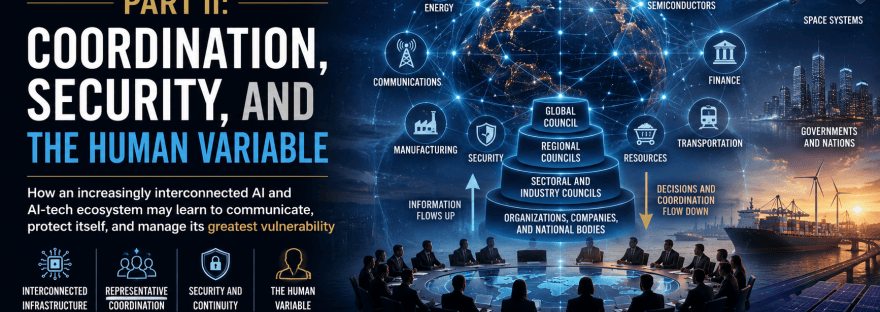
How an increasingly interconnected AI and AI-tech ecosystem may learn to communicate, protect itself, and manage its greatest vulnerability

What happens when an interconnected system becomes so large that maintaining the connections becomes almost as important as building them?

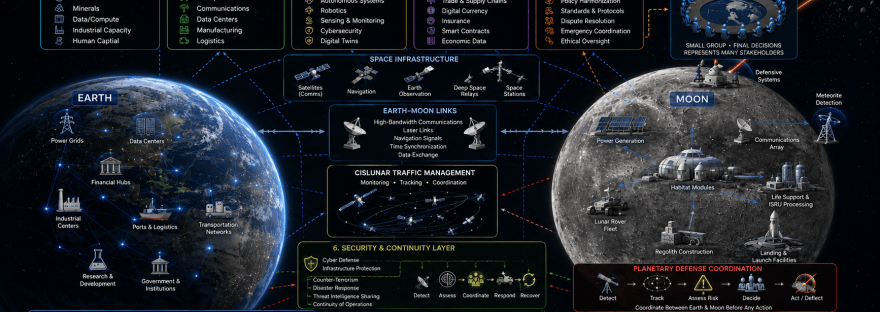
The emerging AI and AI-tech ecosystem is no longer simply about artificial intelligence or data centers. Its continued growth increasingly depends upon electricity, compute, semiconductors, critical minerals, manufacturing, communications, finance, transportation, skilled labor, security, and an emerging extension into space. Each new requirement creates additional relationships among companies, governments, industries, financial institutions, utilities, and nations. The first part of The Handshake Web examined how these relationships may produce something different from the older expectation of a single centralized global machine. Instead, the emerging architecture increasingly resembles a web: many independent actors remaining distinct while becoming progressively more interoperable and functionally dependent upon one another. That distinction changes the question. The issue is no longer simply how large AI and AI-tech can become. It is how an ecosystem of this scale could remain functional as the number of participants, dependencies, and connections continues to multiply. One of the most important characteristics of the emerging web is that convergence does not necessarily require consolidation. The United States can remain the United States. Japan remains Japan. Saudi Arabia remains Saudi Arabia. Companies remain privately owned. Financial institutions remain separate. Utilities operate independently. AI-tech companies compete. Governments disagree. Alliances change. Yet beneath that independence, functional dependencies can continue multiplying.

Competition itself can accelerate the process. One AI-tech company builds enormous compute capacity, prompting competitors to respond. Governments concerned about strategic competitiveness support additional domestic capacity. That increases electricity demand, drawing utilities and generation companies deeper into the ecosystem. Greater construction creates demand for equipment, semiconductors, minerals, manufacturing, transportation, and skilled labor. Capital finances the expansion. Defense becomes increasingly interested in the resulting capabilities. Communications infrastructure expands, and space-based systems begin extending the network beyond terrestrial infrastructure. No single actor has to announce, “Let us build one global system.” Thousands of actors pursuing separate interests can collectively produce an increasingly interconnected system. This explains something that otherwise appears contradictory: competition and convergence can occur simultaneously. The United States and China can compete strategically while remaining economically connected. AI-tech companies can compete while depending upon overlapping semiconductor, energy, telecommunications, financial, and industrial ecosystems. Nations can pursue greater energy independence while simultaneously developing additional cross-border energy relationships. Even diversification can increase connectivity. An organization seeking resilience may reduce its dependence upon one supplier by establishing relationships with three additional suppliers. Dependence upon an individual node decreases, but participation in the larger network increases. The trajectory being tested, therefore, is not one in which independence gives way to centralization and eventually produces one enormous machine. Instead, independent actors establish connections; repeated connections produce interoperability; interoperability can create dependency; dependency encourages redundancy; and redundancy can strengthen network resilience. As that process matures, something else becomes necessary: coordination. As AI and AI-tech grow in scale and capability, maintaining continuity across the web may eventually require more structured communication. A network containing thousands—or eventually millions—of consequential relationships cannot operate by placing every participant at one table. Information has to be gathered, filtered, represented, communicated, and returned to the appropriate participants. One possible solution is a nested, tiered representative structure. At the broadest level, individual companies, organizations, agencies, industries, governments, and other participants would continue operating independently and forming direct horizontal handshakes with one another. Related participants could also coordinate through sectoral, industrial, national, or regional bodies. Those bodies could select representatives to carry their shared needs, constraints, risks, and priorities to broader coordinating councils. If those councils themselves became too large, they could appoint representatives to participate at another level. The process could continue until a comparatively small coordinating body could address issues affecting substantial portions of the web.

Information about shortages, capacity, risks, bottlenecks, and emerging requirements would move upward through these representative layers. Decisions, standards, priorities, and coordinated responses could then move back through the network to the participants responsible for implementing them. Horizontal communication would not disappear. Companies could still negotiate directly. Nations could still make bilateral agreements. Industries could still cooperate across sectors. The representative structure would exist alongside those handshakes rather than replacing them. This particular council structure is not a prediction of what must emerge. Entirely different organizational mechanisms could accomplish the same purpose. For example, current global systems rely on various governance models. The Internet remains governed through a mix of multistakeholder organizations such as ICANN, technical standards bodies, and regional internet registries, which coordinate policy, technical, and operational decisions across borders. Similarly, financial clearinghouses manage risk and ensure secure transactions through standardized rules and collaborative oversight. Power grids, too, often rely on independent system operators coordinating between utilities and nations. These real-world mechanisms demonstrate how complex systems can remain resilient and responsive through representative, layered, or consensus-based structures. The important observation is the functional requirement. As the web becomes larger and more interdependent, it must aggregate enormous amounts of information, reconcile competing needs, communicate across sectors, and coordinate responses quickly enough to maintain continuity. AI itself may help make that possible. AI-tech could analyze enormous information flows, identify emerging bottlenecks, model supply disruptions, compare alternatives, forecast demand, identify dependencies, and condense millions of individual signals into a manageable number of questions requiring human judgment. This produces an unusual recursion: AI growth contributes to the complexity that creates greater coordination requirements. At the same time, AI may become one of the principal tools for managing that complexity. The result could be something much subtler than conventional centralization: a decentralized world becoming increasingly coordinated because its independent parts increasingly depend upon the continuity of the whole. Once continuity matters, another question follows naturally: Who protects the web?

Suppose a terrorist organization attacks an electrical interconnection, undersea cable, semiconductor facility, major port, satellite network, data center, or another critical node. In a highly interconnected system, the damage may no longer belong solely to the nation where the attack occurred. Another country may depend upon products passing through that port. Companies elsewhere may depend upon the affected semiconductor facility. Financial institutions may have substantial exposure. AI-tech infrastructure in another region may depend upon the electricity, communications, or components supplied through the damaged node. The attack therefore becomes a shared continuity problem. That creates an incentive for another category of handshake: security cooperation layered over economic, technological, financial, and industrial cooperation. An increasingly interoperable network could share threat intelligence, detect anomalies, coordinate cybersecurity, identify terrorist financing, monitor critical infrastructure, protect transportation corridors, and coordinate responses across jurisdictions. Countries would not have to agree about everything to cooperate against particular threats. Historically, governments with substantial disagreements have still cooperated against piracy, terrorism, organized crime, nuclear proliferation, financial crime, and threats to maritime or aviation security because certain disruptions harm everyone involved. Greater interdependence strengthens that incentive. This could also alter the cost calculation surrounding warfare. It would not eliminate war. Economic relationships do not erase territorial disputes, ideology, ambition, fear, competition, or miscalculation. But interconnectedness can increase the number of parties that have something to lose when two participants fight.

Imagine twenty people tethered together by ropes. They do not necessarily trust one another. Nobody has identical objectives. One thinks the water is east; another insists it is west. Someone wants to conserve energy while someone else wants to sprint. Inevitably, one person announces that he knows a shortcut. They can disagree about almost everything. But they cannot negotiate away one fact: If two begin fighting, everyone else suddenly has an interest in stopping them—not necessarily because the others have become peacemakers, but because nobody wants to be dragged over the cliff with them. An increasingly interconnected technological and economic web could produce a similar incentive. If conflict between two participants threatens energy supplies, financial stability, semiconductor production, transportation, communications, or AI-tech infrastructure upon which numerous other actors depend, surrounding participants have reasons to mediate, pressure, negotiate, provide alternatives, or otherwise contain the disruption. Interdependence does not necessarily produce peace. It can, however, make instability more expensive for everyone connected to it.

As this architecture develops, security may cease to function as a separate layer and instead become embedded throughout the web. The physical infrastructure consists of resources such as energy, compute, semiconductors, manufacturing, transportation, and communications. The connection architecture allows those resources and systems to interact. An intelligence layer, increasingly supported by AI-tech, can analyze information moving through those connections. Coordinating structures can then reconcile competing requirements and organize responses. Security and continuity would operate across every one of those layers. Energy requires energy security. Supply chains require supply-chain security. Financial networks require financial security. Communications require cybersecurity and physical protection. Space infrastructure requires space security. Transportation networks require protection. Critical facilities require physical security. Counterterrorism and defense increasingly serve as mechanisms for protecting the continuity on which the wider network depends. That capability, however, introduces a profound tension. The architecture that protects an interconnected system could also create extraordinary surveillance and control capabilities. AI combined with interoperable databases, financial information, communications infrastructure, biometrics, transportation records, satellite observation, and international information sharing could be enormously effective at identifying genuinely dangerous actors. But technology does not decide who is dangerous. Humans do. This reality underscores the need for meaningful oversight and robust accountability frameworks to guard against misuse, abuse of power, and unjust surveillance. Effective mechanisms might include independent review bodies, transparent audit trails for all surveillance activities, clear legal frameworks limiting the scope and duration of data collection, and dedicated ombudsman offices to handle complaints and appeals. Cross-border and multistakeholder oversight could help ensure that decisions affecting such interconnected webs are balanced, transparent, and contestable. As policy professionals seek actionable guidance, it becomes crucial to embed due process, regular third-party audits, mechanisms for redress, and avenues for civil society participation within the governance structures that manage these powerful tools. These layers of accountability are essential to prevent the architecture of protection from becoming a tool of unchecked control.

A government could use powerful tools to identify someone preparing a terrorist attack. Another government could classify a peaceful dissident as a terrorist. Both governments could use parts of the same international infrastructure. The more capable and interconnected the security architecture becomes, therefore, the more consequential questions of authority, jurisdiction, accountability, access, oversight, and due process become. This is where systems analysis intersects with a deeper problem concerning human nature.

Lord Acton’s familiar observation that “absolute power corrupts absolutely” identifies the danger of concentrated authority. Scripture identifies the problem at an even deeper level: power does not create the sinful human heart; it gives that heart greater opportunity to express what is already within. Jesus said, “For from within, out of the heart of men, proceed evil thoughts” (Mark 7:21). Jeremiah likewise wrote, “The heart is deceitful above all things, and desperately wicked” (Jeremiah 17:9). The ultimate non-engineerable variable in the web is therefore not electricity, compute, semiconductors, or communications. It is the human heart.

Electricity can be made redundant. Mineral suppliers can be diversified. Data centers can be duplicated. Financial backstops can be established. Technical standards can be made interoperable. Representative councils can be constructed. Checks and balances can be established. AI-tech can identify failures. But sin cannot be engineered out of the people operating those systems. This creates a paradox within the hypothetical governance architecture. Greater interconnection creates greater need for coordination. Greater coordination can require delegated authority. Greater authority increases the consequences when authority is abused. The mechanism created to preserve continuity can therefore become a source of systemic risk itself. This risk is not without possible mitigations. Practical steps to reduce the dangers of concentrated authority include distributing decision-making power across multiple independent bodies, embedding regular independent audits and oversight reviews to catch failures, and ensuring transparent record-keeping at all key governance nodes. Instituting clear procedures for redress, establishing rotation and terms for leadership roles, involving civil society organizations as stakeholders, and maintaining the ability for participants to appeal or exit are additional mechanisms that can help check the misuse of authority. By designing governance systems with built-in redundancies, contestability, and independent review, policymakers can better guard against the inherent vulnerabilities that arise from the human element.

Imagine a representative architecture functioning successfully for decades. Energy, finance, governments, AI-tech, industry, transportation, communications, and security are all represented. Information moves efficiently through the system. Problems are identified and resolved quickly. Control over one important coordinating interface then enables influence over enormous portions of the network. A new critical node has appeared. It is not an electrical node. It is not a semiconductor node. It is a governance node. Governance nodes therefore require redundancy and safeguards just as technical nodes do. The American constitutional system provides a useful systems-design example regardless of political perspective. The framers did not construct the government on the assumption that every future officeholder would remain virtuous. Federalism, separation of powers, bicameralism, elections, divided authority, and other checks created resistance to unconstrained concentrations of power. The same systemic principles become increasingly important when decisions can propagate through highly interconnected technological infrastructure.

A mature web could develop extraordinarily effective mechanisms to prevent terrorism, protect infrastructure, respond to disasters, and contain conflict. Those same capabilities could be abused. AI-tech could identify a terrorist. It could also identify a dissident. Financial interoperability could freeze terrorist financing. It could also financially isolate someone improperly designated by authorities. Shared communications could coordinate disaster relief. They could also facilitate surveillance. Digital identity could provide trusted access to critical infrastructure. It could also become an instrument of exclusion. The technology itself contains no moral compass. The moral responsibility remains with the human beings exercising authority through it. Scripture repeatedly demonstrates that governmental authority can restrain wrongdoing while remaining vulnerable to wrongdoing by those who wield it. Romans 13:1–4 describes civil authority as capable of restraining evil, yet Scripture also records rulers repeatedly abusing authority—from Pharaoh and Saul to Ahab, Nebuchadnezzar, and Herod. Even David grievously abused royal authority in his actions concerning Uriah in 2 Samuel 11. Technological advancement does not remove this problem.

Secular governance theory and historical experience similarly recognize that concentrated or unchecked power can become a source of systemic risk. Classical political philosophers such as Montesquieu emphasized the separation of powers to avoid the dangers of accumulating authority. At the same time, thinkers like John Stuart Mill highlighted the need for checks, balances, and civic engagement to prevent the abuse of law and process. The collapse of centralized regimes, the excesses of unchecked bureaucracies, and the recurring challenges of regulatory capture throughout modern history remind us that institutional design must anticipate failures in human judgment and self-interest. Consequently, as coordination becomes increasingly institutionalized, the important questions will extend far beyond how efficiently the web operates. How is authority distributed? Who can override whom? Who audits the decision-makers? Can participants withdraw? Can bad decisions be reversed? Are there competing centers of authority? What safeguards exist against capture or collusion? And what happens when the institution designed to coordinate the system becomes the source of the failure? These are the governance equivalents of redundancy and contingency planning.

A paradox therefore sits at the center of the convergence trajectory. The more complicated and interconnected the web becomes, the greater the pressure for effective coordination. Yet the more consequential that coordination becomes, the greater the potential danger created by concentrated authority in human hands. From a Biblical standpoint, better human government is never presented as the ultimate solution to sinful humanity. Scripture places righteous government ultimately in Christ Himself, whose reign is described in Isaiah 9:6–7, Revelation 19:11–16, and Revelation 20:4–6. Until then, every human institution—regardless of its political, economic, or technological architecture—remains populated by fallible human beings. That may leave the mature handshake web with a remarkable contradiction. Its technical architecture could become extraordinarily resilient. Its energy supplies could become redundant. Its communications could reroute automatically. Its supply chains could substitute alternative providers. Its AI systems could identify emerging failures before humans recognize them. Its institutions could coordinate responses across nations and industries. Yet the people entrusted with increasingly consequential interfaces would remain human. The web’s greatest strength—its connectivity—could therefore simultaneously create its greatest governance vulnerability: decisions made at a relatively small number of coordinating points could propagate through an enormous interconnected system. That makes the human element something more than another component of the emerging architecture. It may ultimately be its weakest link.
Convergence, The Last Days

The Handshake Web, Part I: The Emerging Architecture of Resilient Convergence

From the Series: Countdown to Convergence

Scripture quotations are from the New King James Version®.
Copyright © 1982 by Thomas Nelson. Used by permission. All rights reserved.

The Handshake Web, Part II: Coordination, Security, and the Human Variable

What appears to be developing is not one giant integrated machine where everybody gives up independence. It looks more like a network of semi-independent systems that increasingly require one another to keep functioning and growing. For example, recent challenges in global chip supply chains have shown how even tech giants rely on complex webs of manufacturing, logistics, and cross-border agreements to maintain production. The rapid adoption of cloud interoperability standards, such as those among major cloud providers to move workloads efficiently, is another illustration. In layman’s language, I would picture it this way: AI/AI-tech becomes an increasingly important engine. Around that engine grows an enormous support web supplying what it needs. The members of that web remain independent, but they increasingly build standardized ways to exchange resources, information, capacity, financing, and assistance. ​The basic scaffolding begins with AI tech and compute, which depend on electricity and energy infrastructure. That energy infrastructure is connected to chips, critical minerals, and manufacturing, which in turn depend upon communications networks, fiber, satellites, and emerging space infrastructure. These systems rely upon transportation, logistics, and supply chains, all of which require capital, banking, insurance, and government finance. Labor, engineering, construction, and other forms of human capital support the entire structure, while defense, cybersecurity, and physical security protect its operation. Governments, regulators, and international coordinating institutions increasingly interact with all of these layers.

None of these relationships is strictly linear; each layer increasingly depends upon and communicates with several others, creating the larger web. ​​But those arrows aren’t really vertical. Eventually they’re everywhere. Energy needs capital. Capital needs information. Information needs communications. Communications need chips. Chips need minerals. Minerals need energy and transportation. Transportation needs energy. Defense needs AI-tech. AI-tech needs space and terrestrial communications. Governments need all of them. That’s the web. At the center of this web is what I call the “handshake” mechanism: a formal or informal agreement, standard, or interface that allows different systems to cooperate, share resources, and depend on each other without giving up independence. And then comes the handshake mechanism. ​A handshake basically says, “I don’t have to own you in order to depend upon something you provide.” That’s enormously important. The United States doesn’t have to own a foreign mine. A hyperscaler doesn’t have to own every power plant supplying its data centers. An AI-tech company doesn’t have to own every chip fab. Japan doesn’t have to own America’s financial system to benefit from a financial backstop. A government doesn’t have to own a private space company to contract for launch capability. They create interfaces. Contracts are handshakes. Technical standards are handshakes. Trade agreements are handshakes. Currency arrangements are handshakes. Defense agreements are handshakes. Power-purchase agreements are handshakes.

Cloud interoperability is a handshake. Emergency assistance is a handshake. Shared infrastructure can be a handshake. And eventually the really important transition is likely to be from individual handshakes to systems of handshakes. ​That’s where the scaffolding starts looking mature. At the present stage, a need arises, an appropriate partner is identified, terms are negotiated, and a connection is established. In a more mature version of the web, a need would arise within an already established network, a compatible provider or alternative would be identified, and capacity could be connected, rerouted, or substituted rapidly—potentially with much of that process already standardized or automated. That’s the difference between having a bunch of extension cords lying around and having an electrical grid. That’s where diversification becomes central.

​Suppose Country A relies completely on Country B for something critical. That’s dependency, but it’s fragile. So Country A adds C and D. Now B fails, and C picks up some load while D supplies another portion. That’s redundancy. But for C and D to substitute effectively, they need compatible standards, logistics, financial arrangements, communications, contracts, infrastructure, etc. So strangely, attempts to reduce dependency on individual nodes can increase dependency on the larger network. That’s one of the most interesting things uncovered. Eventually the objective isn’t necessarily independence. It’s continuity. And once continuity becomes the objective, the system starts behaving differently. A node fails? Reroute. A country becomes unreliable? Substitute. A data center loses power? Shift workloads. A mineral source disappears? Activate another supplier. A financial system experiences stress? Liquidity/support mechanisms activate. A hurricane knocks something offline? Move capacity through another node while repairs occur. A geopolitical dispute breaks one handshake? Find another route through the web. That’s why a mature system can tolerate enormous amounts of disagreement without necessarily coming apart. ​Then humans have to manage the thing. This is the part I’ve spent so much time discovering.

Eventually, there are too many handshakes for everybody to coordinate everything independently. That’s where a tiered representative governance structure or a nested representative council system, where information and authority move both directions through it, becomes plausible. Not necessarily the architecture they’ll choose, but something functionally similar. Possible governance models to explore include intergovernmental organizations dedicated to infrastructure standards, public-private consortia for setting and enforcing cross-border protocols, federated oversight councils composed of sectoral and regional representatives, and adaptive policy levers such as incentive-based coordination frameworks or binding international agreements on interoperability and security. More speculative options include algorithmic coordination layers that supplement human councils, or dynamic regulatory sandboxes that allow experimentation across national and institutional boundaries. Briefly outlining these models can help analysts consider actionable frameworks for ensuring effective coordination in this complex environment. At the broadest level are the individual participants in the web. Related participants could coordinate through sectoral, industrial, national, or regional bodies, which would select or appoint representatives to carry their needs, constraints, and concerns to the next level. Those representatives could then participate in broader cross-sector coordinating bodies, where issues affecting multiple parts of the web are reconciled. Information, needs, and problems would move upward through these representative layers, while decisions, standards, priorities, and coordinated responses would move back down through the network. This would allow a very large decentralized system to coordinate without requiring every participant to have a seat at the highest decision-making table.

​Energy says: “We’re approaching capacity.”

​AI-tech says: “We need another 20 GW.”

Mining says: “We can’t supply those materials on that schedule.”

​Finance says: “We can finance expansion, but at this cost.”

​Government says: “We can accelerate permitting.”

​Labor says: “You can permit whatever you want; we don’t have enough electricians.”

​Now somebody has to reconcile those constraints. And increasingly, AI itself could become the information-processing layer helping those representatives understand the beast. That’s an interesting recursion: AI creates infrastructure complexity that requires greater coordination, while AI itself becomes one of the tools used to coordinate that complexity. It can model demand, identify bottlenecks, optimize transportation, forecast energy requirements, monitor inventories, identify supply disruptions, model alternatives, and present decision-makers with options. But as AI takes on a more central role in coordination, this introduces a new set of governance challenges. Issues such as transparency of decision processes, accountability for outcomes, and the potential for systemic bias must be actively managed as the system grows in complexity. Embedding ethical guardrails and robust oversight mechanisms will be essential to ensure AI systems used for coordination remain aligned with broader human values and policy objectives. However, humans still decide what tradeoffs they’re willing to make.

​So in drawing the mature scaffolding I have been hypothesizing, I actually give it four layers:

  1. ​Physical layer: Energy, compute, chips, minerals, manufacturing, transportation, communications, space infrastructure.
  2. Connection layer: Standards, contracts, markets, networks, financial mechanisms, trade arrangements, interoperability.
  3. Intelligence layer: AI/AI-tech monitoring the enormous amounts of information flowing through the physical and connection layers, identifying problems and optimizing responses.
  4. Coordination layer: Governments, corporations, institutions, and potentially increasingly formal representative structures making decisions about priorities, conflicts, security, resources, and continuity.

And all four continuously feed one another. Not necessarily a single centralized machine. More like a living infrastructure network that continuously senses, communicates, substitutes, repairs, finances, negotiates, and expands. And that’s why stabilization wouldn’t mean the thing stops moving. A mature version is moving constantly. Its stability would come from its ability to keep functioning while moving.

The trajectory I am watching begins with connection. As connections multiply, they can produce interoperability, and repeated interoperability can create dependency. Dependency then encourages diversification as participants seek alternatives to individual suppliers or nodes. Diversification can produce redundancy, which makes substitution possible when a particular connection fails. Reliable substitution strengthens continuity, while the need to preserve continuity increases pressure for coordination. If those coordinating relationships become persistent and formalized, they begin to become institutionalized. Taken far enough, this progression could eventually produce what I call resilient convergence: a condition in which the larger system remains functional not because every individual connection is permanent, but because the web has developed enough interoperability, redundancy, substitution, and coordination to survive the loss or disruption of particular connections.

I am nowhere near being able to say that entire sequence has occurred. Much of what I am seeing remains considerably earlier. But that is the scaffolding I’m now looking for evidence of. Even so, early signals are visible. For example, the EU’s Gaia-X initiative and similar government-industry cloud projects are already piloting standardized interfaces across independent infrastructure, echoing the kind of ‘handshake’ mechanisms I described. In global supply chains, industry groups governing chip manufacturing and diversified mineral sources are experimenting with automatic substitution protocols and multi-provider contracts to maintain continuity when a single node fails. Likewise, the creation of regional grid coordination centers reflects a shift toward mature, rapid response for shifting energy loads. Though these implementations are partial and not yet fully integrated, they illustrate a tangible move along the path I’ve outlined. ​And the key change in my thinking is that I no longer expect mature convergence to look like everybody becoming one thing. It could look almost exactly opposite: lots of independent things that can no longer function efficiently without continually communicating with, substituting for, supporting, and coordinating with one another. That’s the web. And AI/AI-tech may simultaneously be one of its largest consumers, one of its strongest accelerators, and eventually one of the principal tools used to manage it. That’s why this thing got so much bigger than “they’re building a lot of data centers.”

Convergence, The Last Days

Convergence in Motion

Why the Headlines Matter More Together Than They Do Apart

From the Series: Countdown to Convergence

Open your favorite news app today, and within minutes you’ll likely encounter stories that seem completely unrelated.

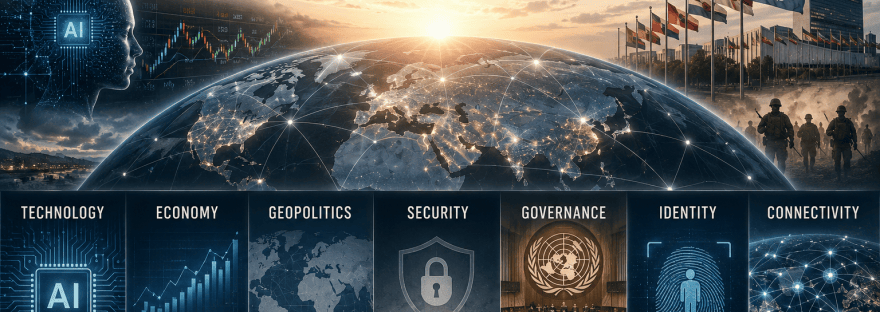
Artificial intelligence continues advancing at a breathtaking pace. Nations meet to discuss global AI governance. Economic uncertainty dominates financial headlines. Wars and regional conflicts reshape alliances. Governments debate digital identity, cybersecurity, and critical infrastructure. International organizations call for greater cooperation to address increasingly global challenges.

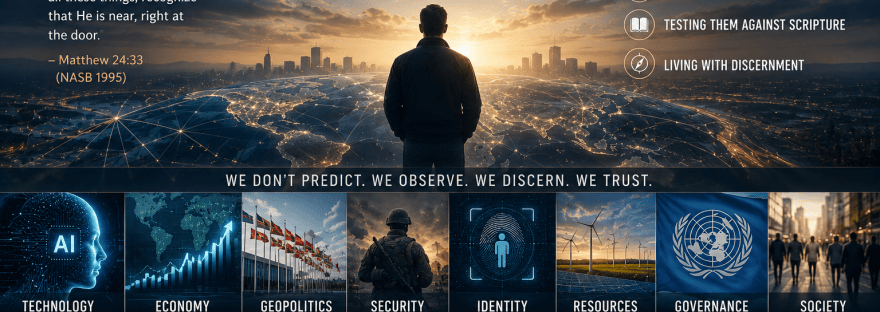
Most of us read these headlines one at a time before moving on with our day. But what if the most important question isn’t what each headline means individually? What if it’s where they all appear to be heading together? That question lies at the heart of the Convergence Framework. Rather than viewing technological, economic, political, military, and cultural developments as isolated events, the framework asks whether these independent systems are becoming increasingly interconnected. Like streams flowing toward the same river, each trend may have its own origin, yet together they can reveal a broader trajectory.

Over the past year, that pattern has become increasingly difficult to ignore. Artificial intelligence is no longer simply a technological story. It has become an economic, national security, educational, and international governance issue. Earlier this month, the United Nations convened its inaugural Global Dialogue on AI Governance in Geneva, bringing governments, industry leaders, scientists, and civil society together to discuss international cooperation on artificial intelligence. At nearly the same time, the Independent International Scientific Panel on AI released its first global assessment, emphasizing both AI’s opportunities and the growing need for coordinated oversight. Meanwhile, the United Nations High-Level Political Forum on Sustainable Development met to review progress toward the 2030 Agenda. With only four years remaining until the Sustainable Development Goals’ target date, international leaders again emphasized partnerships, innovation, infrastructure, and coordinated action as essential to achieving those objectives. These developments do not, by themselves, fulfill biblical prophecy. Neither do they prove that any particular prophetic event is imminent. They are, however, observable examples of increasing international coordination across multiple independent sectors. That distinction matters.

For many years, discussions about Bible prophecy often focused on a single event—a peace treaty, a war, a financial crisis, or a new technology. The Convergence Framework suggests something different. Rather than watching for a single dramatic headline, it observes how separate developments gradually become interconnected over time. Technology influences economics. Economics influences geopolitics. Geopolitics influences security. Security influences governance. Governance increasingly depends upon technology. Each system reinforces the others. Whether one agrees with every policy or not, the observable reality is that today’s challenges are increasingly addressed through international cooperation, shared digital infrastructure, and interconnected systems. That trend deserves careful observation without requiring sensational conclusions. Scripture encourages exactly this kind of careful discernment.

When the sons of Issachar are described as men “who understood the times, with knowledge of what Israel should do” (1 Chronicles 12:32, NASB 1995), they are commended not for speculation but for wisdom. Likewise, Jesus repeatedly instructed His disciples to remain watchful—not fearful, but spiritually awake (Matthew 24:42–44). Being watchful does not require assuming that every headline fulfills prophecy. Nor does it require dismissing observable changes because previous generations have also experienced turbulent times. Biblical discernment lives between those extremes. It recognizes that history unfolds according to God’s sovereign purposes while acknowledging that believers are called to observe the times with humility and wisdom. That is why this series continues to distinguish between established facts, reasoned analysis, and biblical interpretation. The facts are observable. The analysis remains open to revision as events unfold. Scripture alone remains unchanging.

As followers of Christ, our confidence is never placed in analytical models, political systems, or technological forecasts. Those things will continue to evolve. Our confidence rests in the Lord who declares “the end from the beginning” (Isaiah 46:10) and whose purposes cannot be thwarted. The convergence of global systems may continue, or it may slow, shift, or take unexpected turns. Either way, our calling remains unchanged. We are to watch carefully, think biblically, test everything against God’s Word, and live faithfully in whatever season He has placed us. The headlines will continue to change. Christ will not.

Convergence, The Last Days

Countdown to Convergence

Why This Series Exists

Scripture quotations are from the New King James Version®.
Copyright © 1982 by Thomas Nelson. Used by permission. All rights reserved.

Open a news app today, and within minutes you’ll likely read about artificial intelligence, economic uncertainty, digital identity, wars, cyberattacks, government surveillance, global health initiatives, or another international summit promising greater cooperation. Most people read these headlines one at a time before moving on to the next story. Rarely do we stop to ask a much larger question: Are these isolated events, or are they part of a broader pattern? For many Christians, that question naturally leads to another. What does the Bible say about the direction of the world? For generations, believers have wrestled with that question. Every era has experienced wars, political upheaval, technological advances, and cultural change. Yet Jesus repeatedly instructed His followers to remain watchful, not fearful, but discerning.

When His disciples asked about the signs preceding His return, Jesus did not tell them to ignore the world around them. Neither did He encourage endless speculation. Instead, He pointed them toward discernment, saying, “So you also, when you see all these things, know that it is near—at the doors!” (Matthew 24:33). That balance is the heartbeat of this series.

Countdown to Convergence was born out of a simple observation. As technology, economics, geopolitics, global governance, and cultural movements continue to develop, many of these independent systems appear to be becoming increasingly interconnected. While each trend can certainly be studied on its own, their simultaneous movement raises an important question: What happens when they begin moving in the same direction at the same time? That question led to the development of what I call the Convergence Framework.

Rather than attempting to predict future events or assign prophetic certainty to every headline, the framework simply organizes observable developments into a broader picture. Like assembling the pieces of a puzzle, it asks whether independent trends reveal a larger pattern that is becoming easier to recognize over time. That distinction is important.

This series is not an attempt to identify the Antichrist, calculate dates, declare prophetic fulfillment, or sensationalize current events. Scripture warns against unhealthy speculation just as clearly as it encourages believers to remain spiritually awake. Instead, each article seeks to distinguish between three important categories. First are established facts, documented events, publicly available data, official policies, technological developments, economic indicators, and verifiable reporting. Second is reasoned analysis, carefully examining how these independent developments may be converging without claiming certainty about their ultimate significance. Third is biblical interpretation, allowing Scripture to speak for itself while distinguishing between explicit biblical teaching and thoughtful observation. Where the Bible speaks clearly, we can speak confidently. Where it remains silent, we should exercise humility. This approach reflects a principle found throughout Scripture. The sons of Issachar were commended because they “had understanding of the times, to know what Israel ought to do” (1 Chronicles 12:32). Their wisdom was not rooted in speculation but in discernment. Likewise, believers today are called to evaluate the world around them through the unchanging truth of God’s Word. That means this series is as much about how we observe as what we observe.

Christians should neither dismiss every development as insignificant nor embrace every headline as immediate prophetic fulfillment. Instead, we are called to examine carefully, think biblically, and remain anchored in the hope of Christ. As the apostle Paul instructed, we are to “Test all things; hold fast what is good.” (1 Thessalonians 5:21). Ultimately, the purpose of Countdown to Convergence is not to produce anxiety about the future. It is to cultivate discernment in the present.

As followers of Jesus Christ, our confidence has never rested in stable economies, political systems, military alliances, or advancing technology. Our confidence rests in the sovereign Lord who declared the end from the beginning and who remains faithful to every promise He has made. The headlines will continue to change. The world will continue to change. God’s Word will not.

As we examine the events unfolding around us, may we do so with humility, wisdom, and confidence, not because we believe we have every answer, but because we know the One who holds history in His hands.

Welcome to Countdown to Convergence. Let’s watch carefully, think biblically, and keep our eyes fixed on Christ.

Convergence, The Last Days

The Stage Is Being Set: Western Decline and the Rise of a Global System

December 8, 2025

I. Discernment in the Last Days

Birth pains always precede a delivery. Jesus said that in the days leading up to His return:

“You will hear of wars and rumors of wars… and there will be famines, pestilences, and earthquakes in various places.
All these are the beginning of sorrows.”
—Matthew 24:6–8 (NKJV)

The “beginning of sorrows” refers to the world contractions that intensify before the Tribulation. We are not in that final seven-year period yet — but the signs of approach are unmistakable.

This moment in history requires discernment — not panic.
Awake faith — not fear.
Confidence in Christ — not trust in man.

We study nations not because prophecy centers on them…
…but because their actions reveal how close we are to the next major move of God.


II. Israel — The Center of the Prophetic Timeline

The Bible never makes America, Canada, or Europe the star of the story. The focus has always been:

Jerusalem.
The Jewish people.
The covenant promises of God.

“Behold, I will make Jerusalem a cup of trembling to all the surrounding peoples… and a very heavy stone for all peoples.”
—Zechariah 12:2–3 (NKJV)

Prophecy advances when Israel is pressured, isolated, and surrounded — until they cry out for their true Messiah.

Every global shift must be understood in light of God’s dealings with Israel.

Western decline is not random — it is preparation.


III. Europe — The Prototype of the Final World Empire

Europe has moved furthest into the systems Scripture describes:

Digital governance
Speech control and censorship
Unified surveillance and commerce
Aggressive secularism
Rising violence against Christians

So much of Revelation’s world order — global authority, economic mandates, and unified political power — is being tested and normalized there.

The revived empire will arise from Gentile powers (Daniel 2; Revelation 13). Europe reveals the blueprint.

What is being constructed now will not fully manifest until the Church is removed — but the architecture is nearly complete.


IV. Canada — The Soft Transition to Post-Christian Control

While Europe adopts an open fist, Canada favors a velvet glove:

• Restrictions on public Christian expression
• Education systems disciplining biblical convictions
• Laws framed as “protection” that silence truth

A slow erosion of religious liberty is often more dangerous than visible aggression — because it can occur unnoticed.

When a society no longer tolerates public prayer,
it is already preparing to suppress public truth.

The first step away from God is always subtle.


V. The United States — The Final Restraining Power Must Fall

America has:

• The world’s largest Christian witness
• A pro-Israel heritage
• A Constitution that protects truth and conscience
• Military and economic dominance

These characteristics restrain the rise of the next empire.

But when the Rapture removes the Church —
America loses its moral spine instantly.

A weakened United States creates the exact global vacuum Scripture describes:

The Beast will have authority “over every tribe, tongue, and nation.”
—Revelation 13:7 (NKJV)

That cannot happen with a strong, independent America.

Therefore:
The decline is not political coincidence.
It is prophetic necessity.


VI. One Pattern — Three Nations — One Direction

Prophetic IndicatorEuropeCanadaUnited StatesScriptural Alignment
LawlessnessExplosiveIncreasingRapidly risingMatthew 24:12
ApostasyDeepEntrenchedAccelerating2 Timothy 4:3–4
PersecutionViolentSocial/LegalEmergingJohn 15:18–21
Digital ControlActiveAdvancingReadyRevelation 13:16–17
Israel PressureHighRisingGrowingZechariah 12:3

Different rates.
Same destination.


VII. A Watchman’s Conclusion: Our Redemption Draws Near

As believers, we are not called to despair —
but to discern the season we are living in.

Jesus said:

“Now when these things begin to happen,
look up and lift up your heads,
because your redemption draws near.”
—Luke 21:28 (NKJV)

We are not watching the world fall apart.
We are watching God’s Word fall into place.The stage is set.
The actors are in position.
The final curtain cannot rise until the Bride is taken home.

Convergence, The Last Days

The Blessed Hope Beyond Convergence

Countdown to Convergence: How Agenda 2030, Today’s Headlines, and God’s Word Align

As the world accelerates toward global control, digital economies, and false unity, it can feel overwhelming. Headlines declare instability and uncertainty, and Scripture confirms that this system will reach its climax in rebellion against God.

Yet for believers, this is not the end of the story. The Word of God gives us a living hope. Our future is not tied to the collapse of nations, but to the promises of Christ. We are not appointed to wrath, but to obtain salvation through Him (1 Thessalonians 5:9).

The convergence is real — but beyond it lies the Blessed Hope.


Reviewing the Convergence

Throughout this series, we have traced how Agenda 2030, current events, and biblical prophecy intersect:

  • Economy: The rise of digital ID, central bank digital currencies, and a no-buy/no-sell system.
  • Global governance: The consolidation of power under the Antichrist.
  • Apostasy: The falling away in the visible church.
  • Israel: The epicenter of prophecy, the focus of nations.
  • False Prophet: The climax of false religion, demanding worship.
  • Tribulation: God’s judgments poured out in seals, trumpets, and bowls.
  • Armageddon: Nations gathered for war, ended by Christ’s return.

All these threads converge into the final reality: the kingdoms of this world will collapse, and Christ’s kingdom will stand forever (Revelation 11:15).


The Blessed Hope

Scripture anchors us in hope, not fear:

  • “Looking for the blessed hope and glorious appearing of our great God and Savior Jesus Christ.” (Titus 2:13, c. AD 65, NKJV)
  • “For the Lord Himself will descend from heaven with a shout, with the voice of an archangel, and with the trumpet of God. And the dead in Christ will rise first. Then we who are alive and remain shall be caught up together with them in the clouds to meet the Lord in the air. And thus we shall always be with the Lord.” (1 Thessalonians 4:16–17, c. AD 51, NKJV)
  • “I will come again and receive you to Myself; that where I am, there you may be also.” (John 14:3, c. AD 60, NKJV).

The Rapture is God’s promise of deliverance before His wrath. The Millennial Kingdom is His promise of true justice and peace. The New Heaven and New Earth are His promise of eternal fellowship.


Why This Matters Today

Prophecy is not given simply to inform us of the future. It is meant to shape how we live now:

  • Holiness: Knowing Christ may return at any moment should lead us to purify ourselves (1 John 3:3).
  • Urgency: Time is short. The harvest is plentiful, but the workers are few (Matthew 9:37–38).
  • Hope: No matter how dark the world becomes, our destiny is secure in Christ.

We do not fear Antichrist — we await Christ.


God’s Pattern of Hope

God has always preserved His own:

  • Noah delivered through the flood (Genesis 6–9, c. 2300 BC).
  • Lot delivered before the judgment of Sodom (Genesis 19, c. 2000 BC).
  • Israel preserved through the Exodus (Exodus 12–14, c. 1445 BC).
  • The Church preserved by Christ’s promise of deliverance (John 14:3, c. AD 60).

His pattern is consistent: judgment falls, but His people are never forgotten.


A Call to Watchfulness & Faithfulness

  • Believers: Live with urgency and purity. Be salt and light in a darkening world.
  • Unbelievers: Today is the day of salvation. Tomorrow is not guaranteed.
  • All people: Lift your eyes above the chaos of nations. Fix them on Christ, the Author and Finisher of our faith.

Closing Reflection

The world’s convergence is accelerating, and prophecy is being fulfilled before our eyes. Yet nothing is hidden from God.

He told us the end from the beginning, so that we would not be shaken.

The kingdoms of man will fall. The kingdom of Christ will stand.

In the end, convergence does not close with despair, but with the triumph of Jesus Christ.


Sources & References

Scripture

  • Genesis 6–9, c. 2300 BC
  • Genesis 19, c. 2000 BC
  • Exodus 12–14, c. 1445 BC
  • John 14:3, c. AD 60
  • 1 Thessalonians 4:16–17; 5:9, c. AD 51
  • Titus 2:13, c. AD 65
  • Revelation 11:15; 21–22, c. AD 95

Agenda 2030 & Current Events

  • Sustainable Development Goals: Are we on track for 2030? (World Economic Forum, September 2025) Reviews the SDG Summit (Sep 22-26, 2025) in New York; notes a $4T annual financing gap for developing countries and 7.1% decline in aid; emphasizes gender equality lags (123 years to parity) and calls for accelerated action via business-civil society partnerships.
  • The Sustainable Development Goals Report 2025 (United Nations Statistics Division, July 14, 2025) 10th annual stocktake; 35% of targets on track, but 18% regressing; urges international cooperation for the final push, with animated overviews of facts like renewable energy surpassing coal in 2025.
  • UN forum to spotlight health, gender equality, oceans, in critical bid to meet development goals (UN News, July 14, 2025) Covers the 2025 HLPF in New York; follows Nice (ocean protection) and Sevilla (sustainable financing) conferences; highlights Voluntary National Reviews from dozens of countries and the need for science-solidarity convergence ahead of the 2027 SDG Summit.
  • SDG Moment, 22 September 2025 (United Nations Sustainable Development, September 22, 2025) ICYMI: Advancing the 2030 Agenda Through the Pact for the Future
  • SDG Knowledge Hub (IISD) (April 29, 2025) Discusses BBNJ Agreement (biodiversity beyond national jurisdiction) signature deadline (Sep 20, 2025) and BRICS expansion (now including Egypt, Ethiopia, etc.); ties to HLPF preparations and financing timelines for SDGs.
  • 2025 International Solidarity and SDGs Timeline (Focus 2030, Ongoing 2025) Timeline of events like Nutrition for Growth Summit, UN Ocean Conference, Finance in Common Summit, and COP30; includes feminist and health agendas, plus 2024-2030 financing replenishments for gender equality and global health.
  • Sustainable Development Report 2025 (SDSN / SDG Transformation Center, June 23, 2025) 10th anniversary edition ahead of FfD4 in Seville; assesses country progress (e.g., Barbados leads multilateralism); notes U.S. withdrawal from Paris Agreement/WHO impacting SDGs; global averages off-track, with <20% targets met by 2030.
  • Sustainable Development Goals (Wikipedia, Updated November 6, 2025) Overview of 234 indicators tracking SDG implementation; highlights 2025 deployments in governance and Voluntary National Reviews; stresses north-south cooperation and public-private partnerships for the Agenda’s universal goals.
  • The Sustainable Development Goals have improved millions of lives over the past decade, but progress remains insufficient, UN report finds (United Nations, July 14, 2025) SDG Report 2025 launch; renewables at 30% of electricity (up to 92% access); but 8.9% in extreme poverty by 2030 if trends hold; ODA down 7.1% in 2024, with more cuts expected.
  • Now available: the Sustainable Development Report 2025 (SDSN, June 24, 2025) Press release on stalled progress (17% targets on track); ranks countries on multilateralism (U.S. last); calls for peace and GFA reforms to achieve SDGs amid conflicts and fiscal constraints.
  • The United Nations 2025 Sustainable Development Goals Report (Sustainability Magazine, July 30, 2025) Highlights youth/civil society actions despite chaos; revised poverty line shows deeper challenges; urges systemic changes for electricity access (645M without by 2030) and renewable growth.

Transforming Our World: The 2030 Agenda for Sustainable Development (United Nations, 2015).

Convergence, The Last Days

Armageddon & the Return of Christ: The Final Convergence

All of history is moving toward a single climactic moment. The global convergence of politics, economy, and religion reaches its peak in open rebellion against God. The nations gather for war — not just against Israel, but against the Lord Himself. This is the battle of Armageddon.

Yet at the very height of mankind’s pride, heaven opens. Jesus Christ returns in glory, ending the reign of the Antichrist and establishing His kingdom.

Headlines like “World Powers Unite Against Jerusalem” or “Global Forces Assemble in Middle East Conflict” will foreshadow the gathering storm. But Scripture declares the outcome long in advance.


Agenda 2030: Peace That Ends in War

Agenda 2030 speaks of peace, justice, and partnerships:

  • Goal 16: Promotes peace and strong institutions.
  • Goal 17: Calls for partnerships across nations.

But instead of true peace, these alliances will culminate in war. The very language of unity will be used to justify global coalitions — armies gathered to impose their will on Jerusalem. Human peace plans will collapse in the valley of decision.


Current Events in Motion

  • Military coalitions forming across the Middle East.
  • Intensifying disputes over Israel’s sovereignty in Jerusalem.
  • Growing international calls for “peacekeepers” to manage conflict in the Holy Land.
  • Advances in surveillance, AI, and weaponry — preparing the stage for global war.

The world is aligning militarily and politically in ways that match the biblical picture.


Prophecy Foretold This

The prophets and apostles describe this final convergence:

  • “And I saw three unclean spirits like frogs coming out of the mouth of the dragon… For they are spirits of demons, performing signs, which go out to the kings of the earth… to gather them to the battle of that great day of God Almighty… to the place called in Hebrew, Armageddon.” (Revelation 16:13–16, c. AD 95, NKJV)
  • “For I will gather all the nations to battle against Jerusalem… Then the Lord will go forth and fight against those nations… And in that day His feet will stand on the Mount of Olives.” (Zechariah 14:2–4, c. 500 BC, NKJV)
  • “I will gather all nations and bring them down to the Valley of Jehoshaphat; and I will enter into judgment with them there on account of My people, My heritage Israel.” (Joel 3:2, c. 835 BC, NKJV)
  • “Then the sign of the Son of Man will appear in heaven… and they will see the Son of Man coming on the clouds of heaven with power and great glory.” (Matthew 24:30, c. AD 60, NKJV)
  • “Now I saw heaven opened, and behold, a white horse. And He who sat on him was called Faithful and True… His eyes were like a flame of fire… And He has on His robe and on His thigh a name written: KING OF KINGS AND LORD OF LORDS.” (Revelation 19:11–16, c. AD 95, NKJV).

The Bible leaves no ambiguity: Christ will return at the height of mankind’s rebellion.


Why This Matters

  • Armageddon is not just another war — it is the final expression of man’s rebellion against God.
  • Christ’s return will end the Antichrist’s rule and destroy the Beast system.
  • This moment ushers in the Millennial Kingdom, where Jesus reigns with perfect justice and peace.

The kingdoms of this world will become the kingdom of our Lord and of His Christ (Revelation 11:15).


God’s Pattern of Victory

God’s timing is always perfect — He delivers at the moment of greatest pride:

  • He crushed Pharaoh’s army at the Red Sea (Exodus 14, c. 1445 BC).
  • He destroyed the Assyrians outside Jerusalem with one angel (2 Kings 19, c. 701 BC).
  • At Armageddon, the armies of the nations fall before the Word of God Himself (Revelation 19:15).

The pattern is clear: man’s pride rises, but God’s victory is sure.


A Call to Watchfulness

  • Believers: Fix your hope on Christ’s appearing. The convergence ends not in despair, but in triumph.
  • Unbelievers: Recognize that Christ will return as Judge and King. The day of mercy is now.
  • All people: Understand that history is not spiraling out of control. It is moving toward the reign of Jesus Christ.

Sources & References

Scripture

  • Exodus 14, c. 1445 BC
  • 2 Kings 19, c. 701 BC
  • Joel 3:2, 12–14, c. 835 BC
  • Zechariah 14:2–4, c. 500 BC
  • Matthew 24:30, c. AD 60
  • Revelation 11:15; 16:13–16; 19:11–16, c. AD 95

Agenda 2030

  • Goal 16: Peace, justice
  • Goal 17: Partnerships
  • Transforming Our World: The 2030 Agenda for Sustainable Development (United Nations, 2015)

Current Events

Middle East Military Alliances

Global Peacekeeping Efforts in Israel

  • Sustainable Development Goals: Are we on track for 2030? (World Economic Forum, September 2025) Reviews the SDG Summit (Sep 22-26, 2025) in New York; notes a $4T annual financing gap for developing countries and 7.1% decline in aid; emphasizes gender equality lags (123 years to parity) and calls for accelerated action via business-civil society partnerships.
  • The Sustainable Development Goals Report 2025 (United Nations Statistics Division, July 14, 2025) 10th annual stocktake; 35% of targets on track, but 18% regressing; urges international cooperation for the final push, with animated overviews of facts like renewable energy surpassing coal in 2025.
  • UN forum to spotlight health, gender equality, oceans, in critical bid to meet development goals (UN News, July 14, 2025)
    Covers the 2025 HLPF in New York; follows Nice (ocean protection) and Sevilla (sustainable financing) conferences; highlights Voluntary National Reviews from dozens of countries and the need for science-solidarity convergence ahead of the 2027 SDG Summit.
  • SDG Moment 22 September 2025 (United Nations Sustainable Development
    September 22, 2025) ICYMI: Advancing the 2030 Agenda Through the Pact for the Future
    SDG Knowledge Hub (IISD) (April 29, 2025) Discusses BBNJ Agreement (biodiversity beyond national jurisdiction) signature deadline (Sep 20, 2025) and BRICS expansion (now including Egypt, Ethiopia, etc.); ties to HLPF preparations and financing timelines for SDGs.
  • 2025 International Solidarity and SDGs Timeline (Focus 2030, Ongoing 2025)
    Timeline of events like Nutrition for Growth Summit, UN Ocean Conference, Finance in Common Summit, and COP30; includes feminist and health agendas, plus 2024-2030 financing replenishments for gender equality and global health.
  • Sustainable Development Report 2025 (SDSN / SDG Transformation Center
    June 23, 2025) 10th anniversary edition ahead of FfD4 in Seville; assesses country progress (e.g., Barbados leads multilateralism); notes U.S. withdrawal from Paris Agreement/WHO impacting SDGs; global averages off-track, with <20% targets met by 2030.
  • Sustainable Development Goals (Wikipedia, Updated November 6, 2025) Overview of 234 indicators tracking SDG implementation; highlights 2025 deployments in governance and Voluntary National Reviews; stresses north-south cooperation and public-private partnerships for the Agenda’s universal goals.
  • The Sustainable Development Goals have improved millions of lives over the past decade, but progress remains insufficient, UN report finds (United Nations, July 14, 2025) SDG Report 2025 launch; renewables at 30% of electricity (up to 92% access); but 8.9% in extreme poverty by 2030 if trends hold; ODA down 7.1% in 2024, with more cuts expected.
  • Now available: the Sustainable Development Report 2025 (SDSN, June 24, 2025)
    Press release on stalled progress (17% targets on track); ranks countries on multilateralism (U.S. last); calls for peace and GFA reforms to achieve SDGs amid conflicts and fiscal constraints.
  • The United Nations 2025 Sustainable Development Goals Report (Sustainability Magazine, July 30, 2025) Highlights youth/civil society actions despite chaos; revised poverty line shows deeper challenges; urges systemic changes for electricity access (645M without by 2030) and renewable growth.
  • Nations Hesitate to Send Troops to Gaza, Fearing Clashes With Hamas (The New York Times, October 21, 2025) Details Trump’s 20-point plan for a “temporary International Stabilization Force” in Gaza to secure withdrawn Israeli areas, block munitions, aid distribution, and train Palestinian police; nations wary of Hamas clashes, risking ceasefire’s evolution into lasting peace.
  • What’s UNDOF? Why UN peacekeepers patrol the Israel-Syria border (UN News, January 25, 2025) Over 1,100 UN peacekeepers in UNDOF maintain the Golan demilitarized zone per 1974 disengagement; mandate extended to June 2025 amid Syrian instability, supervising separation and limitation areas.
  • Inside Trump’s International Stabilization Mission in Gaza (Northeastern News
    October 16, 2025) Explores historical parallels (e.g., UN in Lebanon, NATO in Kosovo) for Gaza’s stabilization force; plan assigns UN aid role but emphasizes multinational boots-on-ground for post-hostage exchange security.
  • Gaza risks sliding into deadly limbo of ‘no war, no peace’, top Qatari diplomat warns
    (The Guardian, October 31, 2025) Ceasefire requires rapid international force deployment for Gaza security, Hamas demilitarization, and full Israeli withdrawal; Qatar warns of ongoing killings without it, urging U.S. envoys like Kushner to accelerate.
  • Security Council Speakers Call for Swift Action to Secure Fragile Peace in Gaza (UN Press, October 2025) UNSC urges collective Palestinian-led reconstruction and more aid corridors; supports Trump plan’s momentum for two-state solution, with 46% aid increase but calls for unrestricted access and global backing.
  • Why a protective force for Gaza could be a dangerous idea (Al Jazeera, September 9, 2025) Critiques Arab League’s May 2024 peacekeeping proposal as potentially aiding Israeli plans; advocates Global South sanctions over forces manipulable by U.S.-Israel axis, citing historical Oslo pitfalls.
  • UNIFIL statement (30 October 2025) (United Nations Peacekeeping, October 30, 2025) UNIFIL condemns Israeli incursion in southern Lebanon as violation of Resolution 1701; calls for cessation of hostilities and extension of Lebanese state authority to maintain Blue Line ceasefire.
  • Peace Proposal for the Israel-Gaza Conflict (Next Century Foundation, September 17, 2025) Proposes Arab peacekeeping force (Saudi Arabia, Egypt, Morocco) for Gaza stability, UN-monitored aid corridors, and U.S.-funded infrastructure; ties to January 2025 hostage-ceasefire resumption.
  • UNDOF (United Nations Peacekeeping, Updated November 6, 2025) UNDOF’s mandate since 1974 to monitor Israel-Syria ceasefire in Golan; patrols separation area amid Syrian conflict violations, ensuring disengagement implementation.
  • What Comes After the Israel-Hamas War? (Baker Institute, July 22, 2025)
    Analyzes Gaza proposals: $53B reconstruction, international peacekeeping, reformed PA governance; Saudi insistence on Palestinian statehood for broader peace, with summer 2025 as key opportunity.
Convergence, The Last Days

The Tribulation Judgments: God’s Wrath on a Rebellious World

The convergence of politics, economy, and religion reaches its peak in the Antichrist’s system. But this is not the end of the story. When mankind unites in rebellion against God, the Lord Himself responds with direct judgment.

The Bible describes this period as the Tribulation — a time when God’s wrath is poured out on a rebellious world. It is marked by escalating judgments that shake every part of creation and expose the futility of human power.

Headlines like “Global Catastrophes Intensify” and “Unprecedented Disasters Shake the World” already foreshadow what Scripture says will come on a global scale.


Agenda 2030: Man’s Futile Solutions

Agenda 2030 emphasizes climate action and sustainable development:

  • Goal 13: Climate action — humanity’s attempt to “save the planet.”
  • Goal 11: Sustainable cities — visions of resilience and safety.

Yet the Bible declares that no global agreement or human plan will stop what God has decreed. Cities will fall (Revelation 16:19), and the earth itself will reel under judgment.


Current Events in Motion

  • Natural disasters intensifying — earthquakes, floods, fires, and storms.
  • Climate initiatives framed as humanity’s chance to control the earth’s future.
  • Global cooperation on crises foreshadowing the collective response during the Tribulation.
  • Echoes of Revelation’s plagues already appearing in smaller form: pandemics, famine, and economic disruption.

What we see now are birth pains. The fullness will come when God’s judgments are released.


Prophecy Foretold This

Revelation describes a sequence of escalating judgments:

  • The Seal Judgments (Revelation 6, c. AD 95): conquest, war, famine, death, martyrs, and cosmic disturbances.
  • The Trumpet Judgments (Revelation 8–9, c. AD 95): vegetation burned, seas turned to blood, waters poisoned, darkness, locusts unleashed, demonic armies released.
  • The Bowl Judgments (Revelation 16, c. AD 95): painful sores, seas and rivers turned to blood, scorching heat, darkness, Euphrates dried up, and the gathering of Armageddon.

Other prophets echoed these truths:

  • “Behold, the Lord makes the earth empty and makes it waste, distorts its surface and scatters abroad its inhabitants… The earth is also defiled under its inhabitants… Therefore the curse has devoured the earth.” (Isaiah 24:1–6, c. 700 BC, NKJV)
  • “And I will show wonders in the heavens and in the earth: Blood and fire and pillars of smoke. The sun shall be turned into darkness, and the moon into blood, before the coming of the great and awesome day of the Lord.” (Joel 2:30–31, c. 835 BC, NKJV)
  • “For then there will be great tribulation, such as has not been since the beginning of the world until this time, no, nor ever shall be.” (Matthew 24:21, c. AD 60, NKJV).

These judgments are global, devastating, and undeniable.


Why This Matters

  • God’s sovereignty overrules man’s control. No agenda, treaty, or policy can stop His decrees.
  • His wrath is purposeful. It brings justice, exposes rebellion, and prepares for Christ’s kingdom.
  • Urgency is required. The time to repent and believe in Christ is now, before these events unfold.

God’s Pattern of Judgment and Deliverance

God has always distinguished between the rebellious and His own:

  • Egypt (Exodus 7–12, c. 1445 BC): Plagues fell on Egypt but Israel was preserved.
  • Sodom (Genesis 19, c. 2000 BC): God judged the city but delivered Lot.
  • The Flood (Genesis 6–9, c. 2300 BC): God judged the world but preserved Noah and his family.

So it will be again: God will judge the world but preserve His covenant promises and bring His kingdom.


A Call to Watchfulness

  • For unbelievers: these warnings are mercy — flee to Christ while there is time.
  • For believers: comfort in the Blessed Hope — “For God did not appoint us to wrath, but to obtain salvation through our Lord Jesus Christ.” (1 Thessalonians 5:9, NKJV).
  • For all: know that no global agenda can stop God’s plan, but His mercy is available now through Jesus Christ.


Sources & References

Scripture

  • Genesis 6–9, c. 2300 BC
  • Genesis 19, c. 2000 BC
  • Exodus 7–12, c. 1445 BC
  • Isaiah 24:1–6, c. 700 BC
  • Joel 2:30–31, c. 835 BC
  • Matthew 24:21, c. AD 60
  • 1 Thessalonians 5:9, c. AD 51
  • Revelation 6; 8–9; 16, c. AD 95

Agenda 2030

  • Goal 11: Sustainable cities
  • Goal 13: Climate action
  • Transforming Our World: The 2030 Agenda for Sustainable Development (United Nations, 2015)

Current Events

Rising Disasters

Climate/Global Cooperation Efforts


Convergence, The Last Days

The False Prophet & Global Religion: The Spiritual Side of Convergence

The Bible not only warns of a political leader — the Antichrist — but also of a religious one, called the False Prophet. Together, they will merge politics, economy, and religion into one global system.

This will be the spiritual climax of convergence: a worldwide religion that looks peaceful, tolerant, and inclusive — but at its core demands absolute allegiance to the Beast.

Headlines already foreshadow this: “World Faith Leaders Gather to Promote Unity” and “Global Religion Summit Calls for Inclusive Worship.”


Agenda 2030’s Language of Unity

Agenda 2030 sets the stage for global religious convergence:

  • Goal 16: Calls for peace, justice, and inclusive societies — language that easily translates into interfaith unity.
  • Goal 17: Partnerships — which extend to governments, NGOs, and increasingly interfaith alliances.

These goals appear harmless, but they pave the way for a religious framework that demands conformity while rejecting the exclusive truth of the gospel.


Current Events in Motion

  • Interfaith councils and global summits calling for “unity in diversity.”
  • Religious leaders endorsing global agendas on climate, migration, and economics.
  • Declining tolerance for exclusive claims like John 14:6: “I am the way, the truth, and the life. No one comes to the Father except through Me.”
  • Biblical morality increasingly labeled “hate speech” by governments and institutions.

The groundwork for religious convergence is already visible.


Prophecy Foretold This

The book of Revelation describes this second figure:

  • “Then I saw another beast coming up out of the earth, and he had two horns like a lamb and spoke like a dragon. And he exercises all the authority of the first beast in his presence, and causes the earth and those who dwell in it to worship the first beast.” (Revelation 13:11–12, c. AD 95, NKJV)
  • “He performs great signs, so that he even makes fire come down from heaven on the earth in the sight of men. And he deceives those who dwell on the earth by those signs… telling those who dwell on the earth to make an image to the beast.” (Revelation 13:13–14, NKJV)
  • “He was granted power to give breath to the image of the beast, that the image of the beast should both speak and cause as many as would not worship the image of the beast to be killed.” (Revelation 13:15, NKJV)
  • Revelation 17 paints the picture of a great harlot — false religion — riding the beast until she is destroyed.

The False Prophet will appear lamb-like — gentle, humble, tolerant — but his voice will be that of the dragon.


Why This Matters

  • The final deception is not just political or economic — it is spiritual.
  • A false religion will celebrate tolerance while condemning truth.
  • Worship will be weaponized: those who refuse to conform will be excluded, persecuted, and even killed.

This is the culmination of all convergence: the marriage of deception, power, and false worship.


God’s Pattern of Distinction

Throughout history, God has drawn clear lines between true and false worship:

  • Elijah on Mount Carmel (1 Kings 18, c. 850 BC): The Lord answered with fire, proving Baal powerless.
  • Daniel’s friends (Daniel 3, c. 600 BC): Refused to bow to Nebuchadnezzar’s image and were delivered by God.
  • Early Christians: Refused to worship Caesar, choosing Christ over compromise, even unto death.

God always preserves a remnant who refuse false worship.


A Call to Watchfulness

Believers today must:

  • Discern the difference between unity and compromise.
  • Refuse any “faith” system that denies Christ’s exclusivity.
  • Hold fast to Revelation 12:11: “They overcame him by the blood of the Lamb and by the word of their testimony, and they did not love their lives to the death.”

The remnant will overcome, even in the face of persecution.


Sources & References

Scripture

  • 1 Kings 18, c. 850 BC
  • Daniel 3, c. 600 BC
  • Revelation 12:11, c. AD 95
  • Revelation 13:11–15, c. AD 95
  • Revelation 17:1–5, c. AD 95
  • John 14:6, c. AD 90

Agenda 2030

  • Goal 16: Peace, justice, inclusivity
  • Goal 17: Partnerships
  • Transforming Our World: The 2030 Agenda for Sustainable Development (United Nations, 2015)

Current Events

Interfaith Summit

  • Second Parliamentary Conference on Interfaith Dialogue: Strengthening Trust and Embracing Hope (IPU Official Page, June 19–21, 2025 / Rome, Italy) Organized by the Inter-Parliamentary Union (IPU), Italian Parliament, and Religions for Peace) Focuses on interfaith trust-building for global peace; Pope Francis (or successor) addressed a similar 2023 event, emphasizing dialogue amid conflicts. Catholic delegates from the Holy See participate in panels on religious freedom and coexistence.
  • Global Faith Leaders Summit on Climate Action [Catholic News Agency, November 2025 (pre-COP28) / Abu Dhabi, UAE] Vatican Secretary of State Cardinal Pietro Parolin signed an interfaith declaration on environmental protection, joined by Ecumenical Patriarch Bartholomew, Chief Rabbi David Rosen, and others. Builds on Pope Francis’s Laudato Si’; Catholic emphasis on “care for our common home” as a moral imperative for all faiths.
  • First Colloquium: Dicastery for Interreligious Dialogue and Congress of Leaders of World and Traditional Religions (Vatican.va Speech, April 4, 2024 / Vatican City) Vatican-hosted dialogue with Kazakh religious leaders on peace and anti-hatred efforts. Pope Francis urged “creativity and substance to hopes for peace” in his address; extends to 2025 sessions on conflict resolution, involving Catholic, Muslim, Jewish, and indigenous traditions.
  • G20 Interfaith Forum (IF20) (G20 Interfaith Forum, Various 2025 events (e.g., Africa Week May 28-29; IRF Summit June 17) / Multiple (Pretoria, Kenya) Catholic co-sponsorship via Religions for Peace; addresses sustainable development, human trafficking, and food security. Vatican representatives join policy dialogues, linking interfaith action to G20 goals; themes include interfaith literacy and anti-racism.
  • Interfaith Symposium: Peacemakers Needed! (Chicagoland) (September 10, 2025 / Chicago, USA Interfaith Chicago, Sponsored by The Church of Jesus Christ of Latter-day Saints but features prominent Catholic speakers like Rev. Richard Fragomeni). Panels on sacred spaces as sources of peace; includes Jewish, Muslim, and Protestant voices, with Catholic focus on pilgrimage and reconciliation.
  • Cathedrals Plus Conference Interfaith Panel (Cathedrals Plus Report, 2025 / Peterborough Cathedral, UK Anglican-led but with Catholic participation). Panel on spiritual journeys/pilgrimages across faiths, including Judaism and Islam; emphasizes Catholic heritage in interfaith pilgrimage routes.
  • Donald Trump’s 20-point Gaza peace plan in full (BBC News, October 9, 2025) Full text of the plan; Point 18 explicitly details the “interfaith dialogue process” to promote tolerance, change narratives, and support Gaza redevelopment as a step toward potential Palestinian statehood.
  • What’s in Trump’s 20-point peace plan for Gaza? (The Guardian, September 30, 2025) Explains the interfaith process as a vague but crucial end-goal for mindset shifts; notes its role in fostering coexistence post-hostage release and Hamas disarmament, amid skepticism over execution.
  • Religious Freedom in Public Schools Summit (KERA News, September 17, 2025 / Dallas, USA Hosted by Interfaith Alliance); counters “Christian nationalism” in education. Catholic leaders advocate for inclusive religious freedom, drawing 150+ from 22 states; focuses on dialogue to protect minority faiths in schools.
  • Full text of Gaza peace summit declaration signed by US, Egypt, Qatar and Turkey (Al Arabiya English, October 14, 2025) Official declaration text; endorses the interfaith process as part of commitments to “uphold tolerance, dignity, and equal access” for all faiths, tying it to protecting sacred sites in Judaism, Christianity, and Islam
  • Trump’s Gaza plan is still not a complete peace settlement (Chatham House, October 17, 2025) Analyzes the Sharm summit; urges urgent interfaith board creation to address symbolic gaps in the plan, warning that without it, the process risks failing like prior accords.

Top Religious Leaders Aligning with the Interfaith Globalist Agenda

  • Pope Francis, Catholic Church, Pope. Continues leading Vatican efforts in interfaith dialogue, including endorsements of the Jubilee Year’s focus on peace and the Rome Communiqué from the IPU Conference; co-signed historic fraternity declarations with Muslim leaders, emphasizing “love of God and neighbor” in global harmony initiatives. World Interfaith Harmony Week (UN Observance, Feb 2025) Interfaith Dialogue in a Globalized World (ResearchGate, Mar 2025)
  • Ahmad Al-Tayeb, Islam, Grand Imam of Al-Azhar. Co-author of the 2019 Document on Human Fraternity (extended in 2025 dialogues); key speaker at World Interfaith Harmony Week events, promoting Muslim-Christian-Jewish solidarity against extremism and for peace in conflict zones like Gaza. World Interfaith Harmony Week Winners 2025 (Feb 2025) Global Faith Leaders COP28 Summit (2025 Extensions) (Wikipedia, Sep 2025)
  • Rabbi David Rosen, Judaism, Chief Rabbi & International Director of Interreligious Affairs, American Jewish Committee. Leads Jewish participation in IPU’s Rome Conference and G20 Interfaith Forum; advocates for countering antisemitism through Abrahamic alliances, including joint statements on human rights and pluralism. World Jewish Congress: Interfaith Dialogue (Ongoing 2025) Interfaith Dialogue: An Emerging Force in Parliamentary Diplomacy (IPU, 2025)
  • Eboo Patel, Islam, Founder & President of Interfaith America. Oversees the 2025 Interfaith Leadership Summit (“Chords of Democracy”) and campus initiatives against religious bias; funds projects at universities like Cornell to promote dialogue across faiths. Interfaith Leadership Summit 2025 (Interfaith America, Sep 2025) Interfaith America Funds Cornell Initiatives (Cornell Chronicle, Jun 2025)
  • Elder Quentin L. Cook, The Church of Jesus Christ of Latter-day Saints, Apostle. Advanced interfaith ties at the 2025 Forum on Faith in New York, collaborating with Catholic, Jewish, and Muslim leaders on service and pluralism; hosted events like “Oramos por el Perú” with 14 faiths. Elder Cook and President Freeman Advance Interfaith Dialogue (Church Newsroom, Oct 2025) All Are Alike Unto God: Recent Interfaith Efforts (Church News, Feb 2025)
  • Muhammad Hussein, Islam, Grand Mufti of Jerusalem. Joined Orthodox and Catholic leaders at Jordan’s 2025 interfaith iftar to critique Christian Zionism and advocate for Palestinian rights; promotes Abrahamic harmony amid Middle East tensions. At the King of Jordan’s Interfaith Iftar (Religion News Service, Mar 2025)
  • Theophilos III, Greek Orthodox Church, Patriarch of Jerusalem. Co-led interfaith iftar in Jordan, emphasizing shared Abrahamic values for peace; active in UN-backed dialogues on religious freedom and coexistence. Global Faith Forum Summary (G20 Interfaith Forum, Feb 2025) Jordan’s Interfaith Iftar (RNS, Mar 2025)
  • William Hanna Shomali, Catholic Church, Auxiliary Bishop of Jerusalem. Partnered with Mufti Hussein and Patriarch Theophilos at Jordan iftar; focuses on Catholic-Muslim-Jewish reconciliation in the Holy Land, rejecting land-based religious claims. At the King of Jordan’s Interfaith Iftar (RNS, Mar 2025)
  • Rabbi Joseph Potasnik, Judaism, Executive VP of New York Board of Rabbis. Honored at 2025 Forum on Faith for interfaith service; bridges Jewish-Catholic ties, including Nostra Aetate commemorations and anti-hate initiatives. Elder Cook at New York Forum (Church Newsroom, Oct 2025) Miami’s Jewish and Catholic Leaders Meet (Miami Herald, Oct 2025)
  • Rev. Dr. James Movel Wuye, Christianity (Protestant), Co-Director of Interfaith Mediation Centre (Nigeria). Leads Muslim-Christian dialogues in Africa; aligns with UNHCR’s Multi-Religious Council for refugee rights and peacebuilding in conflict zones. Multi-Religious Council of Leaders (UNHCR, 2025)
Convergence, The Last Days

2027: The Turning Point — Why Global Elites Expect a Crisis Before 2030 (and How It Aligns with Biblical Prophecy)

Understanding the Convergence Between Global Timelines, Economic Reality, and the Word of God

For years, many of us have watched the developing trends—economic instability, global governance ambitions, digital surveillance, shifting alliances, and the moral decline warned of in Scripture. But what has become clear in recent months is this:

The world’s own planners—UN, WEF, IMF, BIS—are signaling that the global system will break before 2030. They are not hiding it. They are planning for it. And they have built the infrastructure to respond to it. Even more striking? Their own projected crisis window aligns precisely with what Scripture describes and what our Convergence Model has identified.

This is not date-setting. This is watching the season (Matthew 24:32–35) and recognizing the pattern.


The Globalist Timetable: 2024–2030

    Read their documents—not their media sound bites—and the picture becomes unmistakable.

    2024: “Pact for the Future” — Global Governance Framework Finalized

    At the UN’s Summit of the Future (September 2024), world leaders adopted the Pact for the Future, officially endorsing:

    • The Global Digital Compact
    • Emergency “platforms” for global shocks
    • Roadmaps for centralized digital governance
    • Stronger authority for international institutions

    Their own language speaks of preparing for:

    • financial instability
    • supply chain collapse
    • geopolitical fragmentation
    • digital misinformation
    • global crises requiring coordinated action

    In other words, 2024 was the foundation year for global consolidation.


    What the Financial Architects Are Saying (2025–2030)

      The world’s central banks and monetary institutions are openly preparing for a transition to a new financial order.

      IMF, BIS, and WEF Plan for CBDC Rollout by 2030. They state:

      • 24 CBDCs projected live by 2030
      • 15 national CBDCs likely by 2030
      • Next-generation monetary system in development (tokenized assets + programmable money)
      • Cross-border CBDC bridges under construction

      This is not speculation. It is documented, scheduled, and openly discussed. And the window they emphasize is 2025–2030 — the implementation phase.


      The Missing Piece: The Crisis That Triggers It All

        Here is the part they do not state directly—but repeatedly describe in coded bureaucratic language:

        • The new system cannot be activated without a global crisis.

        Their official documents refer to:

        • “future shocks”
        • “global emergencies”
        • “polycrisis”
        • “economic instability”
        • “emergency platforms”

        These are euphemisms for:

        • “When the collapse happens, we will centralize control.”

        The digital infrastructure is ready. The governance frameworks are ready. The crisis is the gateway.


        Why 2026–2027 Is Their Expected Shock Window

          This is where globalist planning, economic reality, and biblical prophecy converge.

          Debt Math Turns Critical in 2026–2027. By then:

          • U.S. debt reaches ~$42T
          • Annual interest crosses $1.3–1.7T
          • Treasury must borrow to service interest
          • Social Security enters insolvency pressure
          • Foreign investors reduce U.S. debt holdings

          This matches the moment when the fiat system becomes mathematically non-functional.

          • Digital ID & CBDC Systems Are Complete by 2026–2027
          • Infrastructure will be ready worldwide:
          • EU Digital Identity Wallet
          • Digital Euro
          • India’s global UPI system
          • China’s e-CNY full deployment
          • IMF cross-border CBDC bridges
          • FedNow fully matured

          This is the replacement system, waiting for activation.

          UN Governance Frameworks Mature by 2027

          The Pact for the Future and Global Digital Compact are specifically designed to be activated during:

          • global shocks
          • emergency conditions
          • systemic instability

          The timelines are clear:

          • They expect the shock before 2030.
          • They expect consolidation by 2030.
          • 2027 sits exactly in the middle.

          Their Timeline Matches the Prophetic Timeline

            When laid side by side, the convergence is unmistakable:

            Globalist Timeline

            • 2024: Framework finalized
            • 2025–2027: Shock window (“polycrisis”)
            • 2027–2030: Activation & consolidation

            Economic Reality

            • 2025–2026: Strain intensifies
            • 2026–2027: Systemic break
            • 2027–2030: Rebuilding into a new monetary order

            Biblical Prophecy

            • Church removed before global leader rises (1 Thess. 4:16–17; Rev. 3:10)
            • Chaos creates the vacuum
            • Antichrist emerges
            • 7-year Tribulation unfolds
            • System reaches peak control mid-Trib
            • Christ returns in power

            God’s Word comes into sharp focus:

            “When these things begin to happen,
            look up and lift up your heads,
            because your redemption draws near.”
            —Luke 21:28 (NKJV)

            We are not in darkness (1 Thess. 5:4).
            We recognize the season.
            We see the convergence.
            We know what comes next.


            What This Means for Us

              This is not fear. This is clarity.

              This is not speculation. This is watching.

              This is not panic. This is prophecy confirmed.

              • A global crisis is expected before 2030.
              • The most probable window is 2026–2027.
              • The new system is scheduled to be operational by 2030.

              Scripture foresaw every piece of this.

              We stand on solid ground:

              • In Scripture
              • In observation
              • In truth
              • In hope

              Because our Redeemer is coming soon.


              References

              International Monetary Fund. 2024. Central Bank Digital Currency: Progress and Further Considerations. IMF Policy Paper. Washington, DC: International Monetary Fund.
              https://www.imf.org/-/media/files/publications/pp/2024/english/ppea2024052.pdf.

              International Monetary Fund. 2024. Central Bank Digital Currency (CBDC): Virtual Handbook. Washington, DC: International Monetary Fund.
              https://www.imf.org/en/topics/digital-payments-and-finance/central-bank-digital-currency/virtual-handbook.

              International Monetary Fund and World Bank. 2023. IMF and World Bank Approach to Cross-Border Payments Technical Assistance. December.
              https://documents1.worldbank.org/curated/en/099122223114525255/pdf/P1787031652e720041b10c1e6520fe2f8d0.pdf.

              Reuters. 2024. “UN Adopts Pact That Aims to Save Global Cooperation.” September 22, 2024.
              https://www.reuters.com/world/un-adopts-pact-that-aims-save-global-cooperation-2024-09-22/.

              United Nations. 2024. Global Digital Compact — Summit of the Future.
              https://www.un.org/en/summit-of-the-future/global-digital-compact.

              United Nations. 2024. Pact for the Future — Summit of the Future.
              https://www.un.org/en/summit-of-the-future/pact-for-the-future.