Faith Worthy of the Kingdom, Kingdom Discipleship

Clean Hands, Pure Hearts

The Integrity of the Priest

From the Series: Ordinary Saints: Lessons from the Ante-Nicene Church

Scripture quotations are from the New King James Version®. Copyright © 1982 by Thomas Nelson. Used by permission. All rights reserved.

Most people will never see the private moments that shape our lives. No one notices the decision to tell the truth when a lie would be easier. Few see the quiet prayer of repentance after a careless word or the choice to forgive an offense that still hurts. The battles against pride, envy, temptation, and selfishness are often fought far from public view. Yet those hidden moments matter deeply. While people see our outward actions, God sees the heart.

King David asked a question that reaches across every generation: “Who may ascend into the hill of the Lord? Or who may stand in His holy place? He who has clean hands and a pure heart…” (Psalm 24:3–4). These words remind us that God has always desired more than outward obedience. Long before there were church buildings or public ministries, He was calling His people to lives marked by sincerity, holiness, and integrity. For those who belong to Christ, integrity is not simply about maintaining a good reputation. It is the natural fruit of a heart that has been transformed by His grace. The early Christians understood this well.

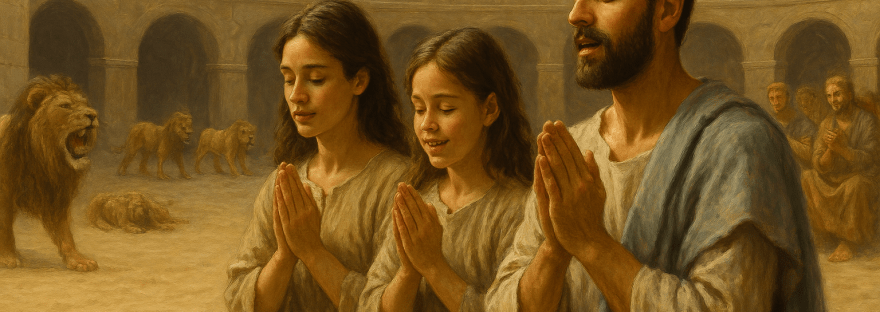
Imagine living in a city where following Christ could cost you your livelihood, your reputation, or even your life. In such a world, there was little room for pretending. A person’s daily conduct either confirmed or contradicted the faith they professed. This was one of the quiet strengths of the Ante-Nicene Church. They were known not for wealth or political influence but for lives that reflected the character of Christ. They sought to be trustworthy in business, faithful in marriage, generous toward the poor, and honest in their dealings with others. Their witness rested not only on what they proclaimed but on how they lived. Ignatius of Antioch encouraged believers to live in such a way that even those who opposed them would see the reality of their faith. Their integrity became one of the most compelling pieces of evidence of the transforming power of the gospel. This kind of life begins with a proper fear of the Lord.

Scripture tells us, “The fear of the Lord is the beginning of wisdom” (Proverbs 9:10). Biblically, fearing the Lord is not living in terror of Him. It is responding to His holiness with reverence, humility, and joyful obedience. It is remembering that every part of our lives is lived before the God who sees perfectly, loves completely, and judges righteously. That perspective changes the way we live when no one else is watching. The apostle Paul wrote that if anyone cleanses himself from what is dishonorable, “he will be a vessel for honor, sanctified and useful for the Master, prepared for every good work” (2 Timothy 2:21). God delights to use willing vessels whose hearts are yielded to Him. Our usefulness does not come from talent, charisma, or position, but from a life continually being shaped by His grace. This does not mean believers never fail. The early Christians were not perfect, and neither are we. Like every generation of God’s people, they battled temptation, confessed sin, and depended upon the mercy of Christ. Integrity is not sinless perfection. It is the humble practice of bringing our lives into the light, turning from sin when the Holy Spirit convicts us, and continuing to walk in obedience.

Perhaps you’ve struggled with the feeling that your private faithfulness goes unnoticed. Maybe you’ve wondered whether the unseen choices really matter. They do. The decision to speak truth when no one would know otherwise, to honor Christ in your work, to refuse bitterness, to guard your thoughts, to handle money honestly, or to ask forgiveness when you’ve sinned may never make headlines. Yet these quiet acts of obedience are precious in the sight of God. They shape our character, strengthen our witness, and prepare us to serve others with sincerity.

The early Church reminds us that the credibility of our message is closely connected to the integrity of our lives. While only the Holy Spirit can transform a heart, He often uses the faithful witness of ordinary believers whose words and actions reflect Christ’s character. As members of God’s royal priesthood, we are called to live before an audience of One. The world may never see every act of faithfulness, but our heavenly Father does. Every honest word. Every hidden prayer. Every act of repentance. Every quiet decision to obey. These are not small things in His Kingdom. They are the daily offerings of clean hands and pure hearts, brought before the One who is worthy of our wholehearted devotion.

Prayer

Father, You see not only my actions but also my heart. Create in me clean hands and a pure heart that honor You in both public and private. Help me to walk with integrity, to respond quickly to Your conviction, and to reflect the character of Christ in every area of my life. May my hidden faithfulness become a visible testimony to Your transforming grace. In Jesus’ name, Amen.
Faith Worthy of the Kingdom, Kingdom Discipleship

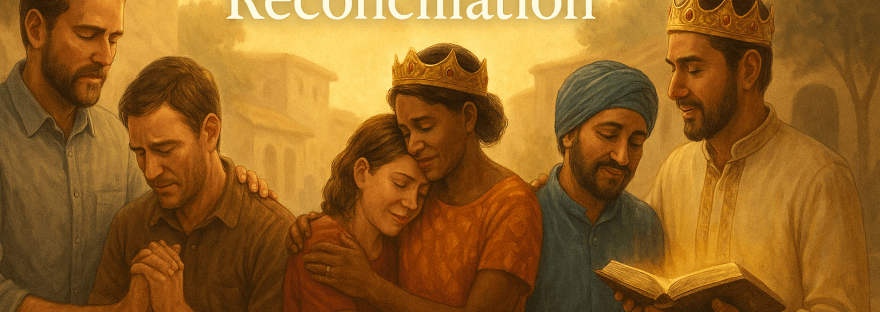
The Ministry of Reconciliation

Representing Christ to the World

From the Series: Ordinary Saints: Lessons from the Ante-Nicene Church

Scripture quotations are from the New King James Version®. Copyright © 1982 by Thomas Nelson. Used by permission. All rights reserved.

Most Christians have experienced the moment. A coworker asks why you have hope when life falls apart. A neighbor quietly shares that their marriage is crumbling. A family member wants to know why you continue to forgive someone who has hurt you. In those moments, we often wonder, What should I say? Yet before we ever speak, God has already given us our calling.

The apostle Paul writes, “Now all things are of God, who has reconciled us to Himself through Jesus Christ, and has given us the ministry of reconciliation” (2 Corinthians 5:18). Notice what Paul does not say. He does not reserve this ministry for pastors, missionaries, or church leaders. He gives it to every believer. The moment God reconciled us to Himself through Christ, He entrusted us with the privilege of inviting others to be reconciled to Him. This is the work of the royal priesthood.

Under the Old Covenant, priests stood before God on behalf of the people. They offered sacrifices, interceded in prayer, and taught God’s commands to Israel. Their ministry pointed forward to the coming of Jesus Christ, our perfect High Priest, who offered Himself once for all as the final sacrifice for sin. Because His work is complete, our priestly ministry looks different. We do not offer sacrifices for sin. We proclaim the One who already has.

Paul continues, “We are ambassadors for Christ, as though God were pleading through us: we implore you on Christ’s behalf, be reconciled to God” (2 Corinthians 5:20). An ambassador does not represent himself. He represents the king who sent him. That truth shaped the lives of the earliest Christians. The believers of the Ante-Nicene Church understood that they belonged to another Kingdom. They did not seek influence through political power or social status. Instead, they represented Christ wherever He placed them, in homes, marketplaces, workshops, prisons, and even courtrooms. Their witness extended far beyond their words. They cared for widows who had no family. They welcomed abandoned infants whom Roman society had discarded. They fed the hungry, visited prisoners, and prayed for those who persecuted them. When sickness swept through their cities, many remained behind to care for the suffering while others fled. Their lives became visible demonstrations of the Gospel they proclaimed. Tertullian described the remarkable effect this had on the surrounding world. Even unbelievers observed the Christians’ extraordinary love for one another. Their compassion, humility, and peace became powerful evidence that Christ had truly transformed them. This reminds us that reconciliation is more than explaining the Gospel. It is living in such a way that people catch a glimpse of the Savior we proclaim.

Jesus said, “Let your light so shine before men, that they may see your good works and glorify your Father in heaven” (Matthew 5:16). Sometimes that means speaking the truth with gentleness. Sometimes it means offering forgiveness when revenge seems justified. Sometimes it means sitting beside someone who is grieving, serving quietly without recognition, or extending kindness where none is expected. Every act of faithful obedience reflects the character of our King. That does not mean everyone will respond positively. Many of the early Christians were rejected, imprisoned, and even martyred for their testimony. Yet they refused to answer hatred with hatred because they remembered that they, too, had once been enemies of God until His grace reached them.

Their goal was never to win arguments. It was to faithfully represent Christ. That remains our calling today. Every conversation, every act of kindness, every word of truth, and every expression of mercy provides an opportunity to point someone toward the God who reconciled us to Himself through His Son.

We cannot change another person’s heart. Only God can do that. But we have the privilege of faithfully representing the One who can. As members of God’s royal priesthood, we are not merely recipients of His grace. We are ambassadors of His Kingdom, entrusted with the beautiful ministry of reconciliation until our King returns.

Faith Worthy of the Kingdom, Kingdom Discipleship

Faith That Shook Empires

The Legacy of the Ante-Nicene Christians

From the Series: Ordinary Saints: Lessons from the Ante-Nicene Church

Scripture quotations are from the New King James Version®.
Copyright © 1982 by Thomas Nelson. Used by permission. All rights reserved.

History often celebrates emperors, generals, and philosophers. Their names fill textbooks, their monuments still stand, and their accomplishments are remembered centuries later. Yet one of the greatest movements in history was not built by emperors or politicians. It was built by ordinary people. They were merchants and fishermen, widows and slaves, soldiers who left the army after coming to Christ, craftsmen who worked with their hands, and parents raising children in a culture increasingly hostile to their faith. They owned no cathedrals, commanded no armies, and held little political influence. Many lived under the constant threat of imprisonment or death. Yet within just a few generations, these ordinary believers helped carry the gospel throughout the Roman Empire. How? The answer was not superior education, political power, or organizational genius. It was lives transformed by Jesus Christ.

The Christians who lived between the time of the apostles and the Council of Nicaea in AD 325 are often called the Ante-Nicene Christians. They were not perfect, nor were they inspired in the same way as the writers of Scripture. Like believers today, they faced disagreements, false teachers, and cultural pressures. But they also occupied a unique place in history. Many learned from men who had been taught by the apostles themselves. They worshiped in the same cities Paul had visited. They spoke the common Greek language of the New Testament and lived in the cultural world in which the gospel first spread. While we must always test their writings by Scripture, they offer a valuable window into how the earliest generations of Christians understood and practiced their faith.

Imagine gathering with believers after a long day’s work. There is no church building waiting for you, no sound system, no comfortable auditorium. Instead, you quietly enter a family’s home where brothers and sisters have assembled to pray, sing, read the Scriptures, and encourage one another. Outside, neighbors may mock you. Authorities may be watching. If persecution breaks out, someone in that room may never return. Still, you gather. Not because it is safe. Because Christ is worthy. That was the rhythm of life for many early Christians.

Jesus had promised that the Holy Spirit would teach His followers and bring His words to remembrance (John 14:26). John reminded believers that the Spirit would guide them in the truth they had received (1 John 2:27). The early church devoted itself to the apostles’ teaching, carefully preserving the faith “once for all delivered to the saints” (Jude 3). Their confidence rested not in new revelations but in the unchanging gospel entrusted to them.

What made these believers remarkable was not merely what they believed but how they lived. One of the strongest testimonies about the early church did not come from Christians praising themselves. It came from the people who opposed them. Around AD 197, Tertullian defended Christians against false accusations in his Apology. Describing what unbelievers observed, he wrote, “See how they love one another.” That reputation was earned through sacrificial care for widows, orphans, the poor, prisoners, and even abandoned infants. Justin Martyr and Aristides likewise described communities known for generosity and compassion.

More than a century later, even Emperor Julian, who sought to restore paganism—could not ignore what he saw. Frustrated by the church’s influence, he admitted that Christians cared not only for their own poor but for pagan neighbors as well. Their love had become impossible to dismiss. This was exactly what Jesus had said would happen. “By this all will know that you are My disciples, if you have love for one another” (John 13:35). Their witness extended beyond acts of compassion. They saw themselves as servants of Christ before they were citizens of Rome. Paul called believers “slaves of God” (Romans 6:22). Peter described them as “sojourners and pilgrims” (1 Peter 2:11). They understood themselves to be ambassadors for Christ (2 Corinthians 5:20), representing another Kingdom while living within the Roman Empire. Because of that allegiance, they refused to worship Caesar, even when a pinch of incense could have spared their lives. Many accepted imprisonment, torture, and execution rather than deny the Lord who had died and risen for them. Their courage did not grow from human determination. It grew from their conviction that Jesus truly meant what He taught in the Sermon on the Mount. Loving enemies, forgiving those who persecuted them, seeking first the Kingdom of God; these were not lofty ideals reserved for exceptional Christians. They were the normal pattern of discipleship. That may be the greatest challenge they leave for us today.

The modern church possesses resources that the early believers could scarcely have imagined. We have church buildings, seminaries, Bible software, podcasts, conferences, and instant access to Scripture in countless translations. Yet the question remains: Are we as captivated by Christ as they were? The purpose of this series is not to romanticize the Ante-Nicene Christians or place them on a pedestal. They were sinners saved by grace, just as we are. Their authority is not equal to Scripture, and where they departed from biblical truth, Scripture must always correct them. But their lives invite us to ask honest questions. What did they understand about following Jesus that produced such courage? Why were even their enemies astonished by their love? What can we learn by comparing their lives, not uncritically, but carefully, with the teaching of God’s Word?

Over the coming weeks, we’ll explore their writings, worship, evangelism, view of discipleship, and the Scriptures that shaped them. Throughout this journey, the Bible will remain our final authority. The Ante-Nicene Christians are not our standard; Christ is.

If their story teaches us anything, it is this: God has always changed the world through ordinary saints who were completely surrendered to an extraordinary Savior.

Faith Worthy of the Kingdom, Kingdom Discipleship

Worship as a Way of Life: Living as a Daily Offering Before God

From the Series: Ordinary Saints: Lessons from the Ante-Nicene Church

Scripture quotations are from the New King James Version®.
Copyright © 1982 by Thomas Nelson. Used by permission. All rights reserved.

Walk into almost any Church on a Sunday morning, and if someone asks, “When does worship begin?” most people would probably look toward the musicians gathering on the platform. For many Christians, worship has become closely associated with singing, a meaningful and beautiful expression of praise, but often viewed as something that begins with the first song and ends with the final prayer.

The New Testament paints a much larger picture. When the apostle Paul wrote to the believers in Rome, he had already spent eleven chapters proclaiming the mercy of God revealed through Jesus Christ. He had explained humanity’s need for salvation, the gift of justification by faith, the believer’s new life in Christ, and God’s unfolding plan of redemption. Only then did he turn to the practical response every believer is called to make.

“Therefore I urge you, brethren, by the mercies of God, to present your bodies a living and holy sacrifice, acceptable to God, which is your spiritual service of worship” (Romans 12:1).

Paul did not describe worship as an event to attend or a song to sing. He described a life offered to God. Every believer is invited to place their entire life upon the altar—not as a sacrifice that dies, but as one that lives each day for the glory of Christ.

This language would have immediately reminded Paul’s readers of the sacrifices offered under the Old Covenant. Animals were placed upon the altar as acts of worship and devotion to God. Under the New Covenant, however, Christ became the once-for-all sacrifice for sin. Because His work is complete, believers no longer bring sacrifices for atonement. Instead, we offer ourselves in grateful response to His mercy. Every area of life becomes an opportunity to honor the One who gave Himself for us.

True worship, therefore, begins long before we sing our first hymn. Jesus rebuked those who honored God with their lips while their hearts remained far from Him (Matthew 15:8). His words remind us that worship has always been a matter of the heart before it is an expression of the voice. Songs, prayers, and gatherings are beautiful when they flow from lives surrendered to God, but they cannot replace genuine devotion.

The Christians of the Ante-Nicene Church understood this well. Imagine entering a Christian home near the close of the second century. Believers gather quietly before sunrise or after the day’s work has ended. They sing psalms, read from the Scriptures, pray together, and share the Lord’s Supper. Yet when the gathering concludes, worship does not end.

A merchant returns to his shop determined to conduct his business with honesty because he serves Christ above all. A mother patiently teaches her children the Scriptures around the evening meal. A widow quietly cares for those who are suffering. Neighbors open their homes to travelers and those in need. Their worship continues because their lives belong to God.

Clement of Alexandria captured this beautifully when he encouraged believers, “Let your life be a hymn to God; pure in word, deed, and heart.” Worship was never intended to be confined to a particular place or hour. It was meant to shape every conversation, every decision, every act of service, and every ordinary responsibility. That truth remains just as relevant today.

When we perform our work with integrity, we honor Christ. When we forgive someone who has wronged us, we reflect His mercy. When we care for our families, show kindness to a stranger, give generously without seeking recognition, or endure hardship with steadfast hope, we are offering our lives back to the God who first loved us. As Paul reminds us elsewhere, whatever we do, we are to do it heartily, as for the Lord rather than for men (Colossians 3:23).

Perhaps you’ve wondered whether your worship matters when your week feels ordinary. Maybe your days are filled with meetings, laundry, doctor’s appointments, school pickups, or caring for aging parents. None of those moments may seem especially spiritual. But God is near to you in each of these daily tasks, and He delights in your faithfulness, even when no one else sees. Your quiet acts of love and perseverance do not go unnoticed by Him. You are deeply valued, and His presence fills even the most routine moments with purpose.

Yet Scripture gently reminds us that faithfulness in ordinary life is never ordinary to God. For example, when you bring a meal to a neighbor who is sick, or offer to help a friend with errands, these simple acts become offerings of worship when done out of love for Christ. Even taking time to encourage a weary coworker or listening patiently to someone in need honors God and reflects His kindness.

The meal prepared with gratitude, the patient conversation with a struggling friend, the unseen prayer offered before the day begins, and the quiet decision to obey Christ when no one else is watching are all acts of worship when they flow from a heart devoted to Him.

The beauty of this kind of worship is that it belongs to every believer. It does not require a stage, a microphone, or an audience. It simply requires a heart transformed by the mercy of God and desiring to honor Him in every circumstance.

The early Church understood that worship was not measured by the volume of one’s singing but by the faithfulness of one’s life. Justin Martyr observed that the sacrifices offered by Christians were no longer bulls and goats but thanksgiving, praise, and lives marked by faithful obedience. Their worship was not confined to their gatherings; it followed them into their homes, workplaces, marketplaces, and neighborhoods. The same invitation stands before us today.

Every moment becomes an opportunity to glorify God. Every act of obedience becomes an offering of praise. Every ordinary day becomes sacred when it is lived for Christ.

That is the worship our Great High Priest makes possible, not merely voices lifted in song for an hour each week, but lives joyfully surrendered to the One who loved us and gave Himself for us.

Prayer

Father, thank You for the mercy You have shown through Jesus Christ. Teach me to offer my whole life as an act of worship. Whether I am working, resting, serving, or enduring hardship, help me to live in a way that honors You. May my heart remain close to You, and may every ordinary moment become an opportunity to glorify Your name. Through Christ, my Great High Priest, Amen.

Take a moment to talk to God in your own words. Invite Him into your day and share with Him what is on your heart. Feel free to personalize this prayer or add your own thoughts, asking God to help you worship Him through every part of your life.

Faith Worthy of the Kingdom, Kingdom Discipleship

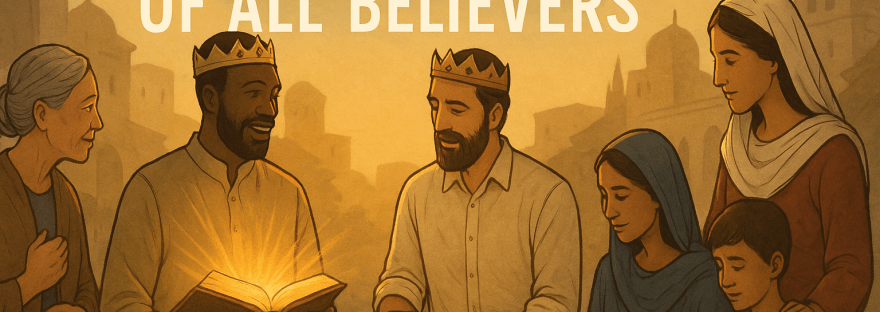
The Biblical Priesthood of All Believers

From the Series: Ordinary Saints: Lessons from the Ante-Nicene Church

Scripture quotations are from the New King James Version®.
Copyright © 1982 by Thomas Nelson. Used by permission. All rights reserved.

On any given Sunday morning, it’s easy to assume that ministry belongs to the people standing at the front of the church. Our attention naturally turns to the pastor preaching the sermon, the worship team leading in song, or the missionary sharing stories from abroad. Meanwhile, the woman quietly praying over a friend after the service, the father opening the Scriptures with his children around the dinner table, the retiree visiting someone in the hospital, or the young believer encouraging a coworker in Christ often goes unnoticed.

Yet if we were to ask the apostle Peter who was truly engaged in ministry, his answer might surprise us.

Writing to believers scattered throughout Asia Minor during a time of growing hardship, Peter reminded ordinary Christians of an extraordinary truth:

“You are a chosen generation, a royal priesthood, a holy nation, His own special people, that you may proclaim the praises of Him who called you out of darkness into His marvelous light” (1 Peter 2:9).

These believers were not religious elites. They were merchants, craftsmen, parents, laborers, widows, and servants—people living faithfully in ordinary places under difficult circumstances. Yet Peter did not define them by their occupations or their hardships. He reminded them of their new identity in Christ. Through Him, they had become part of God’s royal priesthood, a people set apart to worship Him, represent Him, and proclaim His greatness to the world.

That same truth remains just as powerful today. Before we identify ourselves by our careers, family roles, accomplishments, or even our place within a local congregation, Scripture reminds us that our deepest identity is found in Christ. Everything we do flows from who we have become through Him.

To appreciate the richness of Peter’s words, we must first understand what a priest represented under the Old Covenant. Priests did not volunteer for this ministry. God called them, cleansed them, and consecrated them for His service. They taught His Law, offered sacrifices, led worship, and interceded on behalf of the people. Their lives pointed beyond themselves to the holiness of God and humanity’s need for reconciliation with Him.

Everything changed with the coming of Jesus Christ and the establishment of the New Covenant.

As our Great High Priest, Christ fulfilled what the Old Covenant priesthood could only foreshadow. Through His once-for-all sacrifice, He opened the way for every believer to draw near to God with confidence. John celebrates this reality in Revelation, declaring that Christ “has made us kings and priests to our God” (Revelation 5:10). Believers do not replace Christ’s priesthood; rather, our ministry flows from His perfect and eternal priesthood.

Because of Him, the sacrifices we now bring are no longer animals laid upon an altar but lives willingly surrendered to God. Paul describes the Christian life as a living sacrifice, while the writer of Hebrews speaks of continual sacrifices of praise and acts of generosity. Under the New Covenant, the priestly work of God’s people is no longer performed with animals on an altar but with lives surrendered to Christ. We pray for others, proclaim the gospel, encourage fellow believers, extend mercy, and participate in Christ’s ministry of reconciliation. These are not separate callings reserved for pastors or missionaries. They are the natural expression of every believer’s new identity in Christ.

Imagine walking into a Christian gathering sometime during the middle of the second century. There is no cathedral, no stage, and no elaborate production. Families gather inside a modest home. Someone stands to read from a copy of one of the apostles’ letters or a Gospel that has been carefully passed from congregation to congregation. Psalms are sung together. Bread is broken in remembrance of Christ. An elder opens the Scriptures and encourages the congregation to remain faithful despite growing persecution.

Then the gathering ends.

The ministry, however, does not.

The widow continues caring for those in need. Merchants carry the gospel into the marketplace through honest work and gracious speech. Parents teach their children the Scriptures around the evening meal. Neighbors welcome strangers into their homes. Hospitality becomes an expression of Christ’s love, and ordinary occupations become opportunities to bear witness to His grace. Clement of Rome reflected this shared responsibility when he wrote, “Let each one serve as he has been gifted, for we are all part of one priesthood under the Lord.” While responsibilities differed, every believer understood that following Christ meant participating in His mission.

Perhaps you’ve quietly assumed that ministry isn’t really your calling because you’ve never preached a sermon, led a Bible study, or served in an official position. Maybe you’ve wondered whether your quiet acts of faithfulness matter because no one seems to notice them.

The New Testament offers wonderfully freeing news.

Christ never called most believers to stand behind a pulpit.

He called every believer to follow Him faithfully wherever He placed them.

Living as a royal priesthood is often expressed in the ordinary moments of life. It may look like patiently teaching a child to forgive, showing integrity when no one else is watching, praying faithfully for a struggling friend, welcoming a lonely neighbor into your home, or encouraging a weary believer with the promises of Scripture. The world may see simple acts of kindness, but God sees hearts faithfully reflecting His Son.

At times, we all feel inadequate for such a calling. Yet our priesthood is not something we earn through spiritual achievement. It is received through our union with Christ. As we abide in Him, the Holy Spirit continues to shape our character, strengthen our faith, and prepare us for every good work. Growth is often gradual. Like the believers who came before us, we learn faithfulness one act of obedience at a time, discovering that God’s strength is made perfect in our weakness.

This priesthood is also deeply communal. God never intended His people to serve Him in isolation. As members of one Body, we strengthen one another through prayer, encouragement, hospitality, discipleship, and bearing one another’s burdens. Whether offering a listening ear, extending practical help, opening our homes, or faithfully praying for another believer, we remind one another that no one walks alone. As each member faithfully embraces the opportunities God provides, the whole Church is strengthened, and Christ becomes more visible through His people.

The priesthood of all believers is not about elevating ourselves. It is about magnifying our Great High Priest. Every prayer whispered in faith, every meal shared in hospitality, every child taught the Scriptures, every quiet act of service offered in Christ’s name becomes an act of worship. That was the heartbeat of the early Church. It can become ours again—not by creating more programs or seeking greater recognition, but by recovering the beautiful truth that ordinary saints, walking closely with an extraordinary Savior, faithfully reflect His Kingdom wherever He leads them.

Prayer

Lord, thank You for calling me into Your royal priesthood through Christ. Help me remember that my identity is found in You before anything else. Teach me to serve faithfully in the ordinary moments of life, trusting that every act of obedience offered in love brings honor to Your name. May my life reflect the grace and truth of my Great High Priest, Jesus Christ. Amen.

Faith Worthy of the Kingdom, Kingdom Discipleship

More than Ordinary Living as a Royal Priesthood

From the Series: Ordinary Saints: Lessons from the Ante-Nicene Church

Scripture quotations are from the New King James Version®.
Copyright © 1982 by Thomas Nelson. Used by permission. All rights reserved.

When the apostle Peter wrote his first letter, he addressed believers who had been scattered throughout Asia Minor because of growing hardship and persecution (1 Peter 1:1). Many were ordinary men and women living far from positions of influence or prestige. Some faced rejection by their communities, uncertainty about the future, and pressure to abandon their faith. To these believers, Peter did not begin by reminding them of what they had lost. Instead, he reminded them of who they had become through Jesus Christ.

“You are a chosen generation, a royal priesthood, a holy nation, His own special people, that you may proclaim the praises of Him who called you out of darkness into His marvelous light” (1 Peter 2:9, NKJV).

These words were far more than encouragement during difficult times; they declared a new identity rooted in Christ. Before, these believers thought of themselves in terms of their occupations, social standing, or circumstances; now they were to understand that they belonged to God. Through Christ, they had become part of His royal priesthood; a people set apart to worship Him, represent Him, and proclaim His excellencies to the world.

That same truth remains just as powerful today. Before we think of ourselves as parents, employees, students, neighbors, or even members of a local church, Scripture reminds us that our first identity is found in Christ. Everything we do flows from who we have become through Him.

To appreciate the richness of Peter’s words, it helps to remember the role of the priest under the Old Covenant. Priests did not choose this ministry for themselves. God called them, cleansed them, and consecrated them for His service. They taught His Law, offered sacrifices, led the people in worship, and interceded on their behalf. Their lives continually pointed beyond themselves to the holiness of God and humanity’s need for reconciliation with Him.

Through the finished work of Christ, our Great High Priest, that ministry has been transformed under the New Covenant. Priestly service is no longer confined to one tribe within Israel. John celebrates this truth in Revelation, declaring that Christ “has made us kings and priests to our God” (Revelation 5:10). Every believer now shares in the privilege of drawing near to God through Christ and serving Him according to the gifts He has graciously given.

This does not mean believers replace Christ’s priesthood. Rather, our ministry flows from His perfect and eternal priesthood. Because He offered Himself once for all as the perfect sacrifice for sin, we no longer bring animal sacrifices before God. Instead, we present ourselves as “a living sacrifice, holy, acceptable to God” (Romans 12:1). We intercede for others in prayer, proclaim the gospel as Christ’s ambassadors, encourage fellow believers, and participate in His ministry of reconciliation. These are not separate callings reserved for a select few; they are natural expressions of the new identity every believer has received in Christ.

The Christians of the Ante-Nicene Church understood this well. Although they recognized pastors, elders, and deacons within the local assembly, they also understood that every believer had a part to play in the life and mission of the Church. Ministry was never viewed as the responsibility of church leaders alone. Ordinary men and women prayed for one another, cared for widows and orphans, welcomed strangers into their homes, shared the gospel with their neighbors, and strengthened fellow believers during seasons of persecution. Clement of Rome reflected this shared responsibility when he wrote, “Let each one serve as he has been gifted, for we are all part of one priesthood under the Lord.” His words remind us that while our gifts differ, our calling to serve Christ belongs to every member of His Body.

That same calling continues today. Living as a royal priesthood is often expressed in the ordinary moments of life rather than the extraordinary ones. A parent patiently teaching a child to forgive, an employee choosing integrity when no one else is watching, a neighbor quietly serving someone in need, or a believer faithfully praying for a struggling friend may never receive public recognition. Yet these ordinary acts become sacred offerings when they are done in love and obedience to Christ. The world may see simple acts of kindness, but God sees hearts faithfully reflecting His Son.

At times, believers may feel inadequate or wonder whether they are truly equipped for such a calling. The good news is that our priesthood is not earned through spiritual achievement. It is received through our union with Christ. As we abide in Him, the Holy Spirit continues to shape our character, strengthen our faith, and prepare us for every good work. Growth is often gradual. Like the early believers, we learn faithfulness one step of obedience at a time, discovering that God’s strength is made perfect in our weakness.

The beauty of this priesthood is also found in the community it creates. God never intended His people to serve Him in isolation. As members of one Body, we strengthen one another through prayer, encouragement, hospitality, discipleship, and bearing one another’s burdens. Whether gathered in homes, meeting as a local congregation, or simply walking alongside one another through the ordinary rhythms of life, believers reflect Christ most clearly when they serve together in love. As each person faithfully exercises the gifts God has entrusted to them, the whole Church is strengthened, and His character becomes more visible to the world.

The early Church reminds us that a royal priesthood is not defined by titles, positions, or public recognition. It is revealed in lives faithfully surrendered to Christ. Every act of worship, every prayer offered in faith, every word of encouragement, and every quiet act of service bears witness to the One who called us out of darkness into His marvelous light.

As we reflect on Peter’s words, we are invited to see ourselves as God sees us, not merely as individuals striving to live moral lives, but as people set apart for His purposes. Our calling is not rooted in what we have accomplished but in what Christ has accomplished on our behalf. As we walk with Him each day, our ordinary lives become opportunities to reflect His extraordinary grace. May we embrace this calling with humility and gratitude, serving faithfully wherever He has placed us, so that in both our worship and our witness, Christ is made known.

Prayer

Lord, thank You for calling me into Your royal priesthood through Christ. Teach me to depend upon You each day, serving faithfully wherever You have placed me. May my life reflect Your holiness, Your compassion, and Your truth, so that others may see Your grace through me. Amen.

Faith Worthy of the Kingdom, Kingdom Discipleship

Revival Begins in the Secret Place

Why Awakening Starts with Personal Prayer and Repentance

From the Series: Ordinary Saints: Lessons from the Ante-Nicene Church

Scripture quotations are from the New King James Version®.
Copyright © 1982 by Thomas Nelson. Used by permission. All rights reserved.

Every great move of God begins in a hidden place.

Before churches are filled, before nations are stirred, before the lost are awakened, God first calls His people into the secret place. Revival does not begin in the crowd; it begins where one heart is humbled and one soul is awakened. It begins with one believer on their knees crying, “Lord, change me.” If you desire to see awakening, start today by setting aside a quiet moment each day for personal prayer and honest reflection before God. Let that small step become the beginning of deeper transformation.

“But when you pray, go into your room and shut the door and pray to your Father who is in secret. And your Father who sees in secret will reward you.”— Matthew 6:6

The early Christians lived in hostile territory. There were no stages, no spotlights, and no media. Their strength came from personal communion with God in solitude and silence. That was where the fire was ignited—and what sustained them through persecution and pressure.

“Withdraw often to your chamber, and there seek the face of the Lord in prayer and fasting, so that your soul may be strengthened.” — Didache, ch. 4

They were not looking for revival. They were looking for God. And He brought revival with Him.

True Revival Requires Repentance

“If My people who are called by My name humble themselves, and pray and seek My face and turn from their wicked ways…” — 2 Chronicles 7:14

Revival is not a feeling—it is a return to holiness. It does not begin with the world; it begins with the Church. And it always starts with repentance.

The Holy Spirit convicts us, not to shame, but to cleanse. He draws us to the Father—not with condemnation, but with love and truth. If you sometimes feel distant from God or discouraged in your spiritual journey, know you are not alone. Many believers struggle with these feelings. Do not let discouragement or a sense of inadequacy hold you back. Instead, persist in seeking Him, trusting that God welcomes even your weakest prayers with compassion.

“The Lord visits the humble and the contrite; let the one who grieves over his sin rejoice, for the Spirit will heal him.” — Hermas, Mandate 9

Many desire the effects of revival—power, miracles, conversions—without the cost. But the early Church understood this: the upper room comes before Pentecost. God moves through vessels emptied in secret. Yet, those early believers did not pursue God alone. They gathered together in unity, praying and humbling themselves side by side. If you long for true awakening, consider joining with others in your community or church. By seeking God together, repenting as one body, and praying with one voice, we invite His Spirit to move in greater measure.

They prayed. They fasted. They confessed their sins. Confession was not only communal or formal; it took many forms. Today, you can practice confession by bringing your sins privately before God in prayer, sharing honestly with a trusted friend or mentor, or joining together in small groups for mutual encouragement and support. However you choose to confess, the goal is openness before God and a heart willing to be changed. They waited. The Spirit came, and revival followed.

Faith Worthy of the Kingdom, Kingdom Discipleship

Walking in the Spirit: Living What We Teach

From the Series: Ordinary Saints: Lessons from the Ante-Nicene Church

Scripture quotations are from the New King James Version®.
Copyright © 1982 by Thomas Nelson. Used by permission. All rights reserved.

The heart of Christian maturity is not measured by head knowledge alone, but by the lived reality of obedience, a life truly transformed by and dependent upon the Holy Spirit. This is the main mark of a disciple, and makes all teaching credible. The early Church, especially before Constantine, became known for aligning their beliefs and actions. They lived simply, humbly, and sacrificially, not by willpower, but as the visible result of walking in the Spirit. Today, this same reality is expressed in ordinary moments when someone chooses to forgive a colleague after a harsh word, offers a helping hand to a struggling neighbor, or responds to an insult with patience and kindness. Such choices, though quiet, reveal the Spirit’s work in daily life. As Paul wrote: “If we live in the Spirit, let us also walk in the Spirit” (Galatians 5:25). This was the daily pattern for believers, not an unreachable ideal, even in a hostile world.

Believers have been drawn to the gifts of the Spirit, and rightly so; Scripture values them when exercised in love and order. Yet the surest evidence of maturity remains the fruit the Spirit produces in the disciple’s life: “But the fruit of the Spirit is love, joy, peace, longsuffering, kindness, goodness, faithfulness, gentleness, self-control. Against such there is no law” (Galatians 5:22–23). A person may have remarkable gifts yet still display immaturity. But no one can walk consistently in the Spirit and remain unchanged. The fruit of the Spirit is not manufactured by effort alone; it grows as the believer abides in Christ, allowing the Spirit to shape desires and actions. Abiding in Christ means intentionally staying connected to Him each day through regular prayer, meditation on Scripture, and worship. These practices help the believer remain attentive to His presence, receive guidance, and be renewed by His truth. Over time, what once felt unnatural, such as patience under trial, gentleness in conflict, or self-control amid temptation, becomes instinctive, a quiet testimony of a life yielded to God.

Walking in the Spirit is not a singular crisis experience but a daily posture of dependence. The apostle urges believers to “put off, concerning your former conduct, the old man which grows corrupt according to the deceitful lusts, and be renewed in the spirit of your mind” (Ephesians 4:22–23). Renewal comes through attentive listening to conviction, abiding in Christ, and following His leading, even when costly or uncomfortable. The early Christians knew this well. They did not just speak of dying to self; many lived it, even to martyrdom. As one early voice expressed it, “If the Spirit of God dwells in you, He will show Himself in your deeds, not in your words only” (Shepherd of Hermas, Mandate 5). The Christian life deepens not through bursts of zeal but quiet, repeated acts of surrender such as choosing honesty, extending kindness, and remaining faithful under pressure.

This daily surrender can be practiced in simple, intentional ways: beginning each morning with a prayer of surrender, asking God to lead your thoughts and actions; pausing during the day to listen for His prompting before you respond; and closing the evening by reflecting on the choices made, seeking forgiveness where needed, and thanking God for His faithfulness. These small, consistent acts of reliance form the quiet rhythm by which the Spirit transforms the heart and shapes a life of genuine discipleship.

The world has always noticed the gap between Christian profession and conduct. Hypocrisy wounds the Church’s witness. Yet early believers, though mocked for their customs and loyalty, were rarely accused of double lives. Their reputation rested on visible integrity: love extended to enemies, honesty upheld at personal loss, purity amid corruption, and faithfulness under threat. Ignatius of Antioch exhorted, “Do not be called Christians only in name, but in action and truth.” For him and his contemporaries, the name “Christian” was both privilege and responsibility, to be lived rather than merely claimed.

In every generation, tension between profession and practice remains. The early Church reminds us that the Holy Spirit is not given merely for comfort or power, but to conform us to Christ’s image. Sanctification is neither automatic nor optional; it is the Spirit-led journey of putting off the old and walking in the new. As we reflect on their witness, we are invited to examine our steps. Are our lives marked by the fruit of the Spirit? Do our choices reflect a renewed mind and a will aligned with God’s? The same Spirit who indwelt believers in the Ante-Nicene era dwells in us, patiently leading those who will follow.

Spiritual growth is not meant to be a solitary endeavor. Consider sharing your journey with others, inviting mutual prayer, encouragement, and honest conversation about the challenges and victories on the path. When we walk together, pray for one another, and hold each other accountable in love, we create a supportive community where transformation is nurtured and sustained.

May we, like those before us, walk in the Spirit, steadily, humbly, and with integrity, so our lives adorn the gospel. In this abiding obedience, the Church finds its deepest joy and clearest testimony.

Faith Worthy of the Kingdom, Kingdom Discipleship

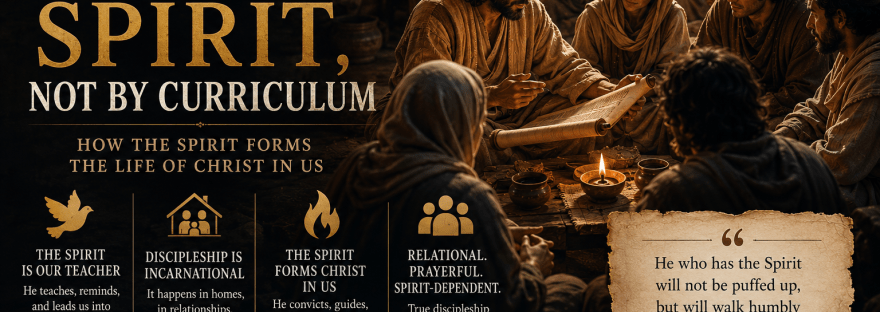
Discipleship by the Spirit, Not by Curriculum

How the Spirit Forms the Life of Christ in Us

From the Series: Ordinary Saints: Lessons from the Ante-Nicene Church

Scripture quotations are from the New King James Version®.
Copyright © 1982 by Thomas Nelson. Used by permission. All rights reserved.

Discipleship is not just about workbooks, programs, or structured courses. While these tools have value, true discipleship is a deeper, lifelong process led by the Spirit. It involves being transformed into the image of Jesus Christ through surrender, obedience, and daily abiding in Him. But what does this look like in everyday life? Simple daily practices can help. You might begin your morning by inviting the Spirit to guide your words and actions. Pause regularly to pray or recall Scripture throughout your day. Choose to obey a gentle prompting to serve someone in need or forgive someone who has hurt you. End your day by reflecting in prayer, asking God to reveal where you need to grow and giving thanks for His presence. Practicing small acts of surrender, obedience, and trust creates space for the Spirit to shape you into Christ’s likeness. This distinction matters because it is possible to gather information about Christ through programs yet remain untransformed by Him, whereas Spirit-led discipleship leads to real change.

The early Church knew this truth well. They had no printed study guides or official discipleship systems. They did not depend on complex programs. Yet they raised courageous, holy, and faithful believers who were rooted in Christ. Why? Their discipleship was grounded in Scripture, shaped by the Spirit, and lived out through daily surrender and obedience.

Jesus promised His followers:

“But the Helper, the Holy Spirit, whom the Father will send in My name, He will teach you all things…” (John 14:26)

The Holy Spirit is essential, not optional, in discipleship. Without the Spirit, discipleship can become about information rather than transformation. Knowledge may grow, but the heart can stay the same. Someone might learn biblical words, memorize doctrine, and participate in church activities, yet remain spiritually immature. The Spirit brings conviction, humility, obedience, and real change.

You may pause here and recognize something deeply personal. “I’ve learned a lot about Christianity, but sometimes I still feel unchanged inside.” That realization can feel discouraging, but it is also important. Feeling this way is a normal part of the journey, and you are not alone. When you notice this gap between what you know and how you feel, take it to God in prayer and ask Him to keep shaping your heart. If needed, consider reaching out to a trusted friend or spiritual mentor to pray with you and offer support. Scripture never presents discipleship as mere intellectual growth. God’s goal is not simply informed minds, but transformed lives.

The Spirit shapes our hearts in ways the world never could. He does not just give information. He forms Christ within His people. He reminds them of Jesus’ words, convicts them of sin, strengthens them in their weakness, and leads them into the truth through God’s Word.

John writes:

“But the anointing which you have received from Him abides in you… and His anointing teaches you concerning all things…” (1 John 2:27)

This does not mean teachers are unnecessary. God sends pastors, elders, and teachers to help the Church. But good teaching always points people to trust Christ and depend on the Holy Spirit, not just human systems.

The early Christians understood this balance well. They valued instruction, but they recognized that the Spirit was the true Teacher behind every faithful word spoken. Their discipleship was also deeply relational.

Today, discipleship can become institutionalized. Classes, schedules, and programs often contain it. But in the early Church, discipleship happened during daily life. It took place in homes with meals and prayer. It happened during suffering and hardship. Mature believers walked with younger ones, showing faithfulness day by day. They learned Christ not only through sermons but through watching one another endure suffering, extend forgiveness, practice hospitality, and remain steadfast in prayer.

You may reflect, “I long for that kind of authentic discipleship.” Many believers feel that tension today. While programs can organize information, they cannot create the spiritual family, shared burdens, or Spirit-filled relationships that come from true discipleship. Discipleship is formed through proximity, humility, patience, and genuine care within the Body of Christ.

One way to foster this kind of community is to participate in small groups that meet regularly for prayer, sharing, and mutual encouragement. Opening your home for meals, joining accountability partnerships, or gathering a few people to study Scripture and pray together can help deepen relationships. Serving together on ministry teams, visiting those in need, or simply spending time with others outside of formal church events builds real connection. Creating space in church life for honest conversations and shared prayer helps nurture authentic spiritual friendships and provides practical support for the journey of faith. This is why the early Church emphasized character so strongly.

The Spirit does not produce prideful, self-exalting disciples. He forms humility, servanthood, and love within believers. As the Shepherd of Hermas observed:

“He who has the Spirit will not be puffed up, but will walk humbly and serve others.”

The evidence of spiritual maturity is not merely knowledge; it is Christlike character.

Paul expressed this beautifully when he wrote:

“My little children, for whom I labor in birth again until Christ is formed in you…” (Galatians 4:19)

That is the true goal of discipleship: Christ formed within His people.

The Holy Spirit works with patience in believers. He shapes the life of Jesus in them. He convicts sin, renews the mind, grows spiritual fruit, and gives power to obey. He teaches not only Christ’s words, but His ways.

No curriculum alone can produce love, joy, peace, patience, kindness, goodness, faithfulness, gentleness, or self-control. While programs may impart biblical concepts, only abiding in Christ produces spiritual fruit, contrasting external teaching with internal transformation. Only abiding in Christ through the Spirit can.

You may quietly wonder, “Why does spiritual growth sometimes feel slow?” Discipleship is not instant. Formation takes time. Slow growth is not a sign of failure but rather a normal and purposeful part of God’s process. The Spirit often works deeply and patiently. Even in seasons when change feels slow, God is still at work below the surface, shaping believers through ordinary obedience, hidden prayer, trials, correction, and perseverance. Remember how God formed Joseph in the darkness of prison before raising him into leadership, or how Moses spent years in the wilderness before stepping into his calling. Growth is seldom as dramatic as people expect, but just as in Scripture, God faithfully brings fruit in His timing. Over time, though, the evidence becomes visible. And importantly, believers are not meant to walk this process alone.

The Spirit forms disciples in the Body of Christ. The early Church prayed together, corrected and encouraged one another, and carried each other’s burdens. Spirit-led discipleship thrives in communities where believers truly pursue Christ and help each other stay faithful. If you are seeking to experience this kind of community, consider joining a prayer group at your church or starting a regular gathering with a few friends to pray, study Scripture, and encourage one another. You might also form an accountability partnership with someone you trust, meeting regularly to share honestly, pray, and support each other in your walk with Christ. Taking these steps can help make the communal aspect of discipleship more accessible and real in your own life.

Here is great comfort for the restless heart. Transformation does not depend on our strength or perfect systems. The same Spirit who empowered the early Church indwells believers today, faithfully completing His work in us.

What the early Church teaches us is deeply needed today. True discipleship is Spirit-led, not merely driven by schedules. The Holy Spirit is our Teacher, Comforter, and Transformer. Programs may inform, but only the Spirit forms Christ within us. And discipleship must remain relational, prayerful, humble, and dependent upon God. Because the goal has never simply been to educate Christians. The goal is for people who increasingly look like Jesus.

Faith Worthy of the Kingdom, Kingdom Discipleship, Prayer

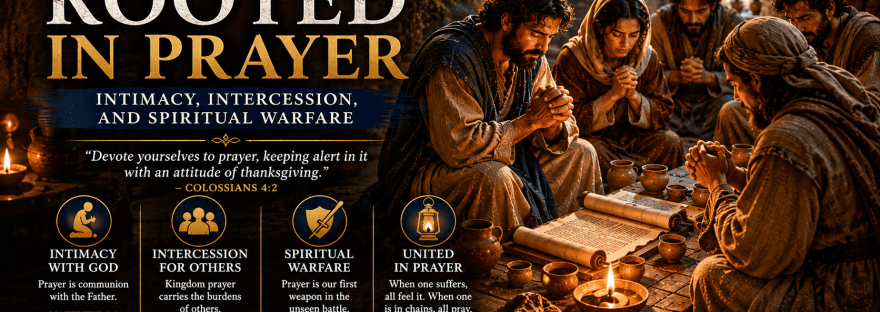
Rooted in Prayer: Intimacy, Intercession, and Spiritual Warfare

From the Series: Ordinary Saints: Lessons from the Ante-Nicene Church

Scripture quotations are from the New King James Version®.
Copyright © 1982 by Thomas Nelson. Used by permission. All rights reserved.

The prayer life of God’s Kingdom citizens goes beyond routine. Prayer is communion with the King, a time to speak, listen, surrender, intercede, battle, repent, and rest. It’s not a technique to master but a relationship to pursue.

For example, a day of relational prayer might begin in the morning with silent listening, inviting God to speak into any needs or anxieties for the day. Later, as needs or concerns for others arise, one might pause to intercede on behalf of a friend or coworker. During a lunch break, a believer could turn ordinary moments into prayer by expressing gratitude or asking for guidance. In quiet moments before bed, there might be an honest confession, a surrender of the day’s burdens, and a recognition of God’s presence. Relational prayer invites ongoing conversation with God in every part of life, not just at set times or in set places.

For the early Church, prayer was neither optional nor occasional but essential. Without abiding in Christ, they had no strength. Prayer became their daily atmosphere for life, worship, suffering, and service. And through prayer, God moved powerfully among them, setting the stage for remarkable change in every aspect of early Christian life.

Through prayer, God moved powerfully among them. Prisons shook. Fearful believers became courageous witnesses. Many were healed, while the discouraged grew stronger. Entire cities encountered the reality of Christ. This was not due to any special, inherent power, but because their prayers drew on Scripture, relied on the Holy Spirit, and focused on the Kingdom of God.

Jesus taught His followers:

“But you, when you pray, go into your room, and when you have shut your door, pray to your Father who is in the secret place…” (Matthew 6:6)

From this foundational truth, we see that prayer begins with intimacy. This is one of the most important truths believers must recover today. Jesus did not teach prayer merely as a religious obligation or public performance. He invited His people into fellowship with the Father. True prayer is relational. It flows from a heart that desires. Early believers prayed daily, not by force but longing for God’s presence. Their prayers were sincere and honest, seeking communion with the One who already knew them completely. the One who already knew them completely.

You may pause here and quietly think, “Sometimes my prayer life feels dry or inconsistent.” That struggle is deeply human. Prayer is not sustained by emotion alone. Like every relationship, intimacy with God grows through continual pursuit, even in seasons when feelings fluctuate. The Father does not turn away the believer who comes honestly before Him. If you find yourself in a dry season, consider setting aside just a few quiet minutes each day to sit in God’s presence or write a short, honest prayer in a journal. Even a small, intentional step can open the way for renewed intimacy with Him.

Building on this foundation, the early Church also understood that prayer was never meant to remain self-centered.

Paul wrote:

“Therefore I exhort first of all that supplications, prayers, intercessions, and giving of thanks be made for all men…” (1 Timothy 2:1).

Believers prayed for boldness, healing, the salvation of those in prison, the salvation of unbelievers, and strength for the Church. When one suffered, the whole body felt the burden. When one believer suffered, the entire body felt the burden together. This reflects the heart of Christ Himself. Prayer trains believers to look beyond their own needs and participate in God’s care for others.

You may recognize something here: “I spend much of my prayer time focused only on my own struggles.” While God certainly invites believers to bring personal needs before Him, Kingdom prayer expands the heart outward. As believers mature spiritually, intercession becomes an expression of love, compassion, and shared burden within the Body of Christ. For those seeking a way to begin, consider choosing one person, group, or situation each day to lift up in prayer. This simple practice can make intercession a natural part of your daily rhythm, helping you grow in love and concern for others.

Beyond intercession, the early Christians also viewed prayer as spiritual warfare.

Scripture reminds believers:

“For we do not wrestle against flesh and blood, but against principalities, against powers… against spiritual hosts of wickedness…” (Ephesians 6:12)

They understood that the Christian life was not merely a social or intellectual struggle. A spiritual battle was taking place beneath the surface. But importantly, they recognized that people themselves were not the enemy. The true conflict involved the spiritual. Prayer was never a last resort for them; it was always their first response. They prayed amid temptation and persecution, seeking protection, courage, discernment, and endurance, and used prayer to stand firm against the enemy. Prayer became part of how they stood firm against the enemy’s schemes.

You may feel overwhelmed by the reality of spiritual warfare. “How do I stand firm when life feels spiritually heavy?” Scripture continually points believers back to dependence upon God. The strength to endure does not come from human willpower alone, but from abiding in Christ through prayer, truth, righteousness, faith, and the Word of God. In such moments, believers can turn to specific Scriptures for encouragement and strength. For example, they might pray Ephesians 6:10-11: “Finally, be strong in the Lord and in the power of His might. Put on the whole armor of God, that you may be able to stand against the schemes of the devil.” A simple prayer could be: “Lord, help me to stand strong in Your truth and righteousness, and to trust in Your power when I feel weak. Clothe me with Your armor, and guide me by Your Spirit today.”

And there is deep assurance in this: believers do not fight for victory as though the outcome is uncertain. Christ has already overcome the world.

Prayer is not about manipulating God or forcing His hand. It is about aligning the believer’s heart with the will of God and participating in what He is already doing.

In addition to individual prayer, the early Church also prayed together. Corporate prayer unified believers, strengthened weary hearts, and reminded them they were not alone. In moments of fear and persecution, they gathered together and sought God with one mind and one heart. Their unity in prayer reflected their unity in Christ. This call to united prayer remains deeply important today.

Modern life easily fragments believers into isolation and distraction. Yet the Body of Christ was designed to pray together, carry burdens together, and seek God together. Prayer knits hearts together in humility and dependence upon the Lord.

If you do not already have a group to pray with, consider starting or joining a small prayer group. Invite a few friends, family members, or fellow believers to meet regularly for prayer, either in person or online. Praying together brings encouragement, accountability, and a stronger sense of unity. Even gathering with just one or two others can make a profound impact, helping you apply these truths and experience the power of shared prayer in your own life.

Taken together, what the early Church teaches us is both simple and profound. Prayer is intimacy with God. Prayer is intercession for others. Prayer is spiritual warfare.

The main takeaway is clear: Prayer is the vital connection for every believer who desires a close relationship with Christ, serving as a means of intimacy, intercession, and spiritual warfare.

The Kingdom of God is not advanced merely through activity, programs, or human effort. Ultimately, the Kingdom of God advances through those who stay rooted in prayer, showing that true effectiveness comes not from effort alone but from a heart aligned with God through devoted prayer.