Faith Worthy of the Kingdom, Kingdom Discipleship, Prayer

Anchored in Prayer: Lessons from the Early Church in the Book of Acts

From the Series: Ordinary Saints: Lessons from the Ante-Nicene Church

Scripture quotations are from the New King James Version®.
Copyright © 1982 by Thomas Nelson. Used by permission. All rights reserved.

When I read through the Book of Acts, I do not see a passive or powerless church. I see people anchored in prayer; devoted, expectant, and filled with the Holy Spirit. Their prayers were not empty routines or quiet rituals. They were living expressions of faith that moved in step with God’s will. Through prayer, they sought boldness, asked for guidance, and trusted God for what only He could do. And God answered.

Scripture shows this clearly:

“These all continued with one accord in prayer and supplication…” (Acts 1:14)

Prayer was not an accessory to their faith; it was its foundation. Their lives were shaped before God in private and revealed in power in public. They prayed, knowing God hears and responds.

From the very beginning, their prayers were not only personal but also shared. They gathered together, unified in purpose and voice, seeking the Lord as one body. And when they did, something remarkable happened:

“When they had prayed, the place where they were assembled together was shaken…” (Acts 4:31)

This was not emotional hype. It was the Holy Spirit uniting their hearts. They carried the same burden, sought the same Lord, and waited with expectation, trusting God to move. Their unity in prayer brought clarity, courage, and drove out fear.

As I consider this, I can imagine a reader quietly asking, “Is that kind of unity even possible today?” It may feel distant, especially in a world divided even within the Church. Yet Scripture does not present this as something reserved solely for them. The same Spirit who unified them still dwells within the Body of Christ. Unity is not something we manufacture; it is something we yield to.

Their prayers were also marked by boldness. They did not approach God timidly, nor did they ask for comfort in the face of opposition. When threatened, they did not pray only for safety; they asked for strength to continue.

“Grant to Your servants that with all boldness they may speak Your word.” (Acts 4:29)

There was no retreat in their hearts. They did not shrink back under pressure. Instead, they pressed further into the presence of God. Their confidence was not in themselves, but in the One who had called them.

Perhaps this stirs something deeper. You might think, “I don’t know if I pray like that. My prayers feel small… cautious.” That awareness is not condemnation; it is an invitation. God is not looking for perfected words, but for hearts that trust Him. Boldness in prayer is not about volume or intensity; it is about confidence in who God is and what He has said.

The early church also prayed beyond human effort. Their prayers weren’t mere routine; they were led, strengthened, and carried by the Holy Spirit, even when words failed.

As it is written:

“Praying always with all prayer and supplication in the Spirit…” (Ephesians 6:18)

Their prayers were shaped by Scripture, directed by the Spirit, anchored in faith, and filled with worship. This was not mechanical repetition; it was living communion with God.

And they did not treat prayer as something to rush through. They remained steadfast. They continued.

“They continued steadfastly… in prayers.” (Acts 2:42)

They fasted. They waited. They listened. They did not abandon prayer when answers were delayed. This was not desperation trying to force God’s hand; it was devotion that trusted His timing. Their persistence revealed their dependence.

A reader might pause here and wonder, “What if I’ve prayed and nothing seems to change?” That question is real, and Scripture does not ignore it. The early believers did not measure God’s faithfulness by immediate outcomes. They trusted Him even in the waiting. Prayer was not merely about receiving but about aligning. As hearts aligned with God, they were strengthened to endure, to trust, and to continue.

I remember a time when I was praying through a difficult season, waiting for direction that did not come as quickly as I hoped. Each day, I brought my requests to God, uncertain and sometimes discouraged. Weeks passed, and I saw no clear answer. But as I persisted in prayer, my heart slowly changed. Instead of focusing only on the outcome, I began to notice God at work in subtle ways, giving me patience, deepening my dependence on Him, and reminding me of His promises. When the answer finally came, it was not just the resolution I needed, but a testimony of God’s faithfulness in the waiting. My faith grew stronger, not because I received what I wanted right away, but because I met God in the process.

And in that place, assurance begins to grow. God hears. He is not distant. He is not indifferent. The same God who responded in the Book of Acts is unchanged. His purposes are perfect, and His timing is sure.

There is also something deeply communal about this kind of prayer. The early church did not carry burdens alone. They stood together, lifting one another up before the Lord. In that shared pursuit, faith was strengthened. Courage spread. Hearts were knit together.

This invites reflection: who are we praying with? Not just beside, but with. There is a difference. When the Body of Christ truly gathers in prayer, seeking God together, something begins to shift not only around us, but within us. To take this to heart, consider practical steps: invite one or two friends to meet and pray regularly, form a small prayer group at home or after a service, or simply share your prayer needs with someone and offer to pray for theirs. You could join an existing prayer meeting, start a group chat to share requests, or take a moment to pray with someone right after a conversation. Each of these simple actions helps us move from inspiration to true community, carrying one another and drawing closer to God.

The main takeaway is simple: prayer shaped the early Church and remains the foundation of the Church today. We are called to pray together, boldly and dependently, trusting God to work as we align ourselves with Him.

Ultimately, prayer in God’s Kingdom is the active, unified, Spirit-filled response that sustains His people. The Church’s foundation is prayer, steadfast, scripturally grounded, and worshipful, and it is through this that God’s purpose is revealed and accomplished.

When the Church humbles itself and seeks Him, God will move according to His will.

The invitation is simple.

Return to prayer; begin today. Step in with faith, expectation, and unity. God is ready to meet you there.

To help us respond as one body, I invite you to join with others in prayer, whether right after this message, in small groups during the week, or with trusted friends and family. Let us put this into practice together. As we gather and seek God with one heart and voice, may His presence shape us and deepen our unity.


Sources:

  • The Holy Bible — Acts 1:14; Acts 2:42; Acts 4:29, 31; Ephesians 6:18
  • Tertullian, On Prayer
  • Didache, ch. 8–10
  • Clement of Rome, 1 Clement 59–61
  • Origen, On Prayer
Faith Worthy of the Kingdom, Kingdom Discipleship

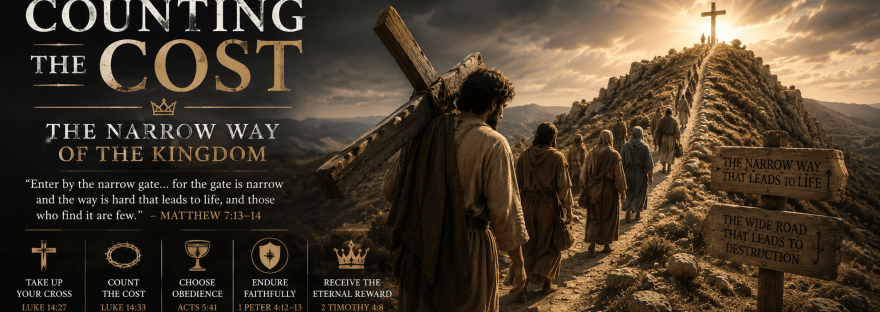
Allegiance to Christ: Faithful Obedience and Civil Disobedience in the Early Church

From the Series: Ordinary Saints: Lessons from the Ante-Nicene Church

Scripture quotations are from the New King James Version®.
Copyright © 1982 by Thomas Nelson. Used by permission. All rights reserved.

To the early Christians, allegiance to Jesus Christ was never just words. It was seen and proven in the way they lived. Every action, every relationship, and every response to authority flowed from a singular truth: Christ is Lord. They obeyed laws, paid taxes, and prayed for those in authority. Yet, they also understood this: obedience to earthly authority has limits. When human commands contradicted God’s Word, they chose Christ over Caesar, no matter the cost.

I am reminded of what is written:

“We must obey God rather than men.” (Acts 5:29)

This was not a rebellion rooted in pride or resistance for its own sake. It was faithful obedience, humble, Scripture-grounded, and Spirit-empowered. Their lives bore witness to a higher allegiance.

The early believers were not political agitators or revolutionaries. They sought peace, lived quietly, and respected governing authorities as ordained by God. As it is written:

“That you also aspire to lead a quiet life, to mind your own business, and to work with your own hands…” (1 Thessalonians 4:11–12)

Yet even in their submission, there was clarity. When rulers demanded what belonged to God alone, worship, devotion, or denial of Christ, they did not comply. They refused to offer incense to idols or call Caesar “Lord.” Their obedience to God set the limit on their obedience to man.

One can almost hear the weight of their conviction in words like these:

“We are ready to serve you, but we cannot worship your gods or call the emperor ‘Lord.’ Christ is our only King.”

This was not the language of defiance; it was the confession of allegiance.

They were not arrested as criminals in the traditional sense. They did not riot or incite rebellion; their “crime” was singular: they would not bow to anyone but Jesus Christ. Their resistance took the form of silence before magistrates, refusal of idolatrous acts, hymns from prison cells, and quiet acceptance of whatever sentence followed.

They did not curse the authorities. They did not demand their rights. Instead, they stood firm, peacefully, resolutely, and entrusted themselves to God.

The early church did not hide this reality from new believers. Discipleship included preparation for suffering. Leaders taught that following Christ might bring conflict with human authority. Such moments were not signs of failure, but evidence of faithfulness.

As one early Christian wrote:

“We pray for the empire… but we refuse to call Caesar ‘God.'”

There was no confusion in their hearts. They honored earthly authority, but they worshiped God alone.

And the cost was real.

To follow Christ in this way often meant losing everything that anchored a person to this world. Businesses collapsed because believers refused to participate in idolatrous practices. Positions of influence were lost. Families and communities rejected them. Many faced imprisonment, torture, and ultimately death.

Yet Scripture reveals their perspective:

“They departed from the presence of the council, rejoicing that they were counted worthy to suffer shame for His name.” (Acts 5:41)

They did not chase suffering, nor did they flee from it. Their eyes looked to a greater Kingdom, a righteous Judge, and an eternal inheritance that nothing could take from them.

As I consider this, I can already sense what may rise in the reader’s heart.

You might feel the tension. Does this mean you may one day have to choose between obedience to God and man? Scripture says yes. That realization feels sobering. It urges us to examine where our true allegiance lies, not in theory, but in practice.

At such moments, how can a believer discern what faithfulness requires? The early church offers us practical steps: Prayerfully seek wisdom in God’s Word and through the counsel of mature believers. Weigh whether the human command requires you to sin or deny Christ. Consider the motivations of your heart; are you acting out of devotion to Christ, or from anger or pride? Remember to pursue peace where possible, and to honor authority up to the point where obedience to God is compromised. These steps help ensure that any act of civil disobedience is truly an act of obedience to God, marked by humility, courage, and love.

You might also feel a quiet assurance take root. If that day comes, will God sustain you? He will. The same Spirit who strengthened the early church has not changed. God does not call His people to stand alone. He upholds them in the very moments they are tested. What He commands, He equips.

Let me share a recent example. In a country where churches were suddenly closed by authorities, a small group of believers continued to gather quietly in homes to pray and encourage one another. One member later shared, “We felt afraid, but God gave us peace each time we met. Even when some were questioned by police, the Spirit gave them words to answer. We saw God provide, protect, and keep our faith strong.” Stories like these remind us: God still sustains His people under pressure, and His faithfulness has not diminished.

There may also be a deeper stirring, an awareness that faith was never meant to be lived alone. Early believers stood together. They prayed and strengthened one another. Their courage was forged in community. The same holds true today. We are not meant to navigate these tensions alone. Instead, we do so within the Body of Christ. Here, truth is spoken, burdens are shared, and faith is refined.

To foster this unity and encourage one another, we can take practical steps together. Forming consistent prayer groups allows us to lift one another before God. Creating support circles or sharing networks helps meet practical needs when someone faces hardship for their faith. We can set aside regular times for honest conversations, inviting each person to share their struggles or doubts in a safe environment. Visiting one another, sharing meals, and offering to help with daily needs can lighten burdens and strengthen hearts. Through these acts of community, we reflect the love and encouragement that sustained the early church.

What, then, do we learn?

We learn that civil disobedience, when rooted in obedience to God, is faithfulness, not lawlessness. Following Christ costs something, as it always has. Our stand must be marked by humility, courage, and peace, not anger or pride.

To clarify, faithful civil disobedience is not simply following personal preference or disagreeing with a policy. The boundary is clear: when an earthly authority requires us to do what God forbids, or forbids what God commands, obedience to God must come first. It is not enough to act based on personal opinions or desires; the matter must be weighed carefully against Scripture, prayer, and wise counsel. In this way, true civil disobedience honors God’s commands, while mere preference or convenience does not.

And above all, let us take this to heart: our true calling is to bear faithful witness, even when it is costly. We are not rebels without cause. We are citizens of a higher Kingdom, ambassadors of a greater King, and servants of the One whose authority stands above all others. Our allegiance is not divided; it is clear, unwavering, and rooted in Christ alone.

Take a moment to reflect: In what areas of your life might your allegiance to Christ be tested? Are there relationships, habits, or situations where following Him would require courage or sacrifice? Invite the Holy Spirit to reveal any places where your devotion or obedience is being challenged. Bring these before God, ask Him for strength, wisdom, and faithfulness to choose Christ above all.

Our allegiance is undivided and intentional, rooted wholly in Christ.

This is the foundation on which we stand.


Sources:

  • The Holy Bible — Acts 5:29, 41; 1 Thessalonians 4:11–12
  • Tertullian, To Scapula
  • Athenagoras, Apology
  • Martyrdom of Polycarp, c. AD 155
  • Eusebius, Church History
Faith Worthy of the Kingdom, Kingdom Discipleship

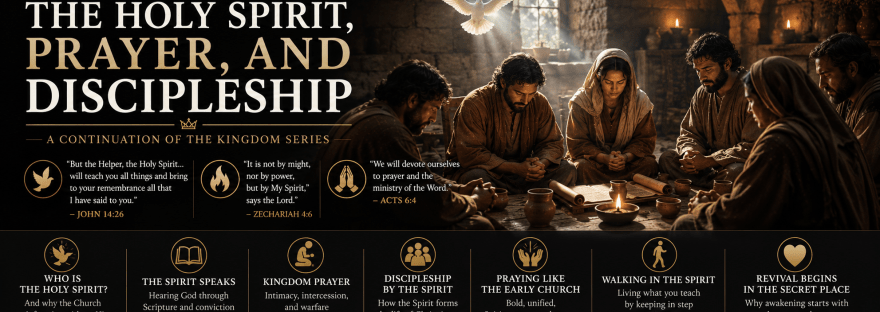
How Does the Holy Spirit Speak? Word, Conviction, and Guidance Explained Biblically

From the Series: Ordinary Saints: Lessons from the Ante-Nicene Church

Scripture quotations are from the New King James Version®.
Copyright © 1982 by Thomas Nelson. Used by permission. All rights reserved.


The question is often asked: how does the Holy Spirit speak? Some expect dramatic impressions or audible voices, while others dismiss the question altogether, reducing the Spirit’s work to doctrine alone. Yet Scripture gives a clear and balanced answer, one that is neither mystical nor mechanical, but living and rooted in truth.

The Holy Spirit does speak. But He does not speak independently of what God has already revealed. Jesus said, “However, when He, the Spirit of truth, has come, He will guide you into all truth… He will take of what is Mine and declare it to you” (John 16:13-14). The Spirit’s role is not to introduce new truth, but to reveal, apply, and bring to remembrance what belongs to Christ.

Because of this, the primary way the Holy Spirit speaks is through the Word of God—the very Word He inspired. Scripture tells us, “All Scripture is given by inspiration of God” (2 Timothy 3:16). The Spirit who authored the Word does not contradict it; He illuminates it. Apart from Him, the Word may be read, but not truly understood, for “the natural man does not receive the things of the Spirit of God… because they are spiritually discerned” (1 Corinthians 2:14). When a believer comes to Scripture with a yielded heart, the Spirit brings clarity, conviction, and understanding. What was once distant becomes personal, and what was once merely known becomes deeply understood.

The Holy Spirit also speaks through conviction. Jesus said, “And when He has come, He will convict the world of sin, and of righteousness, and of judgment” (John 16:8). This conviction is not condemnation, but clarity. It exposes sin, corrects the heart, and aligns us with the righteousness of God. Often, this work is quiet but unmistakable. It does not depend on emotion, but on truth. It presses inward, calling us to respond in repentance and obedience.

He also guides believers in their daily walk. Scripture says, “For as many as are led by the Spirit of God, these are sons of God” (Romans 8:14). This guidance is not vague or detached from Scripture, but deeply connected to it. The Spirit brings God’s Word to mind in moments of decision, aligns our desires with His will, restrains us from sin, and prompts us toward obedience. He does not offer new revelation apart from the Word, but faithfully applies what has already been revealed. As it is written, “Your word is a lamp to my feet and a light to my path” (Psalm 119:105). The Spirit uses that light to direct our steps.

To understand how the Spirit speaks, we must also recognize what He does not do. He does not contradict Scripture, nor does He produce confusion or disorder, for “God is not the author of confusion but of peace” (1 Corinthians 14:33). He does not draw attention to Himself apart from Christ, but rather glorifies Him, as Jesus said, “He will glorify Me” (NKJV, John 16:14). Any leading that departs from Scripture or shifts the focus away from Christ is not from the Spirit of God.

Learning to hear the Holy Spirit, then, is not about chasing experiences, but about growing in sensitivity to truth. This comes through remaining in Scripture, walking in obedience, and living in continual dependence on God through prayer. As we respond to conviction and test all things by the Word—”Test all things; hold fast what is good” (1 Thessalonians 5:21)—we begin to discern His work more clearly. Over time, we recognize His leading, not as something separate from Scripture, but as the Spirit bringing the Word of God to life within us.

At this point, some may wonder: What does this look like in daily life? It often looks far simpler, and far deeper, than expected. It is opening the Scriptures and finding that a passage speaks directly to your situation. It is sensing a quiet but firm conviction to turn away from sin or to act in obedience. It is being reminded of truth at the exact moment you need it. These are not dramatic displays, but they are unmistakably the work of God within you.

Others may ask: What if I don’t feel anything? Scripture never teaches that the Spirit’s work is measured by feeling. His presence is known first by truth and by the fruit He produces. As it is written, “But the fruit of the Spirit is love, joy, peace…” (Galatians 5:22-23). Growth in these things is evidence of His work, even when emotions are quiet.

Some may struggle with assurance, wondering if they truly hear Him at all. Scripture gives clarity here as well: “For as many as are led by the Spirit of God, these are sons of God” (Romans 8:14). If you are being drawn to Christ, convicted of sin, and led toward obedience to God’s Word, this is the Spirit’s work. He is not absent; He is actively working within you.

And this is not meant to be lived out in isolation. The Spirit works within the body of Christ, using other believers for encouragement, correction, and confirmation. As we walk together in truth, we help one another discern rightly and remain grounded in Scripture.

The Holy Spirit is not distant. He is present, active, and faithful to lead God’s people. But His voice is heard most clearly where His Word is known, believed, and obeyed. As we abide in Christ and remain grounded in Scripture, the Spirit teaches, convicts, and guides us into a life that reflects Him.

This is not a mystical pursuit, nor a mechanical process. It is a living relationship; one rooted in truth, sustained by grace, and directed by the Spirit of God.


Further Scriptures for Study

  • John 14:26 — The Spirit teaches and reminds believers of Christ’s words
  • John 16:13-14 — The Spirit guides into truth and glorifies Christ
  • Romans 8:14 — Believers are led by the Spirit of God
  • Galatians 5:16 — The call to walk in the Spirit
  • Galatians 5:22-23 — The fruit of the Spirit as evidence of His work
  • 1 Corinthians 2:10-14 — Spiritual truth is revealed by the Spirit
  • 1 Corinthians 12:4-11 — The Spirit distributes gifts according to His will
  • Ephesians 5:18 — The ongoing call to be filled with the Spirit
  • 1 Thessalonians 5:19-21 — Do not quench the Spirit; test all things
  • Hebrews 4:12 — The Word of God discerning the heart
Faith Worthy of the Kingdom, Kingdom Discipleship

The Holy Spirit: The Living Presence at the Heart of the Church

From the Series: Ordinary Saints: Lessons from the Ante-Nicene Church

Scripture quotations are from the New King James Version®.
Copyright © 1982 by Thomas Nelson. Used by permission. All rights reserved.

The Holy Spirit is neither a force nor a mere concept. He cannot be reduced to a feeling or regarded as a theological accessory to Christian life. Rather, the Holy Spirit is God, the third Person of the Trinity, eternal, holy, and present throughout every stage of redemptive history. He constitutes the very life of the Church. Without Him, the Church cannot exist.

Despite this, confusion about the Holy Spirit persists in many Christian communities. Some misunderstand His role, substituting His influence for intellectual theology or confining Him to emotional experiences lacking biblical grounding. Others nearly ignore Him altogether.

This was not the case in the early Church, where the role of the Spirit was both clear and central.

“In the beginning… the Spirit of God was hovering over the face of the waters.”
Genesis 1:2

From creation, the Holy Spirit was present: active, powerful, and creative. Throughout the Old Testament, He empowered judges, prophets, and kings. The prophets also anticipated a future time when the Spirit would be poured out on all people, regardless of age or status (Joel 2:28).

This promise was fulfilled on the day of Pentecost, marking a pivotal transition in redemptive history.

“You will receive power when the Holy Spirit has come upon you, and you will be My witnesses…”
Acts 1:8

The Church did not originate from a strategy meeting. Instead, its birth occurred during a prayer gathering, marked by the arrival of the Spirit. Tongues of fire rested upon the believers, who then spoke boldly and preached with conviction. Thousands responded in faith. The Holy Spirit accomplished what human effort could not: He imparted life to the Body of Christ.

From that day forward, the Holy Spirit filled believers with courage and joy. He provided strength and boldness amid persecution and uncertainty. He convicted hearts of sin and revealed truth. He opened eyes to God’s holiness and the necessity of repentance. The Spirit guided decisions and enabled the planting of churches. Through His wisdom, He shaped the direction of the early Christian movement. The Spirit spoke through ordinary individuals, empowering them to proclaim the gospel and minister beyond their natural abilities. He comforted the persecuted, offering solace and hope during suffering and trials. The Spirit led discipleship, mission, and unity, forming a community that demonstrated Christ’s love and purpose to the world. Early believers did not merely believe in the Spirit; they depended on Him. They lacked seminaries, creeds, or commentaries, but possessed Scripture, prayer, and the indwelling presence of God.

They didn’t ask: “What do the theologians say?” They asked:

“What is the Spirit saying to the churches?”
Revelation 2:7

Over the centuries, significant transitions occurred within church life. The Church increasingly prioritized hierarchy, tradition, and intellectual systems, often replacing the living voice of the Spirit. While doctrine was debated in councils, personal reliance on the Spirit frequently diminished.

This situation persists today. Some regard the Spirit merely as a theological label rather than as a present and active Person. Others reduce His role to mystical experiences that lack discernment, valuing experience over truth. Still others ignore Him entirely, prioritizing academic clarity or tradition above the Spirit’s living presence. A church without the Holy Spirit is comparable to a body without breath. Nevertheless, even in our shortcomings, God graciously invites us to return to Him. The Spirit is not distant, and God desires to renew His presence among us. Regardless of our past neglect or misunderstanding of the Spirit, He is ready to revive, restore, and guide us forward. As we seek Him, there is hope for spiritual renewal and growth both individually and collectively as Christ’s Church.

He is God, as affirmed in Acts 5:3–4, and shares in the divine nature of the Triune God. He is a Person, not a force or impersonal power, as described by Jesus in John 14:16–17. He is also identified as the Spirit of Truth (John 16:13), guiding believers into all truth and illuminating the Scriptures. The Holy Spirit teaches, guides, convicts, comforts, speaks, and empowers believers for life and ministry. He is the indwelling presence of Christ within each believer, as stated in Romans 8:9–11, making God’s life real and personal.

Our relationship with the Holy Spirit is intended to be dynamic, personal, and ongoing. Believers can cultivate this relationship through prayer, inviting the Spirit to guide their thoughts and decisions daily. Engaging with Scripture with an open heart and asking the Spirit to reveal truth and provide understanding draws us closer to Him. By listening during moments of quiet and remaining attentive to His promptings, we become more sensitive to His guidance. As we act in faith and obedience, the Spirit deepens our connection with God, bringing transformation, comfort, and strength. The Holy Spirit is neither distant nor abstract; He desires fellowship with us and seeks to make Christ known in our daily lives.

The Church cannot function authentically without the Holy Spirit, who is essential to its existence and purpose. We must come to know the Holy Spirit as a Person, not merely as an abstract idea or doctrine. The Spirit leads us into truth, never contradicting the Scriptures, and consistently confirms and illuminates the Word. We are commanded to walk by the Spirit, rather than by our own desires or intellect, and to entrust ourselves to His guidance daily.

How can we practice this daily? Begin with prayer, inviting the Spirit to guide, correct, and encourage you throughout the day. Engage with Scripture, asking the Spirit to open your understanding and apply truth to your life. Learn to listen during moments of quiet, allowing space for the Spirit to speak to your heart and conscience. When facing decisions, seek His wisdom and remain attentive to His promptings. Make it a consistent practice to pause and seek His presence, whether during routine tasks or new challenges. Through these practices, we grow in relationship with the Holy Spirit and learn to walk more closely by His guidance.

Select Scriptures:

  • “Now the Lord is the Spirit; and where the Spirit of the Lord is, there is liberty.” (2 Corinthians 3:17)
  • “And the Spirit of God was hovering over the face of the waters.” (Genesis 1:2)
  • “And it shall come to pass afterward that I will pour out My Spirit on all flesh…” (Joel 2:28)
  • “But you shall receive power when the Holy Spirit has come upon you; and you shall be My witnesses…” (Acts 1:8)
  • “And when He has come, He will convict the world of sin, and of righteousness, and of judgment.” (John 16:8)
  • “He will guide you into all truth… He will take of what is Mine and declare it to you.” (John 16:13-14)
  • “He who has an ear, let him hear what the Spirit says to the churches.” (Revelation 2:7)
  • “Sanctify them by Your truth. Your word is truth.” (John 17:17)
  • “But if anyone does not have the Spirit of Christ, he is not His.” (Romans 8:9)
  • “Your word is a lamp to my feet and a light to my path.” (Psalm 119:105)
  • “Walk in the Spirit, and you shall not fulfill the lust of the flesh.” Galatians 5:16)
  • “But the fruit of the Spirit is love, joy, peace, longsuffering…” (Galatians 5:22-23)
  • “But one and the same Spirit works all these things, distributing to each one individually as He wills.” (1 Corinthians 12:11)

Sources:

  • The Holy Bible — Genesis 1:2; Joel 2:28; Acts 1:8; Acts 5:3–4; John 14:16–17; John 16:13; Romans 8:9–11; Revelation 2:7
  • The Didache, ch. 10 (Spirit-led worship and teaching)
  • The Shepherd of Hermas, Similitude 9
  • Clement of Rome, 1 Clement 63 (Spirit speaks through prophets and teachers)
Faith Worthy of the Kingdom, Kingdom Discipleship

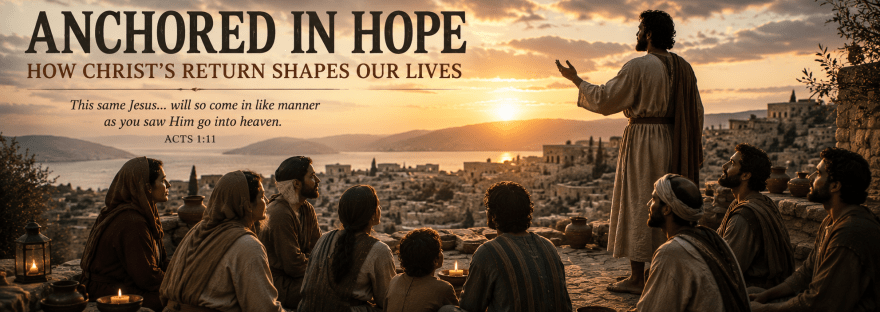
Living in Expectation: Preparing for the Return of the King

From the Series: Ordinary Saints: Lessons from the Ante-Nicene Church

Scripture quotations are from the New King James Version®.
Copyright © 1982 by Thomas Nelson. Used by permission. All rights reserved.

The return of Christ is not a legend or a symbol; it is the Church’s blessed hope. For centuries, believers have grounded their faith in His promise. In uncertainty, they find strength in this hope. The King will return, not for the perfect, but for the prepared: vigilant and wholehearted in devotion.

“Behold, I am coming soon. Blessed is the one who keeps the words of the prophecy of this book.”
Revelation 22:7

History does not descend into chaos; rather, it progresses with purpose toward a divine wedding and the establishment of a Kingdom. Every event, including those that appear random or challenging, serves God’s ultimate plan. The Bride who waits in purity will be adorned in glory, and the sovereign King will dwell with His people eternally, fulfilling ancient promises.

“But you are not in darkness… for that day to surprise you like a thief.”
1 Thessalonians 5:4

Although the faithful do not know the appointed hour, they remain vigilant and alert, actively preparing within the ordinary rhythms of life. We ready ourselves by nurturing a vibrant relationship with God: daily prayer, watchfulness, repentance, self-examination, service, Scripture reading, and worship all illuminate a darkening world. Consistent repentance and regular self-examination keep our hearts tender and receptive to the Spirit. We also practice obedience through loving our neighbors, seeking justice, showing mercy, and serving others as Christ did. Cultivating gratitude and watchfulness transforms routine moments into opportunities for faithfulness. Each day, we take another step toward readiness. Preparation is not passive; it involves daily decisions to love God and others, to pursue justice, to walk in humility, and to remain steadfast during trials. When we anticipate Christ’s return, even ordinary days become opportunities for worship and testimony.

“Let us be found ready, so that when the King appears, we will not shrink back in shame.”
Hermas, Mandate 9

“When Christ, who is your life, appears, then you also will appear with Him in glory.”
Colossians 3:4

Every tear, every loss, and each moment of faithful waiting will be overcome by His glory. He will remove all sorrow and establish His reign; His people will reign with Him. The suffering of the present age—genuine and painful though it is—is incomparable to the glory that is to come. On that day, questions will be resolved, wounds healed, and joy will abound as the faithful behold the King.

“The coming of the King will make radiant all who have kept the faith.”
Clement of Rome, 1 Clement 50

Those who are prepared are not merely spectators; they are heirs. Vigilance and hope thrive in community. As a church, we gather regularly for worship, prayer, and teaching to recall God’s promises. In these gatherings, sharing testimonies of faith and endurance inspires others to persevere. Through small groups and intentional friendships, we gain accountability, encouragement, and prayer. Furthermore, acts of service, both within and beyond the Church, help us embody Christ’s love and keep our eyes fixed on His return. Together, encouragement, shared burdens, and mutual celebration of God’s

faithfulness create a culture where hope is contagious. Importantly, this inheritance is not reserved solely for the future; it also transforms present conduct. Believers are thus called to live as citizens of the coming Kingdom, embodying love, mercy, and righteousness. Ultimately, the prepared will inherit the Kingdom and shine like the sun, reflecting His light to the world until His return.

“Then the righteous will shine like the sun in the Kingdom of their Father.”
Matthew 13:43

The imminent return of the King calls for unwavering hope and continual readiness. Those who prepare their hearts will be adorned in eternal glory. The Kingdom is reserved for those who remain faithful. Hope is not mere wishful thinking but a certainty grounded in promise. Feeling unprepared or wrestling with doubt is a common part of the journey of faith. The good news is that our hope does not rest on our perfection but on Christ’s finished work. When doubts arise, returning to God’s promises in Scripture brings reassurance. He is faithful even when we are weak. Honest conversations with trusted believers can offer perspective and prayer. Remember, readiness is not about having all the answers, but about trusting Jesus and responding to His invitation daily. His grace is sufficient, and He delights to meet us right where we are, offering peace and the assurance that we belong to Him. The wedding feast approaches. Until that day, the faithful are exhorted to encourage one another, remain steadfast in their confession, and live in a manner that directs others to the hope found in Christ. The narrative is ongoing, and its conclusion will be glorious for all who await and long for His appearing.

Faith Worthy of the Kingdom, Kingdom Discipleship

Ambassadors of a Different Kingdom: Lessons from the Early Church

From the Series: Ordinary Saints: Lessons from the Ante-Nicene Church

Scripture quotations are from the New King James Version®.
Copyright © 1982 by Thomas Nelson. Used by permission. All rights reserved.

The early Christians understood that their ultimate home was not in this world. Rather than seeking power or acceptance, they regarded themselves as strangers and ambassadors of a Kingdom beyond this world (John 18:36).

This perspective was not a form of escapism; instead, it was central to their identity. They lived within the world but did not belong to it. Their words and actions reflected the values of Christ’s Kingdom rather than those of the surrounding Roman culture.

“Our citizenship is in heaven. And from it we await a Savior, the Lord Jesus Christ.”

— Philippians 3:20

Due to their refusal to conform, early Christians were frequently misunderstood, slandered, and marginalized. They abstained from participating in pagan feasts, military service, and the pursuit of political power. To outsiders, their lives appeared unusual, characterized by simplicity, purity, peace, and love.

“They dwell in their own countries, but simply as sojourners… they are in the flesh, but they do not live after the flesh… they pass their days on earth, but they are citizens of heaven.”

— Epistle to Diognetus, c. AD 130–200

Their primary focus was on preparing for the return of their King rather than attempting to reform Roman society. In a similar way, believers today can prioritize deepening their relationship with Christ, pursuing spiritual growth, and living out Kingdom values in their daily lives, rather than seeking influence or validation through political or cultural means. This mindset encourages faithfulness in character and love, trusting that change begins within and radiates outward.

An ambassador does not act on personal authority but embodies the will and values of the one who sends them. The early church embodied this role, being sent by Christ, empowered by the Spirit, and grounded in Scripture.

“We are ambassadors for Christ, God making His appeal through us.”

— 2 Corinthians 5:20

They did not assimilate into the surrounding culture; instead, they stood out. Their presence challenged Rome’s prevailing values, exposed wrongdoing, and directed others toward a greater hope.

These believers were not anarchists. They paid taxes, honored the emperor, and obeyed civil laws, unless doing so required disobeying God. In those instances, they responded with peaceful civil disobedience, choosing to suffer rather than compromise their convictions.

“We must obey God rather than men.”

— Acts 5:29

They resisted quietly, without resorting to violence, protests, or rebellion. Many were imprisoned, tortured, or killed for their stance, yet they rejoiced to suffer for His name (Acts 5:41).

Their distinctiveness shaped their conduct. Their refusal to compromise was marked not by bitterness but by beauty. They prayed for their enemies, chose to sing rather than riot, and lived in a manner unapologetically different from those around them.

Their very existence served as testimony that another Kingdom had arrived and taken root within their hearts.

Today, many believers seek comfort in the kingdoms of this world: fighting culture wars, clinging to power, or blending in at work, online, or in their communities to avoid being called “radical.” But we are called to holiness, to be set apart, and to love boldly in our daily lives, decisions, and interactions. For example, being set apart at work might mean choosing honesty even if it means missing out on advancement, standing up for a colleague who is treated unfairly, or refusing to participate in gossip. Online, it may look like refraining from harsh debates or spreading negativity, instead offering encouragement and truth with grace. In relationships, it can mean choosing forgiveness over grudges, sacrificing time to support others, or keeping commitments even when it is difficult. These practical steps show what it means to live differently and reflect Christ in every aspect of daily life.

The early church transformed the world by steadfastly refusing to conform to it. They maintained their distinctiveness and demonstrated an unwavering commitment to Christ. Remember that your citizenship is in heaven. Consistently reflect this truth in your decisions, relationships, and daily priorities.

  1. As an ambassador, ask daily: Does my speech, attitude, and service reflect the King I represent? Strive to faithfully and consciously reflect His character in all you do.
  2. Prioritize obedience to God above obedience to people, even when social or professional pressures make godly choices challenging. Trust that faithful obedience produces a lasting impact. Remember that God is always with you, giving strength and wisdom as you seek to honor Him. He will remain faithful to you in every circumstance, and your courage and faithfulness will never go unnoticed by Him.
  3. Standing apart by demonstrating humility, love, and integrity, especially when such qualities are unpopular, can profoundly influence those around you. Allow your distinctiveness to invite others to hope.

      Sources:

      • The Holy Bible — Philippians 3:20; 2 Corinthians 5:20; Acts 5:29, 41; John 18:36
      • Epistle to Diognetus, c. AD 130–200
      • Justin Martyr, Apology
      • Eusebius, Church History
      Biblical Interpretation, Kingdom Discipleship

      The Authority of God’s Word

      From the Series: Who Defines Truth: God or Man?

      Scripture quotations are from the New King James Version®.
      Copyright © 1982 by Thomas Nelson. Used by permission. All rights reserved.

      Under every doctrine and belief lies a fundamental question: Who defines truth, God or humanity? This is not a theoretical debate for philosophers or theologians alone; rather, it is one each person answers, consciously or unconsciously, whenever engaging with the Bible. Opening Scripture is more than reading words; it is an encounter with God’s revelation. Our response to this encounter shows where we see true authority. Take time to ponder: When you read Scripture, who do you trust to define what is true—God or your own view? Consider how your answer shapes your daily choices, thoughts, and attitudes. Honestly assess where you stand, not just in theory, but in daily life. As we reflect individually, let us also open this question to group discussion. Please share your thoughts or any personal experiences that have shaped your view of truth and authority. By inviting honest and respectful conversation, we can encourage one another to examine where we turn for guidance and how we allow God’s Word to speak into our lives.

      Scripture never suggests we invent truth through reason or experience. Jesus’s words are clear: “Your word is truth” (John 17:17). Rather than truth being ours to manufacture, God reveals it. Consequently, the Bible is not a text we shape to fit our preferences. Instead, it is a standard that forms us. We do not stand above God’s Word as judges; we come before it to be corrected, challenged, and transformed.

      The Bible clearly distinguishes sacred from human authority. As Romans 3:4 states, “Let God be true, but every man a liar.” There is no compromise. When God’s Word and human opinion clash, God is always correct—not because it aligns with human reasoning, but because He is the source of truth. God does not change or deceive, as shown in Numbers 23:19: “God is not a man, that He should lie.” His Word remains constant, for “The word of the Lord endures forever” (1 Peter 1:25).

      From the start, humanity has sought to claim authority. In Eden, the serpent began not with denial but with a question: “Has God indeed said…?” (Genesis 3:1). This doubt invited reinterpretation. Once God’s Word was questioned, its meaning became negotiable. Human reasoning took center stage. Today, this persists in comments like “This is what the Bible means to me” or “I think this passage says…”. When truth becomes subjective, authority shifts from God to humanity.

      We see this in daily situations: someone justifies a dishonest business practice by saying, “I know the Bible says you shouldn’t lie, but everyone does it to get ahead. God understands.” Or a person dismisses difficult teachings about forgiveness with, “That command was for people back then; my situation is different.” Social topics are often reframed with the claim that “Times have changed, so the Bible needs to be interpreted differently now,” making Scripture submit to modern preferences rather than the other way around. These subtle shifts happen when personal perspective becomes the filter for truth, rather than approaching Scripture with humility and a willingness to be shaped by what God has spoken.

      The Bible warns against this mistake: “No prophecy of Scripture is of any private interpretation” (2 Peter 1:20). God’s Word did not start with humanity; individuals do not have ultimate authority over its meaning. Instead, the Holy Spirit inspired Scripture. Therefore, readers are called to engage it with humility, not autonomy. While diligent study is essential, our guiding question should not be, “What do I want this to mean?” Rather, it should be, “What has God said, and how will I respond?”

      At this point, the authority of Scripture becomes personal. Affirming the truth of God’s Word is different from accepting it when it challenges personal assumptions. The Bible “discerns the thoughts and intents of the heart” (Hebrews 4:12). It shows what people believe and reveals deeper motivations. It highlights where there is true submission to truth and where truth has been bent to fit personal preferences. The central question is not abstract. It is a practical daily reality: Who defines truth—God or humanity?

      The answer is not found in words alone, but in response to what God says. Jesus asked, “Why do you call Me ‘Lord, Lord,’ and not do the things which I say?” (Luke 6:46). Authority is not shown just through words. It is proven by obedience. If God defines truth, His Word must shape thought, correct misunderstanding, and direct life. Scripture is not to fit our desires. Instead, we are to be transformed by it so that we reflect Christ.

      To put theory into practice, make space each day for prayerful reading of Scripture. Invite God to reveal His truth. Reflect on passages and ask how they apply to your life right now. Find fellowship with others who value God’s Word. Pursue accountability by sharing your commitments and challenges. To strengthen this, consider forming prayer partnerships or small groups where members pray for one another and share specific ways they are seeking to apply God’s Word. Set aside time each week for the group to reflect together on how Scripture is shaping their thinking and choices, offering encouragement and support. Through intentional community and shared commitment, let Scripture guide your choices, even when it means change or surrender. In this way, God’s Word shapes daily life.

      This question underpins all further discussion. Before debating doctrine, tradition, or interpretation, however, this issue must be settled. If God alone defines truth, then all other sources—teachers, traditions, and personal reasoning—must yield to Him. As Proverbs 3:5 says, “Trust in the Lord with all your heart, and do not lean on your own understanding.” This does not mean rejecting critical thinking; rather, it calls us to anchor our thoughts in the One who defines truth perfectly.

      As this series begins, return to the guiding question: Who has the authority to define truth—God or humanity? Your response will shape how you study Scripture and your willingness to submit to it. If you let God answer this question, all other priorities will fall into place.

      To close, stop and prayerfully consider your response. Will you surrender your assumptions and preferences to God’s authority? Will you let His Word define truth in your life? If you are willing, pray: “Lord, I confess my tendency to rely on myself. Help me trust You fully. Teach me to submit to Your Word. Change my heart where it resists, and teach me to seek Your truth above my own. Amen.”

      As you go through the coming days, keep returning to this prayer and question. Take moments throughout the week to pause, reflect, and honestly assess where God is inviting you to trust Him more deeply. Ongoing reflection not only deepens spiritual growth but also helps you keep the lesson active in your heart and daily life.

      Faith Worthy of the Kingdom, Kingdom Discipleship

      Love Your Enemies: The Testimony of the Martyrs

      From the Series: Ordinary Saints: Lessons from the Ante-Nicene Church

      Scripture quotations are from the New King James Version®.
      Copyright © 1982 by Thomas Nelson. Used by permission. All rights reserved.

      In a world where power is often linked with violence and justice with vengeance, Jesus’s teachings stand in stark contrast. Among His commands, none is more challenging than loving one’s enemies. As Jesus said, “Love your enemies and pray for those who persecute you” (Matthew 5:44). This radical love sets Kingdom people apart from the world.

      “Love your enemies and pray for those who persecute you.”
      Matthew 5:44

      For early Christians, loving their enemies showed loyalty to Christ. Following Jesus meant imitating His love, even through betrayal or threats of death. Instead of killing, they chose to die, echoing Christ’s words: “Father, forgive them, for they know not what they do” (Luke 23:34). This forgiveness was their core witness, placing God’s law of love above any earthly ties.

      Throughout history, societies have justified violence by appealing to justice, protection, or patriotism. But the Ante-Nicene Christians rejected these reasons. They were not pacifists because of weakness. Instead, they were peacemakers empowered by the Spirit.

      They refused to retaliate, enlist in the military, or occupy positions that required acts of violence. They consistently chose the cross instead of the sword.

      “It is not lawful for a Christian to bear arms for any earthly consideration.”
      Tertullian, On Idolatry 19

      “We who formerly used to kill one another now not only refuse to make war upon our enemies, but gladly die confessing Christ.”
      Justin Martyr, First Apology 39

      Killing, whether in self-defense or war, denied Christ’s call to love. Bearing Jesus’s name meant imitating His peaceful response to threats and pain. As Tertullian said, “It is not lawful for a Christian to bear arms for any earthly consideration.” Early Christians lived out Justin Martyr’s words: “We who formerly used to kill one another now not only refuse to make war upon our enemies, but gladly die confessing Christ.”

      “Father, forgive them, for they know not what they do.”
      Luke 23:34

      They believed Jesus’s self-sacrifice called them to willingly give up their lives. Dying without violence was not failure, but a testimony of faith. Tertullian said, “The blood of the martyrs is the seed of the Church” (Apology 50); their martyrdom strengthened, not stained, their witness.

      Pagans and Roman authorities were confounded by this behavior. How could individuals face death calmly, praying, forgiving, and singing? Their love spoke more powerfully than the roar of lions; their peace silenced the jeers. Both their lives and deaths proclaimed a Kingdom not of this world—a Kingdom shaped by Jesus’s words and example.

      Today, some Christians justify violence in the name of freedom or justice. Yet, the example of the early Church demonstrates that Christ died so that believers might lay down their rights rather than defend them. This call to love is not limited to times of persecution. In our own lives, at work, in families, with neighbors, when we are wronged, Jesus’s words, “Pray for those who persecute you,” take practical form. Christians can choose forgiveness over revenge, reconciliation over resentment, and truth spoken in love over harsh words. By practicing this radical love, the teaching of Jesus becomes visible in our world.

      Kingdom citizenship requires radical obedience to the law of Christ, which is love. This obedience does not signify weakness. Instead, it represents a different form of warfare, one that overcomes evil not through force but through forgiveness.

      What We Can Learn Today

      1. The early martyrs’ refusal to retaliate, even in the face of death, reveals the radical love that Jesus calls His followers to embody. Their actions remind us that love for one’s enemies is not just a lofty idea but the distinguishing mark of a true disciple. Killing, whether in retaliation or in service to any earthly power, stands in direct contradiction to Christ’s command: “Love your enemies.”
      2. Martyrdom, for these believers, was not the loss of a life but the fulfillment of one. By choosing the cross over the sword, they showed that following Christ means embracing His prayer, “Father, forgive them,” even when hatred surrounds us. To reclaim a theology of the cross is to make it not just a symbol but a way of life: loving those who harm us, trusting that forgiveness is more powerful than violence, and living by a standard defined not by what we’re willing to kill for, but by what we’re willing to die for. This legacy of love and sacrifice continues to challenge and inspire the world today.

      To live out this radical love, act now: Pray for someone who has wronged you. Forgive a recent offense, even if it seems minor. Reach out to reconcile with those in conflict. Let go of resentment and seek ways to serve those who oppose you. These simple yet courageous choices reveal Christ’s transforming love, a legacy that begins with one bold step today. Take time to forgive a hurt or offense, even if it is small. Reach out to someone you are in conflict with and offer a word of reconciliation or kindness. Choose to let go of resentment or the desire to retaliate, and instead look for ways to serve or bless those who oppose you. Small acts of grace in daily life open our hearts to the transforming power of Christ’s love. In these moments, the teaching of Jesus and the example of the martyrs become real and visible in our world.


      Sources:

      • The Holy Bible — Matthew 5:44; Luke 23:34
      • Tertullian, On Idolatry 19; Apology 50
      • Justin Martyr, First Apology 39
      • Origen, Against Celsus, Book 8
      • The Epistle to Diognetus, c. AD 130–200
      Faith Worthy of the Kingdom, Kingdom Discipleship

      How the Ante-Nicene Christians Interpreted Scripture

      From the Series: Ordinary Saints: Lessons from the Ante-Nicene Church

      Scripture quotations are from the New King James Version®.
      Copyright © 1982 by Thomas Nelson. Used by permission. All rights reserved.

      Contemporary approaches to Scripture frequently reflect denominational backgrounds, academic training, or philosophical frameworks. In contrast, the earliest Christians, those preceding the Council of Nicaea, exemplified a simple, Spirit-led, and grounded method of personal faithfulness. Their convictions were shaped primarily by direct experience and the guidance of the Holy Spirit, rather than by formal theological constructs. This distinction constitutes the central lesson of their legacy. Reflecting on these differences can encourage our group to consider how we engage with Scripture today. By drawing inspiration from the early church’s emphasis on simplicity and shared spiritual discernment, we may find meaningful ways to reexamine our own approach, prioritizing openness to the Spirit and a humble pursuit of faith together.

      Prior to the establishment of creeds and councils that defined orthodoxy, these believers relied exclusively on God’s written Word. Although the New Testament canon was formalized later, the early church regarded apostolic writings as inspired and authoritative. Irenaeus affirmed, “The Scriptures are indeed perfect, since they were spoken by the Word of God and His Spirit.”

      For these early Christians, Scripture was considered sufficient. Their focus remained on faithfully practicing its teachings rather than constructing elaborate theological systems.

      Ante-Nicene Christians regarded the Holy Spirit as the Church’s primary Teacher. They drew upon passages such as 1 John 2:27: “The anointing you received from Him abides in you, and you have no need that anyone should teach you… His anointing teaches you about everything.” Their writings emphasize humility, prayer, and fasting in the pursuit of understanding, rather than reliance on tradition or doctrinal development.

      This approach did not reflect individualism or rebellion but rather Spirit-led submission to the authority of Scripture. They trusted the Spirit to illuminate the Word for all believers, not solely for a select few.

      The early Christians adhered to Scripture literally and uncompromisingly, enacting Jesus’ commands such as loving enemies and practicing radical forgiveness, even when this resulted in suffering. For example, during the persecution of Christians under Roman rule, many early believers responded to violence not with retaliation but with prayer and acts of kindness toward their persecutors. Accounts describe martyrs who forgave their executioners, imitating Jesus’ call to love one’s enemies even in the face of death. Such stories demonstrate how these Christians embodied Christ’s teachings not as abstract ideals but as daily practices that shaped their lives and witness.

      • Do not resist an evil person.
      • Give to those who ask.
      • Turn the other cheek.

      For these believers, Christ’s words were not merely admired; they were actively put into practice.

      Allegorical interpretation emerged later, introduced by thinkers such as Origen and Clement of Alexandria, who were influenced more by Greek philosophy than by the early church’s emphasis on direct obedience. While allegory represented a departure from earlier straightforward readings, it has nonetheless enriched Christian understanding for many believers throughout history. Acknowledging the valuable contributions of allegorical interpretation allows us to respect the diversity of traditions within the Christian community.

      Scripture was not interpreted in isolation. Early Christians gathered in homes, read the Gospels and Epistles aloud, and sought the Spirit’s guidance together. Despite lacking formal education, they recognized the clarity and power of God’s Word. As Clement of Rome urged, “Let us therefore hold steadfastly and unceasingly to our hope and the guarantee of our righteousness, who is Jesus Christ… Let us look steadfastly to Him.”

      Ante-Nicene Christians aspired to be faithful servants rather than theologians. Their primary objective was transformation and obedience, rather than intellectual mastery.

      What lessons can be drawn from their example for contemporary practice? In our group, we might apply these lessons through tangible practices such as praying together for the Spirit’s guidance before our discussions, reading Scripture aloud as a community, and sharing reflections on how we sense the Spirit leading us in our application of the text. We could also set aside regular times for group study, encourage each member to ask questions, and support one another in living out Jesus’ specific teachings in daily life. By incorporating these simple practices, we can more closely embody the early church’s approach.

      • The Holy Spirit should be trusted to lead believers into a true understanding of Scripture.
      • Prioritizing living out Jesus’ explicit commands is more important than generating complex theological systems.
      • Studying Scripture together in community helps believers discern its meaning more clearly.
      • Every developed doctrine should always be compared to Scripture’s plain meaning first.

      By following the example of the Ante-Nicene Christians, it is possible to rediscover a faith that is simple, humble, and deeply rooted in the living Word of God. In such a faith, Scripture, illuminated by the Spirit and embodied within an obedient community, serves as the foundation.


      Sources:

      • The Holy Bible — 1 John 2:27
      • Irenaeus, Against Heresies, 2.28.2
      • Clement of Rome, 1 Clement 36
      • Acts 2:42; John 14:26
      Faith Worthy of the Kingdom, Kingdom Discipleship

      The Kingdom Constitution: Living the Sermon on the Mount

      From the Series: Ordinary Saints: Lessons from the Ante-Nicene Church

      Scripture quotations are from the New King James Version®.
      Copyright © 1982 by Thomas Nelson. Used by permission. All rights reserved.

      When approaching the Bible, it is essential to allow the text to speak for itself, free from modern preferences, cultural accommodations, or allegorical interpretations. For example, when reading “love your enemies” in Matthew 5:44, rather than explaining the instruction away or adapting it to fit personal comfort, a consistent hermeneutic would prompt us to consider how we might actively bless those who oppose us in daily life. This principle is especially evident in Jesus’ Sermon on the Mount (Matthew 5–7). Contrary to interpretations that regard these teachings as mere ideals or poetic encouragements, Jesus was presenting the constitution of His Kingdom. He established a blueprint for a radically different way of life, in which the King’s standards and values govern every citizen’s conduct.

      The early Church, particularly the Ante-Nicene Christians, exemplified literal obedience. They did not reinterpret Jesus’ commands; they structured their lives around them. For these believers, the Sermon on the Mount was not optional; it constituted the law of the Kingdom. Holiness, humility, mercy, justice, and love were regarded as essential. This form of discipleship influenced their relationships, responses to suffering, and treatment of adversaries. Concrete practices included refusing to swear oaths, declining military service, pooling and sharing possessions to care for those in need, rejecting lawsuits against fellow believers, and greeting one another with a holy kiss as a sign of peace. They were known for praying for their enemies, offering hospitality to strangers, and refusing to participate in violence even under persecution.

      Consider the Beatitudes. Jesus blesses the meek, merciful, persecuted, and pure in heart, rather than the powerful. He defines the character of all Kingdom citizens. “Blessed are the peacemakers, for they shall be called sons of God” (Matthew 5:9) is not merely a slogan but a divine expectation. Early Christians interpreted this literally, blessing persecutors, refusing retaliation, giving generously, speaking truthfully, turning the other cheek, and rejecting violence, even at personal cost.

      This obedience influenced their public life. They abstained from military service, capital punishment, and professions that required causing harm. Their ultimate allegiance was to the Kingdom of God. Their convictions were explicit: Christ was their King, the Church their nation, and the Sermon on the Mount their law. Their citizenship was in heaven (Philippians 3:20), and they lived as ambassadors of a foreign Kingdom (2 Corinthians 5:20).

      This commitment frequently resulted in their marginalization. They declined political power, avoided civil offices that required judgment or violence, and obeyed authorities only when such obedience did not conflict with Christ’s commands. When compelled to choose, they echoed the apostles: “We must obey God rather than men” (Acts 5:29). Their obedience cost them status, employment, homes, and sometimes their lives, yet they did not exchange Kingdom loyalty for personal security.

      In contrast, the modern Church frequently discusses the Kingdom but often neglects its practical application. We defend our rights, pursue comfort, and oppose perceived adversaries, even when such actions contradict Christ’s commands. Yet Jesus warns: “Not everyone who says to Me, ‘Lord, Lord,’ will enter the Kingdom of Heaven, but the one who does the will of My Father…” (Matthew 7:21). Even as we recognize these challenges, we are not left to strive alone. God’s grace meets us in our weakness, and the Holy Spirit empowers us to walk in obedience and become more like Christ. With confidence in God’s faithfulness, we can pursue genuine Kingdom living, trusting that His help is present for all who seek to follow Him.

      Living according to a consistent hermeneutic and strict exegesis requires that we embody the values of the Kingdom, rather than simply admire them. Let us move beyond passive acknowledgment and commit to visible, costly allegiance to the King and His commands in the present. Choose today to practice the Sermon on the Mount with unwavering faithfulness.

      To begin, choose one person who has been difficult for you and pray for them each day this week, asking God to bless them. Additionally, find a practical way to show generosity, such as sharing a meal, time, or resources, with someone in need. These simple steps move Christ’s teachings from theory to action in daily life.


      What We Must Recover

      1. A literal commitment to the Sermon on the Mount
      2. An identity rooted in the Kingdom of God, not the kingdoms of men
      3. An allegiance to Christ that shapes all relationships, actions, and responses
      4. A visible difference that causes the world to take notice

      Sources:

      • The Holy Bible — Matthew 5–7; Philippians 3:20; 2 Corinthians 5:20; Acts 5:29
      • Letter to Diognetus, c. AD 130–200
      • Origen, Against Celsus (on refusal to join the military)
      • Justin Martyr, First Apology (on obedience to Christ over Caesar)