I’m a follower of Christ, learning daily to walk the narrow path laid out in His Word. Through Rooted & Raised: Anchoring Women & Children in Christ, I simply seek to point others back to Scripture, tested by the Holy Spirit, lived out in faith, and anchored in truth.
● This space isn’t about lofty theology or grand platforms. It’s about humble obedience, Kingdom living, and helping others, especially women and families, rediscover the kind of faith that bears fruit, costs something, and reflects the love of Christ. My heart is to encourage others as I learn, grow, and surrender alongside them.
● This space isn’t built on lofty theology or big platforms, it’s grounded in humble obedience, Kingdom living, and encouraging women and families to rediscover a faith that bears fruit, costs something, and reflects the love of Christ.
● I don’t have a budget for an editor, publisher, or team behind the scenes. Everything you see here is created prayerfully and paid for out of pocket, using the tools I can afford to help present a clear, polished message of truth and hope.
● If you're blessed by what you read and would like to contribute toward this work, you’re welcome to support via:
📲 Cash App: $RootedRaised
“Now we have received, not the spirit of the world, but the Spirit who is from God, so that we may know the things freely given to us by God.” — 1 Corinthians 2:12 (NASB 1995)
There is a wisdom that the world celebrates—and then there is the deeper truth that only the Holy Spirit reveals. You’ve been given more than just inspiration or good advice. You’ve been given the Spirit of God, that you might truly know what He has freely given.
The early believers didn’t have commentaries, podcasts, or libraries. They had the Spirit—and that was enough. It still is.
He will teach you the depth of grace, the power of forgiveness, the riches of your inheritance. The Spirit doesn’t just inform. He transforms.
Reflection: What worldly voices have you listened to this week? Are you making space to hear the Spirit?
Prayer: Holy Spirit, reveal to me all that the Father has freely given through Christ. Silence the noise of the world and teach me the deeper things of God. Amen.
Not every lofty thought is holy. From the Garden to today, human reasoning has sought to elevate itself above God’s voice. The enemy’s first question—“Did God really say?”—was not just about doubt. It was a subtle appeal to human logic over divine instruction. Today, that same spirit persists through philosophies, traditions, and theological systems that shape how many read Scripture.
The early Church faced this challenge head-on. So did the Bereans. What made them noble was their refusal to let even an apostle’s message go untested. They measured every teaching against the Word, not the other way around. Theirs was a Scripture-first lens, not a system-first one.
Scripture Focus:
“See to it that no one takes you captive through philosophy and empty deception, according to the tradition of men, according to the elementary principles of the world, rather than according to Christ.” — Colossians 2:8, NASB1995
Philosophy Can Cloud the Word
Greek thought exalted the mind and devalued the body. It shaped Origen, influenced Augustine, and laid the foundation for much of Western theology. But it also introduced abstract categories foreign to Scripture—ideas like:
Dualism between physical and spiritual (as if the body were inherently evil)
Predetermined fate masquerading as sovereignty
Truth measured by logic rather than revelation
These ideas didn’t originate in God’s Word, yet they became the lens through which many began to read it.
Traditions Can Override the Text
“You are experts at setting aside the commandment of God in order to keep your tradition.” — Mark 7:9
Tradition can preserve wisdom—or perpetuate error. When tradition becomes the standard by which we interpret Scripture, it becomes an idol.
The Bereans didn’t rely on rabbinical traditions or creeds. They had Scripture and the Spirit. That was enough. If a teaching couldn’t be confirmed by the Word, it was rejected—no matter how ancient, respected, or widely held.
What Happens When Man’s Wisdom Replaces God’s Voice
The clear becomes confused
The Spirit’s role is replaced by scholars
Doctrines of men replace doctrines of Christ
Allegory replaces literal meaning
Unity in the Spirit is lost in division over systems
God’s Word loses its authority when it’s filtered through frameworks never given by God. Yet this is the very thing the early Church resisted.
How the Early Church Kept Scripture Central
The Ante-Nicene Church didn’t build doctrine on abstract categories. They preached Christ crucified. They obeyed the plain reading of the Word. And they refused to bend truth to fit philosophical trends or cultural pressures.
Their worship was Scripture-saturated. Their theology was born of obedience, not speculation. They let God’s Word speak—and they followed.
A Word for Today
If your theology comes more from a system than from Scripture, pause. Ask: Am I being taught by the Spirit—or by the traditions of men?
God doesn’t need philosophy to defend truth. He needs disciples willing to obey it.
Return to the Word. Refuse to Be Captive.
Tradition is not the enemy—but it is not the authority. Philosophy is not always wrong—but it is never the standard.
Scripture alone is God-breathed. Let no one take you captive. Let Christ—through His Spirit and His Word—be your Teacher.
“But the Helper, the Holy Spirit, whom the Father will send in My name, He will teach you all things, and bring to your remembrance all that I said to you.” — John 14:26 (NASB 1995)
As mothers guiding our children through life and Scripture, we don’t always have the perfect words or answers—but the Holy Spirit does.
He was sent by Jesus to teach and remind us of everything He said. That means we can trust Him to help us teach our children too.
Invite Him into your parenting. Into your moments of correction. Into your family conversations about God’s Word.
Family Talk:
How can we ask the Holy Spirit to help us understand the Bible?
When has He reminded you of something Jesus said?
Prayer: Holy Spirit, be the Teacher in our home. Guide us as we read Scripture and help us remember and obey the words of Jesus. Amen.
“But the Helper, the Holy Spirit, whom the Father will send in My name, He will teach you all things, and bring to your remembrance all that I said to you.” — John 14:26 (NASB 1995)
No app. No tutor. No seminary degree. But you have the greatest Teacher—the Holy Spirit.
He doesn’t just teach you about Jesus; He reminds you of what Jesus said, right when you need it. Whether you’re in a difficult moment or answering a friend’s question, He brings truth to the surface.
But to remember, you have to first receive. Open the Word. Ask Him to teach you.
Challenge: Before reading your Bible, pray: “Holy Spirit, be my Teacher today.”
Prayer: Holy Spirit, I need You to teach me. Help me understand truth and remember Jesus’ words when I need them most. Amen.
“But the Helper, the Holy Spirit, whom the Father will send in My name, He will teach you all things, and bring to your remembrance all that I said to you.” — John 14:26 (NASB 1995)
Have you ever forgotten something important—like where you put your toy or what your mom asked?
The Bible says the Holy Spirit helps us remember the words of Jesus! He teaches us and helps us understand God’s Word.
When you read the Bible or hear a story about Jesus, ask the Holy Spirit to help you remember it later.
Try This: Choose a Bible verse and ask the Spirit to help you remember it today.
Prayer: Holy Spirit, thank You for helping me understand the Bible. Please teach me and help me remember what Jesus said. Amen.
“But the Helper, the Holy Spirit, whom the Father will send in My name, He will teach you all things, and bring to your remembrance all that I said to you.” — John 14:26 (NASB 1995)
You are not left to figure out the Christian life on your own. Jesus sent the Holy Spirit as your Teacher.
When you read Scripture, when you listen to truth, when you need guidance—He is there, faithfully illuminating the words of Christ.
The same Spirit who taught the early believers, guiding them through persecution and temptation, lives in you. He reminds you of what Jesus said… just when you need it most.
Reflection: Do you pause and ask the Holy Spirit to teach you when you open the Word?Prayer: Holy Spirit, thank You for being my Teacher. Bring to my mind all that Jesus said, and help me walk in it. Amen.
“For there is one God, and one mediator also between God and men, the man Christ Jesus.” — 1 Timothy 2:5 (NASB1995)
Christ Is Enough
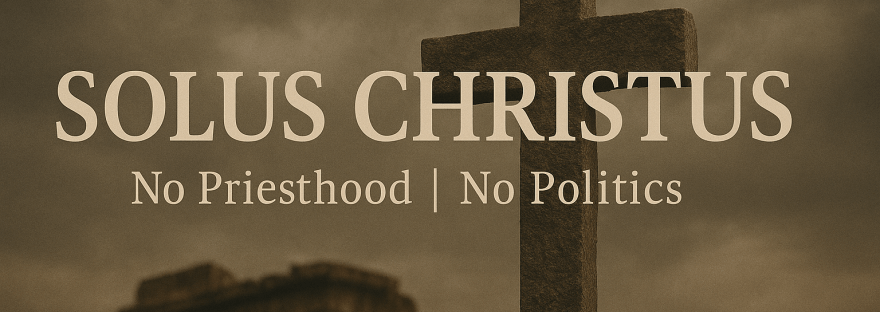
The early Church didn’t gather around a bishop, a priesthood, or an empire. They gathered around Christ alone.
He was their Shepherd. Their Head. Their only Mediator. Their King.
They had no hierarchy. No altars. No state sponsorship. Just a risen Lord, and the Holy Spirit who exalted Him.
“He is our High Priest, our sacrifice, our God. We need no other intercessor.” — Clement of Alexandria, c. AD 190
The Simplicity of Christ-Centered Worship
In the Ante-Nicene era, churches met in homes. Leaders were recognized by character and gifting—not power or title. Their gatherings exalted Jesus:
His Word was read and obeyed
His name was confessed in baptism
His body was remembered in the meal
His Spirit moved among them without control
There were no titles like “reverend.” No power granted by religious office. The focus was not on the man behind the table—but on the Lamb who was slain.
Why They Rejected Priesthood Systems
Jesus’ once-for-all sacrifice ended the priesthood (Hebrews 10:11–14). But as the Church grew, power structures crept in:
Bishops were elevated over congregations
Church leaders began wearing robes and taking titles
Authority became institutional—not spiritual
But the early Church resisted these changes.
“You are all brethren. Do not elevate one above another. Christ alone is Lord of His people.” — The Shepherd of Hermas, c. AD 140
They knew that if Christ is truly the Head, no man can stand in His place.
No Politics in the Kingdom
Before Constantine, the Church had no political favor. They were persecuted, not promoted. And that was a blessing.
Why?
Because it kept their hope in Christ—not Caesar
Because it purified their worship
Because it protected the Church from worldly compromise
When the Church and state eventually merged, Christ was no longer enough. Power, politics, and position took center stage.
The early Church would have wept.
Christ Alone, Then and Now
Solus Christus isn’t just about salvation—it’s about supremacy.
Is Christ truly:
The Head of our gatherings?
The Teacher of our hearts?
The Judge of our motives?
The Center of our worship?
Or have we replaced Him with:
Church tradition?
Personality-driven ministries?
Political alliances?
Religious performance?
The early Church said no to all of it—and yes to Christ alone.
Kingdom Discipleship Reflection
Is Christ the center of my faith—or have I elevated man-made structures?
Do I follow leaders who point me to Christ, or to themselves?
Have I confused patriotism or politics with Kingdom allegiance?
This week, read Colossians 1:15–20 and John 10. Let the Spirit reveal:
“Is Christ truly supreme in my life, my church, and my hope?”
“He is also head of the body, the church; and He is the beginning, the firstborn from the dead, so that He Himself will come to have first place in everything.” — Colossians 1:18
“In the same way the Spirit also helps our weakness; for we do not know how to pray as we should, but the Spirit Himself intercedes for us with groanings too deep for words.” — Romans 8:26 (NASB 1995)
As a family, there will be moments of grief, confusion, or uncertainty—times when words fail and tears come instead.
The Holy Spirit is with you in those moments. He hears the cries of your heart and speaks to the Father on your behalf.
You don’t have to pray perfectly—just sincerely.
Family Talk:
Can you remember a time when prayer was hard?
How can we lean on the Spirit more when we don’t have words?
Prayer: Holy Spirit, thank You for helping us pray. Teach our family to come to You in every moment—especially when we don’t know what to say. Amen.
“In the same way the Spirit also helps our weakness; for we do not know how to pray as we should, but the Spirit Himself intercedes for us with groanings too deep for words.” — Romans 8:26 (NASB 1995)
Sometimes prayer feels awkward. Silent. Confusing. You don’t always know what to say—or how to say it.
That’s okay.
Romans 8:26 gives you peace: The Spirit prays when you can’t. You don’t have to impress God. You just need to come to Him. The Spirit fills the gaps.
Your weakness doesn’t disqualify your prayers—it makes them real. And the Spirit is right there, turning your sighs into intercession.
Challenge: Next time you feel stuck in prayer, sit with God in silence. Trust the Spirit to speak for you.Prayer: Holy Spirit, thank You that I don’t have to figure out the perfect prayer. Meet me in my weakness and draw me closer to the Father. Amen.
“In the same way the Spirit also helps our weakness; for we do not know how to pray as we should, but the Spirit Himself intercedes for us with groanings too deep for words.” — Romans 8:26 (NASB 1995)
Have you ever not known what to say when you pray? That’s okay!
The Bible says the Holy Spirit helps us talk to God—even when we don’t know what to say. He prays for us in a special way only God understands.
You can talk to God anytime. The Spirit will help your heart speak, even without words.
Try This: Close your eyes and sit quietly for a moment. Let your heart talk to God.
Prayer: Holy Spirit, thank You for helping me pray. Even when I don’t know the words, You know my heart. Amen.











Leave a comment