“Every tree that does not bear good fruit is cut down and thrown into the fire.”
— Matthew 7:19 NASB1995
🌱 Raising Fruitful Lives
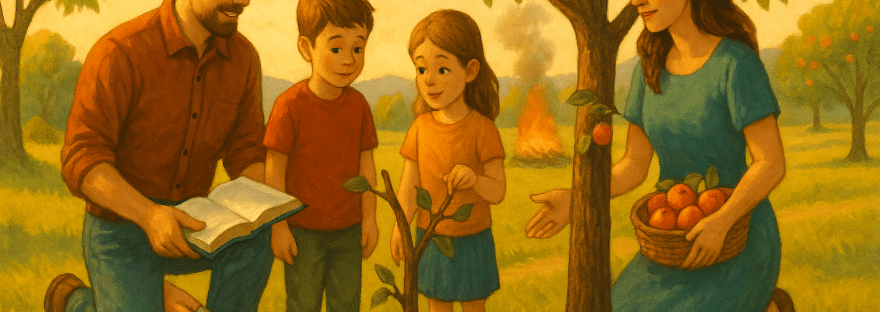
Mothers, we are gardeners of hearts. This warning from Jesus reminds us: a fruitless life is not a neutral one—it’s one in danger. Our role isn’t to produce fruit in our children, but to cultivate the soil of their hearts and lead them to the true Vine.
Don’t fear this verse—use it to stir urgency and hope. Every moment we point our children to Christ matters.
🗣 Family Conversation:
What does it mean to bear fruit?
How can we help each other stay connected to Jesus?
👣 Kingdom Practice:
Choose one way this week to help your child walk out their faith—whether in words, forgiveness, or kindness.
🙏 Prayer:
Lord, make our home a place of fruitfulness. May we grow in You and teach our children to do the same. Amen.
From the series “The Commands of Christ — Love in Action”
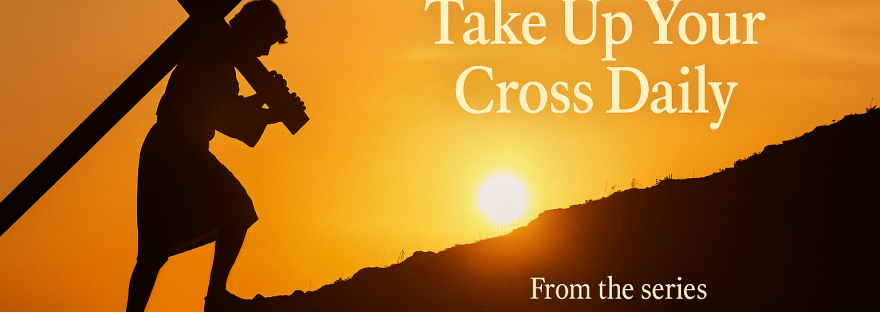
“If anyone wants to come after Me, he must deny himself, take up his cross daily, and follow Me.” — Luke 9:23, NASB 1995
This is not a call to comfort. It is not an invitation to moral improvement. It is a summons to die.
To follow Christ is to walk the road He walked. There is no other path to life but the one that leads through death—death to self, to sin, to pride, to reputation, to everything the world says is valuable.
The cross is not a symbol of inconvenience. It is a tool of execution.
And Jesus didn’t say, “Take it up once.” He said, “Daily.”
The command to deny yourself flies in the face of everything our culture worships. The world says, “Love yourself. Express yourself. Exalt yourself.” Christ says, “Crucify yourself.”
Not literally, but spiritually. Not in despair, but in obedience.
“Those who belong to Christ Jesus have crucified the flesh with its passions and desires.” — Galatians 5:24
This is the heart of discipleship. Not that we add Jesus to our lives—but that we surrender our lives to Him completely.
To take up your cross daily means you no longer belong to yourself. Your time. Your body. Your rights. Your dreams. All laid down in loving surrender.
“He died for all, so that those who live would no longer live for themselves, but for Him who died and rose on their behalf.” — 2 Corinthians 5:15
The early Church did not water this down. They didn’t lure people in with promises of ease. They preached Christ—and Him crucified. And they embraced suffering, rejection, and even death, because they had already died to this world.
Ignatius of Antioch (c. AD 107): “Let me be food for the wild beasts… that I may be found the pure bread of Christ. I no longer desire to live according to the flesh, but to suffer for Christ.” — Letter to the Romans, Ch. 4
Tertullian (c. AD 200): “To bear the name of Christ is to bear the burden of the cross… not only in suffering but in denying our sinful nature daily.” — On the Resurrection of the Flesh, Ch. 23
They did not cling to their comfort. They clung to the cross. Because they knew: to lose your life for Christ is to find it.
This is not a one-time prayer. It is a daily surrender. It’s not about perfection—but persistence.
Every day, you wake up and lay your life down again. Every day, you choose obedience over pride, holiness over comfort, truth over popularity.
And every day, the world may look at you and see loss. But heaven sees love.
Because no one loves Christ more than the one who is willing to die for Him—and live for Him every single day.
📚 Sources & References
Take Up Your Cross Daily
Scripture (NASB 1995):
Luke 9:23 – “Deny yourself, take up your cross daily…”
Galatians 5:24 – “Those who belong to Christ have crucified the flesh…”
2 Corinthians 5:15 – “No longer live for themselves, but for Him…”
Ante-Nicene Sources:
Ignatius of Antioch, Letter to the Romans, Ch. 4. “Let me be food for the wild beasts… I no longer desire to live according to the flesh.” [Available at: EarlyChristianWritings.com]
Tertullian, On the Resurrection of the Flesh, Ch. 23. “To bear the name of Christ is to bear the burden of the cross…” [Available at: NewAdvent.org]
“Every tree that does not bear good fruit is cut down and thrown into the fire.”
— Matthew 7:19 NASB1995
🔥 Fruitlessness Has Consequences
Jesus doesn’t mince words. A fruitless life isn’t neutral—it’s dangerous. Trees without good fruit aren’t just unproductive; they’re destined for judgment.
This isn’t about perfection, but direction. A life truly rooted in Christ will bear fruit. Not instantly, but inevitably. Let His Spirit cultivate growth in your heart.
🕊 Ante-Nicene Insight:
Early Christians didn’t settle for belief alone. They lived lives of sacrificial love, purity, and holiness—fruit that pointed unmistakably to Christ.
💭 Reflect:
Am I making excuses for fruitlessness?
What fruit is the Holy Spirit trying to grow in me right now?
✨ Prayer:
Lord, prune away anything unfruitful in me. Let my life glorify You with lasting fruit. Amen.
“If a tree doesn’t make good fruit, it gets chopped down.”
— Matthew 7:19 (Paraphrased)
✂️ Fruit or Firewood?
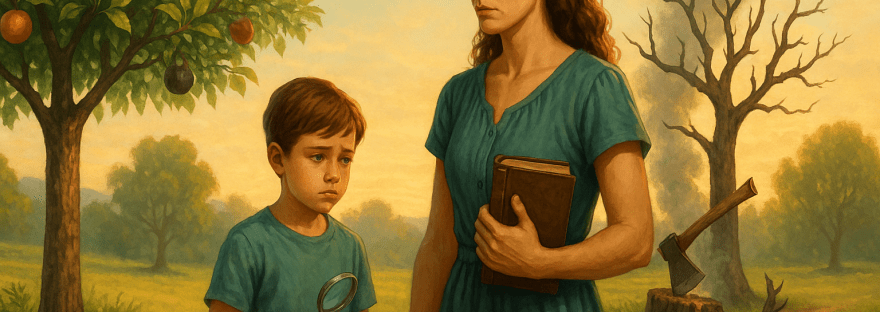
Jesus says trees that don’t grow good fruit are cut down. That means it matters what kind of life we live! He wants our lives to show love, kindness, and truth.
🌟 Kingdom Tip:
Good choices are like growing good fruit. When we follow Jesus, we grow something beautiful.
💬 Think About It:
What good things did you do today?
What would Jesus say about your fruit?
✨ Let’s Pray:
Jesus, help me grow strong and kind. I want to be a tree full of Your love. Amen.
“Every tree that does not bear good fruit is cut down and thrown into the fire.”
— Matthew 7:19 NASB1995
🚫 Fruitless Isn’t Harmless
Jesus’ warning hits hard: No fruit = no life. Being a Christian in name only doesn’t cut it. If there’s no growth, no change, no love—it’s not faith, it’s dead weight.
Don’t fear this verse—respond to it. If you belong to Christ, fruit will come. Let Him till the hard ground and nourish what’s weak.
🔎 Real Talk:
Are you bearing real fruit—or just wearing a label?
What needs to be surrendered for growth?
🙏 Prayer:
God, don’t let me settle for a fruitless life. Shape me into someone who shows You through every part of who I am. Amen.
“A good tree cannot produce bad fruit, nor can a bad tree produce good fruit.”
— Matthew 7:18 NASB1995
🌳 Fruit Reveals the Root
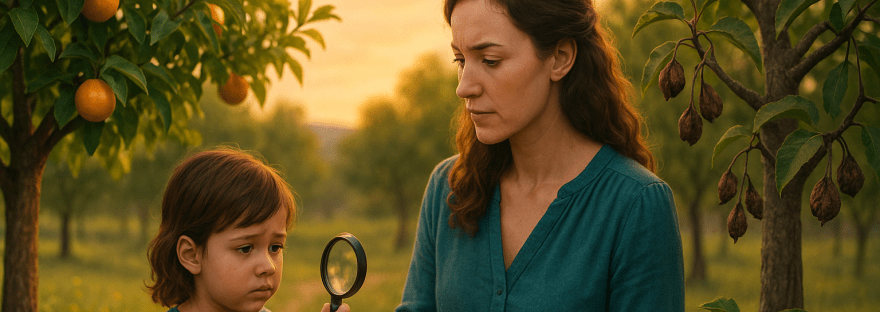
Jesus speaks plainly: fruit matches the tree. You can’t fake godliness forever. Eventually, what’s growing in the heart will show. Words, attitudes, reactions—they all sprout from what’s rooted inside.
Our lives preach louder than our lips. Are we planted in Christ? Then we will grow in holiness, not perfection—but direction.
🕊 Ante-Nicene Insight:
The early believers knew their witness was seen in action. Their fruit—courage, compassion, endurance—proved their faith was genuine.
💭 Reflect:
What kind of fruit is growing in my life?
Am I rooted in Jesus or in something else?
✨ Prayer:
Lord, plant me deep in You. Let Your Spirit produce fruit that glorifies You. Amen.
As mothers, we know we can’t force fruit—but we can nourish the root. The condition of the heart shapes the outcome of life. Jesus reminds us that good fruit only comes from a good tree.
Help your children see that faith is more than words; it’s shown in the fruit of their daily lives—respect, love, truthfulness. Model a life rooted in Scripture, and they’ll learn what grows from abiding in Christ.
🗣 Family Conversation:
What kind of fruit does our home produce?
Are there areas we need to replant or prune?
👣 Kingdom Practice:
Pick one fruit of the Spirit to focus on as a family this week. Encourage each other to grow it through words and actions.
🙏 Prayer:
Lord, help our family stay rooted in You. May the fruit of our lives bring You glory. Amen.
You hold the Bible in your hands. Sixty-six books. One Author. One Spirit. One unfolding story of redemption. And yet, for many, it’s a confusing book—wrapped in mystery, buried under layers of tradition, or filtered through man-made systems. But that was never God’s design.
The earliest Christians didn’t read the Bible through denominational creeds or theological filters. They read it with open hearts, under the teaching of the Holy Spirit, and in the context of their Jewish and first-century world. They tested everything by the written Word—and followed it with their lives.
It’s time to return to their way.
Scripture Focus:
“Your word is a lamp to my feet and a light to my path.” — Psalm 119:105, NASB1995
Reading with the Author, Not Just About Him
The Bible is not a dead text. It is living and active (Hebrews 4:12) because it is breathed out by the Holy Spirit (2 Timothy 3:16). Without the Spirit, Scripture becomes information. With Him, it becomes transformation.
The Bereans didn’t rely on theological systems or traditions to interpret the Word. They relied on the Spirit and the Scriptures themselves. Their example calls us to read with reverence, discernment, and dependence—not on man, but on God.
The Early Church Read the Word as One Unified Story
They saw the Old and New Testaments not as opposites but as one unfolding plan of God. They understood the Jewish idioms and culture behind the text. They read the Word in its historical context, through Hebraic lenses, and with spiritual hunger.
They didn’t force Scripture to fit their beliefs. They submitted their beliefs to the Word.
Principles for Spirit-Led, Scripture-Faithful Reading
Context Is King Who wrote it? To whom? What is happening? What covenant are they under? Read what’s there, not what tradition has imposed.
Culture and Language Matter Jesus spoke as a Jew to Jews. Many truths are deeply rooted in Hebrew idioms and first-century thought. Misreading the cultural setting leads to misapplying truth.
Scripture Interprets Scripture Isaiah 28:10 and 1 Corinthians 2:13 remind us: truth is confirmed in multiple witnesses across God’s Word. Don’t hang doctrines on isolated verses.
Avoid Allegory Unless the Text Demands It The early Church read Scripture literally unless it clearly indicated symbolism (such as in visions or parables). They let the Spirit—not philosophy—determine meaning.
Reject Traditions That Override Scripture Jesus warned about this (Matthew 15:9). When tradition silences the Word or redefines its meaning, we must return to the text and the Spirit.
Walking as the Early Church Walked
To read the Bible rightly, we must return to how it was written: in context, by the Spirit, and for the Church. The Bereans searched the Scriptures daily to test everything. The Ante-Nicene believers treasured the Word, often at the cost of their lives.
They didn’t read to affirm a system. They read to know and follow Christ.
Return to the Word. Return to the Spirit.
The Bible is not meant to be interpreted by the wisdom of men, but by the One who wrote it. The Holy Spirit still teaches, still convicts, still opens eyes. You don’t need a new method—you need the old path.
Read with prayer. Read with surrender. Read with the Spirit. And you will find Christ in every page.








Leave a comment