Being gentle means responding with kindness and calmness, even when someone is upset or when you feel frustrated. Your words and actions can help bring peace rather than make things worse.
Sometimes it is easy to react quickly with strong words when you feel angry. But Jesus teaches you to pause and choose a gentle response. A soft answer can calm a situation and help others feel understood.
Jesus is gentle and kind. He shows you how to treat others with patience and care. When you follow Him, He helps you respond peacefully.
When you choose gentleness, you are showing the love of Jesus to others.
Prayer: Jesus, help me be gentle in my words and actions. When I feel upset, remind me to choose kindness and calmness. Teach me to bring peace in every situation. Amen.
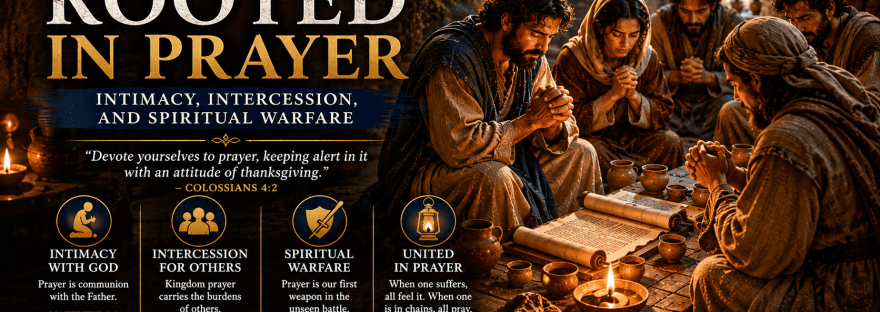
The prayer life of God’s Kingdom citizens goes beyond routine. Prayer is communion with the King, a time to speak, listen, surrender, intercede, battle, repent, and rest. It’s not a technique to master but a relationship to pursue.
For example, a day of relational prayer might begin in the morning with silent listening, inviting God to speak into any needs or anxieties for the day. Later, as needs or concerns for others arise, one might pause to intercede on behalf of a friend or coworker. During a lunch break, a believer could turn ordinary moments into prayer by expressing gratitude or asking for guidance. In quiet moments before bed, there might be an honest confession, a surrender of the day’s burdens, and a recognition of God’s presence. Relational prayer invites ongoing conversation with God in every part of life, not just at set times or in set places.
For the early Church, prayer was neither optional nor occasional but essential. Without abiding in Christ, they had no strength. Prayer became their daily atmosphere for life, worship, suffering, and service. And through prayer, God moved powerfully among them, setting the stage for remarkable change in every aspect of early Christian life.
Through prayer, God moved powerfully among them. Prisons shook. Fearful believers became courageous witnesses. Many were healed, while the discouraged grew stronger. Entire cities encountered the reality of Christ. This was not due to any special, inherent power, but because their prayers drew on Scripture, relied on the Holy Spirit, and focused on the Kingdom of God.
Jesus taught His followers:
“But you, when you pray, go into your room, and when you have shut your door, pray to your Father who is in the secret place…” (Matthew 6:6)
From this foundational truth, we see that prayer begins with intimacy. This is one of the most important truths believers must recover today. Jesus did not teach prayer merely as a religious obligation or public performance. He invited His people into fellowship with the Father. True prayer is relational. It flows from a heart that desires. Early believers prayed daily, not by force but longing for God’s presence. Their prayers were sincere and honest, seeking communion with the One who already knew them completely. the One who already knew them completely.
You may pause here and quietly think, “Sometimes my prayer life feels dry or inconsistent.” That struggle is deeply human. Prayer is not sustained by emotion alone. Like every relationship, intimacy with God grows through continual pursuit, even in seasons when feelings fluctuate. The Father does not turn away the believer who comes honestly before Him. If you find yourself in a dry season, consider setting aside just a few quiet minutes each day to sit in God’s presence or write a short, honest prayer in a journal. Even a small, intentional step can open the way for renewed intimacy with Him.
Building on this foundation, the early Church also understood that prayer was never meant to remain self-centered.
Paul wrote:
“Therefore I exhort first of all that supplications, prayers, intercessions, and giving of thanks be made for all men…” (1 Timothy 2:1).
Believers prayed for boldness, healing, the salvation of those in prison, the salvation of unbelievers, and strength for the Church. When one suffered, the whole body felt the burden. When one believer suffered, the entire body felt the burden together. This reflects the heart of Christ Himself. Prayer trains believers to look beyond their own needs and participate in God’s care for others.
You may recognize something here: “I spend much of my prayer time focused only on my own struggles.” While God certainly invites believers to bring personal needs before Him, Kingdom prayer expands the heart outward. As believers mature spiritually, intercession becomes an expression of love, compassion, and shared burden within the Body of Christ. For those seeking a way to begin, consider choosing one person, group, or situation each day to lift up in prayer. This simple practice can make intercession a natural part of your daily rhythm, helping you grow in love and concern for others.
Beyond intercession, the early Christians also viewed prayer as spiritual warfare.
Scripture reminds believers:
“For we do not wrestle against flesh and blood, but against principalities, against powers… against spiritual hosts of wickedness…” (Ephesians 6:12)
They understood that the Christian life was not merely a social or intellectual struggle. A spiritual battle was taking place beneath the surface. But importantly, they recognized that people themselves were not the enemy. The true conflict involved the spiritual. Prayer was never a last resort for them; it was always their first response. They prayed amid temptation and persecution, seeking protection, courage, discernment, and endurance, and used prayer to stand firm against the enemy. Prayer became part of how they stood firm against the enemy’s schemes.
You may feel overwhelmed by the reality of spiritual warfare. “How do I stand firm when life feels spiritually heavy?” Scripture continually points believers back to dependence upon God. The strength to endure does not come from human willpower alone, but from abiding in Christ through prayer, truth, righteousness, faith, and the Word of God. In such moments, believers can turn to specific Scriptures for encouragement and strength. For example, they might pray Ephesians 6:10-11: “Finally, be strong in the Lord and in the power of His might. Put on the whole armor of God, that you may be able to stand against the schemes of the devil.” A simple prayer could be: “Lord, help me to stand strong in Your truth and righteousness, and to trust in Your power when I feel weak. Clothe me with Your armor, and guide me by Your Spirit today.”
And there is deep assurance in this: believers do not fight for victory as though the outcome is uncertain. Christ has already overcome the world.
Prayer is not about manipulating God or forcing His hand. It is about aligning the believer’s heart with the will of God and participating in what He is already doing.
In addition to individual prayer, the early Church also prayed together. Corporate prayer unified believers, strengthened weary hearts, and reminded them they were not alone. In moments of fear and persecution, they gathered together and sought God with one mind and one heart. Their unity in prayer reflected their unity in Christ. This call to united prayer remains deeply important today.
Modern life easily fragments believers into isolation and distraction. Yet the Body of Christ was designed to pray together, carry burdens together, and seek God together. Prayer knits hearts together in humility and dependence upon the Lord.
If you do not already have a group to pray with, consider starting or joining a small prayer group. Invite a few friends, family members, or fellow believers to meet regularly for prayer, either in person or online. Praying together brings encouragement, accountability, and a stronger sense of unity. Even gathering with just one or two others can make a profound impact, helping you apply these truths and experience the power of shared prayer in your own life.
Taken together, what the early Church teaches us is both simple and profound. Prayer is intimacy with God. Prayer is intercession for others. Prayer is spiritual warfare.
The main takeaway is clear: Prayer is the vital connection for every believer who desires a close relationship with Christ, serving as a means of intimacy, intercession, and spiritual warfare.
The Kingdom of God is not advanced merely through activity, programs, or human effort. Ultimately, the Kingdom of God advances through those who stay rooted in prayer, showing that true effectiveness comes not from effort alone but from a heart aligned with God through devoted prayer.
The Holy Spirit, who was present at creation, now dwells within every believer and continues to lead and guide into truth. Yet amidst these profound truths, many believers quietly ask the same question: How do I hear the voice of God?
To answer this, it helps to understand the main ways the Holy Spirit speaks to believers. In the pages that follow, we will explore how the Spirit primarily communicates through Scripture, brings conviction, guides through godly counsel and obedience, and confirms His presence by producing spiritual fruit. These pathways are not abstract concepts; they show up in everyday life. For example, the Spirit can highlight a specific verse during Bible reading that perfectly addresses a current worry or decision. Conviction might come when a quiet nudge leads someone to apologize after an unkind word. Godly counsel is timely, trusted advice from a friend or mentor that aligns with biblical wisdom. The fruit of the Spirit is often visible in gradual, unmistakable changes in attitude, like responding with patience in a frustrating situation. By outlining these pathways, we can better recognize His voice amidst the many competing influences of this world.
In a world filled with noise, opinions, emotionalism, and spiritual confusion, it is easy to search for dramatic experiences or mystical formulas. However, Scripture continually redirects us to something much simpler and far more stable: the Holy Spirit speaks primarily through the Word of God, confirming His work through conviction, godly counsel, obedience, and spiritual fruit.
Jesus said:
“However, when He, the Spirit of truth, has come, He will guide you into all truth…” (John 16:13)
The Spirit of God never acts apart from the truth already revealed. This is important to remember, as emotions, impressions, or manipulation are often mistaken for the leading of the Holy Spirit. The Spirit and the Word are in harmony.
Scripture declares:
“All Scripture is given by inspiration of God…” (2 Timothy 3:16)
The Spirit authored Scripture, and He faithfully illuminates it for believers. He does not invent a new truth that contradicts what God has already spoken. He leads people deeper into obedience to Christ, not away from Him. Any supposed revelation, prompting, or spiritual experience that opposes the written Word of God cannot be from the Holy Spirit.
At this point, you may pause and feel relieved by that clarity: “So I don’t have to chase signs or emotional experiences to hear God?” The answer is no, God has already spoken through His Word, and the Spirit faithfully applies that truth to the heart of the believer. This does not make the Spirit distant or impersonal. Quite the opposite. The Spirit actively works within believers through conviction.
Jesus said:
“And when He has come, He will convict the world of sin, and of righteousness, and of judgment.” (John 16:8)
Conviction is one of the clearest ways the Holy Spirit speaks internally. Yet conviction is often misunderstood. It is not the same as condemnation or hopeless guilt. To illustrate the difference, consider this example: After making a harsh comment to a friend, a believer might feel an overwhelming sense of shame and believe God is angry and distant. This sense of rejection and hopelessness is a form of condemnation.
When you sense conviction, how can you respond? Consider these steps: pause and listen to what the Spirit is pressing on your heart; pray honestly before God; confess any sin or wrong attitude; and seek forgiveness from God and from anyone you may have hurt. Taking these steps allows conviction to lead you to growth and deeper fellowship with Christ, rather than discouragement or distance. Recognizing this distinction matters deeply, especially for those struggling to discern their responses.
Sometimes, believers struggle with shame and question whether it is conviction or condemnation. Scripture offers assurance:
“There is therefore now no condemnation to those who are in Christ Jesus…” (Romans 8:1)
The Holy Spirit corrects because He loves. He exposes sin to restore believers into deeper fellowship with Christ, not to destroy them. His conviction aligns our conscience with God’s truth. This understanding shaped the early Church. Rather than relying solely on feelings or inward impressions, they tested everything carefully against Scripture.
“Test all things; hold fast what is good.” (1 Thessalonians 5:21)
Their confidence rested in obedient surrender to the truth, trusting the Spirit to reshape them and guide them into holiness through the Word of God. This dependence on Scripture explains why it became central to their lives.
When believers open the Bible, the Holy Spirit brings conviction, encouragement, wisdom, and understanding. Passages become personal as the Spirit applies them to the heart.
“But the natural man does not receive the things of the Spirit of God… because they are spiritually discerned.” (1 Corinthians 2:14)
Early Christians had only portions of Scripture, but with the Word of God and the Spirit, they were faithfully guided. Given this, you may wonder, “Why does Scripture sometimes feel dry or difficult for me?” Spiritual growth is not sustained by emotion alone. There are seasons of clarity and seasons of perseverance. When Scripture feels distant or challenging, it can be helpful to pause and pray honestly, asking God for renewed understanding. For example, you might pray, “Open my eyes, that I may see wondrous things from Your law” (Psalm 119:18), or turn to Psalms such as Psalm 42, which honestly expresses spiritual longing and the hope of renewal. Journaling reflections or questions that arise in these moments may also open the heart for the Spirit’s guidance. If discouragement lingers, consider reaching out to a trusted believer for prayer or advice. These simple steps: prayer, journaling, and seeking counsel, can bring encouragement and help steady you through dry seasons. Yet as believers continue seeking God humbly through His Word, the Spirit remains faithful to teach, refine, and strengthen them over time.
Alongside perseverance, the early Church also understood the necessity of discernment, knowing that not every voice comes from God. The flesh speaks. The world speaks. The enemy deceives, and this is why Scripture repeatedly warns believers to test every Spirit and examine every thought.
“Beloved, do not believe every spirit, but test the spirits, whether they are of God…” (1 John 4:1)
The voice of the Holy Spirit will always reflect the character of Christ. He does not manipulate, flatter, confuse, or contradict the truth. He leads believers toward humility, holiness, obedience, peace, and deeper dependence upon God.
You may ask, “How do I become more discerning?” The answer is not found in suspicion or fear, but in growing intimacy with Christ through Scripture, prayer, and obedience. Just as sheep learn their shepherd’s voice, believers learn the Spirit’s leading by abiding in Christ. Practical steps can foster this discernment, such as meditating deeply on Scripture, praying regularly for wisdom, seeking accountability from mature believers, and reflecting on decisions in the light of biblical truth.
To meditate on Scripture, set aside dedicated time to read a passage slowly, reflecting on each phrase and asking God to reveal its meaning. Consider repeating key verses, writing them in a journal, or praying through the words as you read. If a particular verse stands out, pause to consider how it applies to your life or situation.
Seeking accountability can begin by connecting with a trusted believer or mentor and sharing your desire to grow spiritually. This might involve meeting regularly to discuss struggles, pray together, or review areas where you want to grow. Honest conversation and mutual encouragement lay the foundation for honest feedback and support.
Engaging in these practices helps believers tune their hearts to recognize the Spirit’s guidance. And none of this was meant to happen in isolation.
The early believers discerned together within the Body of Christ. Mature believers strengthened younger believers. The Church prayed together, searched the Scriptures together, and encouraged one another toward truth. God often confirms His guidance through wise, biblically grounded counsel within the community of faith.
In light of this, consider seeking out a local church or connecting with a small group of fellow believers. Participating in a Christian community provides practical support and accountability as you grow in discernment and apply what you learn. Walking alongside others helps you discover guidance, encouragement, and the wisdom of those who have walked the path before you.
If you are not sure where to start, look for a group or church that bases its teaching and practices on the Bible, values prayer and worship, and encourages genuine relationships. You might begin by visiting churches in your area and observing whether the messages are grounded in Scripture, whether the community welcomes newcomers, and whether there are opportunities to connect with others through small groups or ministry. Ask questions about the church’s beliefs, leadership, and how they support spiritual growth. Trusted friends or mentors can also offer recommendations. Remember, you are looking for a place where God’s Word is central, where people seek to follow Christ together, and where you can both receive and contribute to the journey of faith. This brings both stability and protection.
Reflecting on all of this, what the early Church teaches us is deeply important for today.
Thus, the Holy Spirit still speaks, but always in agreement with the Word He inspired. Conviction is His gracious work drawing believers toward truth and holiness. Every voice, thought, and impression must be tested against Scripture. And disciples do not seek emotional excitement above all else. They seek truth.
Because the Spirit of God always leads people toward Jesus Christ, deeper obedience, and lives transformed by the truth of His Word.
📖 “If you love Me, keep My commandments.” —John 14:15 (NKJV)
Jesus teaches that obedience is a way to show love for Him. In a family, this means choosing to follow God’s Word together in daily life. Obedience is not just about rules—it is about trusting God and walking in what is right.
In the home, obedience can be seen in simple actions—listening, showing respect, being honest, and choosing what is right even when it is difficult. These choices help build a strong and peaceful family.
There will be times when obedience feels challenging. Each person may face moments where doing what is right is not the easiest choice. In those moments, remembering that obedience is an expression of love helps guide the decision.
Families can grow in obedience by learning God’s Word together and encouraging one another to follow it. Prayer and time in Scripture help keep the focus on what God has called each person to do.
Parents can lead by example, showing what it looks like to trust God and follow His ways. Children learn that obedience is not about perfection, but about a willing heart that desires to honor God.
Knowing Christ as a family means choosing to walk in obedience together. As each person follows Him, the home becomes a place where love, trust, and faith continue to grow.
Prayer: Jesus, help our family walk in obedience to You. Teach us to follow Your Word and trust Your ways. Give us willing hearts to do what is right and to honor You in everything we do each day. Amen.
📖 “If you love Me, keep My commandments.” —John 14:15 (NKJV)
Jesus makes a clear connection between love and obedience. Obedience is not a means of earning His love, but the evidence of it. It flows from a heart that knows Him, trusts Him, and desires to walk in His ways.
As a woman navigating life’s complexities, I sometimes find obedience challenging. There are moments when God’s Word calls you in a direction that may not align with your preferences, your plans, or what seems easier in the moment. In those times, obedience becomes a decision—one that reveals where you place your trust.
Obedience is rooted in knowing Christ. As you grow in your understanding of His character—His faithfulness, His wisdom, and His love—your willingness to follow Him deepens. His commands are not burdensome; they are given for your good and for your alignment with truth.
Through the Holy Spirit, Christ enables this obedience within you. He brings conviction when you begin to drift, guidance when you are uncertain, and strength when obedience feels difficult. This transforms obedience from something external into something that flows from within.
There will be moments when obedience requires choosing what is right over what is comfortable—speaking truth with grace, walking in integrity, or trusting God’s direction when it is not fully clear. In those moments, obedience becomes a visible expression of love.
Obedience also brings peace and clarity. It aligns your life with God’s truth, creating a steady foundation that remains even when circumstances shift.
Knowing Christ transforms obedience from obligation into devotion. It becomes a response to who He is, not merely a requirement to follow.
Obedience rooted in love reflects a heart that trusts Him fully.
Prayer: Jesus, help me walk in obedience from a heart that loves You. When I am tempted to follow my own way, remind me of Your truth. Strengthen me through Your Spirit to follow You faithfully and to trust that Your ways are always good. Amen.
📖 “If you love Me, keep My commandments.” —John 14:15 (NKJV)
Jesus connects love and obedience in a direct and inseparable way. Obedience is not presented as a means to earn His love, but as the evidence of it. The order matters—love for Christ produces a willingness to follow what He has said.
For teenagers, obedience can sometimes feel restrictive, especially when it conflicts with personal desires, peer influence, or cultural expectations. It may seem easier to follow what feels natural in the moment rather than what Scripture teaches. Yet Jesus redefines obedience—not as limitation, but as relationship.
Obedience begins with understanding who Christ is. As you grow in your knowledge of Him—His character, His authority, and His love—your perspective shifts. His commands are not burdensome; they are given for your good and for your alignment with truth.
Through the Holy Spirit, Christ enables obedience. It is not sustained by willpower alone. He brings conviction when you drift, guidance when you are unsure, and strength when obedience feels difficult. This transforms obedience from external effort into internal response.
There will be moments when obedience requires choosing what is right over what is easy—standing firm when others do not, making decisions that align with God’s Word, or turning away from what does not honor Him. In those moments, obedience becomes a clear expression of love.
Obedience also brings clarity and stability. It aligns your life with truth, shaping your decisions, your relationships, and your direction. It creates a foundation that remains steady, even when circumstances change.
Knowing Christ transforms obedience from obligation into devotion. It becomes a natural response to who He is and what He has done.
Obedience is not about earning His love—it is the evidence that you know Him.
Prayer: Jesus, help me obey You from a heart that loves You. When I feel tempted to follow my own way, remind me of Your truth. Give me strength through Your Spirit to follow Your commands and live in a way that honors You each day. Amen.
📖 “If you love Me, keep My commandments.” —John 14:15 (NKJV)
Jesus teaches that obedience is a way to show your love for Him. When you choose to do what He says, you are showing that you trust Him and care about what is right.
Sometimes it can be hard to obey, especially when you want to do something else. But Jesus helps you make the right choice. He gives you the strength to listen and follow what is good.
Obedience is not just about rules—it is about your heart. It means choosing to follow Jesus because you love Him.
Each time you obey, you grow closer to Jesus and learn to trust Him more.
Prayer: Jesus, help me obey You in everything I do. Teach me to follow Your ways and make right choices. Thank You for helping me grow and love You more each day. Amen.
The Kingdom of God thrives not through human effort, but by God’s presence. Christ’s purpose is ongoing empowerment through the Holy Spirit, who indwells believers and enables them to live in the Kingdom. Without the Holy Spirit, the Church loses vitality. Without prayer, believers lack strength and focus. Without Spirit-led discipleship, Christianity is reduced to information rather than transformation. These are essentials to true Kingdom life.
Jesus promised His disciples:
“But the Helper, the Holy Spirit, whom the Father will send in My name, He will teach you all things…” (John 14:26)
The early Church understood this deeply. They did not see the Holy Spirit as an abstract doctrine or distant force but as God’s living presence among them. Because of this, the Spirit guided, convicted, strengthened, and empowered them to walk as Kingdom citizens. As a result, the Book of Acts Church endured persecution, boldly proclaimed the gospel, and remained steadfast in suffering. Their confidence stemmed not from ability, but from dependence on the Spirit.
“Not by might nor by power, but by My Spirit,” says the Lord of hosts. (Zechariah 4:6)
You may notice a quiet tension. “I know about the Holy Spirit, but I don’t always know what it means to walk with Him.” That uncertainty is more common than many realize. The Spirit’s work is not about performance or spectacle. It is about abiding in Christ, being shaped by His Word, and learning to surrender to God daily. If you wonder what this looks like day to day, begin simply. Start each morning with a prayer, inviting the Holy Spirit to guide you. Open Scripture, even briefly, and ask Him to illuminate it. Pause during the day to recognize God’s presence and ask for help with decisions or challenges. These small practices cultivate a practical walk with the Spirit.
The Holy Spirit teaches believers through Scripture and convicts hearts of sin. Furthermore, He strengthens obedience and continually points to Christ. He does not replace the Word but illuminates it, and does not lead believers away from Christ’s teachings but deeper into them. As a result, this guidance leads believers naturally into prayer.
Prayer was never meant to be a mere ritual. In the early Church, prayer became the lifeblood of discipleship and the place where believers learned to depend on God. Through prayer, they sought wisdom, received courage, interceded for one another, and aligned with God’s will.
The apostles declared:
“But we will give ourselves continually to prayer and to the ministry of the word.” (Acts 6:4)
Note the order: Prayer was not secondary but foundational.
Early Christians prayed, suffered, and sought God together. Their prayers focused on faithfulness and the advancement of the Kingdom. When threatened, they prayed for courage to proclaim Christ.
You may think, “My prayer life feels inconsistent.” That realization invites, not shames. Prayer is not about perfect words but communion with God. The Spirit helps in weakness. If you struggle, set aside regular time each day, even if it’s only briefly, to sit with God. Praying with others brings encouragement and support. Growth in prayer comes less by dramatic moments and more by faithfully returning to God’s presence. Even simple, honest prayers are precious to Him.
Prayer reshapes discipleship. Modern discipleship can depend on systems, curriculum, and programs. These tools have value, but the early Church knew true discipleship flows from abiding in Christ by the Spirit. Transformation is formed internally by God. Spirit-led discipleship together as a community is vital. Join or form small groups for prayer, Scripture, and sharing your spiritual journey. Partnerships or triads encourage prayerful support and accountability. Small settings allow for honest discussion, encouragement, and joint listening to the Spirit. As congregations embrace these rhythms, spiritual growth becomes shared, and Christ’s life is shaped in the community.
The Spirit produces what human effort cannot. He forms humility where pride reigned. He teaches forgiveness where bitterness grew. He produces love, patience, self-control, and faithfulness in the believer. Discipleship is not behavior management. It is Christ’s life formed within His people.
You may ask, “Why do I still struggle if the Spirit lives in me?” Spiritual growth is not instant perfection. The Christian life is continual surrender, learning daily to walk with the Spirit, not the flesh. Even Paul described this ongoing struggle. Yet the Spirit continues His work in those who belong to Christ. Take heart, your struggles neither disqualify you nor put you beyond God’s reach. God is patient, committed to finishing His work in us. If discouraged, remember you are not alone. Every believer walks this journey. Persevere in faith, knowing God will not give up, and seek encouragement and support from others.
The early Church understood something many today must recover: revival starts in private. Before public awakening comes private surrender. Before bold proclamation comes hidden prayer. The believers who turned the world upside down first learned to kneel in humility and dependence. Prayer and repentance remain essential. Revival does not depend on excitement, but on hearts returning to God.
You may wonder, “Can God still awaken His Church today?” The answer is yes. The same Spirit who empowered early believers still indwells every true believer. God has not grown weak, distant, or silent. The question is not if the Spirit will work, but if believers are willing to abide. Moreover, it is crucial to remember that none of this is meant to be lived in isolation.
The Spirit forms a people, not just individuals. The early Church prayed, worshiped, suffered, and strengthened one another. Spirit-led discipleship flourishes in the Body of Christ as believers encourage, correct, and carry each other. This made the early Church powerful, not worldly influence, but surrendered lives filled with the Spirit.
In summary, today’s call is clear: the Church depends on the Holy Spirit. Prayer is essential to Kingdom living. Discipleship is transformation, not just knowledge, but Christlikeness through the Spirit. This is foundational for advancing God’s Kingdom.
I invite you to respond practically. This week, let us commit as a congregation to pray, whether in groups, with a friend, or as a family. Set aside time to seek God in prayer, asking the Holy Spirit to guide, empower, and transform us. As we take this intentional step together, expect God to work in and through our community.
The Kingdom of God is not advanced by human strength. God’s Kingdom grows through people who are surrendered to Christ, walk by the Spirit, and are devoted to prayer and the Word. This is where lasting impact and true transformation begin. This is where revival still begins.
📖 “Therefore, putting away lying, ‘Let each one of you speak truth with his neighbor.’” —Ephesians 4:25a (NKJV)
This instruction reflects a decisive shift in a believer’s life. Lying is not to be managed or minimized—it is to be put away. In its place, truth is to be spoken consistently. This change is rooted in your new life in Christ, where truth becomes the standard for both speech and conduct.
As a woman navigating relationships and daily responsibilities, there can be moments when truth feels difficult to maintain. Situations may arise in which it seems easier to withhold information, soften the truth, or avoid full honesty. Yet Scripture calls you to a clear standard—truth in every word.
Speaking the truth is more than avoiding falsehood. It is living with sincerity, transparency, and consistency. It means your words align with reality, reflecting integrity in both what you say and how you live.
Through the Holy Spirit, Christ brings awareness when your words begin to drift from truth. He convicts gently, guiding you back into alignment with God’s standard. As you respond to that conviction, truth becomes a steady pattern in your life.
Truthfulness also strengthens relationships. It builds trust, reliability, and clarity. Even when the truth is difficult, it establishes a stable, enduring foundation.
There will be moments when speaking truth requires courage—addressing a situation honestly, admitting a mistake, or choosing integrity over comfort. In those moments, obedience to God takes precedence over temporary ease.
Knowing Christ transforms truth from a principle into a way of living. It becomes the foundation of your words, your relationships, and your daily walk.
Walking in truth reflects a life aligned with the God who is truth.
Prayer: Jesus, help me walk in truth in every area of my life. When I am tempted to avoid honesty, give me the courage to speak the truth. Shape my words and actions, so they reflect Your truth and bring honor to You each day. Amen.
📖 “Therefore, putting away lying, ‘Let each one of you speak truth with his neighbor.’” —Ephesians 4:25a (NKJV)
Paul’s instruction begins with a decisive action—putting away lying. This is not presented as a gradual adjustment but as a clear removal of what does not align with the truth. In its place, believers are commanded to speak truthfully. This reflects a transformation that comes from being renewed in Christ.
As a teenager, honesty can be tested in many ways—conversations with friends, responses to authority, or even how you present yourself to others. There can be pressure to exaggerate, hide details, or adjust the truth to avoid consequences or gain approval. Scripture calls you to something higher—truth in every word.
Speaking the truth is not limited to avoiding false statements. It includes sincerity, accuracy, and consistency. It means your words reflect reality without distortion. This builds trust and aligns your speech with God’s character, who is truth.
Through the Holy Spirit, Christ brings conviction when your words begin to drift from honesty. He guides you back to the truth and strengthens your resolve to speak it consistently. Over time, honesty becomes a defining pattern rather than a situational choice.
Truthful speech also shapes your relationships. It builds reliability and credibility, allowing others to trust what you say. Even when the truth is difficult, it establishes a foundation that remains steady.
There will be moments when telling the truth requires courage—admitting a mistake, being transparent, or choosing honesty when it may bring consequences. In those moments, obedience to God takes priority over temporary comfort.
Knowing Christ transforms your speech. You no longer speak out of convenience, but out of truth.
Truth in every word reflects a life aligned with the God of truth.
Prayer: Jesus, help me speak truth in every situation. When I feel tempted to hide or change the truth, give me the courage to be honest. Shape my words so they reflect Your character and honor You in all I say. Amen.