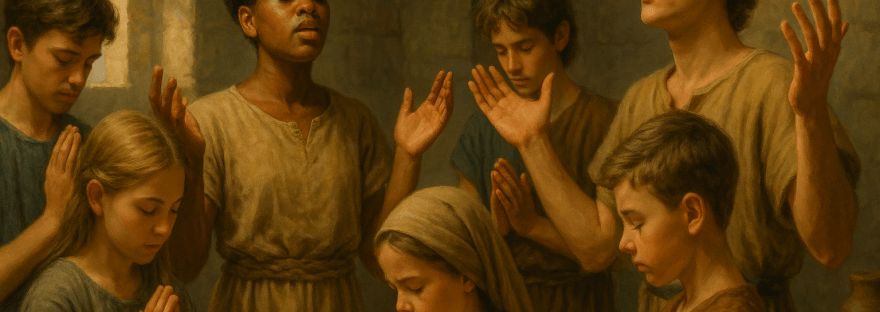
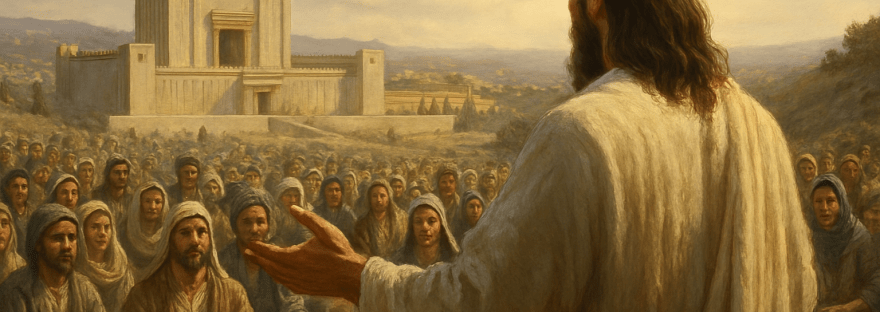
I’m a follower of Christ, learning daily to walk the narrow path laid out in His Word. Through Rooted & Raised: Anchoring Women & Children in Christ, I simply seek to point others back to Scripture, tested by the Holy Spirit, lived out in faith, and anchored in truth.
● This space isn’t about lofty theology or grand platforms. It’s about humble obedience, Kingdom living, and helping others, especially women and families, rediscover the kind of faith that bears fruit, costs something, and reflects the love of Christ. My heart is to encourage others as I learn, grow, and surrender alongside them.
● This space isn’t built on lofty theology or big platforms, it’s grounded in humble obedience, Kingdom living, and encouraging women and families to rediscover a faith that bears fruit, costs something, and reflects the love of Christ.
● I don’t have a budget for an editor, publisher, or team behind the scenes. Everything you see here is created prayerfully and paid for out of pocket, using the tools I can afford to help present a clear, polished message of truth and hope.
● If you're blessed by what you read and would like to contribute toward this work, you’re welcome to support via:
📲 Cash App: $RootedRaised
📖 “And He has on His robe and on His thigh a name written: KING OF KINGS AND LORD OF LORDS.” —Revelation 19:16 (NKJV)
Jesus Christ is not only Savior—He is King. This title speaks of absolute authority, not partial influence. His rule is not symbolic or optional; it is rightful and complete. To know Him fully is to recognize both His saving grace and His sovereign lordship.
As a woman navigating responsibilities, decisions, and relationships, there can be a quiet tendency to retain control—over plans, outcomes, or expectations. Yet acknowledging Christ as King calls for a different posture. It calls for surrender, not as loss, but as alignment with the One who governs perfectly.
His kingship is marked by righteousness, wisdom, and unchanging truth. Unlike human leadership, which can falter or shift, His authority remains steady. When you yield your life to Him, you are entrusting it to One who sees the whole path and leads without error.
Submission to Christ is lived out in daily decisions. It is choosing obedience when it is difficult, trusting His Word above personal reasoning, and allowing His truth to shape your responses. Through the Holy Spirit, He enables this surrender—not as a burden, but as a transformation of the heart.
There may be moments when yielding feels challenging, especially when circumstances are unclear or outcomes uncertain. Yet His authority is not harsh—it is good. The King who rules over all is the same Savior who gave His life for you.
Knowing Christ as King brings both reverence and rest. Reverence, because He is sovereign over all things. Rest, because the One who rules is faithful and just.
To yield to the King is to place your life in the hands of perfect authority.
Prayer: Jesus, You are the King of kings and Lord of lords. Help me surrender every area of my life to Your authority. Teach me to trust Your rule and follow Your ways with a willing heart each day. Amen.
📖 “And He has on His robe and on His thigh a name written: KING OF KINGS AND LORD OF LORDS.” —Revelation 19:16 (NKJV)
A king is someone who rules and leads. Jesus is not just any king—He is the King of kings. That means He is above every ruler and has all authority.
Jesus is a good and perfect King. He leads with truth, love, and justice. He knows what is best and cares for His people. When you follow Jesus, you are choosing to trust His rule in your life.
Sometimes you may want to do things your own way. But Jesus, as King, knows the right way. When you obey Him, you are showing that you trust Him as your King.
One day, everyone will see that Jesus is King. Until then, you can choose to follow Him, love Him, and live the way He teaches.
Prayer: Jesus, thank You for being my King. Help me trust You and follow Your ways. Teach me to obey You and remember that You are in control of everything. Amen.
📖 “And He has on His robe and on His thigh a name written: KING OF KINGS AND LORD OF LORDS.” —Revelation 19:16 (NKJV)
The title “King of kings and Lord of lords” reveals the absolute authority of Jesus Christ. This is not symbolic language meant to inspire—it is a declaration of His rightful rule over all creation. Every authority, whether earthly or spiritual, is ultimately subject to Him.
Recognizing Christ as King has personal implications. It means your life is not self-governed in the ultimate sense. You are not the final authority over your identity, decisions, or direction. Christ’s lordship calls for submission—not as oppression, but as alignment with truth.
As a teenager, the desire for independence is natural. You are forming identity, making choices, and stepping into responsibility. Yet Scripture reframes independence through the lens of authority. True freedom is not found in self-rule but in living under the rule of Christ, who governs perfectly.
Christ’s kingship is marked by righteousness, justice, and truth. Unlike human authority, His rule is not flawed or inconsistent. He leads with complete knowledge and perfect wisdom. Submitting to His authority means trusting that His commands are for your good.
Through the Holy Spirit, Christ enables you to live under His lordship. This involves daily decisions—choosing obedience over preference, truth over compromise, and faithfulness over convenience. Each act of submission shapes your life according to His kingdom.
Knowing Christ as King transforms your perspective. You are not navigating life aimlessly. You are living under the authority of the One who holds all things together and directs history toward His purpose.
To live under Christ as King is not to lose control—it is to be guided by perfect authority.
Prayer: Jesus, You are the King of kings and Lord of lords. Help me submit my life to Your authority and trust Your leadership. Teach me to follow Your ways daily and live in alignment with Your truth. Amen.
📖 “And He has on His robe and on His thigh a name written: KING OF KINGS AND LORD OF LORDS.” —Revelation 19:16 (NKJV)
Jesus is not only Savior—He is King. This means He has authority over all things, including every part of a family’s life. When a home recognizes Christ as King, it chooses to follow His leadership in how it lives, speaks, and makes decisions.
In a family, this begins with understanding that God’s Word is the standard for truth. Parents and children alike learn to look to Scripture for guidance rather than relying only on personal opinions or emotions. When Christ is honored as King, His truth shapes the direction of the home.
Living under Jesus’ authority also affects how family members treat one another. His commands lead to love, patience, forgiveness, and kindness. When each person chooses to follow Him, the home becomes a place where His character is reflected in everyday actions.
There may be times when following Jesus feels difficult, especially when it means choosing obedience over personal preference. But trusting Him as King means believing that His ways are always right and good.
Knowing Christ as a family means placing Him at the center. When Jesus is recognized as King over the home, there is clarity, unity, and confidence in the direction He leads.
Prayer: Jesus, You are the King of kings, and we want You to be King over our family. Help us follow Your Word and trust Your leadership in everything we do. Teach us to live in a way that honors You each day. Amen.
The return of Christ is not a legend or a symbol; it is the Church’s blessed hope. For centuries, believers have grounded their faith in His promise. In uncertainty, they find strength in this hope. The King will return, not for the perfect, but for the prepared: vigilant and wholehearted in devotion.
“Behold, I am coming soon. Blessed is the one who keeps the words of the prophecy of this book.” — Revelation 22:7
History does not descend into chaos; rather, it progresses with purpose toward a divine wedding and the establishment of a Kingdom. Every event, including those that appear random or challenging, serves God’s ultimate plan. The Bride who waits in purity will be adorned in glory, and the sovereign King will dwell with His people eternally, fulfilling ancient promises.
“But you are not in darkness… for that day to surprise you like a thief.” — 1 Thessalonians 5:4
Although the faithful do not know the appointed hour, they remain vigilant and alert, actively preparing within the ordinary rhythms of life. We ready ourselves by nurturing a vibrant relationship with God: daily prayer, watchfulness, repentance, self-examination, service, Scripture reading, and worship all illuminate a darkening world. Consistent repentance and regular self-examination keep our hearts tender and receptive to the Spirit. We also practice obedience through loving our neighbors, seeking justice, showing mercy, and serving others as Christ did. Cultivating gratitude and watchfulness transforms routine moments into opportunities for faithfulness. Each day, we take another step toward readiness. Preparation is not passive; it involves daily decisions to love God and others, to pursue justice, to walk in humility, and to remain steadfast during trials. When we anticipate Christ’s return, even ordinary days become opportunities for worship and testimony.
“Let us be found ready, so that when the King appears, we will not shrink back in shame.” — Hermas, Mandate 9
“When Christ, who is your life, appears, then you also will appear with Him in glory.” — Colossians 3:4
Every tear, every loss, and each moment of faithful waiting will be overcome by His glory. He will remove all sorrow and establish His reign; His people will reign with Him. The suffering of the present age—genuine and painful though it is—is incomparable to the glory that is to come. On that day, questions will be resolved, wounds healed, and joy will abound as the faithful behold the King.
“The coming of the King will make radiant all who have kept the faith.” — Clement of Rome, 1 Clement 50
Those who are prepared are not merely spectators; they are heirs. Vigilance and hope thrive in community. As a church, we gather regularly for worship, prayer, and teaching to recall God’s promises. In these gatherings, sharing testimonies of faith and endurance inspires others to persevere. Through small groups and intentional friendships, we gain accountability, encouragement, and prayer. Furthermore, acts of service, both within and beyond the Church, help us embody Christ’s love and keep our eyes fixed on His return. Together, encouragement, shared burdens, and mutual celebration of God’s
faithfulness create a culture where hope is contagious. Importantly, this inheritance is not reserved solely for the future; it also transforms present conduct. Believers are thus called to live as citizens of the coming Kingdom, embodying love, mercy, and righteousness. Ultimately, the prepared will inherit the Kingdom and shine like the sun, reflecting His light to the world until His return.
“Then the righteous will shine like the sun in the Kingdom of their Father.” — Matthew 13:43
The imminent return of the King calls for unwavering hope and continual readiness. Those who prepare their hearts will be adorned in eternal glory. The Kingdom is reserved for those who remain faithful. Hope is not mere wishful thinking but a certainty grounded in promise. Feeling unprepared or wrestling with doubt is a common part of the journey of faith. The good news is that our hope does not rest on our perfection but on Christ’s finished work. When doubts arise, returning to God’s promises in Scripture brings reassurance. He is faithful even when we are weak. Honest conversations with trusted believers can offer perspective and prayer. Remember, readiness is not about having all the answers, but about trusting Jesus and responding to His invitation daily. His grace is sufficient, and He delights to meet us right where we are, offering peace and the assurance that we belong to Him. The wedding feast approaches. Until that day, the faithful are exhorted to encourage one another, remain steadfast in their confession, and live in a manner that directs others to the hope found in Christ. The narrative is ongoing, and its conclusion will be glorious for all who await and long for His appearing.
📖 “And He has on His robe and on His thigh a name written: KING OF KINGS AND LORD OF LORDS.” —Revelation 19:16 (NKJV)
Jesus Christ is not only Savior—He is King. This title speaks of absolute authority, not partial influence. His rule is not symbolic or optional; it is rightful and complete. To know Him fully is to recognize both His saving grace and His sovereign lordship.
As a woman navigating responsibilities, decisions, and relationships, there can be a quiet tendency to retain control—over plans, outcomes, or expectations. Yet acknowledging Christ as King calls for a different posture. It calls for surrender, not as loss, but as alignment with the One who governs perfectly.
His kingship is marked by righteousness, wisdom, and unchanging truth. Unlike human leadership, which can falter or shift, His authority remains steady. When you yield your life to Him, you are entrusting it to One who sees the whole path and leads without error.
Submission to Christ is lived out in daily decisions. It is choosing obedience when it is difficult, trusting His Word above personal reasoning, and allowing His truth to shape your responses. Through the Holy Spirit, He enables this surrender—not as a burden, but as a transformation of the heart.
There may be moments when yielding feels challenging, especially when circumstances are unclear or outcomes uncertain. Yet His authority is not harsh—it is good. The King who rules over all is the same Savior who gave His life for you.
Knowing Christ as King brings both reverence and rest. Reverence, because He is sovereign over all things. Rest, because the One who rules is faithful and just.
To yield to the King is to place your life in the hands of perfect authority.
Prayer: Jesus, You are the King of kings and Lord of lords. Help me surrender every area of my life to Your authority. Teach me to trust Your rule and follow Your ways with a willing heart each day. Amen.
📖 “And He has on His robe and on His thigh a name written: KING OF KINGS AND LORD OF LORDS.” —Revelation 19:16 (NKJV)
A king is someone who rules and leads. Jesus is not just any king—He is the King of kings. That means He is above every ruler and has all authority.
Jesus is a good and perfect King. He leads with truth, love, and justice. He knows what is best and cares for His people. When you follow Jesus, you are choosing to trust His rule in your life.
Sometimes you may want to do things your own way. But Jesus, as King, knows the right way. When you obey Him, you are showing that you trust Him as your King.
One day, everyone will see that Jesus is King. Until then, you can choose to follow Him, love Him, and live the way He teaches.
Prayer: Jesus, thank You for being my King. Help me trust You and follow Your ways. Teach me to obey You and remember that You are in control of everything. Amen.
📖 “And He has on His robe and on His thigh a name written: KING OF KINGS AND LORD OF LORDS.” —Revelation 19:16 (NKJV)
The title “King of kings and Lord of lords” reveals the absolute authority of Jesus Christ. This is not symbolic language meant to inspire—it is a declaration of His rightful rule over all creation. Every authority, whether earthly or spiritual, is ultimately subject to Him.
Recognizing Christ as King has personal implications. It means your life is not self-governed in the ultimate sense. You are not the final authority over your identity, decisions, or direction. Christ’s lordship calls for submission—not as oppression, but as alignment with truth.
As a teenager, the desire for independence is natural. You are forming identity, making choices, and stepping into responsibility. Yet Scripture reframes independence through the lens of authority. True freedom is not found in self-rule but in living under the rule of Christ, who governs perfectly.
Christ’s kingship is marked by righteousness, justice, and truth. Unlike human authority, His rule is not flawed or inconsistent. He leads with complete knowledge and perfect wisdom. Submitting to His authority means trusting that His commands are for your good.
Through the Holy Spirit, Christ enables you to live under His lordship. This involves daily decisions—choosing obedience over preference, truth over compromise, and faithfulness over convenience. Each act of submission shapes your life according to His kingdom.
Knowing Christ as King transforms your perspective. You are not navigating life aimlessly. You are living under the authority of the One who holds all things together and directs history toward His purpose.
To live under Christ as King is not to lose control—it is to be guided by perfect authority.
Prayer: Jesus, You are the King of kings and Lord of lords. Help me submit my life to Your authority and trust Your leadership. Teach me to follow Your ways daily and live in alignment with Your truth. Amen.
📖 “And He has on His robe and on His thigh a name written: KING OF KINGS AND LORD OF LORDS.” —Revelation 19:16 (NKJV)
Jesus is not only Savior—He is King. This means He has authority over all things, including every part of a family’s life. When a home recognizes Christ as King, it chooses to follow His leadership in how it lives, speaks, and makes decisions.
In a family, this begins with understanding that God’s Word is the standard for truth. Parents and children alike learn to look to Scripture for guidance rather than relying only on personal opinions or emotions. When Christ is honored as King, His truth shapes the direction of the home.
Living under Jesus’ authority also affects how family members treat one another. His commands lead to love, patience, forgiveness, and kindness. When each person chooses to follow Him, the home becomes a place where His character is reflected in everyday actions.
There may be times when following Jesus feels difficult, especially when it means choosing obedience over personal preference. But trusting Him as King means believing that His ways are always right and good.
Knowing Christ as a family means placing Him at the center. When Jesus is recognized as King over the home, there is clarity, unity, and confidence in the direction He leads.
Prayer: Jesus, You are the King of kings, and we want You to be King over our family. Help us follow Your Word and trust Your leadership in everything we do. Teach us to live in a way that honors You each day. Amen.
The early Christians understood that their ultimate home was not in this world. Rather than seeking power or acceptance, they regarded themselves as strangers and ambassadors of a Kingdom beyond this world (John 18:36).
This perspective was not a form of escapism; instead, it was central to their identity. They lived within the world but did not belong to it. Their words and actions reflected the values of Christ’s Kingdom rather than those of the surrounding Roman culture.
“Our citizenship is in heaven. And from it we await a Savior, the Lord Jesus Christ.”
— Philippians 3:20
Due to their refusal to conform, early Christians were frequently misunderstood, slandered, and marginalized. They abstained from participating in pagan feasts, military service, and the pursuit of political power. To outsiders, their lives appeared unusual, characterized by simplicity, purity, peace, and love.
“They dwell in their own countries, but simply as sojourners… they are in the flesh, but they do not live after the flesh… they pass their days on earth, but they are citizens of heaven.”
— Epistle to Diognetus, c. AD 130–200
Their primary focus was on preparing for the return of their King rather than attempting to reform Roman society. In a similar way, believers today can prioritize deepening their relationship with Christ, pursuing spiritual growth, and living out Kingdom values in their daily lives, rather than seeking influence or validation through political or cultural means. This mindset encourages faithfulness in character and love, trusting that change begins within and radiates outward.
An ambassador does not act on personal authority but embodies the will and values of the one who sends them. The early church embodied this role, being sent by Christ, empowered by the Spirit, and grounded inScripture.
“We are ambassadors for Christ, God making His appeal through us.”
— 2 Corinthians 5:20
They did not assimilate into the surrounding culture; instead, they stood out. Their presence challenged Rome’s prevailing values, exposed wrongdoing, and directed others toward a greater hope.
These believers were not anarchists. They paid taxes, honored the emperor, and obeyed civil laws, unless doing so required disobeying God. In those instances, they responded with peaceful civil disobedience, choosing to suffer rather than compromise their convictions.
“We must obey God rather than men.”
— Acts 5:29
They resisted quietly, without resorting to violence, protests, or rebellion. Many were imprisoned, tortured, or killed for their stance, yet they rejoiced to suffer for His name (Acts 5:41).
Their distinctiveness shaped their conduct. Their refusal to compromise was marked not by bitterness but by beauty. They prayed for their enemies, chose to sing rather than riot, and lived in a manner unapologetically different from those around them.
Their very existence served as testimony that another Kingdom had arrived and taken root within their hearts.
Today, many believers seek comfort in the kingdoms of this world: fighting culture wars, clinging to power, or blending in at work, online, or in their communities to avoid being called “radical.” But we are called to holiness, to be set apart, and to love boldly in our daily lives, decisions, and interactions. For example, being set apart at work might mean choosing honesty even if it means missing out on advancement, standing up for a colleague who is treated unfairly, or refusing to participate in gossip. Online, it may look like refraining from harsh debates or spreading negativity, instead offering encouragement and truth with grace. In relationships, it can mean choosing forgiveness over grudges, sacrificing time to support others, or keeping commitments even when it is difficult. These practical steps show what it means to live differently and reflect Christ in every aspect of daily life.
The early church transformed the world by steadfastly refusing to conform to it. They maintained their distinctiveness and demonstrated an unwavering commitment to Christ. Remember that your citizenship is in heaven. Consistently reflect this truth in your decisions, relationships, and daily priorities.
As an ambassador, ask daily: Does my speech, attitude, and service reflect the King I represent? Strive to faithfully and consciously reflect His character in all you do.
Prioritize obedience to God above obedience to people, even when social or professional pressures make godly choices challenging. Trust that faithful obedience produces a lasting impact. Remember that God is always with you, giving strength and wisdom as you seek to honor Him. He will remain faithful to you in every circumstance, and your courage and faithfulness will never go unnoticed by Him.
Standing apart by demonstrating humility, love, and integrity, especially when such qualities are unpopular, can profoundly influence those around you. Allow your distinctiveness to invite others to hope.
Sources:
The Holy Bible — Philippians 3:20; 2 Corinthians 5:20; Acts 5:29, 41; John 18:36