

Subscribe to continue reading
Subscribe to get access to the rest of this post and other subscriber-only content.
Subscribe to get access to the rest of this post and other subscriber-only content.
Subscribe to get access to the rest of this post and other subscriber-only content.

Subscribe to get access to the rest of this post and other subscriber-only content.

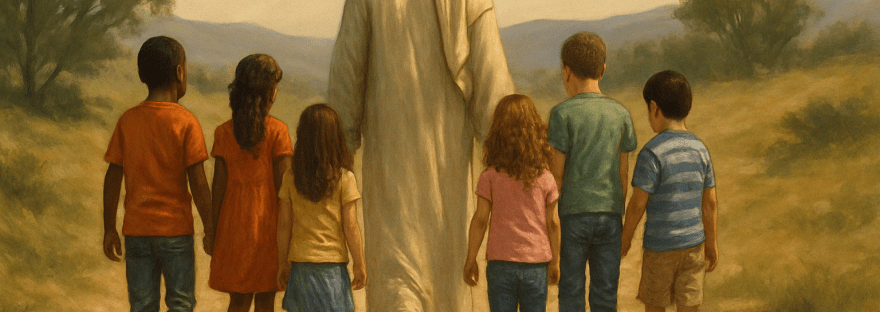
In a culture where women and children were often overlooked, dismissed, or used, the Kingdom of God broke every norm. Jesus didn’t just tolerate women and children—He honored them, taught them, touched them, healed them, included them, and commissioned them.
“Let the little children come to Me and do not hinder them, for to such belongs the Kingdom of Heaven.”
— Matthew 19:14
“Truly I tell you, wherever the gospel is preached in the whole world, what she has done will also be told in memory of her.”
— Mark 14:9
The early Church, following the example of Christ, created space for women and children to be seen, valued, and used by God. They weren’t peripheral to the Kingdom—they were essential to it.
Women in the Early Church
From the beginning, women played key roles in the spread of the gospel and the life of the Church:
The early church fathers, even while bound by certain cultural norms, often honored these women’s faithfulness.
“The women of the Church are not silent in works, though they may be in gatherings; they teach by their examples.”
— Tertullian, On the Veiling of Virgins
Children in the Kingdom
Unlike Roman culture that viewed children as disposable or property, Christians believed children were image-bearers of God with a right to life and dignity. They:
The testimony of young martyrs like Agnes, Pancras, and many others showed that children were capable of great faith and spiritual maturity.
“Out of the mouth of infants and nursing babies You have ordained praise.”
— Psalm 8:2
A Different Witness to the World
The early Church stood out in how they treated the least valued members of society. They didn’t marginalize the weak—they exalted them. In the Kingdom, greatness isn’t about power—it’s about purity, humility, and sacrificial love.
“Whoever humbles himself like this child is the greatest in the Kingdom of Heaven.”
— Matthew 18:4
What We Can Learn
Sources:

I. Scriptural Foundation — What Are First Fruits?
“Then the Lord spoke to Moses, saying, ‘Speak to the sons of Israel and say to them, “When you enter the land which I am going to give to you and reap its harvest, then you shall bring in the sheaf of the first fruits of your harvest to the priest. He shall wave the sheaf before the Lord for you to be accepted; on the day after the sabbath the priest shall wave it.”’
— Leviticus 23:9–11 (NASB 1995)
The Feast of First Fruits (Bikkurim) is one of the appointed times in Leviticus 23. It was celebrated on the day after the Sabbath following Passover—the first day of the week. As the barley harvest began, Israel was commanded to bring the first and best of their crop to the priest as a wave offering, consecrating the rest of the harvest to the LORD.
II. Understanding First Fruits in Jewish Thought
“Bikkurim” (בִּכּוּרִים) means first of the ripe fruits—a Hebrew idiom meaning what is most precious, set apart, and belonging to God.
First Fruits marked the beginning of the harvest season and launched the Counting of the Omer, a 50-day journey of anticipation leading to Shavuot (Pentecost).
Farmers would tie a reed around the ripening sheaf and declare, “This is for the LORD.”
The “first” of anything—fruit, children, livestock—was not optional. In Jewish culture, it acknowledged that God owns everything, and we are simply stewards.
Jewish Idiom: “The first belongs to the King.” It was a way of honoring the covenant relationship with YHWH.
III. Fulfillment in Messiah — Jesus, the First Fruits
1 Corinthians 15:20–23 (NASB 1995)
“But now Christ has been raised from the dead, the first fruits of those who are asleep. For since by a man came death, by a man also came the resurrection of the dead. But each in his own order: Christ the first fruits, after that those who are Christ’s at His coming.”
Yeshua rose on the Feast of First Fruits, fulfilling this appointed time not only in timing but in meaning.
Messianic Fulfillment:
Jesus is the “First Fruits” of the resurrection—the first of the final harvest to be raised in glory.
Just as the first sheaf made the whole harvest holy, Messiah’s resurrection sanctifies the resurrection of all who belong to Him.
This also fulfills Psalm 16:10 — “You will not allow Your Holy One to undergo decay.”
Jewish Thought: “What begins in holiness continues in holiness.” The first fruits were a pledge of what’s to come.
IV. Key Themes and Jewish Idioms

V. Devotional Exercises — Living the First Fruits Life
Each of these is rooted in Scripture and can be practiced individually or with your family or small group.
Read: Deuteronomy 26:1–11
Do: Write down your “first fruits” in this season. What has God given you that you can give back—your time, talents, worship, resources?
Pray:
“Abba, everything I have comes from You. I offer You my first and best. Let my life be an offering, just as You gave me Your best in Yeshua.”
Read: 1 Corinthians 15:12–28
Do: Journal what it means that Messiah is the first fruits of the resurrection. How does His resurrection shape your view of eternity?
Reflect:
“If He rose, so will I. My future is as secure as the empty tomb.”
Read: Psalm 119:1–16
Do: Begin a 50-day Scripture journey from First Fruits to Pentecost. Each day, read a Psalm or passage, meditate, and record spiritual growth.
Blessing (adapted):
“Blessed are You, LORD our God, King of the universe, who sanctifies us in Messiah and teaches us by His Spirit.”
Read: Romans 12:1–2
Do: Dedicate the areas of your life that need to be surrendered to the Lord—work, family, ministry, dreams. Offer them as a “wave offering.”
Pray:
“Yeshua, You are my First and Best. Teach me to live as a first fruits believer—holy, consecrated, and joyfully Yours.”
VI. Final Word — Messiah the First and the Guarantee
The first fruits were the pledge that more was coming. In Messiah’s resurrection, we have the guarantee that the full harvest of believers will one day rise. Until then, we live as consecrated ones—bearing fruit, growing in holiness, and anticipating the day of final redemption.
“But each in his own order: Messiah the First Fruits, then those who are Messiah’s at His coming.”
— 1 Corinthians 15:23

Subscribe to get access to the rest of this post and other subscriber-only content.

Subscribe to get access to the rest of this post and other subscriber-only content.

Subscribe to get access to the rest of this post and other subscriber-only content.

Subscribe to get access to the rest of this post and other subscriber-only content.

Jesus never promised an easy road for those who follow Him. In fact, He said quite the opposite:
“Enter by the narrow gate… For the gate is narrow and the way is hard that leads to life, and those who find it are few.”
— Matthew 7:13–14
The early Christians didn’t just understand this—they lived it. Their path was narrow. Their lives were hard. But they counted the cost, took up their crosses, and followed their King with joy.
They knew that Kingdom citizenship came with sacrifice, but they also knew it came with an eternal reward.
They Counted the Cost Before Following
Unlike modern altar calls that often emphasize blessing over burden, the early Church believed that following Christ meant dying to self. Jesus warned:
“Whoever does not bear his own cross and come after Me cannot be My disciple… any one of you who does not renounce all that he has cannot be My disciple.”
— Luke 14:27, 33
This wasn’t theoretical. They risked their jobs, homes, families, and lives. And they followed anyway.
They Chose the Hard Road Over the Popular One
The world offered comfort, protection, and compromise. But these believers knew that the wide road leads to destruction. They chose:
They knew that obedience might cost them everything. And still, they rejoiced that they were counted worthy to suffer for Christ (Acts 5:41).
Discipleship Was a Lifelong Surrender
For them, faith wasn’t a moment—it was a movement of the heart toward lifelong obedience. Baptism marked the beginning of a radical new allegiance. They didn’t ask, “What’s the minimum I must give?” They asked, “How can I give all?”
“Let none of you turn deserter… let us serve God with a pure heart, and we shall be found righteous in the last day.”
— 2 Clement 11
What About Today?
The Church today often minimizes the cost to maximize attendance. But Christ never changed His standard. The gate is still narrow. The cross is still required. And true discipleship still demands total surrender.
To be a citizen of the Kingdom means to walk a road that the world will never understand—but one that leads to life eternal.
What We Can Learn
Sources:

Leave a comment