I’m a follower of Christ, learning daily to walk the narrow path laid out in His Word. Through Rooted & Raised: Anchoring Women & Children in Christ, I simply seek to point others back to Scripture, tested by the Holy Spirit, lived out in faith, and anchored in truth.
● This space isn’t about lofty theology or grand platforms. It’s about humble obedience, Kingdom living, and helping others, especially women and families, rediscover the kind of faith that bears fruit, costs something, and reflects the love of Christ. My heart is to encourage others as I learn, grow, and surrender alongside them.
● This space isn’t built on lofty theology or big platforms, it’s grounded in humble obedience, Kingdom living, and encouraging women and families to rediscover a faith that bears fruit, costs something, and reflects the love of Christ.
● I don’t have a budget for an editor, publisher, or team behind the scenes. Everything you see here is created prayerfully and paid for out of pocket, using the tools I can afford to help present a clear, polished message of truth and hope.
● If you're blessed by what you read and would like to contribute toward this work, you’re welcome to support via:
📲 Cash App: $RootedRaised
Empowered: The Holy Spirit in the Life of the Believer devotional series
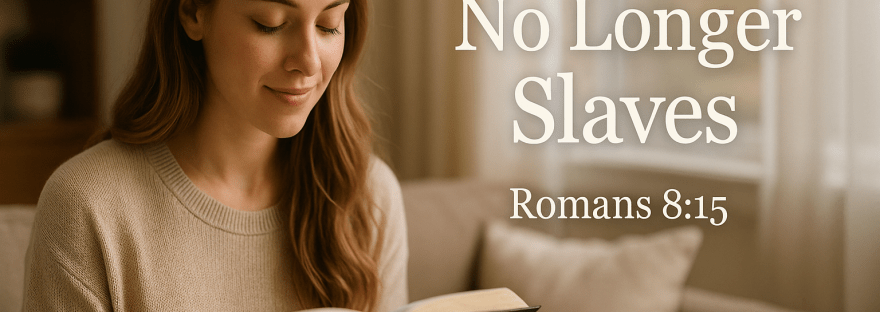
“For you have not received a spirit of slavery leading to fear again, but you have received a spirit of adoption as sons by which we cry out, ‘Abba! Father!’” — Romans 8:15 (NASB1995)
Fear shouts. Adoption whispers.
The world wants you to live in anxiety, insecurity, and pressure—but the Spirit you’ve received calls you family. That’s your identity. Not failure. Not pressure. Not fake perfection.
In Christ, you’re adopted, not abandoned.
Challenge: What fear has been trying to define you? Talk to God about it today. Cry out “Abba, Father,” and ask the Spirit to remind you who you are.
Prayer: Father, I confess the fears I’ve carried. Thank You for reminding me I’m Yours. I don’t have to live like a slave. I’m Your child. Amen.
Empowered: The Holy Spirit in the Life of the Believer devotional series
“For you have not received a spirit of slavery leading to fear again, but you have received a spirit of adoption as sons by which we cry out, ‘Abba! Father!’” — Romans 8:15 (NASB1995)
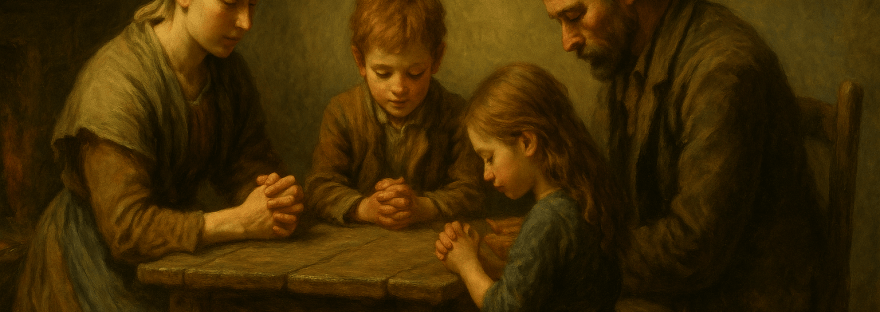
When you get scared, do you run to your mom or dad? God wants you to know that He is your Father too! He loves you and wants you to come to Him.
You don’t have to be afraid anymore. You can say, “Abba, Father!” That means, “Daddy, I need You!”
Try This: Next time you feel afraid, whisper “Abba, Father” and ask Him to help you.
Prayer: Abba, I’m so glad You made me Your child. Help me remember I don’t need to be scared—you’re always with me! Amen.
Empowered: The Holy Spirit in the Life of the Believer devotional series
“For you have not received a spirit of slavery leading to fear again, but you have received a spirit of adoption as sons by which we cry out, ‘Abba! Father!’” — Romans 8:15 (NASB1995)
You are not a slave to fear. You are not under the bondage of your past, your failures, or the expectations of others. The Holy Spirit reminds you of this truth—you are adopted. Loved. Safe.
You’ve been brought into a family where you can cry out, “Abba! Father!” with childlike trust and reverence. That cry isn’t just a word—it’s a deep connection. You belong.
Reflection: What areas of fear still try to enslave you? What would it look like to cry “Abba” in that space?
Prayer: Abba Father, thank You for adopting me into Your family. Replace my fears with trust, and let Your Spirit confirm again that I belong to You. Amen.
Your life has direction—but only if you’re following the right Guide. The Holy Spirit isn’t silent. He speaks through Scripture, convicts in the heart, and confirms truth.
Being led by Him means tuning out the noise and tuning in to His voice.
If you’re in Christ, you’re not just saved—you’re led.
Challenge: Ask yourself: Am I making choices led by feelings… or led by the Spirit?
Prayer: God, help me live as Your son/daughter—led by the Spirit, not my emotions or the world. I want to walk where You lead. Amen.
You are not alone in decision-making, in trials, or in growth. As a daughter of the Most High, you are led—not pushed, not abandoned. The Holy Spirit leads you gently, faithfully, and with divine purpose.
His leading may not always make sense in the moment, but it’s always right.
Reflection: Where do you need the Spirit’s leadership today—in parenting, relationships, or decisions?
Prayer: Holy Spirit, thank You for leading me as a true daughter of God. Teach me to listen closely and follow You in trust. Amen.
We often forget: the Bible wasn’t written to us—but it was written for us. Every book of the Bible was penned in a time, place, and culture vastly different from our own. The original readers understood idioms, customs, and references that are foreign to modern ears. If we ignore this, we risk reshaping God’s Word in our own image.
The early Church didn’t have this problem. They lived closer to the language, the land, and the worldview of Scripture. They heard it in its original echo, not through centuries of translation, philosophy, or tradition. To read as they did is to get closer to the heart of God’s message.
Scripture Focus:
“For whatever was written in earlier times was written for our instruction, so that through perseverance and the encouragement of the Scriptures we might have hope.” — Romans 15:4, NASB1995
Language Shapes Meaning
Scripture was written primarily in Hebrew, Aramaic, and Greek—languages rich with idiom, poetry, and concrete imagery. Many truths get lost in translation. For example:
“To bind and loose” (Matthew 18:18) was a known rabbinic phrase meaning to forbid or permit.
“Hating your father and mother” (Luke 14:26) reflects a Hebraic contrast in loyalty, not emotional hatred.
The Bereans and early disciples didn’t need these things explained—they lived them. But we must be students, not just of the text, but of its language.
Culture Illuminates the Message
To understand the Bible, we must step into sandals, not sneakers. That means:
Understanding first-century Jewish customs around marriage, covenant, or synagogue life
Recognizing Roman occupation and its impact on Jesus’ teachings
Seeing agricultural metaphors as more than symbolic—they were everyday realities
When Jesus said, “My sheep hear My voice,” His hearers knew exactly what shepherding looked like. When He spoke of seeds, vineyards, and leaven, these weren’t abstract—they were familiar, lived-in truths.
Mistaking the Culture Can Distort the Message
When we read Scripture as Western thinkers without reference to the original context, we risk:
Making allegory where God gave literal promises
Confusing metaphors with doctrine
Misinterpreting commands meant for a specific people and time
The Holy Spirit does not lead us into cultural ignorance. He brings clarity—but He does not override the setting of the Word He authored.
How the Early Church Understood Scripture
The Ante-Nicene believers received the Word in a cultural context still tied to its roots. Many were Jewish believers or Gentiles discipled by them. Their understanding flowed from:
The Septuagint (Greek translation of the Hebrew Scriptures)
Oral traditions from apostolic teaching
A lifestyle steeped in biblical rhythms (feasts, fasts, Scripture memorization)
They interpreted the Word in step with its meaning, not outside of it.
A Return to Biblical Hearing
We are not disconnected from Scripture, but we must admit our distance from its original setting. To be faithful readers, we must:
Learn the meanings behind expressions and customs
Avoid imposing our culture on the text
Invite the Holy Spirit to bridge the gap
Return to the Word. Hear It Anew.
God’s Word is timeless, but it came through time, culture, and language. When we listen with Berean hearts and an Ante-Nicene posture, we don’t just read the Bible—we hear it.Step into their world. Let the Spirit teach you through the culture and language He originally chose. And you’ll find the voice of Jesus, not just in your language, but in His.
“…for if you are living according to the flesh, you must die; but if by the Spirit you are putting to death the deeds of the body, you will live.” — centered on Romans 8:13 (NASB1995)
The Christian life isn’t just about avoiding sin—it’s about choosing life. But every choice matters.
How does your family handle temptation? Do you talk about sin and the Spirit’s help?
This is a great day to remind each other that we don’t fight fleshly desires alone. We are Spirit-led, and that changes everything.
Family Talk:
What’s one area we can help each other grow in?
How can we remind each other to call on the Spirit when tempted?
Prayer: Holy Spirit, help our family put off what is harmful and choose what gives life. Lead us together in obedience and joy. Amen.
“…for if you are living according to the flesh, you must die; but if by the Spirit you are putting to death the deeds of the body, you will live.” — centered on Romans 8:13 (NASB1995)
Culture says, “Do what feels right.” Scripture says, “Put to death the deeds of the body.”
You’re in a battle—and the Holy Spirit is your ally. He’s not here to shame you when you fall, but to empower you not to fall in the first place.
You can say no to lust. To anger. To gossip. To bitterness. Not by your strength—but by His.
Challenge: Name one struggle. Ask the Holy Spirit for help. Then actively choose obedience today.
Prayer: Holy Spirit, I can’t do this without You. Kill the sin that tries to rule me, and help me live in You. Amen.








Leave a comment