Kingdom Discipleship, Kingdom Living

Worship as a Way of Life

Living as a Daily Offering Before God

Worship is not music. Worship is not a Sunday event. Worship is not something we attend. Worship is a life surrendered—offered daily before the Lord.

In the Kingdom of God, priests don’t clock in once a week. They live in continual service. Everything they do, everything they give, everything they suffer, and everything they rejoice in can become worship when done unto the Lord.

“Present your bodies as a living sacrifice, holy and acceptable to God, which is your spiritual worship.”
Romans 12:1


Worship Begins with the Heart

God doesn’t want hollow songs or empty rituals. He wants your heart.

“These people honor Me with their lips, but their hearts are far from Me.”
Matthew 15:8

The early Church understood worship as more than external expression—it was an internal posture of humility, reverence, and joyful obedience. Their lives matched their words.

“Let your life be a hymn to God—pure in word, deed, and heart.”
Clement of Alexandria, The Instructor


All of Life Is Sacred When Offered to God

Whether working, serving, parenting, or suffering, the believer is never off-duty. Every action can be consecrated when done with a heart that says, “This is for You, Lord.”

  • Work becomes worship when done with honesty and excellence
  • Suffering becomes worship when borne with hope and praise
  • Rest becomes worship when received with gratitude
  • Generosity becomes worship when given in secret
  • Prayer becomes worship when we listen as well as speak

“In everything you do, do it heartily, as for the Lord…”
Colossians 3:23


The Early Church Worshiped in Spirit and in Truth

Their worship was marked by:

  • Simplicity
  • Scripture
  • Communion
  • Prayer
  • Song
  • Generosity
  • Obedience

And above all, they offered their lives, not just their voices.

“Their sacrifices were not bulls or goats, but thanksgiving, praise, and faithfulness.”
Justin Martyr, First Apology


What We Can Learn

  1. Worship is not an event—it is a lifestyle.
  2. God desires our hearts, not hollow rituals.
  3. Every action can be worship when done unto the Lord.
  4. Priests offer their entire lives as daily sacrifices.

Sources:

  • The Holy Bible — Romans 12:1; Colossians 3:23; Matthew 15:8; John 4:23–24
  • Clement of Alexandria, The Instructor
  • Justin Martyr, First Apology
  • Didache, ch. 9–10
  • Tertullian, On Prayer
2–3 minutes

Leave a comment

Kingdom Discipleship, Kingdom Living

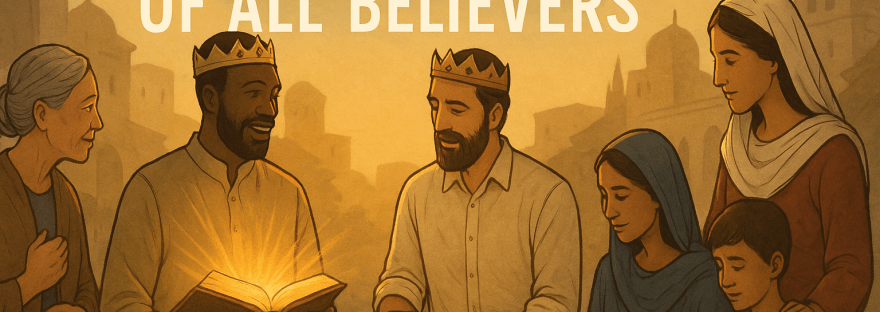
The Priesthood of All Believers

Beyond the Pulpit

When most people hear the word “ministry,” they think of pulpits, platforms, or pastoral titles. But in the Kingdom of God, every believer is a priest, and every follower of Jesus is in ministry.

The early Church didn’t operate with a clergy-laity divide. There were spiritual leaders, yes—but leadership was functional, not hierarchical. Ministry belonged to the whole Body. Everyone served. Everyone gave. Everyone prayed. Everyone witnessed. Everyone was a priest.

“To each is given the manifestation of the Spirit for the common good.”
1 Corinthians 12:7


Every Believer Has Access to God

In the Old Covenant, only the high priest could enter the Holy of Holies—and only once a year. But now, through Christ:

“We have confidence to enter the holy places by the blood of Jesus…”
Hebrews 10:19

You don’t need a mediator to go to God—you have one: Jesus. And through Him, the Spirit dwells in you, making every moment and every space sacred.


Every Believer Is Gifted for Ministry

“As each has received a gift, use it to serve one another…”
1 Peter 4:10

The gifts of the Spirit weren’t just for apostles or elders—they were distributed across the whole Body:

  • Teaching, serving, giving
  • Encouraging, interceding, leading
  • Healing, helping, discerning
  • And more…

The Church grew not because a few did much, but because everyone did their part.

“All of you together are Christ’s body, and each of you is a part of it.”
1 Corinthians 12:27


The Early Church Was Mobilized, Not Spectating

“Let no one be idle in the church, for the Spirit gives to all their part in Christ’s body.”
Clement of Rome, 1 Clement 44

There were no pew-warmers in the early Church. Every member was a minister, every home a place of worship, every gathering a time of edification and sending.

This priesthood wasn’t based on knowledge—it was based on surrender. The uneducated served alongside the wise. The poor gave what they had. Women prophesied, prayed, and served. Children praised.

The Spirit equipped the Body, and the Body walked in obedience.


What We Can Learn

  1. There is no “audience” in the Church—only participants.
  2. Every believer has direct access to God and is called to serve.
  3. The gifts of the Spirit are for the building up of the entire Body.
  4. When all believers function as priests, the Church becomes unstoppable.

Sources:

  • The Holy Bible — 1 Corinthians 12:7, 27; 1 Peter 4:10; Hebrews 10:19–22
  • Clement of Rome, 1 Clement 44
  • Didache, ch. 13–15
  • Origen, Homilies on Numbers
  • Tertullian, Apology 39

2–3 minutes

Leave a comment

Kingdom Discipleship, Kingdom Living

A Royal Priesthood

Your Calling in the Kingdom

Before you are anything else in this world—before you are a parent, a worker, a student, or even a church member—you are something far more sacred: a priest in the Kingdom of God.

This is not a metaphor. It is your identity and calling.

“You are a chosen race, a royal priesthood, a holy nation, a people for His own possession, that you may proclaim the excellencies of Him who called you…”
1 Peter 2:9

Through Christ, every believer has been made both royalty and priest—set apart for God’s purposes, empowered to worship, serve, intercede, and reflect His holiness to the world.


Priests Were Always Meant to Represent God

In the Old Testament, priests were:

  • Chosen by God
  • Cleansed and consecrated
  • Set apart to intercede, teach, offer sacrifices, and lead worship
  • Bridge-builders between God and man

But now, through Christ, that role has been restored and expanded—not limited to one tribe, but given to all who are born again.

“He has made us a kingdom and priests to our God.”
Revelation 5:10


Your Priesthood Is Rooted in Christ

Jesus is the Great High Priest—and we, His Body, follow in His priestly footsteps. Just as He offered Himself, we now offer ourselves:

  • As living sacrifices (Romans 12:1)
  • As intercessors for others (1 Timothy 2:1)
  • As witnesses of His grace and truth (2 Corinthians 5:20)
  • As ministers of reconciliation (2 Corinthians 5:18)

This is not optional. It is central to your identity in the Kingdom.


You Were Set Apart for Worship and Mission

The early Church didn’t wait for permission to minister—they lived as priests. They didn’t just attend gatherings; they became temples of the Holy Spirit, bringing light, healing, truth, and love everywhere they went.

“Let each one serve as he has been gifted, for we are all part of one priesthood under the Lord.”
Clement of Rome, 1 Clement 40


What We Can Learn

  1. Your identity as a royal priest is not earned—it is given in Christ.
  2. Priests are not passive observers—they are active servants and worshipers.
  3. Your life is a sacred offering—holy, set apart, and pleasing to God.
  4. You are called to proclaim, intercede, worship, and serve as Christ’s representative.

Sources:

  • The Holy Bible — 1 Peter 2:9; Revelation 5:10; Romans 12:1; 2 Corinthians 5:18–20; 1 Timothy 2:1
  • Clement of Rome, 1 Clement 40
  • Didache, ch. 15
  • Tertullian, On the Soldier’s Crown
  • Origen, Against Celsus

2–3 minutes

Leave a comment

Kingdom Discipleship, Kingdom Living

Part 4: Royal Priests — Living Out the Kingdom on Earth

Your Identity. Your Calling. Your Worship. Your Witness.

The Kingdom of God is not just a place we enter—it’s a life we embody. And God has not only made us citizens of His Kingdom—He has made us priests.

“You are a chosen race, a royal priesthood, a holy nation, a people for His own possession…”
1 Peter 2:9

In Christ, every believer is called to the priesthood—not to stand at an altar in robes, but to live as sacred vessels, offering up spiritual sacrifices, interceding for others, and reflecting the holiness of the King.

The early Church knew this deeply. They didn’t build temples—they became them. Their worship wasn’t confined to a service—it was poured out in their obedience, sacrifice, and daily lives.

This part of the series explores what it means to live as royal priests—serving, worshiping, interceding, and witnessing for Christ in all things.


Post Index:

  1. A Royal Priesthood — Your Calling in the Kingdom
    Understanding your priestly identity in Christ
  2. The Priesthood of All Believers — Beyond the Pulpit
    How every believer is called to serve, intercede, and minister
  3. Worship as a Way of Life
    Living as a daily offering before God
  4. The Ministry of Reconciliation — Representing Christ to the World
    Priests as bridge-builders, peacemakers, and ambassadors
  5. Clean Hands, Pure Hearts — The Integrity of the Priest
    Holiness and humility in Kingdom living
  6. Bearing One Another’s Burdens — Intercession in Action
    Priestly love through prayer, presence, and service
  7. Priests on Mission — Living for the Glory of the King
    Evangelism, service, and Kingdom influence through the priesthood
1–2 minutes

Leave a comment

Kingdom Discipleship, Kingdom Living

Revival Begins in the Secret Place

Why Awakening Starts with Personal Prayer and Repentance

Every great move of God begins in an unseen place.

Before churches are filled, before nations are stirred, before the lost are awakened—God first calls His people into the secret place. Revival doesn’t start in the crowd. It starts in the closet. It begins with one heart humbled, one soul awakened, one believer on their knees crying, “Lord, change me.”

“But when you pray, go into your room and shut the door and pray to your Father who is in secret. And your Father who sees in secret will reward you.”
Matthew 6:6


The Secret Place Is Where the Fire Is Kindled

The early Christians lived in hostile territory. There were no stages, no spotlights, no media. Their strength came from personal communion with God, cultivated in solitude and silence. That’s where the fire was ignited—and that’s what burned through persecution and pressure.

“Withdraw often to your chamber, and there seek the face of the Lord in prayer and fasting, so that your soul may be strengthened.”
Didache, ch. 4

They weren’t looking for revival. They were looking for God. And He brought revival with Him.


True Revival Requires Repentance

“If My people who are called by My name humble themselves, and pray and seek My face and turn from their wicked ways…”
2 Chronicles 7:14

Revival is not a feeling—it is a return to holiness. It doesn’t begin with the world—it begins with the Church. And it always begins with repentance.

The Holy Spirit convicts, not to shame, but to cleanse. He draws us to the Father, not with condemnation, but with love and truth.

“The Lord visits the humble and the contrite; let the one who grieves over his sin rejoice, for the Spirit will heal him.”
Hermas, Mandate 9


Personal Prayer Precedes Public Power

Many desire the effects of revival—power, miracles, conversions—without the cost. But the early Church understood this truth: the upper room comes before Pentecost. God moves through vessels that have been emptied in secret.

They prayed.
They fasted.
They confessed their sins.
They waited.
And the Spirit came.


What We Can Learn

  1. Revival is born in secret, not on stage.
  2. God moves through repentant, praying people.
  3. The secret place is where the Spirit transforms us.
  4. Before awakening a church or a nation, God awakens the individual.

Sources:

  • The Holy Bible — Matthew 6:6; 2 Chronicles 7:14; Psalm 51:17; Isaiah 57:15
  • Didache, ch. 4
  • Shepherd of Hermas, Mandate 9
  • Clement of Rome, 1 Clement 56
  • Origen, Homilies on Luke

2–3 minutes

Leave a comment

Kingdom Discipleship, Kingdom Living

Walking in the Spirit

Living What You Teach

The mark of a mature disciple is not how much they know, but how much they obey. True transformation happens not when truth is heard—but when it is lived. And that kind of living is only possible by the Holy Spirit.

The early Church was known for its consistency of life and doctrine. What they taught, they lived. What they preached, they practiced. Their lives were marked by simplicity, humility, sacrificial love, and bold obedience—all because they walked in the Spirit.

“If we live by the Spirit, let us also keep in step with the Spirit.”
Galatians 5:25


The Spirit Produces Fruit, Not Just Gifts

Many seek the gifts of the Spirit—and they are important. But the fruit of the Spirit is what proves maturity.

“The fruit of the Spirit is love, joy, peace, patience, kindness, goodness, faithfulness, gentleness, self-control…”
Galatians 5:22–23

It’s possible to be gifted and yet immature. But no one can walk in the Spirit and remain unchanged.


Walking in the Spirit Means Daily Surrender

“Put off your old self… and be renewed in the spirit of your minds.”
Ephesians 4:22–23

Walking in the Spirit is not a one-time event. It is a daily dying to self. It is:

  • Listening and responding to conviction
  • Abiding in Christ through prayer and obedience
  • Following His lead even when it costs

The early Church didn’t just teach this—they lived it, even to death.

“If the Spirit of God dwells in you, He will show Himself in your deeds, not in your words only.”
Shepherd of Hermas, Mandate 5


Integrity in the Spirit

The world is watching. Hypocrisy has harmed the witness of the Church. The early Christians were mocked, but never accused of double lives. They were known by:

  • Their love, even for enemies
  • Their honesty, even when costly
  • Their purity, in a corrupt world
  • Their faithfulness, even under pressure

“Do not be called Christians only in name, but in action and truth.”
Ignatius of Antioch, Letter to the Magnesians


What We Can Learn

  1. Walking in the Spirit is more than belief—it’s obedience.
  2. Gifts may be given, but fruit must be grown.
  3. Discipleship without integrity is hypocrisy.
  4. Spirit-led lives glorify Christ in word and deed.

Sources:

  • The Holy Bible — Galatians 5:22–25; Ephesians 4:22–24; Romans 8:1–14; John 15:5
  • Shepherd of Hermas, Mandate 5
  • Ignatius of Antioch, Letter to the Magnesians
  • Clement of Alexandria, Stromata
  • Didache, ch. 1–3

2–3 minutes

Leave a comment

Kingdom Discipleship, Kingdom Living

Discipleship by the Spirit, Not by Curriculum

How the Spirit Forms the Life of Christ in Us

Discipleship is not a workbook. It is not a church program. It is not a 6-week course with fill-in-the-blanks. Discipleship is the Spirit-led process of being conformed to the image of Christ—daily, humbly, and wholeheartedly.

Curriculum can help. Teachers are necessary. But without the Holy Spirit, discipleship becomes informational instead of transformational. It may change minds, but it cannot change hearts.

The early Church had no printed materials. No formal class schedules. And yet, it produced bold, holy, faithful followers of Jesus—because their discipleship was rooted in Scripture, the Spirit, and a surrendered life.


The Spirit Is Our Primary Teacher

“But the Helper, the Holy Spirit… will teach you all things and bring to your remembrance all that I have said to you.”
John 14:26

The goal of discipleship is not knowledge for its own sake, but obedience to Christ (Matthew 28:20). And the One who teaches us to obey is not a system—but the Spirit of the living God.

“You have no need that anyone should teach you… His anointing teaches you about everything.”
1 John 2:27

This doesn’t mean we reject teachers—it means we recognize the Spirit is the true Teacher behind all faithful instruction.


Discipleship Is Incarnational, Not Institutional

In the early Church, discipleship happened:

  • In homes, over meals and prayer
  • In prison, through suffering and encouragement
  • In relationships, as the mature walked with the new
  • In gatherings, as the Spirit led worship, exhortation, and correction

They didn’t need flashy methods—they needed faithful people and the Spirit of Christ dwelling richly within them.

“He who has the Spirit will not be puffed up, but will walk humbly and serve others.”
Shepherd of Hermas, Mandate 10


The Spirit Forms Christ in Us

“My little children, for whom I am again in the anguish of childbirth until Christ is formed in you!”
Galatians 4:19

The Spirit doesn’t merely teach about Jesus—He forms the life of Jesus within us. He convicts us of sin, leads us into truth, gives us spiritual gifts, and produces the fruit of the Spirit (Galatians 5:22–23).

No curriculum can produce that. Only abiding in Christ and walking with the Spirit can.


What We Can Learn

  1. True discipleship is Spirit-led, not schedule-driven.
  2. The Holy Spirit is our Teacher, Comforter, and Transformer.
  3. Programs may inform, but only the Spirit can form.
  4. Discipleship must be relational, prayerful, and Spirit-dependent.

Sources:

  • The Holy Bible — John 14:26; 1 John 2:27; Matthew 28:20; Galatians 4:19; Galatians 5:22–23
  • Shepherd of Hermas, Mandate 10
  • Didache, ch. 4
  • Irenaeus, Against Heresies, Book 3
  • Clement of Alexandria, The Instructor

2–3 minutes

Leave a comment

Kingdom Discipleship, Kingdom Living

Kingdom Prayer

Intimacy, Intercession, and Warfare

The prayer life of a Kingdom citizen is not a religious routine—it is the lifeline of communion with the King. In prayer, we do more than speak; we listen, intercede, battle, repent, and rest. Prayer is not a discipline we master—it’s a relationship we pursue.

To the early Church, prayer was oxygen. It wasn’t optional. It was essential. Their prayers moved cities, shook prisons, healed the sick, and emboldened the fearful. Why? Because their prayers were Spirit-led, Scripture-shaped, and Kingdom-driven.


Prayer Is Intimacy with God

“When you pray, go into your room and shut the door and pray to your Father who is in secret.”
Matthew 6:6

True prayer is relational. Jesus did not teach formulas—He invited intimacy. The early believers prayed daily, not because of duty, but because they longed for God’s presence.

They were not performing. They were seeking.

“Let your prayer be frequent, but not filled with empty words. Pray as one who speaks with the Father who hears.”
Didache, ch. 8


Prayer Is Intercession for Others

“I urge… that petitions, prayers, intercessions, and thanksgivings be made for all people…”
1 Timothy 2:1

Kingdom prayer is not self-centered—it is others-focused. The Church prayed for:

  • Boldness in persecution (Acts 4:29)
  • The healing of the sick (James 5:14–16)
  • The salvation of souls (Romans 10:1)
  • The strengthening of fellow believers (Ephesians 3:14–19)

They prayed like watchmen, alert and burdened. When one suffered, all felt it. When one was in chains, all pleaded for release.

“They prayed unceasingly for those in danger, and rejoiced when they returned, whether from death or prison.”
Eusebius, Church History


Prayer Is Spiritual Warfare

“We do not wrestle against flesh and blood… but against spiritual forces of evil in the heavenly places.”
Ephesians 6:12

The early Christians saw prayer as battle, not ritual. They were in a war, not against people, but against the schemes of the enemy. Their weapons were not swords, but truth, righteousness, faith, and prayer (Eph. 6:18).

  • They stood firm through prayer
  • They overcame temptation through prayer
  • They drove back darkness through prayer
  • They guarded one another through prayer

Prayer was not the last resort—it was their first weapon.


What We Can Learn

  1. Prayer is the believer’s primary place of intimacy with God.
  2. Kingdom prayer prioritizes intercession for others.
  3. Effective prayer is Spirit-led and Scripture-rooted.
  4. We are in a war—and prayer is how we fight.

Sources:

  • The Holy Bible — Matthew 6:6; 1 Timothy 2:1; Acts 4:29; James 5:14–16; Romans 10:1; Ephesians 3:14–19; Ephesians 6:12,18
  • Didache, ch. 8
  • Tertullian, On Prayer
  • Clement of Alexandria, Stromata
  • Eusebius, Church History

2–3 minutes

Leave a comment

Kingdom Discipleship, Kingdom Living

The Spirit Speaks

Hearing God Through Scripture and Conviction

The same Spirit who hovered over creation, who filled the prophets, and who raised Jesus from the dead—now dwells within believers. He has not gone silent. He still speaks.

But many ask, “How do I hear God’s voice?”
The answer is not found in spiritual tricks, mystical formulas, or emotional hype. It begins with this: the Holy Spirit speaks through the Word of God, and He confirms it through conviction, counsel, and fruit.


The Spirit and the Word Are Never in Conflict

“All Scripture is breathed out by God…”
2 Timothy 3:16

“The Spirit of truth… will guide you into all truth.”
John 16:13

The Spirit is the author of Scripture. He is also its interpreter. He doesn’t give new truth that contradicts the old. He brings light to what’s already been spoken.

Any voice, prompting, or “revelation” that contradicts Scripture is not from the Holy Spirit. The Spirit leads us to Christ, not away from Him. He exalts the written Word because He authored it.


Conviction: The Spirit’s Internal Witness

“When He comes, He will convict the world concerning sin and righteousness and judgment.”
John 16:8

Conviction is not the same as guilt. Guilt pushes us away from God. Conviction draws us back. The Spirit convicts to correct, not to condemn (Romans 8:1).

In the early Church:

  • Believers didn’t rely on inner feelings alone, but tested all things (1 Thess. 5:21).
  • They walked in obedient surrender, not just emotional confirmation.
  • They trusted the Spirit to align their conscience with God’s will.

Hearing God through Scripture

When believers open the Bible, they do not read alone. The Spirit brings the words to life, making them clear, personal, and powerful.

“The natural person does not accept the things of the Spirit… but the spiritual person discerns all things.”
1 Corinthians 2:14–15

The early Christians didn’t need theology degrees to understand truth. They had the Scriptures and the Spirit—and that was enough.

“If the Lord dwells in us, His Spirit will speak in us, and His truth will guide us.”
Hermas, Mandate 11


False Voices and the Need for Discernment

The Spirit speaks—but so does the flesh, the world, and the enemy. We must:

  • Test every thought (2 Corinthians 10:5)
  • Examine every spirit (1 John 4:1)
  • Know the Shepherd’s voice (John 10:4–5)

The Spirit of God is not confusing, not manipulative, and never contradicts the character of Christ.


What We Can Learn

  1. The Holy Spirit speaks primarily through Scripture.
  2. Conviction is His way of guiding us in truth and holiness.
  3. Every voice must be tested against God’s Word.
  4. Disciples listen not for emotional confirmation, but for spiritual truth.

Sources:

  • The Holy Bible — 2 Timothy 3:16; John 16:8,13; 1 Corinthians 2:14–15; 1 John 4:1; 2 Corinthians 10:5; John 10:4–5; Romans 8:1; 1 Thessalonians 5:21
  • Shepherd of Hermas, Mandate 11
  • The Didache, ch. 4
  • Tertullian, On the Soul
  • Origen, On First Principles

2–3 minutes

Leave a comment

Kingdom Discipleship, Kingdom Living

The Holy Spirit, Prayer, and Discipleship

A Continuation of the Kingdom Series

As citizens of the Kingdom of God, we are not left to live out its values in our own strength. Christ not only saved us—He sent us the Holy Spirit, who fills, teaches, leads, convicts, comforts, and empowers us for Kingdom life.

Without the Spirit, the Church is a lifeless shell. Without prayer, we become powerless and distracted. Without Spirit-led discipleship, we may have knowledge—but not transformation.

This third part of our series explores the living power of the Holy Spirit, the purpose and posture of prayer, and how discipleship flows not from religious performance, but from abiding in Christ through His Spirit.


What You Can Expect in Part 3:

“But the Helper, the Holy Spirit… will teach you all things and bring to your remembrance all that I have said to you.”
John 14:26

“It is not by might, nor by power, but by My Spirit,” says the Lord.
Zechariah 4:6

“We will devote ourselves to prayer and the ministry of the Word.”
Acts 6:4


Post Index:

  1. Who Is the Holy Spirit?
    And Why the Church Can’t Function Without Him
  2. The Spirit Speaks
    Hearing God Through Scripture and Conviction
  3. Kingdom Prayer
    Intimacy, Intercession, and Warfare
  4. Discipleship by the Spirit, Not by Curriculum
    How the Spirit Forms the Life of Christ in Us
  5. Praying Like the Early Church
    Bold, Unified, Spirit-Empowered Prayer
  6. Walking in the Spirit — Living What You Teach
    Keeping in Step with the Spirit as a Lifestyle
  7. Revival Begins in the Secret Place
    Why Awakening Starts with Personal Prayer and Repentance

1–2 minutes

Leave a comment