Kingdom Discipleship, The Six Solas

Sola Fide – Part 3: Counterfeit Faith in Every Age

“This people honors Me with their lips, but their heart is far away from Me.”
— Matthew 15:8 (NASB1995)


Not All Faith Is Saving Faith

The early Church didn’t just defend the truth—they discerned it. Not everyone who claimed faith was walking in it. Even in the days of the apostles, false converts, deceivers, and shallow followers abounded.

Jesus warned that not all who say, “Lord, Lord” will enter the Kingdom (Matt. 7:21). True faith bears fruit. Counterfeit faith is dead, self-centered, and unfaithful when tested.

The Ante-Nicene believers understood that Sola Fide didn’t mean empty belief, but living allegiance to Christ.


What Counterfeit Faith Looks Like

  1. Faith Without Works
    • Intellectual belief with no life change (James 2:17)
    • Doctrinal correctness without obedience
    • Faith that claims Christ but ignores His commands
  2. Faith for Comfort, Not Conviction
    • Turning to God only when life is hard
    • Using grace as an excuse for sin
    • Following Christ only when it’s convenient
  3. Faith That Flees Pressure
    • Denies Christ when culture disapproves
    • Avoids hard truths to keep peace
    • Prefers acceptance over obedience

“The faith that saves is the faith that endures. Do not be deceived—mere words will not stand before God.”
Clement of Rome, First Epistle, c. AD 96


The Early Church Tested Faith by Fruit

The early believers didn’t judge faith by eloquence or association. They looked for:

  • Obedience to Christ’s teachings
  • Purity in life and worship
  • Love for enemies and fellow believers
  • Endurance under trials

“Let us not be deceived by those who say they believe and yet do not obey. The tree is known by its fruit.”
The Didache, c. AD 70–120

They rejected the idea that belief without loyalty was saving faith. To them, faith without action was false testimony.


Why Counterfeits Multiply

Wherever the Gospel is preached, counterfeits arise:

  • Satan mimics truth to confuse and corrupt
  • People prefer a version of faith that requires no change
  • Churches are tempted to grow numbers, not disciples

But truth stands firm. The early Church refused to dilute the Gospel. They called for real repentance, genuine trust, and total surrender.


A Call to Examine Our Faith

Paul urged believers to test themselves to see if they were in the faith (2 Cor. 13:5). This wasn’t to create fear, but to ensure authenticity.

Do we trust Christ enough to obey Him when no one is watching? Do we hold fast to Jesus even when it costs us? Is our faith bearing fruit that reflects the heart of our King?


Kingdom Discipleship Reflection

  • Is my faith merely belief—or has it transformed my life?
  • Do I follow Christ when it’s hard—or only when it’s easy?
  • Is the Holy Spirit producing fruit in me—or have I settled for appearance over substance?

This week, reflect on James 2 and Matthew 7:13–27. Ask the Spirit to show you:

“Where has my faith become empty or shallow?”
Then invite Him to renew and refine your faith in truth.

“Examine yourselves to see whether you are in the faith; test yourselves…”
— 2 Corinthians 13:5
2–3 minutes

Leave a comment

Kingdom Discipleship, The Six Solas

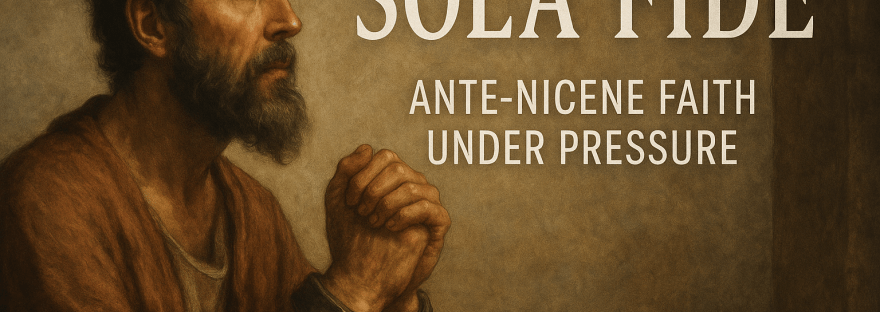
Sola Fide – Part 2: Ante-Nicene Faith Under Pressure

“Be faithful until death, and I will give you the crown of life.”
— Revelation 2:10 (NASB1995)


Faith That Withstands Fire

The faith of the early Church was not hypothetical. It was tested—by prisons, swords, beasts, and fire.

They believed in Christ not just with their lips, but with their lives. Their faith was covenantal loyalty, not mere confession. When threatened with death, they stood firm. When offered freedom in exchange for denial, they clung to Jesus.

This was saving faith under pressure—faith that did not break when the cost was high.

“They may kill the body, but they cannot touch the soul. Christ holds me, and I will not deny Him.”
The Martyrdom of Polycarp, c. AD 155


What True Faith Looks Like

Modern definitions of faith can be shallow:

  • “Just believe in Jesus.”
  • “Say a prayer and you’re saved.”
  • “God knows your heart.”

But the early Church knew that saving faith endures, obeys, and remains loyal, especially when tested.

The writer of Hebrews defines faith as the assurance of things hoped for, the conviction of things not seen (Heb. 11:1). That kind of faith can’t be casual.

It holds fast:

  • When mocked by friends
  • When shunned by family
  • When beaten by authorities
  • When asked to choose between Christ and survival

Faith Under Roman Persecution

In the first three centuries, confessing Christ could mean death. Yet thousands stood firm. They were:

  • Young women like Perpetua, who turned away from her noble status to die with fellow believers
  • Servants like Felicitas, who gave birth in prison and was then martyred
  • Pastors like Ignatius of Antioch, who wrote letters of encouragement as he journeyed to the lions

“Let me be food for the beasts, that I may be found a true disciple of Christ.”
Ignatius, Epistle to the Romans, c. AD 107

This was not faith for comfort. It was faith for eternity.


They Believed—and Obeyed

Their faith led them to:

  • Forgive their persecutors
  • Refuse to recant
  • Sing hymns in chains
  • Love one another in their suffering

They didn’t trust Jesus because life was easy. They trusted Him because He was worthy—even when life was hard.

“The Spirit gives us faith, not to escape death, but to overcome it.”
Tertullian, Apology, c. AD 197


Faith Today: Tested in New Ways

While most of us are not threatened with martyrdom, we are still tested:

  • Will we stand when the culture mocks righteousness?
  • Will we stay loyal when following Christ costs us influence?
  • Will we remain faithful when our prayers are unanswered or pain persists?

Faith under pressure today may not involve a sword—but it still demands trust, allegiance, and endurance.


Kingdom Discipleship Reflection

  • Would my faith remain if the cost increased?
  • Have I believed for blessing—or believed for Christ alone?
  • What pressures today are calling me to compromise my faith?

This week, read Revelation 2–3, and Hebrews 10:32–39. Reflect on how the Spirit is calling you to endure, remain loyal, and hold fast.

“But we are not of those who shrink back to destruction, but of those who have faith to the preserving of the soul.”
— Hebrews 10:39

2–3 minutes

Leave a comment

Biblical Interpretation, Kingdom Discipleship

Avoiding Allegory — Letting the Text Speak for Itself

How to Read the Bible Series

When God speaks plainly, we should listen plainly.
The Bible contains poetry, parables, and prophecy—but not every passage is symbolic. When we  turn literal truths into allegory without textual reason, we silence the Spirit’s intent and risk distorting God’s Word. The early Church feared this. So should we.

The Bereans searched the Scriptures daily—not for hidden meanings, but for the truth plainly revealed. The early believers, especially in the Ante-Nicene period, read the Word as it was written: historically, contextually, and with reverence. They didn’t spiritualize promises to Israel or reinterpret prophecy through philosophical systems. They let God say what He meant.


Scripture Focus:

“Every word of God is tested; He is a shield to those who take refuge in Him. Do not add to His words or He will reprove you, and you will be proved a liar.”
Proverbs 30:5–6, NASB1995


What Is Allegorizing?

Allegorizing is taking a clear, literal statement of Scripture and replacing it with a symbolic meaning not indicated by the text itself. It often stems from:

  • Philosophical systems (like those influenced by Greek thought)
  • Preconceived doctrines trying to fit the text
  • Attempts to “deepen” the meaning beyond what is written

While allegory is used in Scripture (see Galatians 4:24), it’s the exception—not the rule—and it’s always declared plainly.


When the Plain Sense Makes Sense

The Reformation principle holds true: when the plain sense makes sense, seek no other sense. God is not unclear. He doesn’t bury truth in riddles. Jesus taught in parables to conceal from the proud, but when asked, He explained them clearly to His disciples (Matthew 13:10–17).

When prophecy says Messiah will come from Bethlehem, we take it literally—because it happened literally (Micah 5:2). When the text says Israel will be restored, we should not assume “Israel” now means the Church—unless Scripture tells us so.


The Danger of Allegorical Interpretation

  • It opens the door to subjective meaning—what the passage “means to me”
  • It removes accountability to the actual words of Scripture
  • It elevates the interpreter over the Author
  • It can strip God’s promises of their faithfulness and precision

Many doctrines today—like Amillennialism, Replacement Theology, or covenantal reinterpretations—rest on allegory, not exegesis. That’s not how the Bereans or the early Church read.


How the Early Church Handled the Text

The Ante-Nicene believers read the text plainly. They looked for Christ in the Old Testament—but they did not spiritualize historical events. They held to:

  • Literal interpretation unless the genre demanded otherwise (e.g., apocalyptic visions)
  • A future hope based on real promises
  • Reverence for God’s Word without inserting their own speculation

They didn’t assume metaphors unless the text led them there. And when symbolism was present, it was anchored in the rest of Scripture.


Read as a Berean, Not as an Origenist

Origen made allegory popular. Augustine expanded it. But neither approach reflects the Berean model. The Bereans didn’t search for hidden meanings. They searched for truth.

Let the Word speak. Don’t add layers that God didn’t place there. Don’t spiritualize what the Spirit wrote in plain terms. Read with humility, not imagination.


Return to the Word. Trust What Is Written.

We are not called to be mystical interpreters—we are called to be faithful ones. God’s Word is clear. The Spirit is our Teacher. And Jesus meant what He said.

Return to the plain meaning. Reject allegory unless the text demands it. And let God’s promises stand as He gave them—sure, specific, and Spirit-breathed.

2–4 minutes

Leave a comment

Kingdom Discipleship, The Six Solas

Sola Fide – Part 1: Faith as Allegiance and Trust

“And without faith it is impossible to please Him, for he who comes to God must believe that He is and that He is a rewarder of those who seek Him.”
— Hebrews 11:6 (NASB1995)


What Is Faith?

Faith is more than mental agreement. It’s more than “believing in God.” Even demons do that (James 2:19).

In Scripture—and in the life of the early Church—faith meant allegiance. It meant trusting Christ with your life, not just agreeing with facts about Him. It was a heart-level surrender that led to a life of obedience, love, and endurance.

“Let us then show our faith not with our lips only, but with our lives. Faith without obedience is dead.”
Second Clement, c. AD 140


Sola Fide — Misunderstood?

During the Reformation, Sola Fide (“by faith alone”) was rightly declared to guard against salvation by works. But in modern times, it has often been misused to promote faith as a moment, not a life of allegiance.

The early Christians would not have separated faith from loyalty. To them:

  • Faith was seen in how one lived
  • Faith endured under trial and suffering
  • Faith obeyed because it trusted

True faith was never passive—it was active, covenantal, and bold.

“He who truly believes clings to Christ as his Lord and does not deny Him, even in death.”
The Martyrdom of Ignatius, c. AD 110


Faith That Lives

Hebrews 11 paints the picture of a faith that moves:

  • Abel offered
  • Noah built
  • Abraham obeyed and went
  • Moses chose affliction with God’s people

Faith wasn’t invisible. It did something. Not to earn salvation—but because it trusted God’s promise more than earthly comfort.

Likewise, the Ante-Nicene Church:

  • Refused to burn incense to Caesar
  • Endured persecution without denial
  • Walked in purity, generosity, and boldness

Because their faith was more than belief—it was allegiance to their King.


What Saving Faith Looks Like

Biblical, Spirit-born faith is:

  • Trust in Christ’s work — not ours
  • Surrender to His Lordship — not casual acknowledgment
  • Obedience that flows from love — not striving for merit
  • Endurance in suffering — not retreat in fear

“They overcame him because of the blood of the Lamb and because of the word of their testimony, and they did not love their life even when faced with death.”
— Revelation 12:11

This is the faith that saves—the faith that holds to Christ no matter the cost.


Kingdom Discipleship Reflection

  • Do I view faith as a past decision or a present allegiance?
  • Is my life shaped by trust in Jesus—or just belief in doctrine?
  • Would I still follow if it cost me comfort, reputation, or even freedom?

This week, read Hebrews 11 slowly. Ask:

“Lord, where does my faith need to become active obedience?”

Then choose one act of faith to walk out—not to earn anything, but to trust Christ as King.

“But the righteous man shall live by faith…”
— Romans 1:17

2–3 minutes

Leave a comment

Kingdom Discipleship, The Six Solas

Sola Gratia – Part 3: Martyrdom and the Power of God’s Grace

“My grace is sufficient for you, for power is perfected in weakness.”
— 2 Corinthians 12:9 (NASB1995)


Grace That Endures the Fire

The early Church knew grace not merely as unmerited favor, but as unshakable strength. For them, grace wasn’t fragile. It wasn’t sentimental. It was the power of God that held them fast when flames rose, chains tightened, and swords fell.

Martyrdom was not their defeat. It was their victory—because grace didn’t just forgive them; grace carried them home.


What Carried Them?

What gives a person the strength to forgive their executioner? To sing while being torn by beasts? To say “yes” to Christ when it means saying “no” to your own life?

Only grace.

“The fire seemed cold to me. I felt nothing but the peace of God in my bones.”
Polycarp, Bishop of Smyrna, martyred c. AD 155

Polycarp’s words weren’t bravado. They were the language of a man sustained by something greater than courage. He was empowered by grace.


Sola Gratia in the Arena

Martyrdom was never romantic to the early Church. It was raw. Bloody. Real.

But it was also sacred—because those who endured did so by the same grace that had saved them.

“Stand firm, O blessed ones. Grace has been given to you. Your chains are precious. Your death is your witness. The Lord will not forget.”
The Martyrdom of Perpetua, c. AD 203

Their testimonies echo across the centuries—not because they were heroic, but because God’s grace was greater than their fear.


Grace Is Not Just for Forgiveness

Modern Christianity often limits grace to forgiveness. But to the early Church, grace was the force behind faithful endurance:

  • It taught them to love not their lives even unto death (Rev. 12:11)
  • It enabled them to bless those who cursed them (Luke 6:27–28)
  • It sustained them when the world turned against them (John 15:18–20)

Grace wasn’t a soft cushion. It was a shield, a torch, and a strength forged in the fire of affliction.


A Legacy of Grace

The world couldn’t understand them. The empire couldn’t stop them. Hell couldn’t silence them.

Because grace:

  • Enabled their loyalty
  • Purified their motives
  • Strengthened their steps
  • Crowned them with glory

“I am a Christian. Nothing done to me can take His grace from me.”
Blandina, a young slave girl, martyred in Gaul, c. AD 177


Kingdom Discipleship Reflection

  • Have I viewed grace as something soft, or something strong?
  • Am I drawing on God’s grace to endure hardship, or trying to muscle through it myself?
  • Would the grace I rely on sustain me through suffering?

This week, read Hebrews 11 and Revelation 12:10–11. Ask:

“Lord, make Your grace more than a doctrine to me—make it my endurance.”

Because when trials come, and the world presses in, the same grace that saved you will also keep you.

“Therefore let us draw near with confidence to the throne of grace, so that we may receive mercy and find grace to help in time of need.”
— Hebrews 4:16

2–3 minutes

Leave a comment

Kingdom Discipleship, The Six Solas

Sola Gratia – Part 2: Grace That Trains — Titus 2 and the Early Disciples

“For the grace of God has appeared, bringing salvation to all men, instructing us to deny ungodliness and worldly desires and to live sensibly, righteously and godly in the present age.”
— Titus 2:11–12 (NASB1995)


Grace Is a Teacher

Grace doesn’t just save—it trains.

The Apostle Paul didn’t speak of grace as a concept to admire. He described it as a present and active force in the believer’s life: instructing, shaping, correcting, and empowering us to live for God.

Titus 2 tells us that grace instructs us to deny sin and teaches us to live in godliness.

“Christians are not distinguished by knowledge alone, but by the training that grace brings. Their purity and discipline are marks of the Spirit’s work in them.”
The Epistle of Mathetes to Diognetus, c. AD 130


Grace and Discipleship in the Early Church

The early disciples didn’t see grace as an abstract idea. They viewed it as the living activity of God at work in them through the Holy Spirit.

Grace trained them to:

  • Endure slander, loss, and persecution without retaliation
  • Live with self-control and patience in a hostile world
  • Abandon idols, sexual immorality, and greed
  • Love their enemies and pray for those who hated them

And they did all this not by strength, but by grace.


Not a Passive Comfort — A Present Call

Many today receive grace only as comfort: “You’re forgiven. You’re accepted.” And while this is true, grace does not stop at acceptance. It calls us forward.

“He who accepts grace must walk in it. If we return to lawlessness, we reject the gift given.”
2 Clement, c. AD 140

To the early Church, grace was never passive. It moved them, disciplined them, and shaped them into holy vessels.


How Grace Trains

Paul says grace “instructs us.” The Greek word used (παιδεύουσα) means to educate, correct, or discipline—like a loving tutor guiding a child.

Grace:

  • Confronts ungodliness in our hearts
  • Reveals worldly desires for what they are
  • Cultivates habits of holiness and self-restraint
  • Grows our hunger for Christ’s return (Titus 2:13)

And this training is not instant—it is ongoing, personal, and Spirit-led.

“It is not by compulsion we obey, but by the Spirit’s counsel and by the grace that trains us daily in the fear of the Lord.”
Letter of Barnabas, c. AD 100


Grace Trains in Community

The early Church didn’t walk alone. Grace trained them together:

  • Older believers mentored the younger (Titus 2:3–5)
  • They gathered regularly to encourage one another (Heb. 10:24–25)
  • They confessed sins, fasted, prayed, and bore one another’s burdens

Grace wasn’t just personal. It was relational—because the Spirit trains the Body of Christ, not just individual parts.


Kingdom Discipleship Reflection

  • Am I allowing grace to actively train me—or passively comfort me?
  • What “worldly desires” is grace calling me to deny right now?
  • Am I being trained in community, or trying to grow alone?

This week, read Titus 2:11–14 aloud each morning. Let the Spirit teach you what grace wants to change in you.

Then walk it out—not by pressure, but by powerful grace.

“Therefore do not let sin reign in your mortal body so that you obey its lusts… For sin shall not be master over you, for you are not under law but under grace.”
— Romans 6:12, 14 (NASB1995)

2–3 minutes

Leave a comment

Biblical Interpretation, Kingdom Discipleship

Comparing Scripture with Scripture — Letting the Word Confirm the Word

How to Read the Bible Series

God’s Word speaks with one voice because it has one Author.
Across 66 books, written over centuries, by prophets, shepherds, kings, fishermen, and apostles—there is perfect harmony. Why? Because the Holy Spirit, who inspired the writing, does not contradict Himself. And this is why Scripture must be used to interpret Scripture.

The early Church, especially the Bereans and the Ante-Nicene believers, knew this instinctively. They didn’t build doctrines on isolated verses or clever analogies. They let the Word confirm the Word. When they tested Paul’s teaching, they didn’t reach for tradition or speculation—they searched the scrolls. If he preached Christ, they would find Him in Moses and the Prophets.


Scripture Focus:

“But the natural man does not accept the things of the Spirit of God, for they are foolishness to him; and he cannot understand them, because they are spiritually appraised.”
1 Corinthians 2:14, NASB1995

“On the testimony of two or three witnesses every matter shall be confirmed.”
Deuteronomy 19:15b, NASB1995


The Word is Its Own Witness

The Holy Spirit uses Scripture to explain Scripture. A truth is never established by a single verse taken out of context. Just as God required two or three witnesses in legal matters, He often confirms doctrine through multiple voices in His Word.

When Jesus spoke of Himself, He showed how the Law, the Prophets, and the Psalms all testified to Him (Luke 24:44). The early Church followed this same pattern, checking that every teaching aligned with the totality of God’s revealed truth.


Don’t Build a Doctrine on One Verse

It is dangerous to establish beliefs from isolated texts:

  • A single verse on baptism does not teach the full meaning of baptism.
  • A poetic phrase in Psalms isn’t a license for doctrine if it contradicts apostolic teaching.
  • A vision in Revelation must be interpreted in light of clear prophetic Scripture.

When we let Scripture interpret Scripture, the Spirit brings balance, clarity, and unity to our understanding.


How the Early Church Applied This

The Bereans didn’t have systematic theology textbooks. They had the Hebrew Scriptures and the Holy Spirit. When Paul taught salvation through Christ, they searched for those threads in Genesis, Isaiah, and the Psalms. Their faith was not blind—it was grounded in revealed truth.

The Ante-Nicene believers quoted Scripture often and widely, drawing connections across books to test false teaching. They didn’t elevate clever analogies or speculative ideas. They let the Word speak for itself.


Practical Ways to Let the Word Interpret the Word

  • Cross-reference similar passages to see the full picture.
  • Look for patterns: does this principle appear consistently?
  • Consider the whole counsel of God (Acts 20:27), not just selected parts.
  • Let clear passages interpret unclear ones—not the reverse.

Return to the Word. Let It Speak for Itself.

2–3 minutes

Leave a comment

Kingdom Discipleship, The Six Solas

Sola Gratia – Part 1: What Grace Truly Means — Not a License, but a Call

“For the grace of God has appeared, bringing salvation to all men, instructing us to deny ungodliness and worldly desires and to live sensibly, righteously and godly in the present age.”
— Titus 2:11–12 (NASB1995)


Rediscovering Grace in Its Full Strength

In today’s Church, grace is often reduced to a blanket statement: “God loves you just the way you are.” While it’s true that God’s love is unearned, grace was never meant to leave us where it found us.

The early Church understood that grace was not only God’s unmerited favor, but also His empowering presence. It saves, yes—but it also trains, transforms, and calls us to a holy life.

“We are not saved by our own works, but by His mercy and grace. Yet having been saved, we are no longer to live as the Gentiles do, but in reverence and righteousness.”
The Shepherd of Hermas, c. AD 140


Grace Is a Gift—Not a Bypass

Sola Gratia reminds us that salvation is entirely of God. We cannot earn it. We do not deserve it. The early believers knew this well.

But they also knew that grace does not nullify obedience—it enables it.

Grace is not:

  • A free pass to live unchanged
  • An excuse for moral compromise
  • A license to ignore Christ’s commands

Grace is:

  • The undeserved love of God
  • The forgiveness of our sins through the blood of Christ
  • The transforming power to live a new life in the Spirit

“Do we then nullify the Law through faith? May it never be! On the contrary, we establish the Law.”
— Romans 3:31


The Early Church on Grace

The writings of the Ante-Nicene fathers are filled with reverence for the grace of God—not only for what it pardons, but for what it produces.

“Let us serve God with a holy fear and in purity, as we have been called by His grace. Let us not turn His mercy into idleness, but into diligence and virtue.”
Clement of Rome, First Epistle to the Corinthians, c. AD 96

Their lives bore witness to this. Grace caused them to:

  • Endure persecution without compromise
  • Serve one another in love
  • Abstain from the corruption of the world
  • Walk in joy, boldness, and holiness

Grace wasn’t a doctrine on a shelf. It was the fire in their bones.


Grace That Trains

Titus 2 doesn’t say grace permits. It says grace instructs:

“…instructing us to deny ungodliness and worldly desires…”

Grace doesn’t just cleanse the past—it shapes the present and prepares us for the future.

The Spirit uses grace to:

  • Renew our minds (Rom. 12:2)
  • Teach us righteousness (Heb. 12:10–11)
  • Form the image of Christ in us (2 Cor. 3:18)

This was the pattern of the early Church. Their obedience wasn’t self-willed. It was Spirit-empowered through grace.


Kingdom Discipleship Reflection

  • Have I treated grace as an excuse to remain the same, or as the power to become like Christ?
  • Do I see grace as the starting line only—or also the fuel for the journey?
  • Is my life being trained, shaped, and sanctified by grace—or merely comforted by it?

This week, reflect on Titus 2:11–14. Ask the Holy Spirit:

“How have I misunderstood grace?”
“What are You teaching me through grace today?”

Let grace save, train, and transform you.

“Therefore, since we receive a kingdom which cannot be shaken, let us show gratitude, by which we may offer to God an acceptable service with reverence and awe.”
— Hebrews 12:28

2–4 minutes

Leave a comment

Kingdom Discipleship, The Six Solas

Solo Spiritu Sancto – Part 4: Empowered Obedience through the Spirit

“For if you are living according to the flesh, you must die; but if by the Spirit you are putting to death the deeds of the body, you will live.”
— Romans 8:13 (NASB1995)


The Power to Obey Comes from the Spirit

Many Christians are trying to live holy lives by sheer effort—by rules, routines, and resolutions.

But the early Church knew the truth: Obedience doesn’t come from trying harder. It comes from walking in the Spirit.

They didn’t live holy because they had stronger willpower. They lived holy because they were filled with the Holy Spirit, and they surrendered to His transforming work in them.


Not Lawless — Not Legalistic

Spirit-led obedience isn’t license, and it isn’t legalism. It’s not:

  • A checklist of rules
  • A performance to earn God’s favor
  • A burden of impossible standards

It’s new life from within.

“I will put My Spirit within you and cause you to walk in My statutes, and you will be careful to observe My ordinances.”
— Ezekiel 36:27

This is the obedience the early Church displayed—an obedience birthed from love, grace, and the Spirit’s indwelling power.


The Witness of the Early Church

The Ante-Nicene believers lived with radical purity, sacrificial love, and fearless endurance. But it wasn’t moral superiority—it was Spirit-empowered surrender.

“The Spirit dwelling in us produces self-control, patience, and purity. These are not the works of man, but of God.”
Athenagoras, Plea for the Christians, c. AD 177

They didn’t excuse sin. They overcame it.

They didn’t lower the bar. They leaned into grace.

And they didn’t claim their strength. They testified to His.


The Flesh Fights, the Spirit Frees

The modern Church often swings between:

  • Moral effort (Try harder!)
  • Grace as permission (God understands…)

But neither are the way of the Spirit. The Holy Spirit doesn’t excuse sin. He empowers you to crucify it.

He:

  • Convicts (John 16:8)
  • Cleanses (Titus 3:5)
  • Transforms (2 Cor. 3:18)
  • Strengthens (Eph. 3:16)

He is the power to obey what the flesh cannot.

“Walk by the Spirit, and you will not carry out the desire of the flesh.”
— Galatians 5:16


A Life That Shines

The early believers stood out—not because they were impressive, but because the Spirit of God lived in them. Their obedience was radiant. Costly. Beautiful. Powerful.

They loved their enemies.
They gave to the poor.
They endured persecution.
They resisted sin.
They forgave quickly.
They lived holy lives in a filthy world.

Because the Holy Spirit was not a doctrine to them—He was their daily strength.


Kingdom Discipleship Reflection

  • Am I trying to obey God in my own strength—or by the Spirit’s power?
  • Have I made peace with sins the Spirit wants to crucify?
  • Do I see the fruit of the Spirit increasing in my life—or has my growth stalled?

This week, ask the Spirit:

“What area of my life needs Your power to obey?”
Then surrender it. Confess it. Invite Him to transform it.

“But I say, walk by the Spirit, and you will not carry out the desire of the flesh.”
— Galatians 5:16

2–3 minutes

Leave a comment

Kingdom Discipleship, The Six Solas

Solo Spiritu Sancto – Part 3: Spirit vs. Structure — When Man Replaces God

“The wind blows where it wishes and you hear the sound of it, but do not know where it comes from and where it is going; so is everyone who is born of the Spirit.”
— John 3:8 (NASB1995)


When the Spirit Leads — and When Structure Replaces Him

In the early days of the Church, the Holy Spirit led gatherings, confirmed truth, convicted hearts, appointed leaders, and bound believers together in love and obedience. The Church was alive, not with organizational polish, but with Spirit-filled power.

But slowly, something shifted.

What began in upper rooms and homes began to move into halls and hierarchies. What once flowed freely became managed.

What was once Spirit-led became system-controlled.

This is what happens when man replaces the leading of the Spirit with the safety of structure.


The Spirit Builds, Man Institutionalizes

The Ante-Nicene Church operated through:

  • Discerning believers walking in the Spirit (Gal. 5:16–25)
  • Scripture interpreted through prayer and fellowship (1 Cor. 2:13)
  • Decisions made by unity and spiritual gifting (Acts 13:1–4)

But as persecution increased—and eventually gave way to political favor—the Church began adopting Roman organizational models:

  • Formal clergy vs. laity divisions
  • Centralized authority (bishops elevated over the people)
  • Institutional creeds becoming the measure of truth

And gradually, the Church stopped asking, “Is this of the Spirit?” and began asking, “Is this in line with the council?”

“Having begun by the Spirit, are you now being perfected by the flesh?”
— Galatians 3:3


When Structure Silences the Spirit

Structure in itself is not evil. Even the early Church had order. But structure becomes bondage when:

  • It replaces the Spirit’s voice with human rule
  • It prioritizes position over gifting
  • It demands loyalty to a system rather than obedience to God

We see this in later church history:

  • Bishops replacing the voice of the congregation
  • Doctrines affirmed by power, not by Spirit and truth
  • Traditions exalted over Scripture

This was not the Church Jesus birthed at Pentecost. Nor was it the Church described in Acts or the letters of the apostles.


How the Early Church Guarded Against This

Before structure overtook Spirit, the early believers guarded against this drift by:

  • Measuring everything by Scripture
  • Remaining decentralized and relational
  • Allowing the Spirit to appoint leaders—not human ambition

“We do not speak great swelling words of vanity, nor do we boast of office, but of obedience. Our confidence is in the Spirit who guides and instructs us.”
Epistle of the Church in Smyrna, c. AD 155

Their gatherings were marked by prayer, humility, Spirit-filled testimony, and shared responsibility—not passive spectatorship or authoritarian rule.


Reclaiming Sola Spiritu

Today’s Church needs revival. Not of hype. Not of hierarchy. But of the Holy Spirit’s leading.

To reclaim Solo Spiritu Sancto, we must:

  • Listen for His voice above man’s tradition
  • Be willing to follow even when it disrupts structure
  • Appoint leaders by character and calling, not credentials
  • Let Scripture speak, and let the Spirit teach

Because when we follow the Spirit:

  • Christ is exalted
  • Scripture is honored
  • The Church is purified
  • The world is convicted

Kingdom Discipleship Reflection

  • Have I replaced the Spirit’s voice with human structure or authority?
  • Am I more loyal to church systems than to Christ and His Spirit?
  • Do I discern decisions through prayer, Scripture, and Spirit-led counsel—or through policies and platforms?

This week, spend time in silence before God. Ask:

“Holy Spirit, have I replaced You with systems of safety or control?”
“Teach me to follow Your lead again—even when it’s uncomfortable.”

“If we live by the Spirit, let us also walk by the Spirit.”
— Galatians 5:25

2–4 minutes

Leave a comment