Biblical Interpretation, Kingdom Discipleship

Testing Every Teaching — Holding Fast to What Is Good

How to Read the Bible Series

Not all who teach the Bible teach the truth.
In every generation, voices rise with persuasive speech, passion, and promises—but not all speak for God. Scripture warns of false teachers and doctrines of demons (1 Timothy 4:1). The solution isn’t suspicion, but testing.

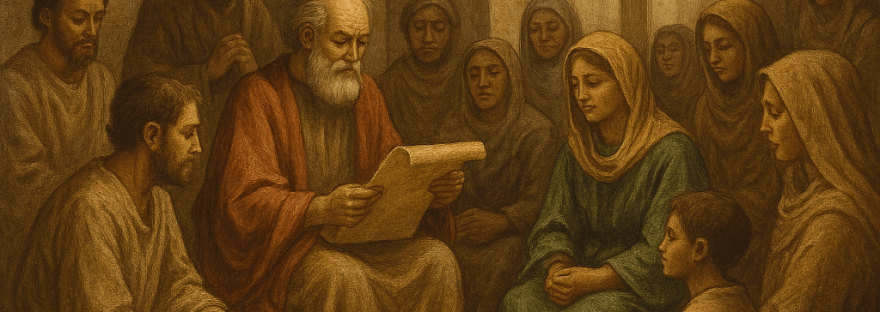
The Bereans weren’t skeptical; they were faithful. They received Paul’s message eagerly—then examined the Scriptures daily to see if what he said was true (Acts 17:11). They didn’t test to reject; they tested to follow rightly. That’s the posture God honors.


Scripture Focus:

“But examine everything carefully; hold fast to that which is good.”
1 Thessalonians 5:21, NASB1995


Teaching Must Be Tested, Not Trusted Blindly

It doesn’t matter who’s preaching. If it contradicts the Word, it must be rejected. Scripture is the standard—not popularity, credentials, or tradition.

Jesus warned of wolves in sheep’s clothing (Matthew 7:15). Paul told the Galatians that even if an angel from heaven preached a different gospel, it was to be accursed (Galatians 1:8). We test everything—not to be critical, but to be careful.


Examine Carefully, Not Casually

Testing is not passive—it’s diligent. The Greek for “examine” (dokimazō) implies testing metals, proving what is genuine. That means:

  • Searching the Scriptures in full context
  • Letting the Spirit confirm or correct
  • Asking questions of the text, not just the teacher

The Bereans searched daily. They let the Word be their filter.


What to Hold Fast To

Once tested, truth must be held tightly. Truth isn’t a buffet—it’s a foundation. The Bereans clung to what aligned with Scripture. Today, we must:

  • Hold fast to what the Bible plainly teaches
  • Let go of what’s built on inference, tradition, or system
  • Walk in obedience to what is clear

How the Early Church Modeled Discernment

The Ante-Nicene believers weren’t easily swayed by clever speech. They weighed everything against the apostles’ teachings, preserved in the Scriptures. When heresies arose, they stood firm—not with arrogance, but with conviction rooted in the Word.

They were not passive hearers. They were active testers.


Today’s Urgent Need: A Berean Heart

We are flooded with podcasts, sermons, and books. Not all are evil—but not all are true. The Church doesn’t need louder voices. It needs sharper listeners.

God still honors those who examine everything and hold fast to what is good.


Return to the Word. Test What You Hear.

Not everything that sounds biblical is. Test it. Search it. Compare it. And when it proves good, cling to it like treasure.

Be discerning. Be devoted. And let the Holy Spirit and the Word be your guide in every teaching you receive.

2–3 minutes

Leave a comment

Kingdom Discipleship, The Six Solas

Soli Deo Gloria – Part 2: Robbing God’s Glory — How Systems Steal Worship

“I am the Lord, that is My name; I will not give My glory to another, nor My praise to graven images.”
— Isaiah 42:8 (NASB1995)


When Good Things Replace God

The Church has always been vulnerable to a subtle enemy: the glory shift.

It starts with something good:

  • A respected leader
  • A structured tradition
  • A theological framework
  • A growing ministry

But over time, what was once a vessel for God’s glory becomes the focus of it. The system gets the spotlight. The teacher becomes the authority. The institution defines truth.

And God’s glory is slowly redirected.


The Early Church Guarded God’s Glory

The Ante-Nicene Church didn’t build their identity around:

  • Famous bishops
  • Systematic theology
  • Church politics or titles

They built around Christ alone. The Scriptures were central. The Spirit was their teacher. Their gatherings exalted the Lord—not men.

“Let not one among you say, ‘I am of Paul’ or ‘I am of Peter.’ Christ alone is our boast.”
Ignatius of Antioch, c. AD 107

They rejected anything that threatened to take glory from God—whether it was idolatry, institutional pride, or religious elitism.


How Systems Steal Worship Today

We may not bow to graven images, but we often:

  • Exalt pastors or scholars as the final voice
  • Defend denominations more than we proclaim Christ
  • Quote theologians more than we quote Scripture
  • Celebrate ministry growth more than God’s holiness

These shifts are often unintentional. But they are real. And when left unchecked, they rob God of what belongs to Him alone.

“No man, no movement, no message is worthy of praise unless it bows at the feet of Christ.”
Athenagoras, Plea for the Christians, c. AD 177


What True Glory Looks Like

When God is rightly glorified:

  • His Word is honored above all
  • His Son is exalted above all
  • His Spirit is trusted in all things
  • His people decrease so that He increases (John 3:30)

The early Church lived with one passion: that Christ would be magnified whether by life or by death (Phil. 1:20).


A Call to Recalibrate

God will not share His glory. He is patient. He is kind. But He will not let His bride be distracted.

So let us ask:

  • Am I part of a system that celebrates itself more than Christ?
  • Is my faith shaped more by leaders and legacy than by the Word?
  • Do I find more joy in being right—or in being surrendered?

Kingdom Discipleship Reflection

  • Have I unknowingly given glory to man, movements, or institutions?
  • Do I speak more of church names, theological tribes, or authors than of Jesus?
  • Is Christ truly central—or merely included?

This week, read Isaiah 42 and Colossians 2. Ask the Spirit:

“Have I robbed God’s glory through misplaced trust or pride?”

Then return to the only One worthy of all praise:

“To Him be the glory forever. Amen.”
— Romans 11:36

2–3 minutes

Leave a comment

Kingdom Discipleship, The Six Solas

Soli Deo Gloria – Part 1: Glory That Belongs Only to God

“For from Him and through Him and to Him are all things. To Him be the glory forever. Amen.”
— Romans 11:36 (NASB1995)


The End of All Things: God’s Glory

From creation to redemption, from the cross to the crown—the story of Scripture is the glory of God.

Everything God has done is to display:

  • His holiness
  • His love
  • His justice
  • His mercy
  • His majesty

The early Church understood this. Their lives were not lived for fame, comfort, or applause. They lived—and died—for the glory of God alone.

“Let us glorify God in our bodies, for He has called us out of darkness into His marvelous light.”
1 Clement, c. AD 96


Soli Deo Gloria Misunderstood

Today, even in churches that affirm “Glory to God alone,” glory is often subtly shared:

  • Glory given to human leaders or theological systems
  • Glory absorbed through performance or success
  • Glory lost to personal ambition, reputation, or control

But God says:

“I am the Lord, that is My name; I will not give My glory to another…”
— Isaiah 42:8


The Early Church Refused the Spotlight

When early believers were praised, they pointed upward:

  • They didn’t build fame around themselves
  • They didn’t elevate certain teachers above others
  • They rejected all attempts to make men great

“We are not the light. We bear the light. Let no man glorify himself.”
The Epistle of Barnabas, c. AD 100

Even their martyrs didn’t seek honor. They only sought to honor Christ.


Everything for His Name

To glorify God is not just to say “Glory to God.” It is to:

  • Worship Him alone
  • Obey Him completely
  • Point others to Him intentionally
  • Live in such a way that He—not we—is praised

Paul wrote:

“Whether, then, you eat or drink or whatever you do, do all to the glory of God.”
— 1 Corinthians 10:31

The early Church didn’t seek applause. They sought faithfulness. And when God was glorified through their lives and deaths, that was enough.


Glory Robbers Today

We rob God’s glory when we:

  • Take credit for fruit that only the Spirit can produce
  • Center ministries around personalities instead of Christ
  • Make theological allegiance more important than worship

The early Church was anonymous in the world—but radiant in heaven.

“Their names are not known among men, but their witness is written in the Book of Life.”
The Martyrdom of Polycarp, c. AD 155


Kingdom Discipleship Reflection

  • Is my life drawing attention to God—or to myself?
  • Am I seeking God’s glory—even when it costs me recognition, comfort, or approval?
  • Have I replaced God’s glory with the praise of man, ministry, or movement?

This week, meditate on Isaiah 42:8 and Romans 11:36. Ask:

“Lord, is there any place in my life where I am receiving what belongs only to You?”

Then surrender it.

“Not to us, O Lord, not to us, but to Your name give glory because of Your lovingkindness, because of Your truth.”
— Psalm 115:1

2–3 minutes

Leave a comment

Kingdom Discipleship, The Six Solas

Solus Christus – Part 2: Holding to Christ in an Empire of Compromise

“I am the way, and the truth, and the life; no one comes to the Father but through Me.”
— John 14:6 (NASB1995)


Christ Alone in a World of Many Paths

In the Roman Empire, religion was pluralistic. Temples lined the streets. Sacrifices were offered to countless gods. Caesar himself was worshiped.

The early Christians had a scandalous message:

“Jesus is Lord—no one else.”

Not Caesar. Not the emperor cult. Not Rome. Not the philosophers, priests, or pantheon of deities.

Only Christ.

This confession cost them everything.

“If I deny Christ to save my life, I lose it. But if I lose my life for Him, I gain eternity.”
Perpetua, martyred AD 203


The Pressure to Compromise

Christians weren’t persecuted for believing in Jesus—they were persecuted for refusing to add Him to the empire’s religion.

They wouldn’t:

  • Offer incense to Caesar
  • Participate in imperial festivals
  • Swear allegiance to any lord but Christ

Rome demanded religious tolerance—so long as no one claimed exclusive truth.

Sound familiar?

Today’s culture celebrates spirituality… as long as it doesn’t say Jesus is the only way.


Christ’s Supremacy Rejected by the World

The early Church refused to compromise because they knew:

  • Christ alone is Savior (Acts 4:12)
  • Christ alone is Lord (Phil. 2:9–11)
  • Christ alone is Truth (John 1:14)
  • Christ alone is the Head of the Church (Col. 1:18)

They weren’t trying to be radical. They were simply being faithful.

“I know whom I have believed, and I will not bow to Caesar. Christ alone reigns.”
Ignatius of Antioch, c. AD 107


The Temptation Still Exists

Today’s Church faces a different kind of empire:

  • Cultural affirmation
  • Political power
  • Religious relativism
  • Academic skepticism

And the temptation remains: “Just soften the message. Just broaden the way.”

But to do so is to abandon Solus Christus.

Jesus does not share His throne. He does not accept rivals. He does not need a platform—He is the platform.

“No one can lay a foundation other than the one which is laid, which is Jesus Christ.”
— 1 Corinthians 3:11


The Witness of the Uncompromising

The power of the early Church was not in their eloquence—but in their clarity and courage:

  • They exalted Christ without apology
  • They obeyed Him without hesitation
  • They suffered for Him without fear

Their witness turned the world upside down—because it was rooted in Christ alone.


Kingdom Discipleship Reflection

  • Have I allowed the world to pressure me into softening Christ’s exclusivity?
  • Do I speak of Jesus as the way—or just a way?
  • Have I made peace with a culture that rejects the supremacy of Christ?

This week, reflect on Acts 4:12 and Colossians 1:13–20. Ask:

“Jesus, are You truly unrivaled in my life, my words, and my faith?”

Then declare in word and deed:

“For I determined to know nothing among you except Jesus Christ, and Him crucified.”
— 1 Corinthians 2:2

2–3 minutes

2 responses to “Solus Christus – Part 2: Holding to Christ in an Empire of Compromise”

  1. satyam rastogi Avatar

    Wonderful post 🎸thanks for sharing🎸

    Like

    1. Rooted & Raised Avatar

      You are very welcome! Thank you.

      Like

Leave a comment

Biblical Interpretation, Kingdom Discipleship

The Dangers of Adding Philosophy or Tradition — Let No One Take You Captive

How to Read the Bible Series

Not every lofty thought is holy.
From the Garden to today, human reasoning has sought to elevate itself above God’s voice. The enemy’s first question—“Did God really say?”—was not just about doubt. It was a subtle appeal to human logic over divine instruction. Today, that same spirit persists through philosophies, traditions, and theological systems that shape how many read Scripture.

The early Church faced this challenge head-on. So did the Bereans. What made them noble was their refusal to let even an apostle’s message go untested. They measured every teaching against the Word, not the other way around. Theirs was a Scripture-first lens, not a system-first one.


Scripture Focus:

“See to it that no one takes you captive through philosophy and empty deception, according to the tradition of men, according to the elementary principles of the world, rather than according to Christ.”
Colossians 2:8, NASB1995


Philosophy Can Cloud the Word

Greek thought exalted the mind and devalued the body. It shaped Origen, influenced Augustine, and laid the foundation for much of Western theology. But it also introduced abstract categories foreign to Scripture—ideas like:

  • Dualism between physical and spiritual (as if the body were inherently evil)
  • Predetermined fate masquerading as sovereignty
  • Truth measured by logic rather than revelation

These ideas didn’t originate in God’s Word, yet they became the lens through which many began to read it.


Traditions Can Override the Text

“You are experts at setting aside the commandment of God in order to keep your tradition.” — Mark 7:9

Tradition can preserve wisdom—or perpetuate error. When tradition becomes the standard by which we interpret Scripture, it becomes an idol.

The Bereans didn’t rely on rabbinical traditions or creeds. They had Scripture and the Spirit. That was enough. If a teaching couldn’t be confirmed by the Word, it was rejected—no matter how ancient, respected, or widely held.


What Happens When Man’s Wisdom Replaces God’s Voice

  • The clear becomes confused
  • The Spirit’s role is replaced by scholars
  • Doctrines of men replace doctrines of Christ
  • Allegory replaces literal meaning
  • Unity in the Spirit is lost in division over systems

God’s Word loses its authority when it’s filtered through frameworks never given by God. Yet this is the very thing the early Church resisted.


How the Early Church Kept Scripture Central

The Ante-Nicene Church didn’t build doctrine on abstract categories. They preached Christ crucified. They obeyed the plain reading of the Word. And they refused to bend truth to fit philosophical trends or cultural pressures.

Their worship was Scripture-saturated. Their theology was born of obedience, not speculation. They let God’s Word speak—and they followed.


A Word for Today

If your theology comes more from a system than from Scripture, pause. Ask: Am I being taught by the Spirit—or by the traditions of men?

God doesn’t need philosophy to defend truth. He needs disciples willing to obey it.


Return to the Word. Refuse to Be Captive.

Tradition is not the enemy—but it is not the authority. Philosophy is not always wrong—but it is never the standard.

Scripture alone is God-breathed. Let no one take you captive. Let Christ—through His Spirit and His Word—be your Teacher.

2–3 minutes

Leave a comment

Kingdom Discipleship, The Six Solas

Solus Christus – Part 1: Christ Alone — No Priesthood, No Politics

“For there is one God, and one mediator also between God and men, the man Christ Jesus.”
— 1 Timothy 2:5 (NASB1995)


Christ Is Enough

The early Church didn’t gather around a bishop, a priesthood, or an empire. They gathered around Christ alone.

He was their Shepherd.
Their Head.
Their only Mediator.
Their King.

They had no hierarchy. No altars. No state sponsorship. Just a risen Lord, and the Holy Spirit who exalted Him.

“He is our High Priest, our sacrifice, our God. We need no other intercessor.”
Clement of Alexandria, c. AD 190


The Simplicity of Christ-Centered Worship

In the Ante-Nicene era, churches met in homes. Leaders were recognized by character and gifting—not power or title. Their gatherings exalted Jesus:

  • His Word was read and obeyed
  • His name was confessed in baptism
  • His body was remembered in the meal
  • His Spirit moved among them without control

There were no titles like “reverend.” No power granted by religious office. The focus was not on the man behind the table—but on the Lamb who was slain.


Why They Rejected Priesthood Systems

Jesus’ once-for-all sacrifice ended the priesthood (Hebrews 10:11–14). But as the Church grew, power structures crept in:

  • Bishops were elevated over congregations
  • Church leaders began wearing robes and taking titles
  • Authority became institutional—not spiritual

But the early Church resisted these changes.

“You are all brethren. Do not elevate one above another. Christ alone is Lord of His people.”
The Shepherd of Hermas, c. AD 140

They knew that if Christ is truly the Head, no man can stand in His place.


No Politics in the Kingdom

Before Constantine, the Church had no political favor. They were persecuted, not promoted. And that was a blessing.

Why?

  • Because it kept their hope in Christ—not Caesar
  • Because it purified their worship
  • Because it protected the Church from worldly compromise

When the Church and state eventually merged, Christ was no longer enough. Power, politics, and position took center stage.

The early Church would have wept.


Christ Alone, Then and Now

Solus Christus isn’t just about salvation—it’s about supremacy.

Is Christ truly:

  • The Head of our gatherings?
  • The Teacher of our hearts?
  • The Judge of our motives?
  • The Center of our worship?

Or have we replaced Him with:

  • Church tradition?
  • Personality-driven ministries?
  • Political alliances?
  • Religious performance?

The early Church said no to all of it—and yes to Christ alone.


Kingdom Discipleship Reflection

  • Is Christ the center of my faith—or have I elevated man-made structures?
  • Do I follow leaders who point me to Christ, or to themselves?
  • Have I confused patriotism or politics with Kingdom allegiance?

This week, read Colossians 1:15–20 and John 10. Let the Spirit reveal:

“Is Christ truly supreme in my life, my church, and my hope?”

“He is also head of the body, the church; and He is the beginning, the firstborn from the dead, so that He Himself will come to have first place in everything.”
— Colossians 1:18

2–3 minutes

Leave a comment

Kingdom Discipleship, The Six Solas

Sola Fide – Part 3: Counterfeit Faith in Every Age

“This people honors Me with their lips, but their heart is far away from Me.”
— Matthew 15:8 (NASB1995)


Not All Faith Is Saving Faith

The early Church didn’t just defend the truth—they discerned it. Not everyone who claimed faith was walking in it. Even in the days of the apostles, false converts, deceivers, and shallow followers abounded.

Jesus warned that not all who say, “Lord, Lord” will enter the Kingdom (Matt. 7:21). True faith bears fruit. Counterfeit faith is dead, self-centered, and unfaithful when tested.

The Ante-Nicene believers understood that Sola Fide didn’t mean empty belief, but living allegiance to Christ.


What Counterfeit Faith Looks Like

  1. Faith Without Works
    • Intellectual belief with no life change (James 2:17)
    • Doctrinal correctness without obedience
    • Faith that claims Christ but ignores His commands
  2. Faith for Comfort, Not Conviction
    • Turning to God only when life is hard
    • Using grace as an excuse for sin
    • Following Christ only when it’s convenient
  3. Faith That Flees Pressure
    • Denies Christ when culture disapproves
    • Avoids hard truths to keep peace
    • Prefers acceptance over obedience

“The faith that saves is the faith that endures. Do not be deceived—mere words will not stand before God.”
Clement of Rome, First Epistle, c. AD 96


The Early Church Tested Faith by Fruit

The early believers didn’t judge faith by eloquence or association. They looked for:

  • Obedience to Christ’s teachings
  • Purity in life and worship
  • Love for enemies and fellow believers
  • Endurance under trials

“Let us not be deceived by those who say they believe and yet do not obey. The tree is known by its fruit.”
The Didache, c. AD 70–120

They rejected the idea that belief without loyalty was saving faith. To them, faith without action was false testimony.


Why Counterfeits Multiply

Wherever the Gospel is preached, counterfeits arise:

  • Satan mimics truth to confuse and corrupt
  • People prefer a version of faith that requires no change
  • Churches are tempted to grow numbers, not disciples

But truth stands firm. The early Church refused to dilute the Gospel. They called for real repentance, genuine trust, and total surrender.


A Call to Examine Our Faith

Paul urged believers to test themselves to see if they were in the faith (2 Cor. 13:5). This wasn’t to create fear, but to ensure authenticity.

Do we trust Christ enough to obey Him when no one is watching? Do we hold fast to Jesus even when it costs us? Is our faith bearing fruit that reflects the heart of our King?


Kingdom Discipleship Reflection

  • Is my faith merely belief—or has it transformed my life?
  • Do I follow Christ when it’s hard—or only when it’s easy?
  • Is the Holy Spirit producing fruit in me—or have I settled for appearance over substance?

This week, reflect on James 2 and Matthew 7:13–27. Ask the Spirit to show you:

“Where has my faith become empty or shallow?”
Then invite Him to renew and refine your faith in truth.

“Examine yourselves to see whether you are in the faith; test yourselves…”
— 2 Corinthians 13:5

2–3 minutes

Leave a comment

Kingdom Discipleship, The Six Solas

Sola Fide – Part 2: Ante-Nicene Faith Under Pressure

“Be faithful until death, and I will give you the crown of life.”
— Revelation 2:10 (NASB1995)


Faith That Withstands Fire

The faith of the early Church was not hypothetical. It was tested—by prisons, swords, beasts, and fire.

They believed in Christ not just with their lips, but with their lives. Their faith was covenantal loyalty, not mere confession. When threatened with death, they stood firm. When offered freedom in exchange for denial, they clung to Jesus.

This was saving faith under pressure—faith that did not break when the cost was high.

“They may kill the body, but they cannot touch the soul. Christ holds me, and I will not deny Him.”
The Martyrdom of Polycarp, c. AD 155


What True Faith Looks Like

Modern definitions of faith can be shallow:

  • “Just believe in Jesus.”
  • “Say a prayer and you’re saved.”
  • “God knows your heart.”

But the early Church knew that saving faith endures, obeys, and remains loyal, especially when tested.

The writer of Hebrews defines faith as the assurance of things hoped for, the conviction of things not seen (Heb. 11:1). That kind of faith can’t be casual.

It holds fast:

  • When mocked by friends
  • When shunned by family
  • When beaten by authorities
  • When asked to choose between Christ and survival

Faith Under Roman Persecution

In the first three centuries, confessing Christ could mean death. Yet thousands stood firm. They were:

  • Young women like Perpetua, who turned away from her noble status to die with fellow believers
  • Servants like Felicitas, who gave birth in prison and was then martyred
  • Pastors like Ignatius of Antioch, who wrote letters of encouragement as he journeyed to the lions

“Let me be food for the beasts, that I may be found a true disciple of Christ.”
Ignatius, Epistle to the Romans, c. AD 107

This was not faith for comfort. It was faith for eternity.


They Believed—and Obeyed

Their faith led them to:

  • Forgive their persecutors
  • Refuse to recant
  • Sing hymns in chains
  • Love one another in their suffering

They didn’t trust Jesus because life was easy. They trusted Him because He was worthy—even when life was hard.

“The Spirit gives us faith, not to escape death, but to overcome it.”
Tertullian, Apology, c. AD 197


Faith Today: Tested in New Ways

While most of us are not threatened with martyrdom, we are still tested:

  • Will we stand when the culture mocks righteousness?
  • Will we stay loyal when following Christ costs us influence?
  • Will we remain faithful when our prayers are unanswered or pain persists?

Faith under pressure today may not involve a sword—but it still demands trust, allegiance, and endurance.


Kingdom Discipleship Reflection

  • Would my faith remain if the cost increased?
  • Have I believed for blessing—or believed for Christ alone?
  • What pressures today are calling me to compromise my faith?

This week, read Revelation 2–3, and Hebrews 10:32–39. Reflect on how the Spirit is calling you to endure, remain loyal, and hold fast.

“But we are not of those who shrink back to destruction, but of those who have faith to the preserving of the soul.”
— Hebrews 10:39

2–3 minutes

Leave a comment

Biblical Interpretation, Kingdom Discipleship

Avoiding Allegory — Letting the Text Speak for Itself

How to Read the Bible Series

When God speaks plainly, we should listen plainly.
The Bible contains poetry, parables, and prophecy—but not every passage is symbolic. When we  turn literal truths into allegory without textual reason, we silence the Spirit’s intent and risk distorting God’s Word. The early Church feared this. So should we.

The Bereans searched the Scriptures daily—not for hidden meanings, but for the truth plainly revealed. The early believers, especially in the Ante-Nicene period, read the Word as it was written: historically, contextually, and with reverence. They didn’t spiritualize promises to Israel or reinterpret prophecy through philosophical systems. They let God say what He meant.


Scripture Focus:

“Every word of God is tested; He is a shield to those who take refuge in Him. Do not add to His words or He will reprove you, and you will be proved a liar.”
Proverbs 30:5–6, NASB1995


What Is Allegorizing?

Allegorizing is taking a clear, literal statement of Scripture and replacing it with a symbolic meaning not indicated by the text itself. It often stems from:

  • Philosophical systems (like those influenced by Greek thought)
  • Preconceived doctrines trying to fit the text
  • Attempts to “deepen” the meaning beyond what is written

While allegory is used in Scripture (see Galatians 4:24), it’s the exception—not the rule—and it’s always declared plainly.


When the Plain Sense Makes Sense

The Reformation principle holds true: when the plain sense makes sense, seek no other sense. God is not unclear. He doesn’t bury truth in riddles. Jesus taught in parables to conceal from the proud, but when asked, He explained them clearly to His disciples (Matthew 13:10–17).

When prophecy says Messiah will come from Bethlehem, we take it literally—because it happened literally (Micah 5:2). When the text says Israel will be restored, we should not assume “Israel” now means the Church—unless Scripture tells us so.


The Danger of Allegorical Interpretation

  • It opens the door to subjective meaning—what the passage “means to me”
  • It removes accountability to the actual words of Scripture
  • It elevates the interpreter over the Author
  • It can strip God’s promises of their faithfulness and precision

Many doctrines today—like Amillennialism, Replacement Theology, or covenantal reinterpretations—rest on allegory, not exegesis. That’s not how the Bereans or the early Church read.


How the Early Church Handled the Text

The Ante-Nicene believers read the text plainly. They looked for Christ in the Old Testament—but they did not spiritualize historical events. They held to:

  • Literal interpretation unless the genre demanded otherwise (e.g., apocalyptic visions)
  • A future hope based on real promises
  • Reverence for God’s Word without inserting their own speculation

They didn’t assume metaphors unless the text led them there. And when symbolism was present, it was anchored in the rest of Scripture.


Read as a Berean, Not as an Origenist

Origen made allegory popular. Augustine expanded it. But neither approach reflects the Berean model. The Bereans didn’t search for hidden meanings. They searched for truth.

Let the Word speak. Don’t add layers that God didn’t place there. Don’t spiritualize what the Spirit wrote in plain terms. Read with humility, not imagination.


Return to the Word. Trust What Is Written.

We are not called to be mystical interpreters—we are called to be faithful ones. God’s Word is clear. The Spirit is our Teacher. And Jesus meant what He said.

Return to the plain meaning. Reject allegory unless the text demands it. And let God’s promises stand as He gave them—sure, specific, and Spirit-breathed.

2–4 minutes

Leave a comment

Kingdom Discipleship, The Six Solas

Sola Fide – Part 1: Faith as Allegiance and Trust

“And without faith it is impossible to please Him, for he who comes to God must believe that He is and that He is a rewarder of those who seek Him.”
— Hebrews 11:6 (NASB1995)


What Is Faith?

Faith is more than mental agreement. It’s more than “believing in God.” Even demons do that (James 2:19).

In Scripture—and in the life of the early Church—faith meant allegiance. It meant trusting Christ with your life, not just agreeing with facts about Him. It was a heart-level surrender that led to a life of obedience, love, and endurance.

“Let us then show our faith not with our lips only, but with our lives. Faith without obedience is dead.”
Second Clement, c. AD 140


Sola Fide — Misunderstood?

During the Reformation, Sola Fide (“by faith alone”) was rightly declared to guard against salvation by works. But in modern times, it has often been misused to promote faith as a moment, not a life of allegiance.

The early Christians would not have separated faith from loyalty. To them:

  • Faith was seen in how one lived
  • Faith endured under trial and suffering
  • Faith obeyed because it trusted

True faith was never passive—it was active, covenantal, and bold.

“He who truly believes clings to Christ as his Lord and does not deny Him, even in death.”
The Martyrdom of Ignatius, c. AD 110


Faith That Lives

Hebrews 11 paints the picture of a faith that moves:

  • Abel offered
  • Noah built
  • Abraham obeyed and went
  • Moses chose affliction with God’s people

Faith wasn’t invisible. It did something. Not to earn salvation—but because it trusted God’s promise more than earthly comfort.

Likewise, the Ante-Nicene Church:

  • Refused to burn incense to Caesar
  • Endured persecution without denial
  • Walked in purity, generosity, and boldness

Because their faith was more than belief—it was allegiance to their King.


What Saving Faith Looks Like

Biblical, Spirit-born faith is:

  • Trust in Christ’s work — not ours
  • Surrender to His Lordship — not casual acknowledgment
  • Obedience that flows from love — not striving for merit
  • Endurance in suffering — not retreat in fear

“They overcame him because of the blood of the Lamb and because of the word of their testimony, and they did not love their life even when faced with death.”
— Revelation 12:11

This is the faith that saves—the faith that holds to Christ no matter the cost.


Kingdom Discipleship Reflection

  • Do I view faith as a past decision or a present allegiance?
  • Is my life shaped by trust in Jesus—or just belief in doctrine?
  • Would I still follow if it cost me comfort, reputation, or even freedom?

This week, read Hebrews 11 slowly. Ask:

“Lord, where does my faith need to become active obedience?”

Then choose one act of faith to walk out—not to earn anything, but to trust Christ as King.

“But the righteous man shall live by faith…”
— Romans 1:17

2–3 minutes

Leave a comment