Kingdom Discipleship, Kingdom Living

The Holy Spirit, Prayer, and Discipleship

A Continuation of the Kingdom Series

As citizens of the Kingdom of God, we are not left to live out its values in our own strength. Christ not only saved us—He sent us the Holy Spirit, who fills, teaches, leads, convicts, comforts, and empowers us for Kingdom life.

Without the Spirit, the Church is a lifeless shell. Without prayer, we become powerless and distracted. Without Spirit-led discipleship, we may have knowledge—but not transformation.

This third part of our series explores the living power of the Holy Spirit, the purpose and posture of prayer, and how discipleship flows not from religious performance, but from abiding in Christ through His Spirit.


What You Can Expect in Part 3:

“But the Helper, the Holy Spirit… will teach you all things and bring to your remembrance all that I have said to you.”
John 14:26

“It is not by might, nor by power, but by My Spirit,” says the Lord.
Zechariah 4:6

“We will devote ourselves to prayer and the ministry of the Word.”
Acts 6:4


Post Index:

  1. Who Is the Holy Spirit?
    And Why the Church Can’t Function Without Him
  2. The Spirit Speaks
    Hearing God Through Scripture and Conviction
  3. Kingdom Prayer
    Intimacy, Intercession, and Warfare
  4. Discipleship by the Spirit, Not by Curriculum
    How the Spirit Forms the Life of Christ in Us
  5. Praying Like the Early Church
    Bold, Unified, Spirit-Empowered Prayer
  6. Walking in the Spirit — Living What You Teach
    Keeping in Step with the Spirit as a Lifestyle
  7. Revival Begins in the Secret Place
    Why Awakening Starts with Personal Prayer and Repentance

1–2 minutes

Leave a comment

Kingdom Discipleship, Kingdom Living

Teaching the Next Generation to Live as Citizens of the Kingdom

The early Church understood a truth that the modern Church must recover: discipleship begins in the home. The faith was never meant to be preserved by institutions alone, but by faithful believers—mothers, fathers, and spiritual family—passing on the ways of the Kingdom to the next generation.

“These words that I command you today shall be on your heart. You shall teach them diligently to your children…”
Deuteronomy 6:6–7

The first believers lived in homes, not cathedrals. They didn’t separate the sacred from the ordinary. Life itself—meals, suffering, worship, conversation—became the classroom of Kingdom living.


Discipleship Was Relational and Generational

The early Church didn’t rely on weekly services to form disciples. Every believer was a teacher, and every home a training ground for godliness.

“Fathers… bring them up in the discipline and instruction of the Lord.”
Ephesians 6:4

  • Parents taught Scripture and modeled prayer and obedience.
  • Mothers and widows catechized children and young women.
  • Children were expected to memorize, worship, serve, and even suffer alongside their families.

The goal wasn’t entertainment—it was formation.


Catechesis Was Grounded in the Teachings of Jesus

Before there were seminaries or printed Bibles, early believers passed on the commands of Christ—especially those found in the Sermon on the Mount—as the foundation of Christian life.

“If you love Me, you will keep My commandments.”
John 14:15

The Didache (AD 50–100), one of the earliest discipleship manuals, was likely used to train new believers—including youth and children—in how to live as citizens of the Kingdom.


Faith Was Caught as Much as It Was Taught

Children saw their parents:

  • Welcome the poor
  • Forgive enemies
  • Sing in suffering
  • Share their food
  • Kneel in prayer
  • Refuse idolatry, even unto death

This kind of faith couldn’t be ignored. It marked children for life.


What About Today?

In an age of distractions and digital noise, the call remains the same: teach them diligently.

We cannot assume the church service or Christian school will do the work of discipling our children. The Kingdom is generational, and it thrives when families live it out together.


What We Can Learn

  1. The home is the first church and primary school of the Kingdom.
  2. Discipleship must be intentional, relational, and rooted in Scripture.
  3. Children don’t need entertainment—they need example.
  4. Raising the next generation is how the Kingdom advances.

Sources:

  • The Holy Bible — Deuteronomy 6:6–7; Ephesians 6:4; John 14:15; 2 Timothy 1:5
  • Didache, chs. 1–6
  • The Shepherd of Hermas, Mandate 4
  • Clement of Alexandria, Paedagogus (The Instructor)
  • Eusebius, Church History

2–3 minutes

Leave a comment

Kingdom Discipleship, Kingdom Living

The Role of Women and Children in the Kingdom

In a culture where women and children were often overlooked, dismissed, or used, the Kingdom of God broke every norm. Jesus didn’t just tolerate women and children—He honored them, taught them, touched them, healed them, included them, and commissioned them.

“Let the little children come to Me and do not hinder them, for to such belongs the Kingdom of Heaven.”
Matthew 19:14

“Truly I tell you, wherever the gospel is preached in the whole world, what she has done will also be told in memory of her.”
Mark 14:9

The early Church, following the example of Christ, created space for women and children to be seen, valued, and used by God. They weren’t peripheral to the Kingdom—they were essential to it.


Women in the Early Church

From the beginning, women played key roles in the spread of the gospel and the life of the Church:

  • Phoebe was a deacon and trusted courier of Paul’s letters (Romans 16:1–2).
  • Priscilla, alongside her husband Aquila, taught Apollos more accurately in the faith (Acts 18:26).
  • Mary, Junia, Tryphena, Tryphosa, and Persis were recognized as co-laborers (Romans 16).
  • Widows were entrusted with prayer, service, and teaching younger women (1 Timothy 5:5, Titus 2:3–5).
  • Many female martyrs, like Perpetua, Blandina, and Felicitas, faced death with courage that shocked their persecutors.

The early church fathers, even while bound by certain cultural norms, often honored these women’s faithfulness.

“The women of the Church are not silent in works, though they may be in gatherings; they teach by their examples.”
Tertullian, On the Veiling of Virgins


Children in the Kingdom

Unlike Roman culture that viewed children as disposable or property, Christians believed children were image-bearers of God with a right to life and dignity. They:

  • Rescued abandoned infants from exposure
  • Raised children in the teachings of Christ
  • Included them in the body of believers
  • Valued their prayers, worship, and spiritual gifts

The testimony of young martyrs like Agnes, Pancras, and many others showed that children were capable of great faith and spiritual maturity.

“Out of the mouth of infants and nursing babies You have ordained praise.”
Psalm 8:2


A Different Witness to the World

The early Church stood out in how they treated the least valued members of society. They didn’t marginalize the weak—they exalted them. In the Kingdom, greatness isn’t about power—it’s about purity, humility, and sacrificial love.

“Whoever humbles himself like this child is the greatest in the Kingdom of Heaven.”
Matthew 18:4


What We Can Learn

  1. The Kingdom lifts up those the world casts aside.
  2. Women and children are not spiritual spectators—they are Spirit-filled citizens.
  3. God uses the faith of the least likely to shame the strong.
  4. Churches today must embrace the fullness of the body—including every generation and gender.

Sources:

  • The Holy Bible — Matthew 18:4; Matthew 19:14; Mark 14:9; Romans 16; Acts 18:26; Psalm 8:2
  • Tertullian, On the Veiling of Virgins
  • The Passion of Saints Perpetua and Felicitas
  • The Martyrdom of Blandina, in Eusebius, Church History
  • Clement of Alexandria, The Instructor, Book 1

2–3 minutes

Leave a comment

Kingdom Discipleship, Kingdom Living

Counting the Cost — The Narrow Way of the Kingdom

Jesus never promised an easy road for those who follow Him. In fact, He said quite the opposite:

“Enter by the narrow gate… For the gate is narrow and the way is hard that leads to life, and those who find it are few.”
Matthew 7:13–14

The early Christians didn’t just understand this—they lived it. Their path was narrow. Their lives were hard. But they counted the cost, took up their crosses, and followed their King with joy.

They knew that Kingdom citizenship came with sacrifice, but they also knew it came with an eternal reward.


They Counted the Cost Before Following

Unlike modern altar calls that often emphasize blessing over burden, the early Church believed that following Christ meant dying to self. Jesus warned:

“Whoever does not bear his own cross and come after Me cannot be My disciple… any one of you who does not renounce all that he has cannot be My disciple.”
Luke 14:27, 33

This wasn’t theoretical. They risked their jobs, homes, families, and lives. And they followed anyway.


They Chose the Hard Road Over the Popular One

The world offered comfort, protection, and compromise. But these believers knew that the wide road leads to destruction. They chose:

  • Poverty over dishonesty
  • Imprisonment over idolatry
  • Martyrdom over military service
  • Rejection over reputation

They knew that obedience might cost them everything. And still, they rejoiced that they were counted worthy to suffer for Christ (Acts 5:41).


Discipleship Was a Lifelong Surrender

For them, faith wasn’t a moment—it was a movement of the heart toward lifelong obedience. Baptism marked the beginning of a radical new allegiance. They didn’t ask, “What’s the minimum I must give?” They asked, “How can I give all?”

“Let none of you turn deserter… let us serve God with a pure heart, and we shall be found righteous in the last day.”
2 Clement 11


What About Today?

The Church today often minimizes the cost to maximize attendance. But Christ never changed His standard. The gate is still narrow. The cross is still required. And true discipleship still demands total surrender.

To be a citizen of the Kingdom means to walk a road that the world will never understand—but one that leads to life eternal.


What We Can Learn

  1. Jesus calls us to count the cost—not just raise a hand.
  2. Discipleship means daily surrender and sacrifice.
  3. The narrow road is hard—but it leads to life.
  4. The reward far outweighs the suffering.

Sources:

  • The Holy Bible — Matthew 7:13–14; Luke 14:27, 33; Acts 5:41
  • 2 Clement, ch. 11
  • Tertullian, On Baptism
  • Hermas, Commandments and Similitudes

2–3 minutes

Leave a comment

Kingdom Discipleship, Kingdom Living

The King’s Return — Living in Expectation

From the moment Jesus ascended into heaven, the early Church lived with one clear expectation: He’s coming back.

This wasn’t just a theological hope—it was a daily reality that shaped how they lived, how they suffered, and how they prioritized their time. Their eyes were not fixed on empires, comfort, or cultural influence. Their hearts were anchored in the certain return of their King.

“Men of Galilee, why do you stand looking into heaven? This Jesus… will come in the same way as you saw Him go into heaven.”
Acts 1:11


They Lived in Readiness, Not Speculation

The early Christians didn’t obsess over timelines or charts. They didn’t build doctrines to argue about dates. Instead, they lived with urgency, believing that Christ’s return could happen at any moment. They kept their lamps burning, their hearts pure, and their hands busy with the work of the Kingdom.

“Be ready, for the Son of Man is coming at an hour you do not expect.”
Matthew 24:44

They weren’t passive watchers—they were active laborers, motivated by the thought of being found faithful when the King returned.


Hope in His Coming Fueled Holiness

They believed that the return of Jesus should purify, not paralyze.

“Everyone who thus hopes in Him purifies himself as He is pure.”
1 John 3:3

This is why they endured persecution with joy, forgave their enemies, and refused to compromise. They wanted to be found worthy of the Kingdom when the trumpet sounded.


Their Focus Was the Kingdom, Not the World’s End

While they acknowledged that judgment would come, their focus wasn’t on fear of destruction, but on hope of redemption. The return of Jesus meant:

  • Justice for the oppressed
  • Reward for the faithful
  • Resurrection of the righteous
  • Restoration of all things

They didn’t hide from the world—they witnessed to it. They didn’t panic—they preached. They didn’t cling to the temporary—they longed for the eternal.


What About Today?

Much of the modern Church has lost its sense of anticipation. We either become distracted by the world or consumed by speculation. But Kingdom citizens are called to live as if the King could return today—with clean hearts, faithful hands, and steadfast hope.


What We Can Learn

  1. Christ’s return is certain—our readiness must be constant.
  2. Hope in His coming should lead us to greater holiness.
  3. The purpose of prophecy is preparation, not prediction.
  4. The Kingdom is coming in fullness—live like a citizen now.

Sources:

  • The Holy Bible — Acts 1:11; Matthew 24:44; 1 John 3:3; Titus 2:13; Revelation 22:12
  • Epistle of Barnabas, ch. 4
  • Shepherd of Hermas, Vision 1
  • Clement of Rome, 1 Clement 23–24

2–3 minutes

Leave a comment

Kingdom Discipleship, Kingdom Living

A Kingdom That Cannot Be Shaken

From the moment Jesus ascended into heaven, the early Church lived with one clear expectation: He’s coming back.

This wasn’t just a theological hope—it was a daily reality that shaped how they lived, how they suffered, and how they prioritized their time. Their eyes were not fixed on empires, comfort, or cultural influence. Their hearts were anchored in the certain return of their King.

“Men of Galilee, why do you stand looking into heaven? This Jesus… will come in the same way as you saw Him go into heaven.”
Acts 1:11


They Lived in Readiness, Not Speculation

The early Christians didn’t obsess over timelines or charts. They didn’t build doctrines to argue about dates. Instead, they lived with urgency, believing that Christ’s return could happen at any moment. They kept their lamps burning, their hearts pure, and their hands busy with the work of the Kingdom.

“Be ready, for the Son of Man is coming at an hour you do not expect.”
Matthew 24:44

They weren’t passive watchers—they were active laborers, motivated by the thought of being found faithful when the King returned.


Hope in His Coming Fueled Holiness

They believed that the return of Jesus should purify, not paralyze.

“Everyone who thus hopes in Him purifies himself as He is pure.”
1 John 3:3

This is why they endured persecution with joy, forgave their enemies, and refused to compromise. They wanted to be found worthy of the Kingdom when the trumpet sounded.


Their Focus Was the Kingdom, Not the World’s End

While they acknowledged that judgment would come, their focus wasn’t on fear of destruction, but on hope of redemption. The return of Jesus meant:

  • Justice for the oppressed
  • Reward for the faithful
  • Resurrection of the righteous
  • Restoration of all things

They didn’t hide from the world—they witnessed to it. They didn’t panic—they preached. They didn’t cling to the temporary—they longed for the eternal.


What About Today?

Much of the modern Church has lost its sense of anticipation. We either become distracted by the world or consumed by speculation. But Kingdom citizens are called to live as if the King could return today—with clean hearts, faithful hands, and steadfast hope.


What We Can Learn

  1. Christ’s return is certain—our readiness must be constant.
  2. Hope in His coming should lead us to greater holiness.
  3. The purpose of prophecy is preparation, not prediction.
  4. The Kingdom is coming in fullness—live like a citizen now.

Sources:

  • The Holy Bible — Acts 1:11; Matthew 24:44; 1 John 3:3; Titus 2:13; Revelation 22:12
  • Epistle of Barnabas, ch. 4
  • Shepherd of Hermas, Vision 1
  • Clement of Rome, 1 Clement 23–24

2–3 minutes

Leave a comment

Kingdom Discipleship, Kingdom Living

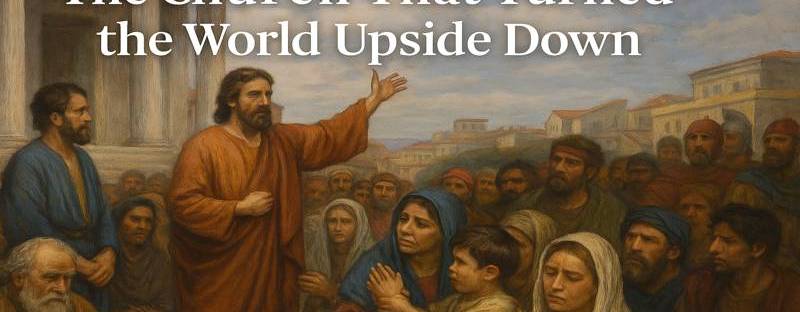
The Church that Turned the World Upside Down

When the gospel began spreading across the Roman Empire, it didn’t come with military might, political clout, or institutional support. It came through fishermen, slaves, mothers, merchants, and martyrs—ordinary people who lived with such conviction that the world couldn’t ignore them.

In Acts 17:6, the accusation was made:

“These men who have turned the world upside down have come here also…”

This was not an exaggeration. The Kingdom of God was turning everything upside down—starting with the hearts of those who refused to live by the world’s values. And nowhere was this more evident than in the early Church.


They Preached Without Platforms

The first Christians had no church buildings, no mass communication, no social media, and no celebrity pastors. Yet the gospel spread like fire. Why? Because every believer saw themselves as a vessel of the Kingdom.

Evangelism wasn’t a program—it was a way of life. Wherever they went, they preached Christ—not only with words, but with love, generosity, and forgiveness.

“They are attacked by Jews as aliens and are persecuted by Greeks, yet those who hate them are unable to give any reason for their hatred.”
Epistle to Diognetus, ch. 5


They Loved Without Limits

The Church’s growth wasn’t driven by theological arguments—it was fueled by radical love.

  • They cared for abandoned babies left to die.
  • They served the sick when others fled during plagues.
  • They welcomed strangers, enemies, and the poor.
  • They forgave their persecutors and prayed for their executioners.

Their love had no worldly explanation, and that’s exactly what made it powerful.

“See how they love one another… and how they are ready to die for each other.”
Tertullian, Apology 39


They Refused to Compromise

The early Christians didn’t adapt the gospel to gain favor with the world. They didn’t soften Jesus’ commands to make converts. They lived holy lives—separate from the systems of the world—and embraced the cost of faithfulness.

Whether it meant losing jobs, status, property, or life—they counted it joy to suffer for Christ. Their courage wasn’t rooted in pride but in eternal hope.

“You joyfully accepted the plundering of your property, since you knew that you yourselves had a better possession and an abiding one.”
Hebrews 10:34


They Made Disciples, Not Just Converts

The goal wasn’t just to win arguments or gain numbers—it was to raise up citizens of the Kingdom who would live and die for Christ.

Discipleship happened in homes, in prison cells, and at gravesides. It was personal. It was sacrificial. And it changed the world.


What About Today?

If we want to turn the world upside down again, we must stop trying to fit in and start living like we truly belong to another Kingdom. Programs won’t change the world—but holy, Spirit-filled lives will.

We don’t need more influence—we need more obedience. We don’t need louder voices—we need brighter light.


What We Can Learn

  1. The early Church didn’t have power—they had presence.
  2. Love, holiness, and sacrifice still change hearts.
  3. We must stop conforming and start transforming.
  4. Ordinary believers with extraordinary obedience can shake nations.

Sources:

  • The Holy Bible — Acts 17:6; Hebrews 10:34; Matthew 5:14–16
  • Epistle to Diognetus, ch. 5
  • Tertullian, Apology 39
  • Eusebius, Church History
2–3 minutes

Leave a comment

Kingdom Discipleship, Kingdom Living

True Greatness in the Kingdom — The Least Among You

Jesus redefined greatness.

In a world where status meant power, and leadership meant rule, Jesus took a towel and washed His disciples’ feet. He looked into the eyes of ambitious men who asked for thrones and said:

“Whoever wants to be great among you must be your servant, and whoever wants to be first must be your slave—just as the Son of Man did not come to be served, but to serve.”
Matthew 20:26–28

This wasn’t poetic humility—it was the foundation of Kingdom leadership. And the early Christians believed Him. They modeled greatness not by exalting themselves, but by lowering themselves in love and service.


They Didn’t Seek Titles—They Took Up Towels

The Ante-Nicene Christians rejected the pursuit of status in both the church and society. Leaders were identified by their character, not their charisma. The goal was not to climb spiritual ranks but to imitate the humility of Christ.

Many refused to accept leadership roles unless asked repeatedly and recognized by the community. Their leadership looked like:

  • Sharing meals with the poor
  • Visiting prisoners
  • Risking their lives for others
  • Serving the sick and dying during plagues
  • Teaching without being paid or celebrated

They didn’t call themselves “Great”—the world called them fools, and Christ called them blessed.


Greatness Meant Becoming the Least

“The greatest among you will be your servant.”
Matthew 23:11

Early Christian writings repeatedly point to service as the truest form of authority. Bishops and elders weren’t figures of dominance—they were examples in suffering and sacrifice.

“Do not think of yourself more highly than you ought… but consider yourself the servant of all.”
Didache, ch. 3

When leaders began taking on titles, dressing differently, or distancing themselves from the flock, the Church began to drift from Christ’s model. But for nearly three centuries, the least were the greatest—and the cross, not the pulpit, was the symbol of leadership.


The Least Were Often Women, Children, and Slaves

In the Kingdom, value is not determined by age, gender, or position. The early church honored the faithful witness of widows, the courage of young martyrs, and the devotion of unnamed servants. Unlike the world, they didn’t build platforms—they lifted up the overlooked.

“God chose what is weak in the world to shame the strong.”
1 Corinthians 1:27

True greatness was seen in quiet obedience, faithful endurance, and unwavering love for enemies and strangers.


What About Today?

Modern leadership often mimics the world: recognition, influence, applause. Even in the church, success is measured in numbers, status, and public presence. But Jesus still whispers:

“The last will be first, and the first last.”
Matthew 19:30

The way up is down. The way forward is on our knees. The way to lead is to serve.


What We Can Learn

  1. Kingdom greatness is marked by humility and sacrifice.
  2. Titles do not define leaders—character does.
  3. We must honor the lowly, not just the visible.
  4. True discipleship means becoming least of all and servant of all.

Sources:

  • The Holy Bible — Matthew 20:26–28; Matthew 23:11; Matthew 19:30; 1 Corinthians 1:27
  • Didache, ch. 3
  • Letter of Ignatius to the Romans (on refusing public praise)
  • Shepherd of Hermas, Similitudes on humility
2–3 minutes

Leave a comment

Kingdom Discipleship, Kingdom Living

Kingdom Values vs. Worldly Values

Jesus said:

“My Kingdom is not of this world…”
John 18:36

This wasn’t just a theological statement—it was a value distinction. The Kingdom of God is governed by radically different principles than those of the world. While the world praises power, influence, and self-preservation, Jesus elevates humility, mercy, sacrifice, and righteousness.

The early Church knew this well. Living under Roman rule, surrounded by wealth, status, and violence, they consciously chose to embody the values of heaven over the systems of earth. Their lives were a public declaration that the Kingdom of God had already come—and that it looked nothing like Caesar’s.


Two Kingdoms. Two Moral Systems.

The world says:

  • Exalt yourself.
  • Get even.
  • Win at all costs.
  • Gather wealth.
  • Preserve your rights.

The Kingdom of God says:

  • Humble yourself (Matthew 23:12).
  • Forgive seventy times seven (Matthew 18:22).
  • Lose your life to find it (Luke 9:24).
  • Give to the poor (Luke 12:33).
  • Turn the other cheek (Matthew 5:39).

The clash isn’t subtle—it’s complete. And the early Christians refused to blend the two.


They Chose the Cross Over the Crown

While Roman citizens glorified the sword and adored military strength, Christians gloried in Christ crucified. They didn’t try to conquer culture—they bore witness to a greater one. They were mocked for weakness, yet their love shook empires.

“They love all men and are persecuted by all… they are poor, yet make many rich… dishonored, yet glorified.”
Epistle to Diognetus

Their values showed that Christ—not comfort—was Lord.


Worldly Values Crept in Over Time

By the mid-4th century, the line between Kingdom and empire blurred. Titles appeared. Wealth increased. The Church sought influence over integrity, status over sacrifice. But the first three centuries stand as a testimony to what the Church looks like when it values the teachings of Jesus more than the applause of men.

We must return to that distinction.


What About Today?

Too often, believers are indistinguishable from the world around them. We chase careers, praise politicians, hoard resources, and defend our reputations—all while professing the name of Christ. But Kingdom values demand a different way—a better way.

To be citizens of the Kingdom, we must renounce the world’s values, even when they come dressed in religious language.


What We Can Learn

  1. Kingdom values are not compatible with worldly systems.
  2. Discipleship means embracing the cross—not comfort or popularity.
  3. We must test every cultural value against the teachings of Christ.
  4. Living by Kingdom values makes us light in the darkness.


2–3 minutes

Leave a comment

Kingdom Discipleship, Kingdom Living

Civil Disobedience and the Cost of Allegiance

To the early Christians, allegiance to Jesus wasn’t just verbal—it was visible. It shaped every action, every relationship, and every response to authority. While they obeyed laws, paid taxes, and prayed for leaders, they also understood there were limits to civil obedience. When human commands contradicted divine truth, they chose Christ over Caesar—no matter the cost.

“We must obey God rather than men.”
Acts 5:29

This wasn’t rebellion for the sake of rebellion. It was faithful resistance, grounded in humility, guided by Scripture, and empowered by the Spirit.


Civil Obedience with Heavenly Boundaries

The early Christians were not revolutionaries in the worldly sense. They sought peace, respected government, and lived quiet lives (1 Thessalonians 4:11–12). But they drew a line where obedience to earthly rulers would require disobedience to God.

When commanded to worship the emperor, offer incense to idols, or renounce Christ, they refused—even if it meant death.

“We are ready to serve you, but we cannot worship your gods or call the emperor ‘Lord.’ Christ is our only King.”
Apology of Athenagoras, c. AD 177


They Were Arrested for Faithfulness, Not Lawlessness

These believers weren’t jailed for rioting or plotting rebellion—they were arrested for refusing to bow to anything or anyone but Jesus. Their defiance came in the form of silence before magistrates, refusal to sacrifice, hymns sung in prison, and joyful submission to execution.

They didn’t curse the state. They didn’t demand their rights. They simply stood firm in holy allegiance—and accepted the consequences.


Civil Disobedience Was Normalized in Their Discipleship

Early church leaders didn’t encourage blind compliance. They taught believers that following Christ might lead to breaking laws that broke God’s law, and that suffering was not failure—but faithfulness.

“We who fear God do not suppose that the empire is to be hated; we pray for it… but we refuse to call Caesar ‘God.’”
Tertullian, To Scapula 2

Obeying God over men wasn’t an act of civil unrest—it was a mark of spiritual integrity.


Faithfulness Was Costly

Choosing Christ over culture meant:

  • Loss of business and income
  • Disqualification from public office
  • Social exclusion
  • Arrest, torture, and martyrdom

But they counted it a privilege to suffer for the Name.

“They left the council, rejoicing that they were counted worthy to suffer dishonor for the Name.”
Acts 5:41

They did not seek suffering, but they did not fear it. Their eyes were on a better Kingdom, a righteous Judge, and an eternal reward.


What We Can Learn Today

  1. Civil disobedience is a biblical, necessary practice when human authority contradicts God’s Word.
  2. Faithfulness to Christ will cost us something—it always has.
  3. Our stand must be marked by humility, courage, and peace.
  4. We are not rebels—we are citizens of a higher Kingdom.

Sources:

  • The Holy Bible — Acts 5:29, 41; 1 Thessalonians 4:11–12
  • Tertullian, To Scapula
  • Athenagoras, Apology
  • Martyrdom of Polycarp, c. AD 155
  • Eusebius, Church History
2–3 minutes

Leave a comment