Convergence, From the Archives, The Last Days

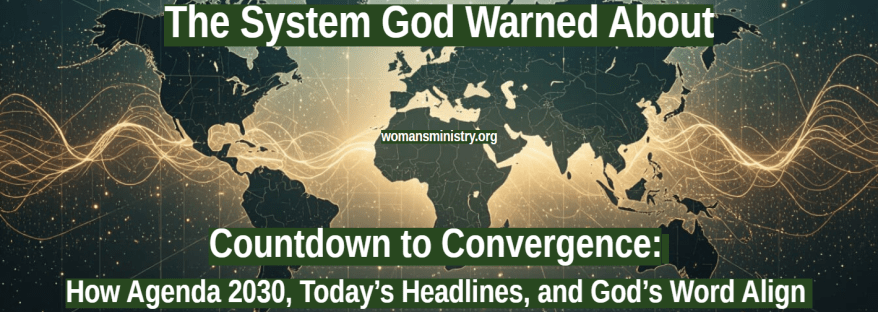
How Agenda 2030, Today’s Headlines, and God’s Word Align

From the Series: Countdown to Convergence


Countdown to Convergence traces the alignment of Agenda 2030’s goals, today’s headlines, and God’s prophetic Word. This series reveals how the world’s plans are converging into the very system the Bible warned us about — the last global order before Christ’s return. Our purpose is not fear, but watchfulness, so that the Church stands ready, holding fast to the Blessed Hope, and calling others out of the system that will soon demand total allegiance.


The System God Warned About

In September 2015, world leaders gathered at the United Nations and adopted what they called a “plan of action for people, planet and prosperity” — better known as the 2030 Agenda for Sustainable Development. Among their goals: the end of poverty, hunger, and inequality, along with the building of “peaceful, just and inclusive societies.”

On the surface, it all sounds noble. But when we hold their vision up to Scripture, we see something deeper: a system that mirrors exactly what the Bible warned about nearly two to four thousand years ago — a final world order built on human unity apart from God, demanding total control over life, commerce, and even belief.


Scoffers in the Last Days

The moment we begin to speak of prophecy, scoffers rise up. Peter told us this would happen:

“Knowing this first: that scoffers will come in the last days, walking according to their own lusts, and saying, ‘Where is the promise of His coming? For since the fathers fell asleep, all things continue as they were from the beginning of creation.’” (2 Peter 3:3–4, c. AD 65, NKJV)

Their very denial is itself a fulfillment of prophecy. Scoffing does not disprove God’s Word — it proves it. And Jesus told us not to be lulled into complacency but to watch (Matthew 24:42).


Apostasy Comes First

The Bible also makes clear that before the Antichrist is revealed, a great falling away must take place:

“Let no one deceive you by any means; for that Day will not come unless the falling away comes first, and the man of sin is revealed, the son of perdition.” (2 Thessalonians 2:3, c. AD 51, NKJV)

This apostasy — a visible Church departing from the truth, softening itself for deception — is already underway. I have written in depth on this in another series, but here we will simply note: apostasy clears the ground for everything else. It is the precursor to the convergence we now see.


Three Timelines Converging

  1. Their Timeline – Agenda 2030
    • The UN’s 2030 Agenda lays out 17 Sustainable Development Goals with 169 targets to be achieved by the year 2030. Words like “universal,” “inclusive,” and “global” echo throughout the text. These reveal not just programs, but a vision for centralized, worldwide governance.
  2. Current Events Timeline
    • Headlines today show the groundwork being laid:
      • Nations piloting digital IDs tied to access.
      • Central banks testing CBDCs (central bank digital currencies).
      • Governments drafting AI regulations to control information and speech.
    • These aren’t isolated innovations; they are puzzle pieces being fitted into one global system.
  3. God’s Timeline – Prophecy
    • Scripture told us long ago where this would lead:
      • “…and the fourth beast shall be a fourth kingdom on earth, which shall be different from all other kingdoms, and shall devour the whole earth, trample it and break it in pieces.” (Daniel 7:23, c. 530 BC, NKJV)
      • “…and that no one may buy or sell except one who has the mark or the name of the beast, or the number of his name.” (Revelation 13:17, c. AD 95, NKJV)
      • “For when they say, ‘Peace and safety!’ then sudden destruction comes upon them, as labor pains upon a pregnant woman. And they shall not escape.” (1 Thessalonians 5:3, c. AD 51, NKJV)

Across 2,500 years of prophecy, the same reality is revealed: a global system of control arising just before the Lord’s return.


Why This Is the Last Economic System

History has seen many empires — Babylon, Rome, and countless others. But none had digital enforcement or global reach. What is being built now is unprecedented. Once established, it will not be surrendered, because it fulfills exactly what Revelation describes: a system continuing until Christ Himself destroys it at His coming (Revelation 19:11–21).

This is not just another cycle of history. It is the final man-made system, the Beast system.


God’s Pattern of Deliverance

Yet in all of this, we see God’s character and pattern. He delivers His people at the brink, just before wrath falls:

  • Noah and his family were lifted above the flood before judgment came (Genesis 7, c. 1445 BC).
  • Lot was led out of Sodom before fire fell (Genesis 19, c. 1445 BC).
  • Israel walked through the Red Sea just as Pharaoh’s army closed in (Exodus 14, c. 1445 BC).
  • Esther stood at the king’s side as Haman’s plot collapsed (Esther 7, c. 450 BC).

Each moment of deliverance came when the enemy’s pride was at its peak — and God was glorified. The Rapture of the Church will be no different.


Watchfulness and Hope

Jesus said, “Watch therefore, for you do not know what hour your Lord is coming” (Matthew 24:42, c. AD 60, NKJV). Paul reminded us that Christ will appear “to those who eagerly wait for Him” (Hebrews 9:28, c. AD 65, NKJV).

We do not watch with fear, but with expectancy. We are not appointed to wrath (1 Thessalonians 5:9). We are called to endure faithfully, to shine as lights in a dark world, and to fix our eyes on the Blessed Hope — the soon return of Jesus Christ.


Sources & References

Scripture

  • Genesis 7 & 19; Exodus 14, c. 1445 BC
  • Esther 7, c. 450 BC
  • Daniel 7:23–25, c. 530 BC
  • 2 Thessalonians 2:3; 1 Thessalonians 5:3, 5:9, c. AD 51
  • 2 Peter 3:3–4, c. AD 65
  • Hebrews 9:28, c. AD 65
  • Revelation 13:16–17; 19:11–21, c. AD 95
  • Matthew 24:42, c. AD 60

Agenda 2030

Current Events

Digital ID/Digital Identification

  • “Britain to introduce compulsory digital ID for workers” — Reuters
  • “New digital ID scheme to be rolled out across UK” — GOV.UK (UK government announcement)
  • “Digital identity leaders and privacy experts sound the alarm on invasive ID systems (‘Phone Home’)” — ACLU press release
  • “Apple’s digital ID program expanding nationwide in 2025 amid privacy debates” — Mobile ID World
  • “Mandatory digital ID card plan blasted as ‘ludicrous’ …” — The Sun
  • “The global rise of digital ID technology in 2025” — ZignSec blog

CBDC (Central Bank Digital Currency) Pilots & Developments

  1. India: Retail Sandbox for CBDC / Deposit Tokenization Pilot
    • The Reserve Bank of India (RBI) launched a “retail sandbox” to let fintech firms build and test solutions around the digital rupee. Reuters+1
    • India will also pilot deposit tokenization (turning deposits into tokenized digital instruments) as part of its digital currency strategy. Reuters
  2. Uganda: CBDC Pilot with Tokenized Economy
    • Uganda launched its CBDC (digital shilling) pilot in a $5.5 billion tokenised economy model, building an infrastructure that goes beyond money to tokenizing real assets and systems. Techpoint Africa+2CoinCentral+2
    • The pilot is anchored in Uganda’s Green Industrial & Special Economic Zone (GISEZ), embedding the CBDC into industrial and trade flows. Techpoint Africa
  3. Global / Other Trends

Representative Articles & Links

  • “India’s central bank launches digital currency retail sandbox” — Reuters Reuters
  • “RBI launches digital currency retail sandbox” — Economic Times The Economic Times
  • “Uganda launches CBDC pilot in $5.5B tokenised economy” — Techpoint Africa Techpoint Africa
  • “Indian central bank to launch pilot for deposit tokenisation” — Reuters Reuters
  • “Cryptocurrencies and digital money in 2025” — Dig.watch (background / trends) Digital Watch Observatory
  • “Blockchain and Digital Assets News and Trends – February 2025” — DLA Piper DLA Piper

AI Regulation / AI Legislation & Policy

  1. U.S. Regulatory Changes & Strategy
    • The U.S. under the 2025 administration has prioritized regulatory clarity for digital assets and AI. State Street
    • A new Executive Order called “Strengthening American Leadership in Digital Financial Technology” set the tone for digital asset + AI policy. State Street
    • The administration formed a “President’s Working Group on Digital Assets,” including an AI/Crypto Special Advisor. State Street
    • It also rescinded SAB 121 (which had required custodial crypto assets to be recognized on balance sheets), replacing it with SAB 122, aligning accounting treatment more cleanly. State Street
    • The U.S. government expects to release a high-level AI policy (for oversight and risks) around mid-2025. State Street
  2. State / National AI-focused Legislation
    • The National Conference of State Legislatures tracks 2025 AI bills in U.S. states (covering issues like transparency, bias, oversight). NCSL
    • Across the globe, jurisdictions are pushing or drafting AI regulation (e.g. EU’s AI Act, national AI laws). State Street+1
  3. Regulatory Outlook & Trends
    • Many commentators expect U.S. regulation to be more innovation-friendly than restrictive, at least initially. State Street
    • The intersection of AI and digital assets (e.g. algorithmic stablecoins, programmable finance) is a major regulatory frontier. State Street+1
    • In Europe, regulations on digital “dark patterns,” algorithmic decisioning, and fairness (like the proposed Digital Fairness Act) are in motion. Wikipedia
  4. Legislative Activity in U.S. States (2025)
    • Various state bills have been introduced on AI, covering disclosure, bias mitigation, algorithmic audits, etc. NCSL

Representative Articles & Links

  • “2025 regulatory preview: Understanding the new US … digital assets & AI” — State Street’s Digital Digest / regulatory outlook State Street
  • “2025 Digital ID Predictions: What’s Next for the Industry?” — Trinsic (with mention of AI-enabled identity) Trinsic
  • “Global Crypto-Asset Regulation Outlook (May 2025)” — Substack insight piece Insights for VC
  • “Artificial Intelligence 2025 Legislation” — NCSL overview of state AI bills NCSL
  • “Blockchain and Digital Assets News and Trends – February 2025” — DLA Piper, covering overlap with AI & digital assets DLA Piper
  • “Digital Fairness Act” — Wikipedia summary of proposed EU legislation (relates to algorithmic fairness and digital regulation) Wikipedia
Featured & Foundational, Featured Article

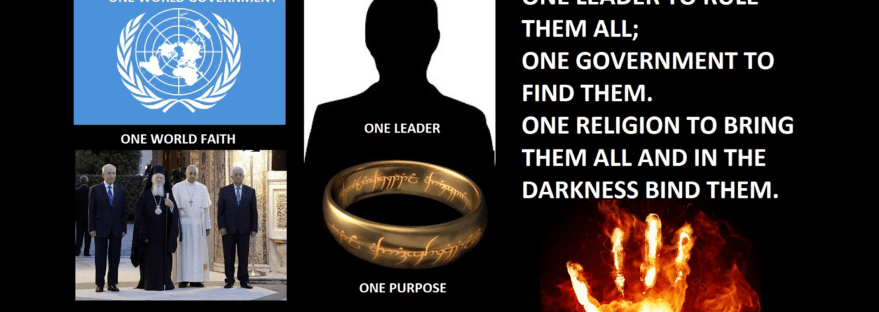
CENTRALIZED POWER, DECEPTIVE UNITY, AND GLOBAL DOMINION

One World Government: “And the ten horns which you saw are ten kings who have received no kingdom as yet, but they receive authority for one hour as kings with the beast. These are of one mind, and they will give their power and authority to the beast.” (Revelation 17:12–13) — This speaks of a future global confederation of kings (or regions) who unite under the authority of the Antichrist. This is a centralized world government, short-lived and driven by satanic influence (Rev. 13:2), ultimately giving rise to the final Beast system described in Daniel and Revelation.

One World Religion: “So he carried me away in the Spirit into the wilderness. And I saw a woman sitting on a scarlet beast… And on her forehead a name was written: MYSTERY, BABYLON THE GREAT, THE MOTHER OF HARLOTS AND OF THE ABOMINATIONS OF THE EARTH.” (Revelation 17:3–5) — Revelation 17 describes Mystery Babylon, a global false religious system that fornicates with kings and seduces the world into spiritual adultery. This woman rides the Beast, meaning the Antichrist initially uses religion to gain global control, but later destroys her (Rev. 17:16–17). This fits the image’s implication of interfaith ecumenicalism paving the way for universal worship ,  eventually pointing to the worship of the Beast himself (Rev. 13:8).

One Leader: “And he shall confirm a covenant with many for one week; but in the middle of the week he shall bring an end to sacrifice and offering. And on the wing of abominations shall be one who makes desolate…” — Daniel 9:27 (NKJV); “Let no one deceive you by any means; for that Day will not come unless the falling away comes first, and the man of sin is revealed, the son of perdition.” (2 Thessalonians 2:3 (NKJV) — This leader is the Antichrist, described as the Little Horn (Dan. 7:8), the Beast from the sea (Rev. 13:1), and the man of sin (2 Thess. 2:3). He rises in a time of chaos, offering peace and order, but ultimately demands worship and blasphemes God.

One Purpose: “It was granted to him to make war with the saints and to overcome them. And authority was given him over every tribe, tongue, and nation.” (Revelation 13:7); “All who dwell on the earth will worship him, whose names have not been written in the Book of Life…” (Revelation 13:8) — The “one purpose” of Satan is to unite mankind in rebellion against God, to exalt himself above all that is called God (2 Thess. 2:4), and to enslave the world in spiritual darkness.

“And in the Darkness Bind Them”: “He causes all, both small and great, rich and poor, free and slave, to receive a mark… and that no one may buy or sell except one who has the mark or the name of the beast…” (Revelation 13:16–17) — This is bondage in darkness, not merely economic control, but spiritual enslavement,  sealing allegiance to the Beast and eternal separation from God for those who take the mark (Rev. 14:9–11). The world is not heading toward unity, peace, and progress, it is heading toward consolidated rebellion under Satan’s final push. But Jesus Christ, the true King, will return and shatter this false unity with the sword of His mouth (Revelation 19:15).

“And the kingdom and dominion… shall be given to the people, the saints of the Most High.” — Daniel 7:27 (NKJV)

Eschatology, From the Archives, The Last Days

Why Eschatology Matters

From the series: Understanding the End Times — A Biblical Framework

“All Scripture is given by inspiration of God, and is profitable for doctrine, for reproof, for correction, for instruction in righteousness.” — 2 Timothy 3:16 (NKJV)

When you hear the word eschatology, it may sound intimidating, even academic. But in simple terms, eschatology means “the study of last things.” It’s about what God has revealed in His Word concerning the future — the return of Christ, the resurrection of the dead, the final judgment, and the new heavens and earth.

The question is: does this matter for our daily lives? According to Scripture, it matters more than we often realize. Eschatology shapes the way we live in the present, strengthens our faith, and calls us to walk as watchful disciples.


What Is Eschatology?

The word comes from two Greek terms:

  • eschatos = “last” or “final”
  • logos = “word, discourse, or study”

So eschatology simply means the study of the last things. Scripture uses this framework to reveal God’s purposes: the kingdom of Christ, the judgment of the nations, the resurrection of the dead, and the restoration of all creation.

Along the way, you’ll encounter key words like:

  • Millennium (Revelation 20:1–6) — Christ’s 1,000-year reign.
  • Tribulation (Matthew 24:21) — a unique time of distress and judgment.
  • Rapture (1 Thessalonians 4:16–17) — the church caught up to meet Christ.
  • Apostasy (2 Thessalonians 2:3) — the great falling away before the man of sin is revealed.

Don’t let these terms overwhelm you. They are simply markers that help us explore what God has already revealed.


Why Study Prophecy?

Some Christians avoid prophecy, thinking it’s too divisive or complicated. But God says otherwise:

  • Hope“Looking for the blessed hope and glorious appearing of our great God and Savior Jesus Christ.” (Titus 2:13)
  • Holiness“Everyone who has this hope in Him purifies himself, just as He is pure.” (1 John 3:3)
  • Mission“This gospel of the kingdom will be preached in all the world as a witness to all the nations, and then the end will come.” (Matthew 24:14)
  • Comfort“Therefore comfort one another with these words.” (1 Thessalonians 4:18)

Far from being speculative, prophecy is intensely practical. It strengthens our endurance, calls us to holy living, fuels our urgency for the gospel, and comforts us with the promise of Christ’s return.


Can We Trust the Bible’s Prophecy?

Skeptics often ask: “How do you know these ancient texts haven’t been corrupted?” The evidence is overwhelming:

  • The Dead Sea Scrolls (dated ~150 BC) show Isaiah’s words copied with astonishing accuracy for over 1,000 years.
  • The New Testament is preserved in more than 5,800 Greek manuscripts — more than any other ancient document.
  • Archaeology repeatedly confirms Scripture:
    • The Cyrus Cylinder validates Isaiah’s prophecy of Cyrus by name (Isaiah 44:28).
    • The Tel Dan Stele confirms the dynasty of King David.
    • The Pilate Inscription affirms Pontius Pilate as prefect in Judea.

Even more compelling is fulfilled prophecy itself:

  • Messiah’s birth in Bethlehem (Micah 5:2; Matthew 2:1).
  • His entry into Jerusalem on a donkey (Zechariah 9:9; Matthew 21:4–5).
  • His piercing and suffering (Isaiah 53; Psalm 22).

If God has been this precise in what’s already fulfilled, we can trust Him for what is yet to come.


Apostasy — The Last Days Backdrop

Before the glory of Christ’s return, Scripture warns of a great departure from truth:

  • “Let no one deceive you by any means; for that Day will not come unless the falling away comes first, and the man of sin is revealed.” (2 Thessalonians 2:3)
  • “Now the Spirit expressly says that in latter times some will depart from the faith, giving heed to deceiving spirits and doctrines of demons.” (1 Timothy 4:1)
  • “Because lawlessness will abound, the love of many will grow cold.” (Matthew 24:12)

This isn’t mere personal struggle. Apostasy is a deliberate turning away from God’s truth — and it is the hallmark of the last days.


Watchfulness, Not Date-Setting

There is a danger on both sides:

  • Neglect — ignoring prophecy altogether.
  • Speculation — trying to set dates, which Jesus forbids (Matthew 24:36).

Instead, Christ commands: “Watch therefore, for you do not know what hour your Lord is coming.” (Matthew 24:42)

The call is to watchfulness, not panic. We may not know the exact day or hour, but we are called to recognize the season (1 Thessalonians 5:4–6).


Reflection

Eschatology is not meant to confuse us but to anchor us. God has given prophecy not to entertain our curiosity but to equip our faith. To ignore it is to ignore part of His Word. To abuse it is to twist His truth. But to embrace it rightly is to live with hope, holiness, mission, and comfort.


Reflection Questions

  1. When you think of prophecy, do you feel overwhelmed, skeptical, or encouraged? Why?
  2. Which of the four purposes of prophecy (hope, holiness, mission, comfort) do you most need to strengthen in your life right now?
  3. How can you practice watchfulness without slipping into fear or speculation?

Closing Prayer

Father, thank You that You have revealed the end from the beginning. Thank You for the hope of Christ’s return, the call to holiness, the urgency of mission, and the comfort of Your promises. Guard us from deception in these last days. Teach us to live as watchful disciples, ready for the return of our Lord. In Jesus’ name, Amen.


References & Further Reading

Scripture:

  • Titus 2:13 — the “blessed hope.”
  • Matthew 24:42 — command to watch.
  • 2 Timothy 4:8 — crown for those who love His appearing.
  • Revelation 1:3 — blessing for reading prophecy.

Early Church Witnesses:

  • Papias (AD 60–130), fragment recorded by Eusebius, affirming a literal 1,000-year reign.
  • Justin Martyr (Dialogue with Trypho, ch. 80) — affirms premillennial hope.

Archaeological & Textual:

  • Dead Sea Scrolls (1947–) — confirming OT prophetic manuscripts preserved with high accuracy.
  • Codex Sinaiticus (c. AD 350) — one of the oldest complete NT manuscripts.

Extra-Biblical Sources:

  • Josephus, Wars of the Jews (Book 6) — description of Jerusalem’s fall in AD 70.
  • Tacitus, Annals (Book 15) — Roman historian noting early Christians and persecution.

Leave a comment

Convergence, From the Archives, The Last Days

The Sweet Spot for a Controlled Global Economic Collapse

Published September 10, 2025

Based on everything we know from current financial trajectories, technological readiness, and prophetic alignment, here’s the distilled reality: The global elites are racing the clock. They must get their digital control infrastructure in place before the current fiat-based system collapses on its own. They have some control over the timing, but not total control; there’s a hard ceiling to how long they can prop it up.

The earliest realistic collapse window is late 2026. The infrastructure, CBDCs, biometric verification, digital IDs, IoB, AI enforcement, won’t be fully operational until 2026. That means an organized, controlled collapse before late 2026 would backfire because there would be chaos without a unified replacement system, and governments and central banks would lose authority rather than consolidate it. Therefore, global adoption of their solution would be inconsistent.

They cannot safely trigger a full-scale collapse in 2025 or early 2026. That’s why they’ve been delaying triggers and buying time with temporary measures like stimulus injections, debt rollovers, and “soft landings.” The latest they can delay is mid-to-late 2027. Even if they try to drag it out, the mathematics and market realities work against them because the global debt is growing exponentially. It’s over $315 trillion right now and compounding faster than GDP. U.S. debt just crossed $35 trillion, with interest payments becoming unsustainable by late 2026. Currency confidence is eroding, and the BRICS alliance is accelerating a de-dollarization strategy. Central banks worldwide are hoarding gold reserves, which is a historic pre-collapse signal. This creates a pressure cooker effect that by 2027 at the latest, the fiat system implodes under its own weight, whether they want it to or not.

If they’re not ready, chaos spirals out of control and weakens their position. Therefore, their best option is to ensure their digital architecture is ready before that point. The sweet spot for a controlled collapse is late 2026 to mid-2027. If they time it perfectly, this window allows them to trigger the collapse while presenting their “solution” simultaneously:

  • CBDCs (Central Bank Digital Currencies)
  • Biometric Digital IDs
  • IoB health integration (vaccine passports, neural IDs, etc.)
  • Global compliance frameworks using AI-driven monitoring
  • Manufacturing dependency so people voluntarily submit for access to essentials, food, energy, healthcare, financial participation.
  • Coordinate governments + Big Tech + central banks globally, removing the option for individual nations to resist effectively.

The reason they’re pushing so hard now is the elites, WEF, BIS, IMF, central banks, Big Tech, are in a compressed timeline. Their technology infrastructure (CBDCs, IoB, AI surveillance) isn’t fully operational yet. The earliest is 2026. But the current fiat system’s death spiral is accelerating with an unavoidable collapse by 2027, even without intervention. That means late 2026 to mid-2027 is the narrow window for a controlled demolition before losing control entirely. If they miss that sweet spot, the collapse happens anyway, but uncontrolled chaos weakens their ability to consolidate power.

Where this aligns prophetically: If the Antichrist’s global financial system rises after the collapse, the infrastructure must already exist when the dust settles. That aligns perfectly with this 2026–2027 timeline. Before this system is imposed, the Church, the restraining influence, is removed:

“…For the mystery of lawlessness is already at work; only He who now restrains will do so until He is taken out of the way.”  — 2 Thessalonians 2:7 (NKJV)

That suggests, the Rapture likely occurs just before or during the controlled collapse. That way, the vacuum of chaos allows the Antichrist to step forward as the “savior” the world cries for.

Apostacy, From the Archives, The Last Days

Apostasy Before His Coming — What Scripture Really Says

(The Great Falling Away, Part 1)

“Let no one in any way deceive you, for it will not come unless the apostasy comes first, and the man of lawlessness is revealed…”
— 2 Thessalonians 2:3, NASB1995


What Is Apostasy?

Apostasy is not simply personal struggle, backsliding, or doubt. It is a deliberate and public departure from the faith—a rebellion against the truth once delivered to the saints (Jude 1:3).

It is not hidden. It is visible. Widespread. Prophetic.

The Apostle Paul wrote to warn believers that the Day of the Lord would not come unless this falling away happened first. Not alongside. Not after. But first.

This apostasy would signal something deeper: that a lawless system was rising—and behind it, a man of lawlessness would be revealed.


This Isn’t Just Future. It’s Already Happening.

Many believers picture a last-days falling away as something sudden—like a switch flipped in the end times. But the Bible paints a more sobering picture:

“For the mystery of lawlessness is already at work…”
—2 Thessalonians 2:7, NASB1995

Even in Paul’s day, the seeds of rebellion were already being sown. Heresies were multiplying. Teachers were twisting Scripture. Some sought power. Others returned to the world.


Jude Pleaded with the Church:

“Contend earnestly for the faith which was once for all handed down to the saints.”
—Jude 1:3, NASB1995

This means we must:

  • Guard the original Gospel
  • Discern false teachings
  • Hold fast to Jesus Christ—not man-made religion

What Will This Series Cover?

In the coming posts, we’ll trace how and when this falling away began—not from modern headlines, but from:

  • The words of Jesus and the apostles
  • The lifestyle of the early, Spirit-led Church (AD 33–100)
  • The slow infiltration of Greek philosophy and political power
  • The shift from Scripture to systems
  • The call today to come out from among Babylon (Rev. 18:4)

We’ll follow the story of faithfulness… and falling away. And we’ll ask:

Where am I standing? On man’s tradition—or on Christ?


Application for Today

Many Christians sense something is wrong. The Church looks polished, organized, and systematized—but lacks power, purity, and Spirit-led conviction.

What’s missing is not relevance… it’s repentance.

The falling away is not just happening around us—it is happening to us, unless we return to the Word, the Spirit, and the life Jesus called us to in Matthew 5–7.

Leave a comment

Editor's Picks, The Six Solas

The Root of the Matter: Why the Solas Must Be Anchored in the Spirit

Most Christians today have never heard of the Solas—let alone the deeper truth behind them. They’ve been reduced to academic slogans in Reformed circles or historical trivia for Protestants. But these were once lived out—not just proclaimed—by the Ante-Nicene Church, the faithful believers between AD 33–325 who bore real Kingdom fruit.

While many know Sola Scriptura or Sola Fide, there’s one that has been tragically forgotten in both Protestant and Catholic traditions:

👉 Solo Spiritu Sancto — By the Holy Spirit Alone
This is the root of all the others…

Sola Scriptura (Scripture Alone)

God’s Word is the ultimate authority for faith and life—not church tradition or human opinion. Everything we believe and do must align with Scripture.

Sola Fide (Faith Alone)

We are justified (made right with God) through faith alone—not by works, rituals, or religious performance. True saving faith trusts fully in Christ.

Sola Gratia (Grace Alone)

Salvation is a free gift of God’s grace. We did not earn it, and we cannot deserve it. It is all by His mercy and love.

Solo Spiritu Sancto (By the Holy Spirit Alone)

We understand and walk in truth by the power of the Holy Spirit—not by intellect, tradition, or man’s wisdom. The Spirit teaches, convicts, empowers, and leads God’s people.

Solus Christus (Christ Alone)

Jesus Christ is the only mediator between God and man. Our hope, forgiveness, and eternal life come through Him alone—not saints, priests, or systems.

Soli Deo Gloria (To the Glory of God Alone)

Everything—including our salvation—is for God’s glory. We live, serve, and worship not for applause or status, but to magnify His name.

Without the Holy Spirit teaching us Scripture (Sola Scriptura), our faith becomes academic. Without the Spirit convicting us toward faith (Sola Fide) and leading us in grace (Sola Gratia), it becomes a transaction. Without the Spirit glorifying Christ alone (Solus Christus) and stirring us to live for God’s glory (Soli Deo Gloria), it becomes religious performance.

Instead of growing deep in Him, we debate endlessly. We lop off branches of doctrinal disagreement, but never deal with the root: that we’ve traded the Spirit’s authority for men’s interpretations. The fruit of this tree? Division, pride, and confusion.

The Ante-Nicene Church shows us a better way: a Church anchored in the Spirit, interpreting Scripture together, walking in radical obedience, and bearing fruit worthy of Christ.

2–3 minutes

Leave a comment

Biblical Interpretation, Editor's Picks, Kingdom Discipleship

How to Read the Bible — Returning to the Way of the Bereans and the Ante-Nicene Church

How to Read the Bible Series

You hold the Bible in your hands.
Sixty-six books. One Author. One Spirit. One unfolding story of redemption. And yet, for many, it’s a confusing book—wrapped in mystery, buried under layers of tradition, or filtered through man-made systems. But that was never God’s design.

The earliest Christians didn’t read the Bible through denominational creeds or theological filters. They read it with open hearts, under the teaching of the Holy Spirit, and in the context of their Jewish and first-century world. They tested everything by the written Word—and followed it with their lives.

It’s time to return to their way.


Scripture Focus:

“Your word is a lamp to my feet and a light to my path.”
Psalm 119:105, NASB1995


Reading with the Author, Not Just About Him

The Bible is not a dead text. It is living and active (Hebrews 4:12) because it is breathed out by the Holy Spirit (2 Timothy 3:16). Without the Spirit, Scripture becomes information. With Him, it becomes transformation.

The Bereans didn’t rely on theological systems or traditions to interpret the Word. They relied on the Spirit and the Scriptures themselves. Their example calls us to read with reverence, discernment, and dependence—not on man, but on God.


The Early Church Read the Word as One Unified Story

They saw the Old and New Testaments not as opposites but as one unfolding plan of God. They understood the Jewish idioms and culture behind the text. They read the Word in its historical context, through Hebraic lenses, and with spiritual hunger.

They didn’t force Scripture to fit their beliefs. They submitted their beliefs to the Word.


Principles for Spirit-Led, Scripture-Faithful Reading

  1. Context Is King
    Who wrote it? To whom? What is happening? What covenant are they under? Read what’s there, not what tradition has imposed.
  2. Culture and Language Matter
    Jesus spoke as a Jew to Jews. Many truths are deeply rooted in Hebrew idioms and first-century thought. Misreading the cultural setting leads to misapplying truth.
  3. Scripture Interprets Scripture
    Isaiah 28:10 and 1 Corinthians 2:13 remind us: truth is confirmed in multiple witnesses across God’s Word. Don’t hang doctrines on isolated verses.
  4. Avoid Allegory Unless the Text Demands It
    The early Church read Scripture literally unless it clearly indicated symbolism (such as in visions or parables). They let the Spirit—not philosophy—determine meaning.
  5. Reject Traditions That Override Scripture
    Jesus warned about this (Matthew 15:9). When tradition silences the Word or redefines its meaning, we must return to the text and the Spirit.

Walking as the Early Church Walked

To read the Bible rightly, we must return to how it was written: in context, by the Spirit, and for the Church. The Bereans searched the Scriptures daily to test everything. The Ante-Nicene believers treasured the Word, often at the cost of their lives.

They didn’t read to affirm a system. They read to know and follow Christ.


Return to the Word. Return to the Spirit.

The Bible is not meant to be interpreted by the wisdom of men, but by the One who wrote it. The Holy Spirit still teaches, still convicts, still opens eyes. You don’t need a new method—you need the old path.

Read with prayer. Read with surrender. Read with the Spirit. And you will find Christ in every page.

2–3 minutes

Leave a comment

Editor's Picks, Kingdom Discipleship, Love In Action

If You Love Me, Obey Me

From the series “The Commands of Christ — Love in Action”

The love of God is not a feeling we carry. It is a life we surrender.
It does not ask for admiration. It calls for obedience.
Love that does not obey is not love at all.

“If you love Me, you will keep My commandments.”
John 14:15, NASB 1995

Jesus didn’t say this to burden His disciples.
He said it to anchor them.
Because love for Christ is not measured in passion, eloquence, or emotion—but in faithfulness.

To follow Jesus is not to admire His teachings.
It is to obey His voice.


There is a kind of faith that applauds Christ from a distance.
There is a kind of love that sings on Sunday and wanders on Monday.
But the love that saves—the love born of the Spirit—is a love that listens, follows, repents, and obeys.

“Why do you call Me, ‘Lord, Lord,’ and do not do what I say?”
Luke 6:46

This is the question that echoes through every age of the Church.
Not, “Do you feel love for Me?”
But, “Will you do what I say?”


Jesus’ commands are not suggestions. They are not optional for the mature or the zealous. They are for every disciple who has been born of the Spirit and adopted into the family of God.

“For this is the love of God, that we keep His commandments; and His commandments are not burdensome.”
1 John 5:3

True love doesn’t argue with the Word.
It doesn’t try to explain away obedience with theology.
It bows. It follows. It trusts.


The early Church understood this well. Their love was visible, not because they claimed it, but because they lived it.

The Didache (c. AD 50–100):
“There are two ways: one of life, one of death. This is the way of life: First, you shall love God who made you; second, your neighbor as yourself. And whatsoever you would not have done to you, do not do to another… walk according to the commandments.”
Didache, Ch. 1–2

Irenaeus (c. 180 AD):
“Those who love Him walk in His commandments. For love does not destroy the Law, but fulfills it through obedience.”
Against Heresies, Book IV

These early believers did not separate doctrine from practice.
They didn’t ask how little they could obey and still be saved.
They asked how deeply they could obey to show their love.


So what does this mean for us?

It means love cannot remain vague.
It must be expressed in action—in forgiving, in speaking truth, in denying self, in remaining faithful, in keeping His words even when it costs us everything.

It means discipleship isn’t just about knowing what Jesus said—it’s about doing it.

“But the one who has listened and has not acted accordingly is like a man who built a house on the ground without a foundation…”
Luke 6:49

And it means this: the clearest evidence that the love of God abides in us… is that we obey.


📚 Sources & References

If You Love Me, Obey Me

Scripture (NASB 1995):

  • John 14:15 – “If you love Me, you will keep My commandments.”
  • 1 John 5:3 – “This is the love of God, that we keep His commandments…”
  • Luke 6:46–49 – “Why do you call Me, ‘Lord, Lord’ and do not do what I say?”

Ante-Nicene Sources:

  • The Didache, Chapters 1–2.
    “There are two ways… walk according to the commandments.”
    [Available at: EarlyChristianWritings.com]
  • Irenaeus, Against Heresies, Book IV.
    “Love does not destroy the Law, but fulfills it through obedience.”
    [Available at: NewAdvent.org]
2–4 minutes

Leave a comment

Editor's Picks, God Is Love, Kingdom Discipleship

Love Empowered: The Holy Spirit and the Life of Christ Within

From the series “The Love of God: Revealed, Received, and Radiated”

It is one thing to speak of the love of God.
It is another to receive it.
But it is something far more profound to live it.

The love that created the world, the love that was nailed to a cross, is not meant to remain distant—admired but unreachable. The risen Christ did not ascend to leave us longing. He sent the Holy Spirit to abide with us, teach us, and form His love within us.

“The love of God has been poured out within our hearts through the Holy Spirit who was given to us.”
Romans 5:5

This is not a metaphor.
It is not a poetic way of saying we feel better when we believe.
It is the supernatural reality of regeneration.

Through the Holy Spirit, the love of God ceases to be a doctrine we study and becomes a presence we carry.


Many speak of love, but very few walk in it.
Why?
Because it cannot be manufactured by discipline, religious knowledge, or human willpower.

The love that forgives enemies, blesses persecutors, shows mercy to the undeserving, and remains faithful in suffering is not natural. It is the result of divine indwelling.

“But I say to you, love your enemies and pray for those who persecute you…”
Matthew 5:44

“By this all men will know that you are My disciples, if you have love for one another.”
John 13:35

These are not ideals for the spiritually gifted—they are commands for every believer. But without the Spirit, they are impossible.


When the Holy Spirit takes up residence in a believer, He does not merely convict and comfort. He conforms us to the image of Christ. He produces what we cannot:

“The fruit of the Spirit is love…”
Galatians 5:22

Notice where it begins: love. Not a feeling. Not attraction. Not tolerance.
A supernatural, self-denying, enemy-forgiving, holiness-seeking love that mirrors the life of Jesus Christ.

It is this kind of love that stunned the Roman Empire. The early Christians didn’t argue the culture into submission—they loved their enemies, cared for the sick during plagues, rescued abandoned infants, and refused to curse their executioners. And this wasn’t because of their willpower. It was the Spirit of Christ within them.


Tertullian (c. 160–220 AD) recorded that the pagans exclaimed:
“See how they love one another… and how ready they are to die for one another!”
Apology, Chapter 39

They loved with a kind of love the world could not explain—because it did not originate in them.
It came from heaven.
It flowed from a Person.
And it burned even when they were burned at the stake.


This is the love that dwells in every true follower of Christ.

It is not optional.
It is not theoretical.
It is not silent.

Where the Spirit is, there is love. And not merely for the brethren. The true test of love is not how we treat our friends, but how we treat our enemies.

“If anyone says, ‘I love God,’ and hates his brother, he is a liar…”
1 John 4:20

The early Church didn’t love one another because it made sense. They loved one another because the Spirit of the risen Christ had made them one. They didn’t love enemies to win debates—they loved them because they had died with Christ, and it was no longer they who lived, but He who lived in them.


This is what the Holy Spirit does.
He makes the love of God a living reality—poured out, overflowing, unstoppable.

Without Him, we cannot love as Christ loves.
With Him, we cannot help it.

Sources & References

Love Empowered: The Holy Spirit and the Life of Christ Within

Scripture (NASB 1995):

  • Romans 5:5 – “The love of God has been poured out within our hearts through the Holy Spirit…”
  • Galatians 5:22 – “The fruit of the Spirit is love…”
  • Matthew 5:44 – “Love your enemies…”
  • John 13:35 – “By this all men will know…”
  • 1 John 4:20 – “If anyone says, ‘I love God,’ and hates his brother, he is a liar…”

Ante-Nicene Sources:

  • Tertullian, Apology, Chapter 39.
    “See how they love one another… and how ready they are to die for one another!”
    [Available at: NewAdvent.org/fathers/0301.htm]
3–4 minutes

Leave a comment

Featured & Foundational, Featured Article

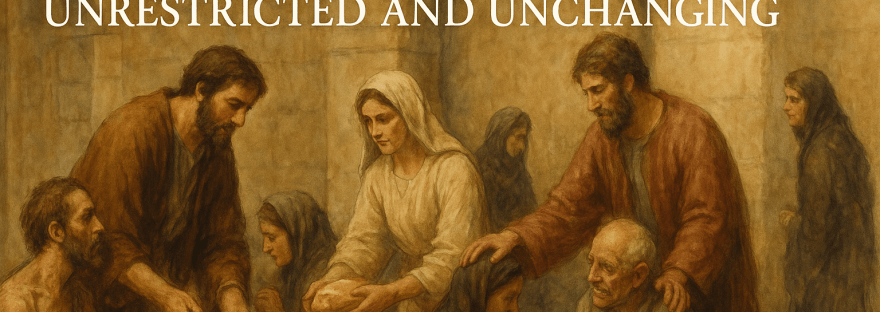
God’s Love: Unrestricted and Unchanging

There is a teaching, often repeated with great confidence, that God does not love anyone who is not “in Christ.” It sounds weighty, reverent, and even logical—until it is tested by the very Word of God.

The Scriptures do not describe God’s love as something hidden or conditional. They describe it as demonstrated, revealed, and poured out. It is not withheld until one believes; it is why one is drawn to believe.

Romans 5:8 tells us, “But God demonstrates His own love toward us, in that while we were yet sinners, Christ died for us.” This declaration is not veiled in mystery. It plainly states that God loved us before we were justified, reconciled, or sanctified. It is not union with Christ that produced His love; rather, it was His love that initiated the very mission of redemption.

When the Lord Jesus said, “Love your enemies… that you may be sons of your Father in heaven,” He grounded the command in God’s own nature: “for He causes His sun to rise on the evil and the good, and sends rain on the righteous and the unrighteous” (Matthew 5:44–45). If God’s love were only extended to those already in Christ, then His kindness toward the wicked would be hypocrisy. But Jesus makes clear: our Father loves even His enemies—and we are called to reflect that very love.

This love is not mere sentiment—it is action. The Father sent the Son not because we were worthy, but because we were lost. The mission of Christ was not the beginning of God’s love—it was the manifestation of what had always been in His heart. “For God so loved the world, that He gave His only begotten Son…” (John 3:16). Not the believing world. Not the elect world. The world.

The early Church understood this deeply. They did not preach a love confined to a theological category. They preached a Gospel that was for all men. They were ridiculed, slandered, and hunted—yet they loved their persecutors. They healed the sick, fed the poor, and offered hope to prisoners. Their writings and their lives bore witness that God’s love extended even to the enemies of the cross.

Justin Martyr wrote that Christ became man “for the sake of the human race,” and that the Father sent the Son “for the good of all men.” The Epistle to Diognetus describes God as sending His Son not to those who were already righteous, but to those who were corrupt and unworthy. The Church believed that God’s love was universal in offer and particular in reception—not because His love was limited, but because not all would receive it.

They lived what they believed. In Roman arenas, they forgave their killers. In plague-ridden cities, they stayed to care for the dying. In households and prisons, they offered the Gospel to every soul without distinction. Their theology was not an abstract system—it was the fragrance of Christ, poured out for the world.

This rich testimony stands in stark contrast to later teachings influenced by Stoic and Neoplatonic thought. These philosophies shaped views of God that emphasized impassibility—teaching that the divine could not experience change or passion. Within such a framework, God’s love became a selective extension of will, rather than the unchanging essence of His nature.

As these ideas entered Christian thought through certain teachers, the concept of divine love shifted. God’s affections were no longer seen as genuine or universally extended, but as fixed upon a predetermined few. The dynamic, pursuing love revealed in Scripture gave way to a colder logic—one where love became synonymous with election, and wrath with everyone else.

But the God of Scripture is not like the impassive gods of Greek philosophy. He is the God who weeps over Jerusalem, who is patient toward the wicked, who takes no pleasure in the death of the sinner, who rejoices over the lost sheep. He is not moved by merit, but by mercy. He is not controlled by our response, but He responds in faithful, pursuing love—so that we might turn and live.

If we are to return to the faith once for all delivered to the saints, we must recover this truth: God is love. Not selectively. Not reactively. Not philosophically. He is love by nature, and He has demonstrated that love by giving His Son—so that whoever believes in Him should not perish, but have everlasting life.

May we, like the early Church, live as those who have known this love—and extend it freely to all. For we are not loved because we are in Christ. We are in Christ because we were loved.

3–5 minutes

Leave a comment