“Blessed are the peacemakers, for they shall be called sons of God.”
— Matthew 5:9 NASB1995
🪡 A Home That Heals, Not Harms
Peacemaking isn’t weakness—it’s Kingdom power. It means choosing grace when someone wrongs us, helping siblings reconcile, and being the first to apologize when we’re wrong. Jesus doesn’t say “blessed are the peacekeepers,” but peacemakers — those who actively bring healing where there is hurt.
As a mother, your responses train your children in how to navigate conflict. Model peacemaking by speaking truth in love, being quick to forgive, and reminding your children that being right is not more important than being reconciled.
🕯 A Mother’s Role
Create a culture of repentance and grace. Let mercy flow freely, and confront sin lovingly. When arguments arise, show them how to return to each other with humility and restore peace.
📖 Talk About It:
What’s the difference between keeping peace and making peace?
How can we bring healing into our home when there’s tension?
🧰 Kingdom Practice
Create a “peace plan” for your home. When conflict happens, practice stopping, praying, and asking, “What would bring peace right now?” Keep this plan visible.
✍️ Prayer
Lord, make our home a place where peace is made, not just hoped for. Teach me to lead in love, and help my children grow into reconcilers who reflect the heart of Christ. Amen.
“Blessed are the peacemakers, for they shall be called sons of God.”
— Matthew 5:9 NASB1995
🔦 Be the One Who Calms the Fire
Let’s face it: drama is everywhere—in your group chat, your school, maybe even your family. Jesus says the real ones in the Kingdom aren’t the ones who fuel the fire. They’re the ones who help put it out.
Peacemaking doesn’t mean avoiding problems or being fake. It means stepping in with gentleness and helping people come back together. It means showing mercy and helping others understand each other. And when you do, Jesus says you look just like your Heavenly Father.
🔊 Real Talk:
Are you more likely to stir the pot or cool things down?
What keeps you from making peace?
✨ Try This:
When you see a conflict this week, ask God to help you be a bridge, not a barrier. Reach out to the person left out or speak peace into the tension.
✍️ Prayer:
God, make me a peacemaker. Help me forgive, help me speak gently, and help me bring people together instead of tearing them apart. I want to look like You. Amen.
“Blessed are the pure in heart, for they shall see God.”
— Matthew 5:8 NASB1995
👓 A Filtered Heart
In a world full of filters, fake smiles, and online personas, Jesus calls us to purity—not just on the outside, but from the inside out.
Being pure in heart doesn’t mean being perfect. It means being real before God. It means letting go of junk—bitterness, gossip, compromise—and wanting what’s holy. Purity clears the fog so we can see God—not just someday in heaven, but here and now.
🔊 Real Talk:
What clutters your heart most—comparison, fear, shame, distractions?
What would it look like to clean that out and make room for God?
✨ Try This:
Clean your phone. Go through your music, photos, and social apps. Ask: Does this help me see God or blur my vision? Delete one thing that doesn’t belong.
✍️ Prayer:
God, I want a pure heart—not to look good, but to see You more clearly. Clean out anything that doesn’t belong. I want to know You for real. Amen.
If there is one command of Jesus that separates Kingdom people from the world, it’s this:
“Love your enemies and pray for those who persecute you.” — Matthew 5:44
To the early Christians, this wasn’t just a spiritual ideal—it was a test of loyalty to the King. They believed that to follow Christ meant to love like Christ, even in the face of betrayal, violence, and death. They chose to be killed rather than kill, because no earthly allegiance could override the law of love written by the hand of their King.
Radical, Not Reasonable
The world has always justified violence in the name of justice, protection, or patriotism. But the Ante-Nicene Christians rejected these arguments. They were not pacifists because they were weak—they were peacemakers because they were strong in Spirit.
They didn’t retaliate when wronged. They didn’t join the military. They didn’t hold public offices that required judging or punishing others. They chose the cross over the sword.
“It is not lawful for a Christian to bear arms for any earthly consideration.” — Tertullian, On Idolatry 19
“We who formerly used to kill one another now not only refuse to make war upon our enemies, but gladly die confessing Christ.” — Justin Martyr, First Apology 39
They Saw Killing as a Violation of Kingdom Allegiance
To kill—even in self-defense or war—was, to them, a denial of Christ’s commands. They believed that bearing the name of Jesus required bearing His nature. And Jesus, when threatened, was silent. When beaten, He did not resist. When crucified, He prayed for His murderers.
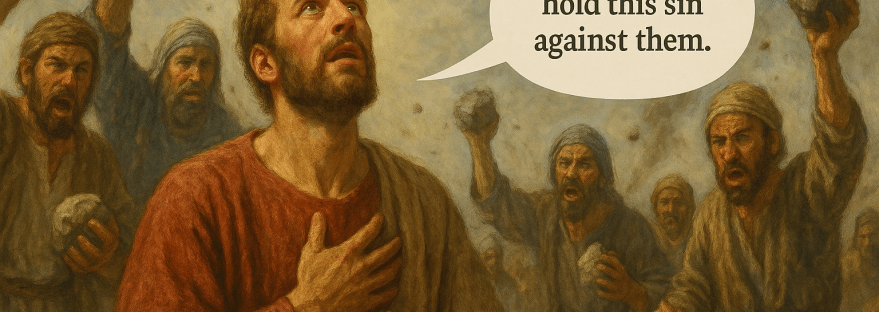
“Father, forgive them, for they know not what they do.” — Luke 23:34
They believed that if Jesus laid down His life, they must also be willing to lay down theirs—without compromise, without retaliation.
Martyrdom Was Victory, Not Defeat
Their willingness to die without violence was not a sign of failure, but a testimony of triumph. Their blood didn’t stain their testimony—it sealed it.
“The blood of the martyrs is the seed of the Church.” — Tertullian, Apology 50
Pagans and Roman authorities couldn’t understand how a people could face death so calmly—praying, forgiving, singing. Their love was louder than the roar of lions. Their peace silenced the jeers of crowds. Their lives and deaths proclaimed a Kingdom not of this world.
The Modern Church Has Forgotten This Witness
Today, many Christians justify war, violence, and retaliation in the name of freedom, justice, or self-preservation. But these early believers remind us: Christ did not die so we could defend our rights—He died so we could lay ours down.
Kingdom citizenship demands radical obedience to the law of Christ: love. This is not weakness. This is warfare of a different kind—the kind that overcomes evil not by force, but by forgiveness.
What We Can Learn Today
Enemy love is the distinguishing mark of a true disciple.
Killing, whether in retaliation or service to empire, contradicts the command of Christ.
Martyrdom is not the loss of a life—it is the fulfillment of one.
We must reclaim a theology of the cross—not just as a symbol, but as a way of life.
“Blessed are the pure in heart, for they shall see God.”
— Matthew 5:8 NASB1995
💎 A Clear Heart, A Clear View
To be pure in heart isn’t about perfection—it’s about being undivided, sincere, and clean before God. A pure heart isn’t distracted by worldly things or double-minded. It longs for God more than anything else.
Jesus promises that the pure in heart will see God. This is not only a future promise—it’s for now. When our hearts are cleansed by grace and devoted to Christ, we begin to see Him in His Word, in our lives, and in His people.
🕯 Ante-Nicene Reflection
Early Christian women lived with remarkable purity—not only morally, but in motive and devotion. They lived for Christ alone, often forsaking the pleasures of the world to walk in holiness. Their hearts were fixed on eternity, and their vision of God grew clearer through surrender.
💭 Reflect
Is there anything dividing my heart or distracting me from a clear view of God?
What does a “pure heart” mean in my everyday life?
🙏 Prayer
Lord, cleanse my heart. I want to see You clearly. Take away anything that distracts or divides my love for You. Make my heart wholly Yours. Amen.
“Blessed are the pure in heart, for they shall see God.”
— Matthew 5:8 NASB1995
💖 A Clean Heart Sees God
Being pure in heart means loving God with everything inside of you. It means choosing what’s right, telling the truth, and thinking about good things. When our hearts are clean, we can see God more clearly in His Word, His love, and His creation.
Jesus wants our hearts to be full of light, not darkness. And when we follow Him with honest and loving hearts, He promises that we will see Him—not just someday, but in the ways He works around us every day.
🏛 Long Ago…
In the early church, children were taught to guard their hearts from wrong things and love what is good. They wanted to live in ways that made God smile.
💡 Think About It:
What does it mean to have a clean heart?
Are there things in your heart you need to talk to God about?
🙏 Let’s Pray:
Jesus, I want my heart to be clean and full of love for You. Help me choose what is right and pure. I want to see You more every day. Amen.
“Blessed are the pure in heart, for they shall see God.”
— Matthew 5:8 NASB1995
👁 A Family with Clear Vision
A pure heart is one that isn’t cluttered by sin, selfishness, or distraction. Jesus isn’t asking for outward perfection—He’s inviting us to a sincerity that flows from within.
As a mother, your transparency, repentance, and desire for holiness are teaching tools. Your children are watching not just your actions, but your affections. A home that treasures purity in thought, word, and motive is one where God’s presence is felt and seen.
🕯 A Mother’s Role
Guard the atmosphere of your home. Fill it with Scripture, worship, honesty, and joy. Talk about heart issues—not just behavior. As your children grow, help them examine their motives and direct their desires toward the Lord.
📖 Talk About It:
What do we fill our minds and hearts with each day?
How can we help each other stay focused on God?
🧰 Kingdom Practice
Do a “heart check” challenge as a family. Pick a time each evening to ask, “Did my heart stay focused on what’s pure today?” Celebrate progress and offer grace where needed.
✍️ Prayer
Lord, create in us clean hearts. Let our home be filled with Your truth and light. Help me lead with purity and honesty so my children learn to see You more clearly. In Jesus’ name, Amen.
In today’s theological world, interpretation of Scripture often gets filtered through denominational lenses, academic traditions, or philosophical frameworks. But the early Christians—those who lived before the Council of Nicaea—read Scripture much differently. Their understanding wasn’t shaped by seminaries or systematic theologies, but by discipleship, persecution, and the Holy Spirit.
Before creeds were formalized and councils held power, these believers leaned wholly on the authority of God’s written Word and the Spirit who breathed it.
Scripture Was Final, Not Evolving
To the Ante-Nicene Christians, the canon of Scripture was not a work in progress. While the formal list of New Testament books wasn’t ratified until later, the early church already treated the apostolic writings as divinely authoritative.
“The Scriptures are indeed perfect, since they were spoken by the Word of God and His Spirit.” — Irenaeus, Against Heresies 2.28.2
They didn’t see the need for developing theology—because they believed the Word was sufficient. Their task was not to add to it or systematize it, but to live it out faithfully.
Interpretation Through the Holy Spirit, Not Human Systems
The early Christians believed the Holy Spirit was the Teacher of the Church.
“But the anointing that you received from Him abides in you, and you have no need that anyone should teach you… His anointing teaches you about everything.” — 1 John 2:27
Their writings reflect constant prayer, fasting, and humility in seeking to understand God’s Word—not reliance on external traditions or evolving doctrines.
This wasn’t individualism or rebellion—it was a Spirit-led submission to the authority of Scripture. They trusted that the same Spirit who inspired the Word could also illuminate it to every believer, not just to elite teachers.
They Interpreted Literally—Unless the Text Was Clearly Symbolic
These believers took the words of Jesus and the Apostles seriously. When Jesus said “love your enemies,” they didn’t allegorize it. They practiced it—often to the death. Their lives bore literal obedience to commands like:
Blessed are the persecuted
Do not resist an evil person
Give to those who ask
Turn the other cheek
They believed the commands of Christ were meant to be lived, not just admired.
Allegorical interpretation only appeared later, influenced by thinkers like Origen and Clement of Alexandria—men who were shaped more by Greek philosophy than by the simple obedience of the early church.
The Word Was Lived in Community
Scripture wasn’t read and interpreted in isolation. The early church gathered in homes, read aloud the Gospels and Epistles, and submitted to one another as they sought the Spirit’s guidance. Even without formal education, they understood the power and clarity of God’s Word.
“Let us therefore hold steadfastly and unceasingly to our hope and the guarantee of our righteousness, who is Jesus Christ… Let us look steadfastly to Him.” — Clement of Rome, 1 Clement 36
They didn’t see themselves as theologians—but as servants. The goal was not intellectual mastery, but transformation and obedience.
What We Can Learn Today
The Holy Spirit is still the best teacher of Scripture.
Literal obedience matters more than theological precision.
Faithful community fosters clarity.
Doctrinal systems must be tested against the plain reading of the Word.
A Warning for Today’s Church
Many today no longer trust the plain reading of Scripture—preferring the interpretations of scholars, theologians, or movements. But if the early church had followed such systems, the gospel would never have spread. It was their simple, radical trust in the Word and the Spirit that shook the world.
Let’s return to that simplicity—where God’s Word is enough, and His Spirit leads us into all truth.
“Blessed are the merciful, for they shall receive mercy.”
— Matthew 5:7 NASB1995
💧 A Heart That Mirrors God’s
Mercy is more than feeling sorry for someone—it’s showing compassion, even when it costs us something. It’s forgiving someone who hurt you. It’s helping someone who may never repay you. It’s choosing tenderness in a world that celebrates payback.
To be merciful is to reflect the heart of God. And Jesus promises something beautiful: those who live this way will receive mercy in return—not just from others, but from the Father Himself.
🕯 Ante-Nicene Reflection
The early Christian women lived mercifully. Many cared for the sick, fed the poor, and even showed kindness to their persecutors. Their mercy wasn’t weakness—it was courage in action, born from a heart shaped by the mercy of Christ.
💭 Reflect
Is there someone I’ve been withholding mercy from?
Do I see mercy as weakness or as strength that reflects the Kingdom?
🙏 Prayer
Lord, thank You for the mercy You’ve poured into my life. Help me reflect that same mercy to others—especially when it’s hard. Make my heart like Yours. Amen.
“Blessed are the merciful, for they shall receive mercy.”
— Matthew 5:7 NASB1995
🫶 Forgive Like You’ve Been Forgiven
We all want mercy when we mess up. But what about when someone else messes up and hurts you?
Being merciful isn’t the same as being a doormat. It’s choosing to forgive instead of getting revenge. It’s helping when someone doesn’t deserve it. And it’s being kind even when you could be cold. That’s mercy. And Jesus says that those who give it—get it back.
🔊 Real Talk:
Who are you struggling to show mercy to right now?
Why is it so hard to forgive when you’ve been hurt?
✨ Try This:
Send an encouraging text to someone who annoyed you recently—or pray for someone who doesn’t deserve it. That’s mercy in action.
✍️ Prayer:
Jesus, I want to show mercy like You do. Help me forgive, help me care, and help me be different from the world around me. Thank You for showing me mercy first. Amen.











Leave a comment