
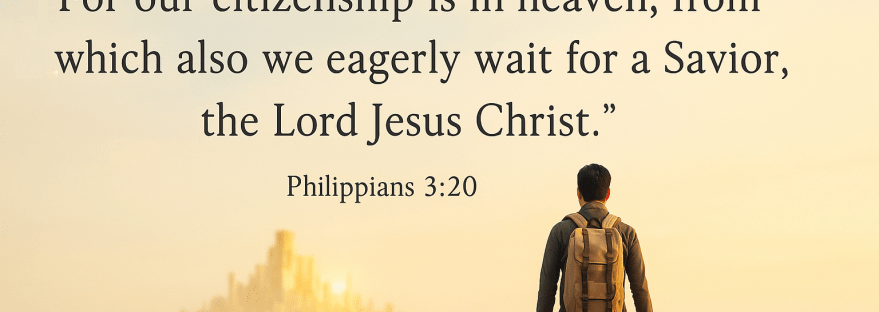
The early Christians understood something that many today have forgotten: this world is not our home. They didn’t strive for power, status, or acceptance. They saw themselves as aliens in a foreign land, and more than that—as ambassadors of a Kingdom not of this world (John 18:36).
This was not escapism—it was identity. They lived in the world, but they were not of it. Their language, conduct, and mission were shaped not by Roman culture but by the Kingdom of Christ.
“Our citizenship is in heaven. And from it we await a Savior, the Lord Jesus Christ.”
— Philippians 3:20
Aliens: They Lived as Outsiders
The early Christians were often misunderstood, slandered, and marginalized because they refused to conform. They didn’t participate in pagan feasts, military service, or political power structures. Their lives were “strange” to their neighbors—marked by simplicity, purity, peace, and love.
“They dwell in their own countries, but simply as sojourners… they are in the flesh, but they do not live after the flesh… they pass their days on earth, but they are citizens of heaven.”
— Epistle to Diognetus, c. AD 130–200
They were not trying to change Rome—they were preparing for the return of the King.
Ambassadors: They Represented Another Kingdom
An ambassador does not speak his own words or act on his own authority. He represents the will, character, and values of the one who sent him. That’s how the early church lived—sent by Christ, empowered by the Spirit, and bound to Scripture.
“We are ambassadors for Christ, God making His appeal through us.”
— 2 Corinthians 5:20
They didn’t try to blend in. They stood out. Their very presence challenged Roman values, exposed sin, and pointed people to a greater hope.
They Obeyed Laws… Until They Contradicted God
These believers weren’t anarchists. They paid taxes, honored the emperor, and followed civil laws—until those laws asked them to violate God’s Word. Then they practiced peaceful civil disobedience, willing to suffer rather than compromise.
“We must obey God rather than men.”
— Acts 5:29
And they did so without violence, without protests, without rebellion—just quiet, faithful resistance. Many were imprisoned, tortured, or killed for this stand, but they rejoiced that they were counted worthy to suffer for His name (Acts 5:41).
Why the World Couldn’t Ignore Them
They were different—not just in belief, but in behavior. Their refusal to compromise wasn’t bitter or prideful—it was beautiful. They didn’t scream at their enemies—they prayed for them. They didn’t riot when wronged—they sang. They didn’t fit in, and they didn’t apologize for it.
Their very existence was a living testimony that another Kingdom had come, and it had made its home in their hearts.
What About Today?
Too many believers today are seeking comfort in the kingdoms of this world—fighting culture wars, clinging to political power, or blending in to avoid being labeled “radical.” But we are not called to be comfortable—we’re called to be holy, set apart, and bold in love.
The early church changed the world by not belonging to it.
What We Can Learn
- Your citizenship is in heaven—live like it.
- You are an ambassador—represent the King well.
- Obedience to God comes before obedience to man.
- Standing apart with humility and love changes lives.
Sources:
- The Holy Bible — Philippians 3:20; 2 Corinthians 5:20; Acts 5:29, 41; John 18:36
- Epistle to Diognetus, c. AD 130–200
- Justin Martyr, Apology
- Eusebius, Church History
Discover more from Rooted & Raised
Subscribe to get the latest posts sent to your email.


Leave a Reply