📖 “For the Son of Man has come to seek and to save that which was lost.” —Luke 19:10 (NKJV)
Jesus’ mission is clearly defined in His own words—He came to seek and to save the lost. This statement reveals both the condition of humanity and the purpose of His coming. To be “lost” is to be separated from God because of sin, unable to restore that relationship through personal effort.
The gospel begins with this reality. Scripture teaches that all have sinned and fall short of God’s glory (Romans 3:23, NKJV). Sin is not merely a mistake but a condition that separates humanity from a holy God. Left to ourselves, reconciliation would be impossible.
Jesus entered into that condition with purpose. As the Son of Man, He came to seek those who were lost—not waiting for them to find their way, but actively pursuing them. His work of salvation was completed through His death and resurrection. On the cross, He bore the penalty of sin, and through His resurrection, He demonstrated victory over death.
As a teenager, understanding Christ as Savior shapes your identity and purpose. Salvation is not achieved through performance, behavior, or effort. It is received through faith in Christ alone. This truth removes both pride and despair—pride because salvation cannot be earned, and despair because it is freely given.
Through the Holy Spirit, Christ draws individuals to Himself, convicts of sin, and opens understanding to the truth of the gospel. Salvation becomes personal when you respond in faith, trusting in His finished work.
Knowing Christ as Savior is the foundation of everything else. It is the beginning of restored relationship with God and the source of eternal life.
You were not left to find your way—He came to find you.
Prayer: Jesus, thank You for coming to seek and save the lost. Help me understand the depth of what You have done for me. Strengthen my faith in Your finished work and guide me to live in the truth of Your salvation each day. Amen.
📖 “For the Son of Man has come to seek and to save that which was lost.” —Luke 19:10 (NKJV)
Jesus defines His own mission with clarity—He came to seek and to save the lost. This statement reveals both the condition of humanity and the heart of God. To be lost is not merely to be confused or searching; it is to be separated from God because of sin. Scripture makes this clear: “For all have sinned and fall short of the glory of God” (Romans 3:23, NKJV).
No amount of effort, morality, or intention can restore that separation. Salvation is not something you achieve; it is something Christ accomplished. He came with purpose—to seek those who could not find their way back and to save them through His sacrifice.
As a woman navigating life’s responsibilities and challenges, it can be easy to place value on performance—what you accomplish, how well you manage, or how others perceive you. Yet the gospel redirects that focus entirely. Your standing before God is not built on what you do, but on what Christ has done.
Jesus did not wait for you to come to Him in perfection. He came to you in your need. Through His death on the cross, He bore the penalty of sin. Through His resurrection, He secured victory over death. Salvation is received by faith—trusting in His finished work alone.
Through the Holy Spirit, Christ draws you into this relationship, opening your understanding and strengthening your faith. Knowing Him as Savior becomes the foundation for everything else—your identity, your purpose, and your hope.
You are not defined by your past, your failures, or your striving. You are defined by the Savior who came to find you.
Prayer: Jesus, thank You for coming to seek and save me. Help me rest in the truth that my salvation is found in You alone. Strengthen my faith and guide me to live in the freedom and purpose You have given me. Amen.
📖 “Be kind to one another, tenderhearted…” —Ephesians 4:32a (NKJV)
Kindness is a way to show love to others. It can be something simple, like sharing, helping, or saying kind words. Jesus teaches you to be kind because He is kind to you.
Sometimes it is easy to be kind when others are kind to you. But Jesus helps you be kind even when it is hard. You might choose to be gentle when someone is upset or help someone who needs it, even if they do not ask.
Kindness shows people what Jesus is like. When you are kind, others can see His love through your actions. Even small acts of kindness can make a big difference.
If you ever feel like being unkind, you can ask Jesus to help you. He will give you a soft and caring heart.
Prayer: Jesus, thank You for being kind to me. Help me be kind to others in what I say and do. Teach me to show Your love through my actions every day. Amen.
📖 “Be kind to one another, tenderhearted…” —Ephesians 4:32a (NKJV)
Kindness in Scripture is not merely a surface-level courtesy. It is rooted in a heart that has been shaped by grace. Paul pairs kindness with tenderness, revealing that true kindness flows from compassion rather than obligation. It reflects a disposition that is attentive to others and responsive in love.
As a woman navigating relationships, responsibilities, and moments of tension, kindness can sometimes feel difficult to maintain. There may be misunderstandings, unkind words, or situations that tempt you toward frustration or withdrawal. Yet Christ calls you to respond differently—not based on the behavior of others, but on the grace you have received.
Kindness does not ignore truth or eliminate the need for discernment. It does not mean allowing harmful behavior to continue unchecked. Rather, it means that even when correction is necessary, it is delivered with gentleness and humility. It reflects the character of Christ, who is both full of grace and truth (John 1:14, NKJV).
Through the Holy Spirit, Christ cultivates this kindness within you. As you grow in your understanding of His mercy, your response to others begins to shift. You become more patient, more willing to listen, and more careful with your words.
Kindness often reveals itself in small, consistent choices—speaking gently, offering encouragement, extending patience, or choosing not to react harshly. Over time, these choices shape the atmosphere of your relationships.
Knowing Christ transforms kindness from something occasional into something intentional. It becomes a reflection of His work within you.
Kindness formed by grace carries both strength and gentleness.
Prayer: Jesus, thank You for the kindness You have shown me. Help me reflect that same grace in how I speak and respond to others. Shape my heart to be tender and patient, so that my actions reveal Your love each day. Amen.
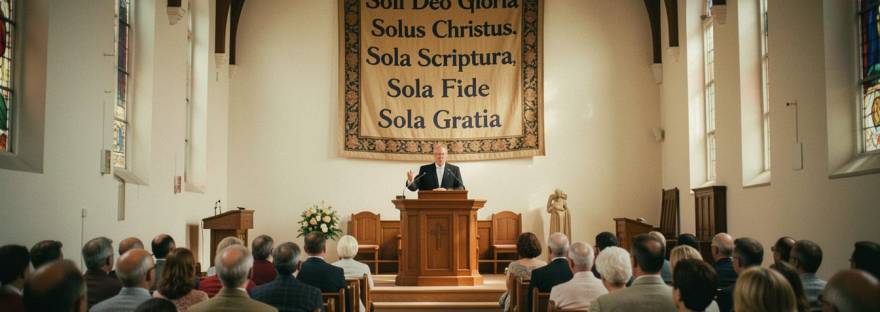
Under every doctrine and belief lies a fundamental question: Who defines truth, God or humanity? This is not a theoretical debate for philosophers or theologians alone; rather, it is one each person answers, consciously or unconsciously, whenever engaging with the Bible. Opening Scripture is more than reading words; it is an encounter with God’s revelation. Our response to this encounter shows where we see true authority. Take time to ponder: When you read Scripture, who do you trust to define what is true—God or your own view? Consider how your answer shapes your daily choices, thoughts, and attitudes. Honestly assess where you stand, not just in theory, but in daily life. As we reflect individually, let us also open this question to group discussion. Please share your thoughts or any personal experiences that have shaped your view of truth and authority. By inviting honest and respectful conversation, we can encourage one another to examine where we turn for guidance and how we allow God’s Word to speak into our lives.
Scripture never suggests we invent truth through reason or experience. Jesus’s words are clear: “Your word is truth” (John 17:17). Rather than truth being ours to manufacture, God reveals it. Consequently, the Bible is not a text we shape to fit our preferences. Instead, it is a standard that forms us. We do not stand above God’s Word as judges; we come before it to be corrected, challenged, and transformed.
The Bible clearly distinguishes sacred from human authority. As Romans 3:4 states, “Let God be true, but every man a liar.” There is no compromise. When God’s Word and human opinion clash, God is always correct—not because it aligns with human reasoning, but because He is the source of truth. God does not change or deceive, as shown in Numbers 23:19: “God is not a man, that He should lie.” His Word remains constant, for “The word of the Lord endures forever” (1 Peter 1:25).
From the start, humanity has sought to claim authority. In Eden, the serpent began not with denial but with a question: “Has God indeed said…?” (Genesis 3:1). This doubt invited reinterpretation. Once God’s Word was questioned, its meaning became negotiable. Human reasoning took center stage. Today, this persists in comments like “This is what the Bible means to me” or “I think this passage says…”. When truth becomes subjective, authority shifts from God to humanity.
We see this in daily situations: someone justifies a dishonest business practice by saying, “I know the Bible says you shouldn’t lie, but everyone does it to get ahead. God understands.” Or a person dismisses difficult teachings about forgiveness with, “That command was for people back then; my situation is different.” Social topics are often reframed with the claim that “Times have changed, so the Bible needs to be interpreted differently now,” making Scripture submit to modern preferences rather than the other way around. These subtle shifts happen when personal perspective becomes the filter for truth, rather than approaching Scripture with humility and a willingness to be shaped by what God has spoken.
The Bible warns against this mistake: “No prophecy of Scripture is of any private interpretation” (2 Peter 1:20). God’s Word did not start with humanity; individuals do not have ultimate authority over its meaning. Instead, the Holy Spirit inspired Scripture. Therefore, readers are called to engage it with humility, not autonomy. While diligent study is essential, our guiding question should not be, “What do I want this to mean?” Rather, it should be, “What has God said, and how will I respond?”
At this point, the authority of Scripture becomes personal. Affirming the truth of God’s Word is different from accepting it when it challenges personal assumptions. The Bible “discerns the thoughts and intents of the heart” (Hebrews 4:12). It shows what people believe and reveals deeper motivations. It highlights where there is true submission to truth and where truth has been bent to fit personal preferences. The central question is not abstract. It is a practical daily reality: Who defines truth—God or humanity?
The answer is not found in words alone, but in response to what God says. Jesus asked, “Why do you call Me ‘Lord, Lord,’ and not do the things which I say?” (Luke 6:46). Authority is not shown just through words. It is proven by obedience. If God defines truth, His Word must shape thought, correct misunderstanding, and direct life. Scripture is not to fit our desires. Instead, we are to be transformed by it so that we reflect Christ.
To put theory into practice, make space each day for prayerful reading of Scripture. Invite God to reveal His truth. Reflect on passages and ask how they apply to your life right now. Find fellowship with others who value God’s Word. Pursue accountability by sharing your commitments and challenges. To strengthen this, consider forming prayer partnerships or small groups where members pray for one another and share specific ways they are seeking to apply God’s Word. Set aside time each week for the group to reflect together on how Scripture is shaping their thinking and choices, offering encouragement and support. Through intentional community and shared commitment, let Scripture guide your choices, even when it means change or surrender. In this way, God’s Word shapes daily life.
This question underpins all further discussion. Before debating doctrine, tradition, or interpretation, however, this issue must be settled. If God alone defines truth, then all other sources—teachers, traditions, and personal reasoning—must yield to Him. As Proverbs 3:5 says, “Trust in the Lord with all your heart, and do not lean on your own understanding.” This does not mean rejecting critical thinking; rather, it calls us to anchor our thoughts in the One who defines truth perfectly.
As this series begins, return to the guiding question: Who has the authority to define truth—God or humanity? Your response will shape how you study Scripture and your willingness to submit to it. If you let God answer this question, all other priorities will fall into place.
To close, stop and prayerfully consider your response. Will you surrender your assumptions and preferences to God’s authority? Will you let His Word define truth in your life? If you are willing, pray: “Lord, I confess my tendency to rely on myself. Help me trust You fully. Teach me to submit to Your Word. Change my heart where it resists, and teach me to seek Your truth above my own. Amen.”
As you go through the coming days, keep returning to this prayer and question. Take moments throughout the week to pause, reflect, and honestly assess where God is inviting you to trust Him more deeply. Ongoing reflection not only deepens spiritual growth but also helps you keep the lesson active in your heart and daily life.
📖 “Be kind to one another, tenderhearted…” —Ephesians 4:32a (NKJV)
Kindness shapes the atmosphere of a home. When family members choose to speak gently, act with patience, and care for one another, the home becomes a place of peace and safety. Scripture connects kindness with a tender heart—one that is willing to listen, understand, and respond with love.
In everyday family life, there are many opportunities to show kindness. It may be helping without being asked, speaking calmly during disagreements, or offering encouragement when someone feels discouraged. These small actions build a strong and loving environment.
Kindness is especially important during moments of tension. When mistakes happen or emotions run high, choosing gentleness instead of harshness helps restore unity. Families that practice kindness learn to resolve conflicts with patience rather than anger.
Parents play an important role by modeling kindness in their words and actions. Children learn how to treat others by watching how adults respond to challenges. Over time, kindness becomes a natural part of how the family communicates and supports one another.
Knowing Christ as a family means allowing His kindness to shape every interaction. As each member chooses to be tenderhearted, the home reflects the love and grace of Jesus.
Prayer: Jesus, thank You for showing our family kindness and grace. Help us speak gently, act patiently, and care for one another each day. Teach us to build a home that reflects Your love. Amen.
📖 “Be kind to one another, tenderhearted…” —Ephesians 4:32a (NKJV)
Kindness, as presented in Scripture, is more than polite behavior. It is a reflection of a heart shaped by grace. Paul connects kindness with being “tenderhearted,” indicating a posture that is sensitive to others and responsive to their needs. This kind of kindness flows from inner transformation rather than outward expectation.
As a teenager, interactions with others can vary widely—friendships, disagreements, misunderstandings, and moments of tension. In these situations, the natural response may lean toward defensiveness, indifference, or retaliation. Scripture calls you to something different: a consistent expression of kindness rooted in Christ.
Kindness does not mean ignoring truth or avoiding necessary boundaries. It means responding to others with compassion and patience, even when their actions do not deserve it. This reflects the way Christ has treated you—with mercy, understanding, and grace.
Through the Holy Spirit, Christ cultivates this quality within you. As you grow in your understanding of His love, your response to others begins to change. Kindness becomes less about convenience and more about reflecting His character.
Practicing kindness often begins with small choices—choosing your words carefully, offering help without recognition, or responding calmly in moments of tension. Over time, these decisions shape your character and influence your relationships.
Knowing Christ transforms kindness from a social expectation into a spiritual reflection. It becomes evidence that His grace is active within you.
Kindness is not weakness—it is strength expressed through grace.
Prayer: Jesus, thank You for showing me kindness and grace. Help me respond to others with compassion and patience. Shape my heart so that my words and actions reflect Your love in every situation. Amen.
In a world where power is often linked with violence and justice with vengeance, Jesus’s teachings stand in stark contrast. Among His commands, none is more challenging than loving one’s enemies. As Jesus said, “Love your enemies and pray for those who persecute you” (Matthew 5:44). This radical love sets Kingdom people apart from the world.
“Love your enemies and pray for those who persecute you.” — Matthew 5:44
For early Christians, loving their enemies showed loyalty to Christ. Following Jesus meant imitating His love, even through betrayal or threats of death. Instead of killing, they chose to die, echoing Christ’s words: “Father, forgive them, for they know not what they do” (Luke 23:34). This forgiveness was their core witness, placing God’s law of love above any earthly ties.
Throughout history, societies have justified violence by appealing to justice, protection, or patriotism. But the Ante-Nicene Christians rejected these reasons. They were not pacifists because of weakness. Instead, they were peacemakers empowered by the Spirit.
They refused to retaliate, enlist in the military, or occupy positions that required acts of violence. They consistently chose the cross instead of the sword.
“It is not lawful for a Christian to bear arms for any earthly consideration.” — Tertullian, On Idolatry 19
“We who formerly used to kill one another now not only refuse to make war upon our enemies, but gladly die confessing Christ.” — Justin Martyr, First Apology 39
Killing, whether in self-defense or war, denied Christ’s call to love. Bearing Jesus’s name meant imitating His peaceful response to threats and pain. As Tertullian said, “It is not lawful for a Christian to bear arms for any earthly consideration.” Early Christians lived out Justin Martyr’s words: “We who formerly used to kill one another now not only refuse to make war upon our enemies, but gladly die confessing Christ.”
“Father, forgive them, for they know not what they do.” — Luke 23:34
They believed Jesus’s self-sacrifice called them to willingly give up their lives. Dying without violence was not failure, but a testimony of faith. Tertullian said, “The blood of the martyrs is the seed of the Church” (Apology 50); their martyrdom strengthened, not stained, their witness.
Pagans and Roman authorities were confounded by this behavior. How could individuals face death calmly, praying, forgiving, and singing? Their love spoke more powerfully than the roar of lions; their peace silenced the jeers. Both their lives and deaths proclaimed a Kingdom not of this world—a Kingdom shaped by Jesus’s words and example.
Today, some Christians justify violence in the name of freedom or justice. Yet, the example of the early Church demonstrates that Christ died so that believers might lay down their rights rather than defend them. This call to love is not limited to times of persecution. In our own lives, at work, in families, with neighbors, when we are wronged, Jesus’s words, “Pray for those who persecute you,” take practical form. Christians can choose forgiveness over revenge, reconciliation over resentment, and truth spoken in love over harsh words. By practicing this radical love, the teaching of Jesus becomes visible in our world.
Kingdom citizenship requires radical obedience to the law of Christ, which is love. This obedience does not signify weakness. Instead, it represents a different form of warfare, one that overcomes evil not through force but through forgiveness.
What We Can Learn Today
The early martyrs’ refusal to retaliate, even in the face of death, reveals the radical love that Jesus calls His followers to embody. Their actions remind us that love for one’s enemies is not just a lofty idea but the distinguishing mark of a true disciple. Killing, whether in retaliation or in service to any earthly power, stands in direct contradiction to Christ’s command: “Love your enemies.”
Martyrdom, for these believers, was not the loss of a life but the fulfillment of one. By choosing the cross over the sword, they showed that following Christ means embracing His prayer, “Father, forgive them,” even when hatred surrounds us. To reclaim a theology of the cross is to make it not just a symbol but a way of life: loving those who harm us, trusting that forgiveness is more powerful than violence, and living by a standard defined not by what we’re willing to kill for, but by what we’re willing to die for. This legacy of love and sacrifice continues to challenge and inspire the world today.
To live out this radical love, act now: Pray for someone who has wronged you. Forgive a recent offense, even if it seems minor. Reach out to reconcile with those in conflict. Let go of resentment and seek ways to serve those who oppose you. These simple yet courageous choices reveal Christ’s transforming love, a legacy that begins with one bold step today. Take time to forgive a hurt or offense, even if it is small. Reach out to someone you are in conflict with and offer a word of reconciliation or kindness. Choose to let go of resentment or the desire to retaliate, and instead look for ways to serve or bless those who oppose you. Small acts of grace in daily life open our hearts to the transforming power of Christ’s love. In these moments, the teaching of Jesus and the example of the martyrs become real and visible in our world.
📖 “I am with you always, even to the end of the age.” —Matthew 28:20b (NKJV)
Jesus gave this promise to His followers to remind them that they would never be alone. Even though He would no longer be with them physically, His presence would remain. This truth is just as real for families today—God is always with you.
In a home, there may be times when someone feels afraid, uncertain, or overwhelmed. Life can bring changes, challenges, or moments when things do not go as planned. In those moments, remembering that Jesus is present brings comfort and confidence.
Families can grow in this understanding by turning to Him together. When you pray, read Scripture, and talk about God’s promises, you remind one another that He is near. His presence helps calm fears and gives guidance for decisions.
Parents can encourage children by reminding them that they are never alone—not at school, not at home, and not in any situation. Children can learn to trust that Jesus is with them wherever they go.
Knowing Christ as a family means living with the awareness of His constant presence. In every season, your home can rest in the truth that He is near, guiding and caring for each member.
Prayer: Jesus, thank You for always being with our family. Help us remember Your presence in every moment. Give us comfort when we are afraid and confidence as we trust You each day. Amen.
📖 “I am with you always, even to the end of the age.” —Matthew 28:20b (NKJV)
Jesus spoke this promise at the close of the Great Commission. As He sent His disciples into the world with responsibility and uncertainty ahead, He anchored them in a certainty that would not change—His presence would remain with them.
As a teenager, there may be moments when you feel isolated—misunderstood by others, uncertain about your direction, or overwhelmed by expectations. Even in a crowded room, loneliness can still exist. Christ’s promise speaks directly into that experience.
His presence is not symbolic or distant. Through the Holy Spirit, He is actively with those who belong to Him. This means guidance is available when decisions feel unclear, strength is present when challenges arise, and comfort is near when emotions feel heavy.
Understanding Christ’s presence reshapes how you view independence. You are not navigating life on your own, even when it feels that way. His nearness is constant, not based on your awareness but on His promise.
Living with this awareness changes how you approach daily life. You carry your concerns to Him in prayer, seek His direction through Scripture, and rely on His strength in moments of weakness. His presence becomes the steady foundation beneath every circumstance.
Knowing Christ removes the illusion of isolation. You may experience moments of solitude, but you are never truly alone.
The One who sends you is the One who stays with you.
Prayer: Jesus, thank You for Your promise to always be with me. When I feel alone or uncertain, remind me of Your constant presence. Help me rely on You for guidance, strength, and comfort each day. Amen.