“And He who searches the hearts knows what the mind of the Spirit is, because He intercedes for the saints according to the will of God.” — Romans 8:27 (NASB 1995)
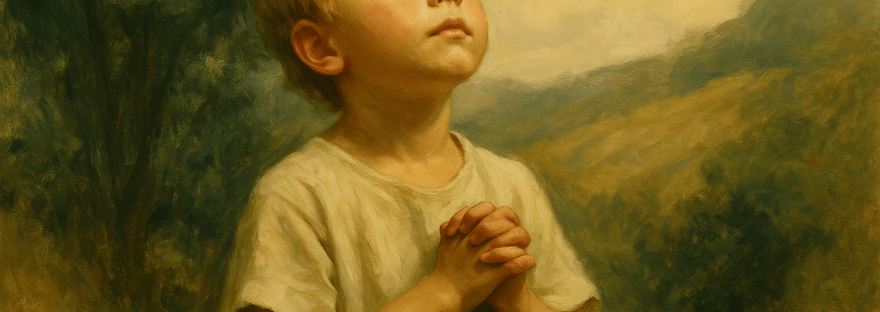
Did you know the Holy Spirit always prays the right way? He knows exactly what God wants and what you need.
Even if you don’t understand what’s happening, the Holy Spirit helps by talking to God for you.
Try This: Say, “Holy Spirit, I trust You to pray for me!” when you’re feeling confused or worried.
Prayer: Thank You, God, that Your Spirit knows what to pray. Help me trust You always. Amen.
“And He who searches the hearts knows what the mind of the Spirit is, because He intercedes for the saints according to the will of God.” — Romans 8:27 (NASB 1995)
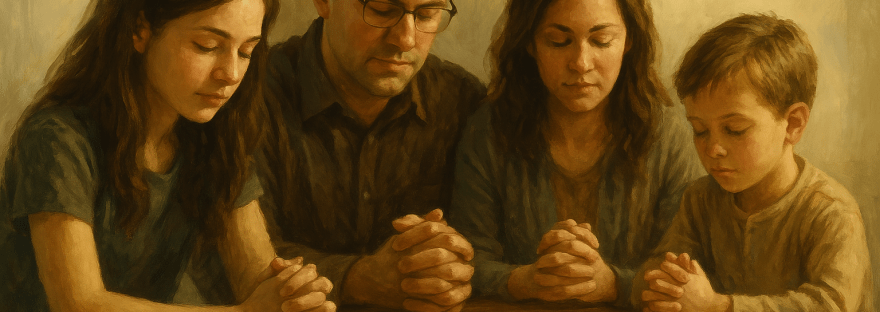
In our home, we want to pray according to God’s will—but how do we know His will?
The answer: we don’t always. But the Holy Spirit does. He searches our hearts, understands our situations, and intercedes on our behalf in full agreement with the Father.
Teaching our children to trust this brings peace—not only in prayer, but in everyday surrender.
Family Talk:
Why is it comforting to know the Holy Spirit always prays the right thing?
How can we pray with more trust and less worry?
Prayer: Holy Spirit, thank You for knowing both our hearts and God’s will. Let our home be guided by Your perfect prayers. Amen.
“And He who searches the hearts knows what the mind of the Spirit is, because He intercedes for the saints according to the will of God.” — Romans 8:27 (NASB 1995)
Sometimes we pray and wonder, “Am I even asking the right thing?”
You don’t need to worry. The Holy Spirit intercedes according to God’s will. That means He prays what you need—not just what you want. And the Father, who knows your heart, listens to the Spirit who knows His.
You are not lost in the shuffle. You are known, searched, and prayed for.
Challenge: Stop today and say: “Holy Spirit, align my prayers with the Father’s heart.”
Prayer: Father, thank You that the Spirit prays in perfect agreement with Your will. I surrender to Your better plan. Amen.
“They profess to know God, but by their deeds they deny Him, being detestable and disobedient and worthless for any good deed.” — Titus 1:16, NASB1995
The Turning Point in Church History
In the first three centuries, the Church grew under persecution—purified, not protected. But in the early 300s, a dramatic shift occurred:
Christianity became legalized, then preferred, and eventually politically empowered—all under the Roman Emperor Constantine.
What looked like a victory for the Gospel… was actually the great acceleration of apostasy.
The Context of Constantine’s Rise
Rome was fractured, and civil war loomed.
Constantine claimed to see a vision: “In this sign, conquer”—a cross with military implications.
He issued the Edict of Milan in AD 313, granting Christians freedom to worship.
By AD 325, he presided over the Council of Nicaea to unify Christianity… under imperial control.
What Changed After Constantine
1. Church and State Became Allies
Bishops gained political power, prestige, and property.
Christianity became entangled with empire, no longer separate from the world.
2. Wealth and Buildings Replaced Simplicity
Lavish basilicas replaced house churches.
Imperial favor flowed in—but so did compromise.
3. Faith Became a Civic Identity
People converted for safety, status, and social advantage.
Persecution of pagans and “heretics” began—not by Rome, but by the Church.
4. Creeds and Councils Replaced the Holy Spirit
The Nicene Creed established doctrinal boundaries—but was enforced by imperial decree.
Spirit-led discernment gave way to imperial-backed orthodoxy.
This Was Not Reformation… It Was Deformation
What began in Acts was Christ-centered, Spirit-led, and world-rejected. What emerged under Constantine was emperor-approved, politically-entwined, and carnally compromised.
“Do not be bound together with unbelievers; for what partnership have righteousness and lawlessness…?” — 2 Corinthians 6:14
Apostasy Took on a Robe and Crown
The Gospel of the Kingdom was replaced by Christendom—a territorial religion.
Bishops became magistrates, and the Church became a governing institution.
Constantine was called “Bishop of Bishops”—yet was never baptized until his deathbed.
Application for Today
We must not confuse institutional success with faithfulness.
Ask yourself:
Is my church modeled after the Acts church—or after Rome?
Are we seeking power, comfort, and visibility—or holiness, sacrifice, and truth?
Would we still follow Jesus if persecution returned?
“In the same way the Spirit also helps our weakness; for we do not know how to pray as we should, but the Spirit Himself intercedes for us with groanings too deep for words.” — Romans 8:26 (NASB 1995)
When your child struggles to explain their feelings, you often understand their heart anyway. The Holy Spirit does the same with us—and more.
He goes beyond understanding. He intercedes. When we and our children don’t know how to pray, He fills the gap with divine groanings. He helps us, not with noise, but with presence.
Family Talk:
Have you ever felt like you didn’t know what to say to God?
What does it mean that the Holy Spirit prays for us?
Prayer: Holy Spirit, thank You for knowing our hearts even better than we do. When we’re weak or lost for words, pray through us. Amen.
“In the same way the Spirit also helps our weakness; for we do not know how to pray as we should, but the Spirit Himself intercedes for us with groanings too deep for words.” — Romans 8:26 (NASB 1995)
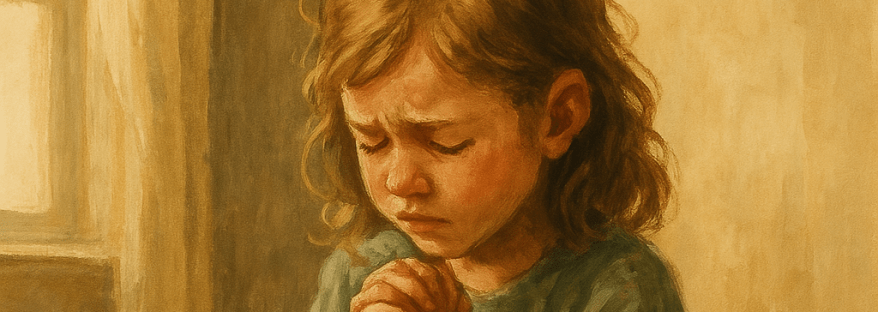
Some days the tears fall, but the words don’t. You open your mouth, but there’s no strength to form the prayer. And that’s when the Holy Spirit steps in.
He doesn’t just help you pray. He intercedes for you—groaning, aching, pleading on your behalf with a depth no human language can express.
You’re not alone in prayer. Even your silence is heard because the Spirit is speaking.
Reflection: When was the last time you let the Spirit pray through your weakness?
Prayer: Holy Spirit, thank You for carrying me when I can’t speak. Teach me to rest in Your prayers. Amen.
“In the same way the Spirit also helps our weakness; for we do not know how to pray as we should, but the Spirit Himself intercedes for us with groanings too deep for words.” — Romans 8:26 (NASB 1995)
There are moments when you want to pray but can’t. You’re overwhelmed, unsure, or just numb.
But God isn’t looking for polished words—He’s listening to groans. The Holy Spirit steps in and speaks the language of the soul. He carries what you can’t say and lays it before the Father.
Even in silence, you’re being heard.
Challenge: Try spending five minutes in silence today, simply inviting the Holy Spirit to pray for what you can’t express.
Prayer: Spirit of God, when my words run out, pray for me. Intercede with power and love. Amen.
The early Church didn’t just study the Word—they lived it. Long before creeds were formalized or theology was debated in ivory towers, believers gathered in homes with open scrolls and open hearts. They read to obey. They heard to follow. They studied not to speculate, but to surrender.
Today, much of modern Christianity reads Scripture for insight but not instruction—for debate, not discipleship. But the early believers, especially those in the Ante-Nicene period, show us a better way: the way of obedient faith.
Scripture Focus:
“But prove yourselves doers of the word, and not merely hearers who delude themselves.” — James 1:22, NASB1995
They Didn’t Just Know the Word—They Followed It
The early Church took Jesus at His Word. When He said, “Love your enemies,” they did. When He said, “Sell your possessions,” many did. When He said, “Take up your cross,” they carried it to death.
They didn’t look for loopholes or allegories. They read literally what Jesus commanded and built their lives around it. That’s not legalism—it’s love.
Faithful Obedience Over Doctrinal Complexity
These early believers weren’t systematic theologians. But they were faithful:
They forgave freely
They cared for orphans and widows
They rejected worldliness
They embraced suffering with joy
They didn’t always use the words we use today—but they walked in the truth of Scripture, led by the Spirit and grounded in love.
Reading to Live, Not Just to Learn
Too often, we approach the Bible as scholars rather than disciples. We underline and debate—but fail to obey. The early Church didn’t have commentaries or academic credentials. They had the Holy Spirit, the Word of God, and a willingness to follow Christ at all cost.
And the world saw their love—and believed (John 13:35).
How We Return to Their Way
Read slowly, letting Scripture examine you
Obey the commands of Christ, not just admire them
Choose faithfulness over intellectual pride
Be willing to suffer for truth
Let the Spirit convict, correct, and conform you to Christ
Let the Word Form Your Life
The Bible is not just a book to be studied—it’s a sword to pierce, a mirror to reveal, a lamp to guide, and a voice to follow. The early Church knew this. That’s why their faith shook the world.
Return to the Word—not just with your mind, but with your whole heart. Read it to obey. Read it to follow Jesus. And read it like the early Church—devoted, surrendered, and unshakably faithful.
“For in hope we have been saved, but hope that is seen is not hope; for who hopes for what he already sees? But if we hope for what we do not see, through perseverance we wait eagerly for it.” — Romans 8:24–25 (NASB 1995)Hope isn’t flashy. It doesn’t shout. It doesn’t demand proof. It waits.
The Spirit teaches us to live with eyes set not on what is seen—but on what is promised. This kind of hope requires perseverance, because it stands firm in the invisible. It’s not a wish; it’s a certainty, rooted in Christ.
In our weary moments, the Spirit fans the flame of hope so it won’t go out. He teaches us to wait eagerly—but not anxiously.
Reflection: Am I persevering in hope—or looking for shortcuts to comfort?
Prayer: Holy Spirit, help me trust in what I cannot yet see. Make my hope unshakable. Amen.







Leave a comment