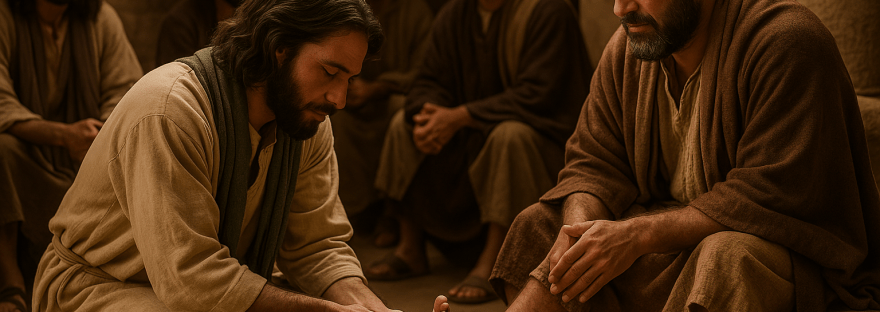
📖 “And be kind to one another, tenderhearted, forgiving one another, even as God in Christ forgave you.” —Ephesians 4:32 (NKJV)
Forgiveness is one of the clearest reflections of Christ’s work in a believer’s life. Paul reminds the church that forgiveness toward others flows directly from the forgiveness God has given through Christ. The foundation of Christian forgiveness is not personal strength or emotional readiness but the reality of the gospel.
As a teenager, you will encounter situations where forgiveness feels difficult. Words may be spoken that wound deeply, friendships may fracture, and betrayal may create lasting disappointment. In those moments, the natural response is often resentment or withdrawal. Scripture calls you to a different response.
Forgiveness does not mean pretending that wrong actions never occurred. It means choosing not to hold the offense as a debt against the person who caused it. This decision reflects the way Christ has forgiven you—fully and undeservedly through His sacrifice.
Through the Holy Spirit, Christ enables believers to release bitterness and replace it with compassion. Forgiveness protects the heart from becoming hardened by anger. Instead of allowing past wounds to define your outlook, you learn to respond with grace shaped by the gospel.
Knowing Christ transforms how you process hurt. The cross becomes the measure of mercy. When you remember how much you have been forgiven, the strength to forgive others becomes possible.
Forgiveness is not weakness. It is evidence that Christ’s grace is shaping your heart.
Prayer: Jesus, thank You for forgiving me through Your sacrifice. Help me release bitterness when others hurt me and choose forgiveness instead. Shape my heart so that I reflect the grace You have shown me. Amen.
📖 “And be kind to one another, tenderhearted, forgiving one another, even as God in Christ forgave you.” —Ephesians 4:32 (NKJV)
Sometimes people say things that hurt your feelings or do something unkind. When that happens, it can be hard not to stay upset or angry. But Jesus teaches His followers to forgive.
Forgiving means choosing not to hold onto anger or try to get back at someone. It means letting go of the hurt and trusting God to help make things right. This does not always feel easy, but it is something Jesus helps you learn.
God forgave us through Jesus. Because He showed us such great love and mercy, we can learn to forgive others too. When you forgive someone, your heart becomes lighter and more peaceful.
Each time you choose kindness and forgiveness, you are following Jesus’ example. He helps you grow a heart that loves others the way He loves you.
Prayer: Jesus, help me forgive when someone hurts my feelings. Teach me to be kind and patient like You. Fill my heart with love so I can treat others the way You want me to. Amen.
📖 “And be kind to one another, tenderhearted, forgiving one another, even as God in Christ forgave you.” —Ephesians 4:32 (NKJV)
Forgiveness sits at the center of the Christian life because it sits at the center of the gospel. Paul reminds believers that the standard for how we forgive others is found in how God forgave us through Christ. His forgiveness was not earned, negotiated, or deserved. It was given freely through the sacrifice of Jesus.
Yet forgiveness can feel deeply challenging in everyday life. Words spoken in anger, broken trust, misunderstandings, and disappointments can leave wounds that linger in the heart. The natural response is often to protect oneself by holding onto the offense or creating distance from the person who caused the hurt.
Scripture points to a different path. Forgiveness does not deny the reality of the offense or minimize the pain it caused. Instead, it releases the right to hold that offense as a debt against the other person. In doing so, the heart refuses to allow bitterness to take root.
Through the Holy Spirit, Christ gives the strength to walk in this kind of mercy. Forgiveness becomes possible because the believer remembers the depth of grace already received. The cross reminds you that your own forgiveness came at an immeasurable cost to Christ.
When forgiveness flows from the heart, it reflects the character of the Savior who forgave first. Instead of allowing hurt to shape your spirit, you allow Christ’s mercy to shape your response.
Knowing Christ means learning to extend the same grace that has been extended to you.
Prayer: Jesus, thank You for the forgiveness You have given through Your sacrifice. Help me release bitterness and choose mercy when I am hurt. Shape my heart so that my response to others reflects the grace You have shown me. Amen.
📖 “Therefore, to him who knows to do good and does not do it, to him it is sin.” —James 4:17 (NKJV)
Every family encounters moments where the right thing to do is clear, but it may not be the easiest choice. God’s Word reminds believers that knowing what is good also brings the responsibility to act on it. When families understand what honors God, they are called to follow through with obedience.
Doing what is right can show up in simple ways within the home. It may mean speaking kindly instead of reacting with anger, helping one another without being asked, telling the truth even when it feels uncomfortable, or choosing forgiveness when someone has made a mistake. These small choices build a home that reflects God’s character.
Parents play an important role in helping children understand that obedience to God is not just about rules but about loving Him and loving others. When families talk about Scripture together and pray for wisdom, they learn how to recognize what is good and how to act on it.
Sometimes doing what is right requires courage, especially when it means admitting a mistake or standing firm when others choose differently. In those moments, remembering Christ’s example helps strengthen the family’s commitment to follow God faithfully.
Knowing Christ as a family means encouraging one another to live according to His truth. As each member seeks to do what is right, the home becomes a place where faith grows and God’s wisdom guides everyday life.
Prayer: Jesus, help our family recognize what is right and give us the courage to follow through with obedience. Teach us to love one another, speak truth, and live according to Your Word each day. Amen.
📖 “Therefore, to him who knows to do good and does not do it, to him it is sin.” —James 4:17 (NKJV)
Sometimes you know what the right thing to do is, but it still feels hard to do it. Maybe you need to tell the truth, help someone, or stand up for what is right. Even when it is difficult, God wants you to choose what is good.
The Bible teaches that when you know what is right but choose not to do it, that is sin. But Jesus does not leave you to figure things out alone. He helps you do what is right.
When you pray and ask Jesus for help, He gives you courage and strength. He reminds you to follow His ways, even when others choose differently. Each time you obey God, your heart grows stronger.
Doing what is right may not always be easy, but it honors God and helps you grow closer to Him.Prayer: Jesus, help me choose what is right even when it feels hard. Give me courage to follow Your ways and strength to obey You every day. Amen.
📖 “Therefore, to him who knows to do good and does not do it, to him it is sin.” —James 4:17 (NKJV)
James reminds believers that obedience involves more than avoiding wrongdoing. It also includes responding faithfully when God reveals what is right. Knowing the good and choosing not to act upon it becomes a quiet form of disobedience. Scripture calls you to a life where knowledge of truth leads to action.
As a woman navigating daily responsibilities, the opportunities to do good often appear in ordinary moments. They may look like offering encouragement when someone is discouraged, speaking truth when silence would be easier, extending patience when irritation rises, or choosing integrity when compromise might bring convenience. These decisions may seem small, yet they reveal the direction of the heart.
The challenge is that doing what is right is not always comfortable. It may require humility, courage, or sacrifice. Fear of misunderstanding or rejection can tempt you to withdraw. Yet obedience grows through these moments. Each choice to act in alignment with God’s Word strengthens spiritual maturity.
Through the Holy Spirit, Christ illuminates what is good and provides the strength to carry it out. Scripture becomes the guide that shapes your conscience and clarifies your response. Obedience, then, is not merely duty—it becomes an expression of love for the One who leads you.
Knowing Christ transforms everyday decisions into opportunities for faithfulness. When your heart responds to what God reveals, your life becomes a reflection of trust in His wisdom.
Faithfulness is often built through the quiet courage to do what is right.
Prayer: Jesus, help me recognize the good You place before me and give me courage to act faithfully. Guard my heart from hesitation or fear when obedience is required. Teach me to respond to Your Word with humility and trust each day. Amen.
📖 “Therefore, to him who knows to do good and does not do it, to him it is sin.” —James 4:17 (NKJV)
Scripture teaches that sin is not only committing wrong actions but also neglecting what is right. James reminds believers that moral responsibility includes obedience to what God has revealed. When you recognize the good you ought to do and intentionally avoid it, that avoidance becomes sin.
As a teenager, you will often face moments where the right choice is clear but not convenient. Peer pressure, fear of rejection, or the desire for comfort can tempt you to remain silent or passive. Choosing what is right may require courage and willingness to stand apart from others.
God does not leave you alone in those moments. Through the Holy Spirit, Christ strengthens your conscience and guides your decisions through Scripture. The more you fill your mind with God’s Word, the clearer your understanding of right and wrong becomes.
Obedience often begins with small choices—speaking truth, showing kindness, refusing compromise, or acting with integrity when no one else is watching. These moments shape character over time. Each decision to follow Christ strengthens spiritual maturity.
Knowing Christ transforms obedience from obligation into conviction. Instead of reacting to pressure, you respond according to God’s truth. The goal is not perfection, but faithful willingness to choose what honors Him.
Doing what is right reflects trust that God’s wisdom is greater than human approval.
Prayer: Jesus, help me recognize what is right and give me the courage to follow through. Strengthen my heart when pressure or fear tries to influence my choices. Teach me to live with integrity that honors You. Amen.
Today, many churches see titles, leadership roles, and hierarchies as signs of faithfulness. But the first Christians, from AD 33 to AD 325, followed a different approach. Their leaders focused on serving Christ with humility instead of seeking authority over others.
For early Christians, being a leader meant showing self-denial and humility and guiding others by example rather than holding official positions. For example, when the apostle Paul traveled and established new communities, he often supported himself by working as a tentmaker instead of drawing on church resources (Acts 18:3). This choice signaled to others that leadership was about service and sacrifice, not personal gain or status.
Jesus articulated this principle in the following statement:
“The greatest among you shall be your servant. Whoever exalts himself will be humbled, and whoever humbles himself will be exalted.” — Matthew 23:11–12
For the early church, these words described how they actually lived. Leaders stayed close to the community, sharing meals, burdens, prayers, and even facing persecution together. Titles like “Reverend,” “Most Holy,” or “Bishop” in the formal sense were unknown to the first believers.
Paul called himself a servant of Christ (Romans 1:1), not someone above others. In the same way, Peter described himself as a fellow elder (1 Peter 5:1), not as someone who ruled over the group.
The early church recognized elders and deacons, but saw them as roles of service rather than official titles. Elders led by example (1 Peter 5:2–3), taught others, and protected the group from false teachings. Deacons took care of the church’s practical needs (Acts 6:1–6). Today, many churches have leaders with similar roles, such as pastors, board members, or ministry coordinators, but these positions can sometimes shift away from their original spirit of humble service. By remembering the example of the early church, modern leaders can reclaim a focus on serving others, guiding by example, and caring for both spiritual and practical needs with humility.
These leaders did not set themselves apart with special clothing or higher status, nor did they live separately from others. Instead, they worked with their hands and often faced poverty and hardship together with the rest of the church.
“We do not speak great things—we live them.” — Cyprian, c. AD 250
As the church became more influential, especially after Constantine, some leaders started to accept support from the state, as well as wealth and power. Before this change, most early leaders did not seek status.
Many early leaders turned down positions of authority or stayed out of the spotlight. They saw leadership not as something to chase, but as a duty assumed by those who had already shown strong character.
“Let no one exalt himself… let the honor be given by others, not seized for oneself.” These leaders knew their own limits and avoided anything that might distract them from serving Christ and the community.
Early Christians kept things simple and met in homes to worship. Their meetings were guided by the Spirit, not by performance. There were no stages, lights, or platforms. Instead, they focused on Scripture, prayer, encouraging each other, and sharing bread together (Acts 2:42).
This simplicity did not equate to poverty, but to freedom. It was not about being poor, but about freedom from systems and showy religion, so they could focus fully on Christ and being together. Over time, leadership has become professionalized, physical structures have replaced home gatherings, and formal titles have replaced close relationships. This shift has frequently resulted in a diminished witness to society at large.
To recapture the spirit of the early church, leaders today can take practical steps such as creating space for informal gatherings in homes, sharing meals and honest conversations, and emphasizing service and relationship over titles and positions. By inviting input from others and modeling humility in everyday actions, modern leaders can guide their communities back to simplicity, authenticity, and a deeper sense of shared purpose.
Still, the early church’s example reminds us to return to serving others, living simply, and seeking a real spiritual life, rather than just looking back with nostalgia. No matter where you are on your leadership journey, remember that every act of humility, service, and genuine care makes a real difference. Be encouraged—your example can inspire others and help build a stronger, more authentic community rooted in the spirit of Christ.
What We Can Learn
True leadership is service.
Simplicity fosters authenticity.
The body of Christ thrives when every member is honored.
We must guard against the temptation to elevate systems over Spirit-led relationships.
Sources:
The Holy Bible — Matthew 23:11–12; Romans 1:1; 1 Peter 5:1–3; Acts 2:42; Acts 6:1–6
📖 “If we are faithless, He remains faithful; He cannot deny Himself.” —2 Timothy 2:13 (NKJV)
Human faithfulness can fluctuate. Commitments may weaken, intentions may fade, and emotions can influence consistency. Scripture acknowledges this reality but contrasts it with the unchanging nature of Christ. His faithfulness does not depend on human reliability; it flows from His own character.
Paul reminds Timothy that even when believers struggle or falter, Christ remains faithful. This statement does not excuse disobedience, but it reveals the stability of God’s nature. He cannot deny Himself, meaning His promises and purposes remain secure regardless of human inconsistency.
As a teenager navigating growth and learning, there may be moments when your faith feels uncertain or your obedience imperfect. Doubts may arise, mistakes may happen, and spiritual disciplines may fluctuate. Christ’s faithfulness becomes the anchor in those seasons.
Through the Holy Spirit, Christ continues guiding, correcting, and strengthening those who belong to Him. His commitment to His people does not fade when they struggle. Instead, His faithfulness invites repentance and renewed trust.
Knowing Christ means resting in the assurance that His character does not change. While your faith may grow gradually, His reliability remains constant. His promises remain trustworthy because they are grounded in who He is.
The stability of your faith is ultimately secured by the faithfulness of Christ.
Prayer: Jesus, thank You for remaining faithful even when I struggle. Strengthen my trust in Your unchanging character. Help me grow in obedience and confidence as I rely on Your steadfast faithfulness. Amen.
📖 “If we are faithless, He remains faithful; He cannot deny Himself.” —2 Timothy 2:13 (NKJV)
People sometimes forget things or break promises. That can make you feel disappointed or unsure. But Jesus is different. He is always faithful.
Being faithful means keeping promises and always doing what is right. Jesus never changes and never forgets about you. His love and care stay the same every day.
Sometimes you might make mistakes or forget to do what is right. But Jesus is still faithful. He forgives you and helps you start again. His faithfulness does not depend on how perfect you are.
When you remember that Jesus is faithful, it helps you trust Him more. No matter what happens, you can know that He will always keep His promises.
Prayer: Jesus, thank You for always being faithful. Help me trust You and remember that Your promises never fail. Teach me to follow You and rely on Your love every day. Amen.