“For all who are being led by the Spirit of God, these are sons of God.” — Romans 8:14 (NASB 1995)
“Follow your heart” might sound inspiring, but your heart can lie. The Holy Spirit won’t.
Those who belong to God are led by His Spirit—not by impulse, culture, or pressure. If you’re a child of God, then expect your direction to come from Him.
But being led by the Spirit requires one thing: you have to listen.
Challenge: Pause before making a big decision. Ask, “Holy Spirit, what do You want me to do?”Prayer: Holy Spirit, I belong to You. Please lead me—through choices, friendships, and my future. Help me hear and obey. Amen.
“Now we have received, not the spirit of the world, but the Spirit who is from God, so that we may know the things freely given to us by God.” — 1 Corinthians 2:12 (NASB 1995)
The world will try to tell your children who they are, what they need, and what to believe. But they’ve been given something far better—the Spirit of God—who reveals all that the Father has freely given.
This is a comfort to mothers raising children in a noisy world: we are not alone in discipling them. The Spirit guides, convicts, teaches, and reveals truth.
We can parent with peace, knowing He will speak.
Family Talk:
What are some things God has given us that the world can’t?
How can we invite the Spirit to guide us every day?
Prayer: Holy Spirit, open our hearts to Your truth. Let us walk in the riches God has freely given. Protect our minds from the world’s lies and lead us into truth. Amen.
“Now we have received, not the spirit of the world, but the Spirit who is from God, so that we may know the things freely given to us by God.” — 1 Corinthians 2:12 (NASB 1995)
You’re being discipled by something—social media, music, influencers, school… or the Holy Spirit.
The Spirit of God wasn’t given to make us “better behaved.” He was given to make us spiritually aware, able to know what God has freely given: grace, purpose, identity, calling.
Don’t settle for shallow. You were made for spiritual depth.
Challenge: What “spirit of the world” influences you the most? Choose one thing to fast from today—and ask the Holy Spirit to speak instead.Prayer: Holy Spirit, I want to be shaped by You. Teach me to see what God has given me—and help me to let go of anything that drowns You out. Amen.
Not every lofty thought is holy. From the Garden to today, human reasoning has sought to elevate itself above God’s voice. The enemy’s first question—“Did God really say?”—was not just about doubt. It was a subtle appeal to human logic over divine instruction. Today, that same spirit persists through philosophies, traditions, and theological systems that shape how many read Scripture.
The early Church faced this challenge head-on. So did the Bereans. What made them noble was their refusal to let even an apostle’s message go untested. They measured every teaching against the Word, not the other way around. Theirs was a Scripture-first lens, not a system-first one.
Scripture Focus:
“See to it that no one takes you captive through philosophy and empty deception, according to the tradition of men, according to the elementary principles of the world, rather than according to Christ.” — Colossians 2:8, NASB1995
Philosophy Can Cloud the Word
Greek thought exalted the mind and devalued the body. It shaped Origen, influenced Augustine, and laid the foundation for much of Western theology. But it also introduced abstract categories foreign to Scripture—ideas like:
Dualism between physical and spiritual (as if the body were inherently evil)
Predetermined fate masquerading as sovereignty
Truth measured by logic rather than revelation
These ideas didn’t originate in God’s Word, yet they became the lens through which many began to read it.
Traditions Can Override the Text
“You are experts at setting aside the commandment of God in order to keep your tradition.” — Mark 7:9
Tradition can preserve wisdom—or perpetuate error. When tradition becomes the standard by which we interpret Scripture, it becomes an idol.
The Bereans didn’t rely on rabbinical traditions or creeds. They had Scripture and the Spirit. That was enough. If a teaching couldn’t be confirmed by the Word, it was rejected—no matter how ancient, respected, or widely held.
What Happens When Man’s Wisdom Replaces God’s Voice
The clear becomes confused
The Spirit’s role is replaced by scholars
Doctrines of men replace doctrines of Christ
Allegory replaces literal meaning
Unity in the Spirit is lost in division over systems
God’s Word loses its authority when it’s filtered through frameworks never given by God. Yet this is the very thing the early Church resisted.
How the Early Church Kept Scripture Central
The Ante-Nicene Church didn’t build doctrine on abstract categories. They preached Christ crucified. They obeyed the plain reading of the Word. And they refused to bend truth to fit philosophical trends or cultural pressures.
Their worship was Scripture-saturated. Their theology was born of obedience, not speculation. They let God’s Word speak—and they followed.
A Word for Today
If your theology comes more from a system than from Scripture, pause. Ask: Am I being taught by the Spirit—or by the traditions of men?
God doesn’t need philosophy to defend truth. He needs disciples willing to obey it.
Return to the Word. Refuse to Be Captive.
Tradition is not the enemy—but it is not the authority. Philosophy is not always wrong—but it is never the standard.
Scripture alone is God-breathed. Let no one take you captive. Let Christ—through His Spirit and His Word—be your Teacher.
“Now we have received, not the spirit of the world, but the Spirit who is from God, so that we may know the things freely given to us by God.” — 1 Corinthians 2:12 (NASB 1995)
There is a wisdom that the world celebrates—and then there is the deeper truth that only the Holy Spirit reveals. You’ve been given more than just inspiration or good advice. You’ve been given the Spirit of God, that you might truly know what He has freely given.
The early believers didn’t have commentaries, podcasts, or libraries. They had the Spirit—and that was enough. It still is.
He will teach you the depth of grace, the power of forgiveness, the riches of your inheritance. The Spirit doesn’t just inform. He transforms.
Reflection: What worldly voices have you listened to this week? Are you making space to hear the Spirit?
Prayer: Holy Spirit, reveal to me all that the Father has freely given through Christ. Silence the noise of the world and teach me the deeper things of God. Amen.
“Now we have received, not the spirit of the world, but the Spirit who is from God, so that we may know the things freely given to us by God.” — 1 Corinthians 2:12 (NASB 1995)
Sometimes the world tells us things that sound right… but they aren’t what God says. That’s why God gave us His Spirit—to help us know the truth.
The Holy Spirit helps us understand what God has given us—like Jesus, forgiveness, love, and heaven!
When we believe in Jesus, we don’t have to guess anymore. We can ask the Spirit to show us what’s real and good.
Try This: Ask your mom or dad to read a verse with you. Then ask, “Holy Spirit, help me understand!”Prayer: Holy Spirit, thank You for showing me what God has given. Help me understand what is true. Amen.
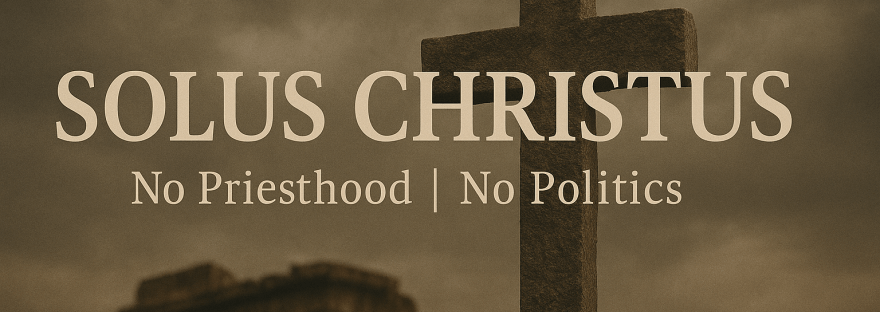
“For there is one God, and one mediator also between God and men, the man Christ Jesus.” — 1 Timothy 2:5 (NASB1995)
Christ Is Enough
The early Church didn’t gather around a bishop, a priesthood, or an empire. They gathered around Christ alone.
He was their Shepherd. Their Head. Their only Mediator. Their King.
They had no hierarchy. No altars. No state sponsorship. Just a risen Lord, and the Holy Spirit who exalted Him.
“He is our High Priest, our sacrifice, our God. We need no other intercessor.” — Clement of Alexandria, c. AD 190
The Simplicity of Christ-Centered Worship
In the Ante-Nicene era, churches met in homes. Leaders were recognized by character and gifting—not power or title. Their gatherings exalted Jesus:
His Word was read and obeyed
His name was confessed in baptism
His body was remembered in the meal
His Spirit moved among them without control
There were no titles like “reverend.” No power granted by religious office. The focus was not on the man behind the table—but on the Lamb who was slain.
Why They Rejected Priesthood Systems
Jesus’ once-for-all sacrifice ended the priesthood (Hebrews 10:11–14). But as the Church grew, power structures crept in:
Bishops were elevated over congregations
Church leaders began wearing robes and taking titles
Authority became institutional—not spiritual
But the early Church resisted these changes.
“You are all brethren. Do not elevate one above another. Christ alone is Lord of His people.” — The Shepherd of Hermas, c. AD 140
They knew that if Christ is truly the Head, no man can stand in His place.
No Politics in the Kingdom
Before Constantine, the Church had no political favor. They were persecuted, not promoted. And that was a blessing.
Why?
Because it kept their hope in Christ—not Caesar
Because it purified their worship
Because it protected the Church from worldly compromise
When the Church and state eventually merged, Christ was no longer enough. Power, politics, and position took center stage.
The early Church would have wept.
Christ Alone, Then and Now
Solus Christus isn’t just about salvation—it’s about supremacy.
Is Christ truly:
The Head of our gatherings?
The Teacher of our hearts?
The Judge of our motives?
The Center of our worship?
Or have we replaced Him with:
Church tradition?
Personality-driven ministries?
Political alliances?
Religious performance?
The early Church said no to all of it—and yes to Christ alone.
Kingdom Discipleship Reflection
Is Christ the center of my faith—or have I elevated man-made structures?
Do I follow leaders who point me to Christ, or to themselves?
Have I confused patriotism or politics with Kingdom allegiance?
This week, read Colossians 1:15–20 and John 10. Let the Spirit reveal:
“Is Christ truly supreme in my life, my church, and my hope?”
“He is also head of the body, the church; and He is the beginning, the firstborn from the dead, so that He Himself will come to have first place in everything.” — Colossians 1:18
“But the Helper, the Holy Spirit, whom the Father will send in My name, He will teach you all things, and bring to your remembrance all that I said to you.” — John 14:26 (NASB 1995)
You are not left to figure out the Christian life on your own. Jesus sent the Holy Spirit as your Teacher.
When you read Scripture, when you listen to truth, when you need guidance—He is there, faithfully illuminating the words of Christ.
The same Spirit who taught the early believers, guiding them through persecution and temptation, lives in you. He reminds you of what Jesus said… just when you need it most.
Reflection: Do you pause and ask the Holy Spirit to teach you when you open the Word?Prayer: Holy Spirit, thank You for being my Teacher. Bring to my mind all that Jesus said, and help me walk in it. Amen.
“But the Helper, the Holy Spirit, whom the Father will send in My name, He will teach you all things, and bring to your remembrance all that I said to you.” — John 14:26 (NASB 1995)
Have you ever forgotten something important—like where you put your toy or what your mom asked?
The Bible says the Holy Spirit helps us remember the words of Jesus! He teaches us and helps us understand God’s Word.
When you read the Bible or hear a story about Jesus, ask the Holy Spirit to help you remember it later.
Try This: Choose a Bible verse and ask the Spirit to help you remember it today.
Prayer: Holy Spirit, thank You for helping me understand the Bible. Please teach me and help me remember what Jesus said. Amen.








Leave a comment