“For if anyone thinks that he is something when he is nothing, he deceives himself.” — Galatians 6:3 (NASB 1995)
Thinking you’re better than others isn’t confidence—it’s deception.
The Spirit opens our eyes to see that apart from Christ, we’re not “something”—we’re nothing. That realization doesn’t crush you; it frees you. Because once pride dies, grace can take root.
And that’s where real strength grows.
Challenge: Confess one area where pride has blinded you. Ask the Holy Spirit to replace it with humility.
Prayer: Holy Spirit, break any pride that’s hidden in me. Help me see myself rightly—humble, dependent, and loved by You. Amen.
“For if anyone thinks that he is something when he is nothing, he deceives himself.” — Galatians 6:3 (NASB 1995)
We live in a culture that celebrates self-promotion, but the Spirit teaches us to walk in humility. Pride isn’t just loud boasting—it’s subtle self-focus. It’s the quiet voice that says, “I’m fine. I’ve got this. I don’t need help.”
But the truth is—we’re nothing apart from Christ. And the Spirit reveals that truth not to shame us, but to free us from the trap of self-deception.
Reflection: Am I depending on myself or walking humbly with the Spirit?
Prayer: Holy Spirit, reveal any pride in me. I don’t want to be deceived by self-sufficiency. Make me humble and dependent on You. Amen.
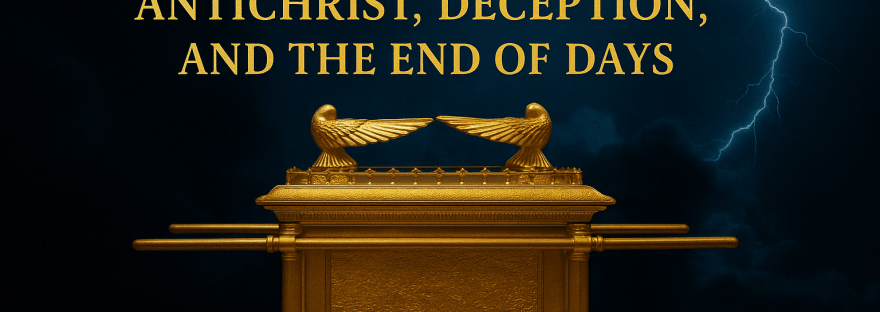
From the Series: The Ark of the Covenant as a Prophetic Game Changer
“And the temple of God was opened in heaven, and the ark of His covenant was seen in His temple. And there were lightnings, noises, thunderings, an earthquake, and great hail.” — Revelation 11:19 (NKJV)
For centuries, the Ark of the Covenant has stirred both fascination and mystery. Hidden since the days of Jeremiah, it is remembered in Scripture as the earthly throne of God’s presence (Exodus 25:22). To Israel, it symbolized covenant, holiness, and power. To the nations, it represented a dangerous and untouchable force.
But what if this Ark were to be rediscovered in our generation? Could its unveiling play a role in the rise of Antichrist and the final deception of the last days?
This question forms the heart of our new series: The Ark of the Covenant as a Prophetic Game Changer.
Why the Ark Matters in Prophecy
The Ark is more than an artifact. It connects directly to prophecy:
God’s covenant faithfulness — The Ark contained the tablets of the Law, Aaron’s rod, and manna (Hebrews 9:4). Each reminds us that God does not forget His promises.
The Temple question — Daniel, Jesus, and Paul all speak of a future desecration in a restored temple (Daniel 9:27; Matthew 24:15; 2 Thessalonians 2:4). The Ark’s discovery could ignite calls to rebuild.
Revelation’s imagery — John sees the Ark in heaven, linked with God’s final judgments (Revelation 11:19).
The Antichrist and Deception
Scripture warns that the Antichrist will rise “with all power, signs, and lying wonders” (2 Thessalonians 2:9). If the Ark were uncovered, it could become a rallying point for global attention:
Used by Israel as proof of divine favor.
Exploited by Antichrist as a tool to demand worship.
Twisted into a counterfeit sign of God’s presence.
Satan has always sought to imitate what is holy (2 Corinthians 11:14). The Ark could serve as a powerful stage for the final deception.
How This Fits in the End Times
Our series explores multiple theories about how the Ark might intersect with prophecy:
Catalyst for the Third Temple — sparking religious and political momentum in Jerusalem.
Symbol of false security — Israel trusting in the Ark instead of the God of the Ark, as in Jeremiah’s day (Jeremiah 7:4).
Global spectacle — nations enraged, yet drawn into the drama of Israel’s covenantal claims.
Foreshadow of Revelation 11:19 — the Ark seen in heaven before God’s final judgments.
Why We Must Be Watchful
Jesus told us to “watch” (Matthew 24:42). Not to speculate endlessly, but to discern the times with sober clarity. If the Ark were to reappear, it would not be a cause for superstition or misplaced hope — but for renewed confidence in God’s Word, which cannot fail.
The Ark points us not to Antichrist, but to Christ. It reminds us that God dwells with His people, that His covenant is sure, and that His Son will return to reign.
Closing Thought
The Ark of the Covenant is not a relic of the past. It is a symbol of God’s unchanging promises — promises that will culminate in Christ’s glorious return. Whether hidden in the earth or revealed in heaven, its true meaning is fulfilled in Jesus, the greater Ark, who is Himself the presence of God among us (John 1:14).
Let us watch, wait, and walk faithfully until that day.
The Man of Lawlessness (Antichrist) is a prophetic certainty (2 Thessalonians 2:3–4; Daniel 9:27; Matthew 24:15). The Ark of the Covenant is seen in heaven (Revelation 11:19).
However, the role of the earthly Ark in end-times prophecy is a matter of theory, not doctrine. Its rediscovery could align with prophecy (Temple rebuilding, Antichrist’s deception, global conflict), but Scripture does not require this for God’s plan to unfold.
We handle prophecy with reverence:
Certainties we hold tightly.
Theories we explore carefully.
Speculation we avoid.
Let Scripture remain our anchor as we watch and wait for Christ’s return.
“Bear one another’s burdens, and thereby fulfill the law of Christ.” — Galatians 6:2 (NASB 1995)
We were never meant to carry everything alone. The Spirit draws us into community—a place where burdens are shared, tears are witnessed, and love is proven.
Bearing one another’s burdens doesn’t always mean fixing problems. Sometimes it means simply being there—present, prayerful, Spirit-led.
This is how we fulfill the law of Christ: love expressed in action, led by compassion, powered by the Holy Spirit.
Reflection: Whose burden have I been avoiding? How might the Spirit want me to come alongside them?
Prayer: Holy Spirit, teach me to walk with others in their pain, not away from it. Help me fulfill Christ’s law through Spirit-filled love. Amen.
The Feast of Trumpets, known in Hebrew as Yom Teruah, means “Day of Blowing.” It begins at sundown on September 22, 2025. This day was unique among the appointed times of the Lord. It was a memorial day marked by the blast of trumpets and a sacred assembly. No specific reason was given in the Torah—only that Israel was to rest, gather, and listen for the sound.
But Scripture interprets Scripture. And when the trumpet sounds in the Word of God, it announces something critical: the arrival of a king, a call to assembly, or a declaration of war.
A Day of Blowing and Awakening
“Speak to the sons of Israel, saying, ‘In the seventh month on the first of the month you shall have a rest, a reminder by blowing of trumpets, a holy convocation’” (Leviticus 23:24).
In Numbers 10, trumpets were used to:
Call the congregation together (v. 2)
Signal the movement of the camp (v. 5)
Sound the alarm for war (v. 9)
Celebrate joyous occasions and offerings (v. 10)
In this way, the Feast of Trumpets prepares the people—a wake-up call for the coming High Holy Days.
The Prophetic Picture: The Return of the King
Jesus spoke of His return in unmistakable terms:
“And He will send forth His angels with a great trumpet and they will gather together His elect from the four winds…” (Matthew 24:31).
Paul says:
“For the Lord Himself will descend from heaven with a shout, with the voice of the archangel and with the trumpet of God, and the dead in Christ will rise first” (1 Thessalonians 4:16).
The trumpet will announce the coming of the true King—Jesus, returning to judge, to redeem, and to reign.
In Revelation 11:15, at the sounding of the seventh trumpet, loud voices in heaven declare:
“The kingdom of the world has become the kingdom of our Lord and of His Christ; and He will reign forever and ever.”
A Call to Readiness
Yom Teruah calls us to pause, reflect, and prepare. It comes without warning, as the new moon was not visible until it was observed and confirmed. This is why Jesus said:
“Of that day and hour no one knows… but the Father alone” (Matthew 24:36).
Just as the feast was dependent on watchfulness, so is our readiness for Christ’s return. Are we listening for the trumpet?
Devotional Reflection: Awake, Watch, Prepare
Read Together: Leviticus 23:23–25; 1 Thessalonians 4:16–17; Matthew 24:29–31
Discuss:
What did the trumpet signify in ancient Israel?
How does the sound of the trumpet relate to the second coming of Christ?
What does it mean to live in a state of spiritual readiness?
Are there areas of your life that need to come under the Lordship of the returning King?
Reflect: The Feast of Trumpets is both a warning and a promise. It reminds us that this world is not the end. Our King is coming, and He will not be late. Let the trumpet stir your heart toward repentance, worship, and joyful anticipation.
Pray:Lord, awaken us to the sound of Your trumpet. Shake us from spiritual slumber. Help us to live holy and alert, with lamps burning and hearts ready. We long for Your appearing. Come quickly, Lord Jesus. Amen.
The trumpet will sound. The King will return. Are we ready?
“Brothers and sisters, even if a person is caught in any wrongdoing, you who are spiritual are to restore such a person in a spirit of gentleness; each one looking to yourself, so that you are not tempted as well.” — Galatians 6:1 (NASB 1995)
Sometimes we see a sister stumble. Maybe it’s a visible failure, or maybe it’s something more hidden. Our flesh wants to judge—but the Spirit calls us to restore.
Gentleness isn’t weakness—it’s power under the Spirit’s control. Restoration takes grace, wisdom, and humility. Not to “fix” someone, but to walk beside her back to Jesus.
And we must always remember: we’re just as prone to fall.
Reflection: When I see someone fall, do I restore—or do I retreat, gossip, or judge?
Prayer: Holy Spirit, teach me to restore gently. Guard my heart from pride, and use me to bring healing, not harm. Amen.









Leave a comment