📖 “I am the light of the world. He who follows Me shall not walk in darkness, but have the light of life.” —John 8:12 (NKJV)
When Jesus declared Himself the light of the world, He spoke into a setting where light symbolized truth, clarity, and divine guidance. Darkness represented confusion, deception, and separation from God. By calling Himself the light, Jesus revealed that true understanding and direction are found in Him alone.
As a teenager navigating identity, decisions, and competing influences, it is easy to encounter voices that cloud judgment. Cultural expectations, peer pressure, and personal emotion can blur the difference between wisdom and impulse. Christ’s light provides clarity that cuts through that confusion.
Walking in the light means aligning your life with His truth. It involves opening Scripture, allowing God’s Word to shape perspective, and responding when the Holy Spirit convicts or corrects. Light reveals both the path forward and the obstacles that might otherwise remain hidden.
Following Christ’s light does not mean you will never face difficulty. It means you are not wandering blindly through it. His truth illuminates each step, helping you choose integrity over compromise and wisdom over reaction.
Knowing Christ replaces uncertainty with guidance. His light exposes what harms and reveals what heals. As you walk in that light, your life becomes increasingly marked by clarity, purpose, and truth.
The closer you walk with the Light, the clearer the path becomes.
Prayer: Jesus, thank You for being the light that guides my life. Help me walk in Your truth and reject the darkness of confusion or compromise. Illuminate my decisions and shape my path according to Your Word. Amen.
📖 “I am the light of the world. He who follows Me shall not walk in darkness, but have the light of life.” —John 8:12 (NKJV)
When it is dark, it can be hard to see where you are going. You might trip or feel afraid because you cannot see the path. But when a light turns on, everything becomes clear again.
Jesus says that He is the light of the world. That means He shows you the right way to live. When you follow Him, you do not have to walk in darkness. His truth helps you understand what is right and what is wrong.
Just like a flashlight helps you see in the dark, Jesus helps guide your heart and your choices. When you read the Bible and talk to Him in prayer, His light shines brighter in your life.
Because Jesus is the light, you do not have to be afraid. He leads you step by step and helps you walk in the right direction.
Prayer: Jesus, thank You for being the light that guides me. Help me follow You and choose what is right. Shine Your light in my heart and lead me every day. Amen.
📖 “I am the light of the world. He who follows Me shall not walk in darkness, but have the light of life.” —John 8:12 (NKJV)
When Jesus declared Himself the light of the world, He revealed that true clarity and direction come through Him alone. Light exposes what is hidden and illuminates the path ahead. In contrast, darkness conceals and confuses. Christ’s presence brings understanding where uncertainty once prevailed.
As a woman navigating decisions, responsibilities, and the complexities of life, it is easy to feel surrounded by competing voices and expectations. Cultural messages may encourage self-direction, while emotions may shift with circumstances. Yet Christ’s light cuts through confusion and anchors your heart in truth.
Walking in the light means allowing His Word to shape your thinking and guide your actions. Through Scripture and the work of the Holy Spirit, Christ reveals what honors God and what leads away from Him. Light sometimes exposes areas that require correction, but that exposure is an act of grace meant to guide rather than condemn.
Living in the light also brings freedom. Darkness thrives in secrecy and fear, but the light of Christ produces confidence and peace. As you remain close to Him through prayer and obedience, His presence steadily illuminates the next step.
Knowing Christ means you are not navigating life blindly. His truth lights the path before you and guards your steps from hidden dangers. Even when the full journey is not visible, the Light is faithful to guide you forward.
Walking in the light becomes a daily act of trust in the One who sees the whole path.
Prayer: Jesus, thank You for being the light that guides my life. Help me walk in Your truth and allow Your Word to shape my choices. Illuminate my path and guard my heart so that I live each day in the clarity of Your presence. Amen.
📖 “The Lord is my shepherd; I shall not want.” —Psalm 23:1 (NKJV)
Psalm 23 presents a deeply personal declaration. David does not say merely that the Lord is a shepherd, but that He is my shepherd. The image conveys guidance, protection, provision, and attentive care. Sheep depend entirely on the shepherd for direction and safety. The metaphor invites similar dependence upon God.
As a teenager navigating identity, decisions, and future direction, the desire for independence can be strong. Yet Scripture reveals that true security is found not in self-direction, but in following the Shepherd. He sees terrain you cannot. He anticipates dangers you do not perceive. His guidance is not restrictive; it is protective.
The Good Shepherd leads to places of restoration. Psalm 23 speaks of green pastures and still waters—images of nourishment and peace. Following Christ does not eliminate difficulty, but it ensures that you are never navigating it alone. His presence steadies when valleys appear.
Through the Holy Spirit, Christ clarifies direction through Scripture and conviction. Listening to the Shepherd requires attentiveness—time in the Word, sensitivity to conscience, and humility in correction. Sheep remain near the shepherd’s voice; disciples remain near Christ’s instruction.
Knowing Christ as Shepherd transforms anxiety about the future into trust in His care. You may not always see the entire path, but you can rely on the One who does.
Following the Shepherd is not weakness. It is wisdom rooted in trust.
Prayer: Jesus, thank You for being my Good Shepherd. Help me listen for Your voice and follow where You lead. Guard my heart from self-reliance and teach me to trust Your guidance in every decision. Amen.
📖 “The Lord is my shepherd; I shall not want.” —Psalm 23:1 (NKJV)
A shepherd takes care of sheep. He makes sure they have food, water, and a safe place to rest. He watches over them and protects them from danger. The Bible says the Lord is your Shepherd. That means He takes care of you.
Just like sheep need a shepherd, you need Jesus. He guides you when you feel unsure. He comforts you when you are afraid. He provides what you truly need.
Sometimes sheep wander away, but a good shepherd goes after them. If you ever feel far from God, remember that Jesus cares about you and wants you close to Him. He is patient and loving.
When you trust Jesus as your Shepherd, you do not have to be afraid. He knows the way, and He walks with you every day.
Prayer: Jesus, thank You for being my Good Shepherd. Help me trust You and follow where You lead. Take care of my heart and keep me close to You. Amen.
📖 “The Lord is my shepherd; I shall not want.” —Psalm 23:1 (NKJV)
Psalm 23 reminds families that God’s care is personal and faithful. When David called the Lord his Shepherd, he described a relationship of guidance, protection, and provision. Just as sheep depend on a shepherd to lead them safely, families are invited to trust God’s leadership in daily life.
Every household faces decisions, responsibilities, and moments of uncertainty. Parents guide children, and children learn to trust the direction given. In the same way, a family grows stronger when everyone looks to the Lord as their Shepherd, seeking His wisdom through Scripture and prayer.
The Shepherd provides what His sheep truly need. Sometimes that provision looks like peace during difficulty, patience during growth, or guidance when the path ahead feels unclear. When a family chooses to follow Christ’s leadership, fear gives way to trust.
Following the Shepherd together means learning to listen for His voice. It means pausing to pray before decisions, encouraging one another in faith, and remembering that God’s care is constant even when circumstances change.
Knowing Christ as a family brings confidence that you are never navigating life alone. The Shepherd walks ahead, guiding each step and providing faithfully along the way.
Prayer: Jesus, thank You for being the Shepherd of our family. Help us listen for Your voice and follow Your guidance. Teach us to trust Your care and lead our home in Your wisdom every day. Amen.
📖 “The Lord is my shepherd; I shall not want.” —Psalm 23:1 (NKJV)
David’s declaration in Psalm 23 is both simple and profound. He does not merely acknowledge that the Lord shepherds His people in general; he speaks personally—“my shepherd.” The statement expresses trust in God’s ongoing care, provision, and leadership.
As a woman carrying responsibilities and navigating seasons of uncertainty, the temptation to manage every outcome can be strong. Yet the image of the Shepherd reminds you that guidance does not rest on your strength alone. The Shepherd sees what lies ahead and leads with wisdom.
Sheep depend entirely on the shepherd for safety and direction. In the same way, following Christ invites a posture of reliance rather than self-sufficiency. Through the Holy Spirit, He directs through Scripture, conviction, and providence, guiding steps even when the full path remains unseen.
Psalm 23 also emphasizes rest. The Shepherd leads to green pastures and still waters—places of nourishment and renewal. In seasons when fatigue or anxiety presses heavily, remembering the Shepherd’s care steadies the heart. Provision may not always match personal expectations, but it will meet true needs.
Knowing Christ as Shepherd replaces restless striving with quiet trust. You are not responsible for controlling every circumstance. Your calling is to remain near His voice and follow faithfully.
Under the Shepherd’s care, fear loses authority and trust grows stronger.
Prayer: Jesus, thank You for being my Shepherd. Help me trust Your guidance when I cannot see the whole path. Quiet my anxious thoughts and teach me to rest in Your faithful care each day. Amen.
📖 “Be kind to one another, tenderhearted, forgiving one another, even as God in Christ forgave you.” —Ephesians 4:32 (NKJV)
Sometimes people hurt your feelings. Maybe someone says something unkind or treats you unfairly. It can feel hard to forgive. You might want to stay upset or get even. But Jesus teaches you to forgive.
Forgiveness means choosing not to hold anger in your heart. It does not mean pretending nothing happened. It means letting go and trusting God to take care of it. Jesus forgave you for your sins, and He helps you forgive others, too.
When you forgive, your heart feels lighter. Anger can make you feel heavy inside, but forgiveness brings peace. Jesus gives you the strength to say, “I forgive you,” even when it is hard.
If someone hurts you, you can talk to Jesus about it. He understands. He will help you be kind and tenderhearted.
Prayer: Jesus, thank You for forgiving me. Help me forgive others when they hurt me. Take away anger from my heart and fill me with Your peace. Amen.
📖 “Be kind to one another, tenderhearted, forgiving one another, even as God in Christ forgave you.” —Ephesians 4:32 (NKJV)
Forgiveness is not rooted in the deserving nature of the offender, but in the completed work of Christ. Scripture anchors your call to forgive in the reality that you have already been forgiven. The standard is not human fairness; it is divine mercy.
As a woman navigating relationships that may include disappointment, misunderstanding, or betrayal, forgiveness can feel costly. Wounds may linger, and trust may require rebuilding. Yet withholding forgiveness binds the heart to the injury. Grace releases it.
Forgiveness does not excuse wrongdoing or eliminate consequences. It relinquishes personal vengeance and entrusts justice to God. Through the Holy Spirit, Christ softens hardened places within you and replaces bitterness with peace.
When you remember the depth of mercy extended to you through Christ, perspective shifts. The cross becomes both comfort and instruction. You forgive not because the hurt was small, but because grace was immeasurable.
Knowing Christ transforms forgiveness from reluctant duty into liberated obedience. It frees your heart from resentment and restores clarity of conscience. Forgiveness reflects confidence in God’s righteousness rather than reliance on personal retaliation.
Grace that frees the heart is grace that mirrors the gospel.
Prayer: Jesus, thank You for the mercy You have shown me. Help me release bitterness and extend forgiveness where it is needed. Soften my heart through Your Spirit and anchor my response in Your grace. Amen.
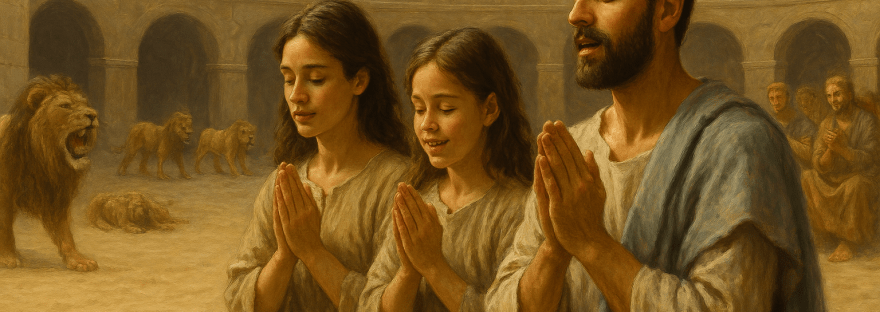
The Ante-Nicene Christians, who lived from AD 33 to 325, demonstrate how ordinary individuals can be profoundly transformed by authentic faith in Christ. Their courage, love, and commitment to Jesus’ teachings arose not from privilege or esoteric knowledge, but from lives wholly devoted to following Him. As successors to the first disciples, they significantly influenced their world and established a compelling model for contemporary Christians.
To understand their influence, it is important to examine who the Ante-Nicene Christians were and how their historical context shaped their faith.
Ante-Nicene Christians lived prior to the Council of Nicaea in AD 325. Their faith developed amid hardship and persecution rather than comfort. They did not rely on seminaries or formal church structures. Instead, they adhered to the Bible, the teachings transmitted from the Apostles, and the guidance of the Holy Spirit (John 14:26; 1 John 2:27).
They were:
Disciples of disciples: They received instruction from individuals who had learned directly from the Apostles.
Anchored in Scripture: They regarded the Bible as complete and sufficient. They sought understanding from the Holy Spirit rather than altering human traditions.
Fluent in context: They lived within the Greco-Roman world, spoke Koine Greek, and engaged with Scripture directly, without the necessity of bridging significant historical or cultural gaps.
Unified and scattered: They assembled in homes rather than cathedrals, yet sustained profound unity in faith across diverse regions. Their solidarity was grounded in trust in the Word and the Spirit, rather than in centralized authority or ecclesiastical council. By the early fourth century, Christianity had spread to nearly every province of the Roman Empire and beyond. Eusebius, an early church historian, documented that the message of Christ had reached “all the nations” prior to Constantine’s reign (Eusebius, Ecclesiastical History, 3.1).
With this background, it is valuable to consider how others perceived them and what they were recognized for.
Notably, some of the most compelling testimony originates not from Christians themselves, but from their Roman persecutors.
Tertullian, writing around AD 197, defended Christians against Roman accusations in his work Apologeticus.“It is mainly the deeds of a love so noble that lead many to put a brand upon us. ‘See,’ they say, ‘how they love one another.'” This statement was not Tertullian boasting; rather, he conveyed the perspective of non-Christians regarding believers. Persecutors expressed astonishment at their love, which included care for orphans, the poor, and abandoned infants (Justin Martyr, First Apology, 67; Aristides, Apology). Roman Emperor Julian the Apostate, a later critic of Christianity, reluctantly acknowledged in the fourth century:
“It is disgraceful that the impious Galileans support not only their own poor but ours as well; all men see that our people lack aid from us.” — Letter to Arsacius, c. AD 362
Even when maligned or martyred for their faith, the early Church was recognized for a love that originated from transformed hearts.
Beyond their reputation, it is important to consider what truly distinguished these believers from the society that surrounded them.
These believers did not identify as ‘theologians’ or pursue titles, separation, or elaborate leadership structures. Instead, they embodied humility, holiness, and service. They regarded themselves as:
Slaves of Christ (Romans 6:22),
Aliens and strangers in this world (1 Peter 2:11),
Ambassadors of a Kingdom not of this earth (2 Corinthians 5:20).
They refused to kill, even in war, or to protect themselves. They would not worship Caesar or offer incense, even if it involved losing their lives. Why? Because they believed Jesus’ words in Matthew 5 to 7 were not just a beautiful sermon, but the true standard of Heaven.
In contrast, the modern Church, particularly in the West, often struggles to demonstrate the same vibrant faith as the Ante-Nicene Christians.
This is because many have exchanged Kingdom living for cultural conformity, regarding the Sermon on the Mount as a recommendation rather than as a standard.
If we truly belong to Christ as His servants and children, we must return to the radical, holy, and love-filled way of life that characterized the early believers. Our admiration should not be directed toward them, but rather toward the God who empowered them.
“They overcame him because of the blood of the Lamb and because of the word of their testimony, and they did not love their life even unto death.” I do not glorify these early Christians; God has already done so, calling them “those of whom the world was not worthy” (Hebrews 11:38). They did not merely die for Jesus; they lived entirely for Him.
What’s Ahead
In the coming weeks, I will examine their writings, their stories, and, most importantly, the Scriptures that shaped them. Together, we will evaluate all things, both past and present, by the Word of God, seeking the Holy Spirit’s interpretation rather than relying solely on human opinions.
Let us commit together to studying their lives, their writings, and God’s Word. Begin this journey by reading the Scriptures referenced above and reflecting on how you might embody the faith of the early believers in your daily life. Please share your perspectives or questions as we continue this conversation and grow together.
📚 Sources & References
· Scripture:
John 14:26
1 John 2:27
Jude 3
Hebrews 11:38–40
Revelation 12:11
Romans 6:22
1 Peter 2:11
2 Corinthians 5:20
Matthew 5–7
· Historical & Early Church Writings:
Tertullian, Apology, ch. 39 (c. AD 197)
Eusebius, Ecclesiastical History, 3.1
Justin Martyr, First Apology, ch. 67
Aristides, Apology
Emperor Julian, Letter to Arsacius (c. AD 362)
Rodney Stark, The Rise of Christianity, HarperOne, 1996