Biblical Interpretation, Kingdom Discipleship

The Example of the Bereans — Testing All Things by the Word

How to Read the Bible Series

You’ve heard the message before.
A respected teacher, a moving sermon, a popular quote—sometimes repeated so often it feels like Scripture itself. But something unsettles your spirit. You don’t reject it outright, but you also can’t move on. You open your Bible, eyes scanning the text—not to be combative, but to be faithful. That’s the posture of the Bereans.

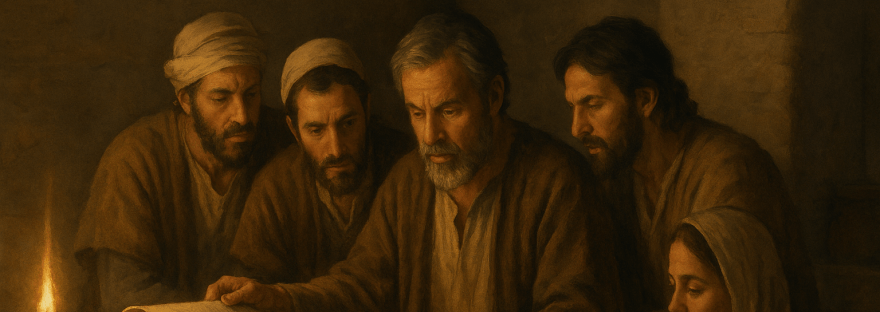
In a world full of noise, the Bereans teach us how to listen. They show us how to search—not for confirmation bias, but for truth. In Acts 17:11, their approach is honored by the Holy Spirit as “more noble-minded.” Why? Because they searched the Scriptures daily to see if what Paul said was true.


Scripture Focus:

“Now these were more noble-minded than those in Thessalonica, for they received the word with great eagerness, examining the Scriptures daily to see whether these things were so.”
Acts 17:11, NASB1995


Noble-Minded: Humble, Not Gullible

The Bereans weren’t suspicious; they were eager. They wanted truth. But they also understood that truth must be tested. They didn’t elevate Paul’s reputation or passion over the written Word. They weighed every teaching against what God had already spoken. That’s humility. That’s nobility.

And unlike modern approaches that rely on theological labels or commentaries, the Bereans didn’t have creeds, councils, or catechisms. They had the Scriptures—and they had the Spirit.


They Searched Daily

This wasn’t a surface reading or proof-texting session. The Greek term anakrinontes implies a careful, judicial inquiry—testing evidence, like a courtroom. They examined the Scriptures every day, not because they were uncertain of God, but because they wanted to be certain they were following Him. That level of discernment is not suspicion—it’s devotion.


Scripture Above All

If the Bereans tested Paul—an apostle who performed miracles and was personally commissioned by Christ—should we not test every preacher, author, and influencer today?

Even Jesus rebuked religious leaders for not knowing the Scriptures (Matthew 22:29). The early Church never placed man’s words above God’s. For them, Scripture wasn’t just a guide—it was the authority. And it still is.


Fruit of Berean Faithfulness

“Therefore many of them believed…” — Acts 17:12

Notice the fruit: belief. Not skepticism, not endless debate—but genuine, Spirit-born faith. Truth examined led to truth embraced.


What This Means for Us Today

  • Don’t treat Scripture like a filter; treat it like a foundation.
  • Don’t elevate personality over truth.
  • Don’t accept or reject based on tradition—test it all.
  • And don’t stop searching. The Holy Spirit loves to reveal what He has already spoken.

Return to the Word. Return to Discernment.

The Bereans weren’t exceptional because they had more access or intelligence. They were exceptional because they were faithful. Their nobility wasn’t in status—it was in submission to Scripture. This is how the early Church stayed grounded. This is how the remnant remains faithful today.

Be a Berean. Test everything. Cling to truth. And let the Spirit illuminate the Word—daily.

2–3 minutes

Leave a comment

Kingdom Discipleship, Love In Action

Be Merciful, Just as Your Father is Merciful

From the series “The Commands of Christ — Love in Action”


“Be merciful, just as your Father is merciful.”
— Luke 6:36, NASB1995


In a world that rewards retaliation and celebrates harshness as strength, Jesus calls His disciples to something radically different: mercy. Not a vague kindness. Not a passive tolerance. But divine, active mercy—poured out in the likeness of our Father in heaven.

This mercy isn’t based on merit. God doesn’t wait for us to be worthy of His compassion. While we were still sinners, Christ died for us (Romans 5:8). That’s the measure of His mercy—and the model for ours.

The command is not simply to be merciful, but as your Father is merciful. This is not human compassion raised slightly; it is a divine attribute extended through Spirit-filled people. And it reaches beyond those who love us. Jesus makes that clear. The merciful do good to those who hate them. They bless those who curse them. They pray for those who mistreat them (Luke 6:27–28).

The early Church understood this calling well. Their mercy wasn’t limited to emotional sympathy—it translated into action. They rescued abandoned infants from Roman garbage heaps, cared for plague victims when others fled, and fed both Christian and pagan neighbors during famines. Their acts of mercy confused the empire and reflected the heart of their King.

They were not trying to earn salvation. They were living out the nature of the One who saved them.

Tertullian observed, “It is our care of the helpless, our practice of lovingkindness, that brands us in the eyes of many of our opponents. ‘Look!’ they say, ‘How they love one another!’” (Apology, ch. 39). Mercy was their reputation.

And it should be ours.

We don’t get to choose who deserves mercy. We simply extend it—because our Father has extended it to us. The merciful show God’s heart to a hardened world. They reflect His character and reveal His kingdom.

So, we must ask ourselves: Do our enemies see mercy in us? Do the broken, the ignored, the undeserving find the compassion of the Father in our lives?

Mercy does not ignore justice. But it doesn’t wield justice as a sword of pride. It offers restoration, dignity, and love. It leans in when the flesh wants to pull away. It opens its arms when fear says to close them.

This is what the Kingdom looks like.


Sources:

Luke 6:27–36, NASB1995

Romans 5:6–8

Tertullian, Apology, Chapter 39

The Didache (ch. 1–2): Early instructions on showing mercy to the poor, forgiving quickly, and imitating the meekness of Christ

Lactantius, Divine Institutes, Book 6: Advocates for mercy as a divine attribute believers must mirror


2–3 minutes

Leave a comment

Biblical Interpretation, Kingdom Discipleship

The Role of the Holy Spirit in Reading Scripture

How to Read the Bible Series

You open your Bible, and the words lie before you.
But without the Author beside you, the meaning remains hidden. The Word is alive (Hebrews 4:12), yet it breathes only when the Spirit breathes into us. Many read the Bible as information; few read it as revelation. The early Church knew the difference—and their lives reflected it.

The Ante-Nicene believers didn’t read Scripture through systems. They weren’t led by councils or creeds. They were led by the Spirit of Truth. The Bereans searched daily, but they did not search alone. The Spirit was their Teacher—and He must be ours.


Scripture Focus:

“But when He, the Spirit of truth, comes, He will guide you into all the truth…”
John 16:13, NASB1995


The Spirit Is the Teacher

The Lord never left His people with a book and no Guide. Jesus promised that the Spirit would lead us into all truth—not through mystical experiences, but through the Word He authored. As Paul wrote:

“We have received… the Spirit who is from God, so that we may know the things freely given to us by God.”
1 Corinthians 2:12

The Spirit does not give new revelation but illumines what has already been given. He opens our eyes to behold (Psalm 119:18), convicts us of truth, and teaches with clarity. No theologian or denomination can replace His voice.


The Anointing That Abides

“You have no need for anyone to teach you… but His anointing teaches you about all things…”
1 John 2:27

This doesn’t reject godly teachers—it rejects dependence on man. The Bereans didn’t check with Paul’s résumé; they tested his message with Scripture, led by the Spirit. The early Church walked in the same pattern, trusting the Spirit’s conviction above the authority of men.


The Spirit Knows the Mind of God

He is not merely a Helper; He is God. He searches the deep things of God (1 Corinthians 2:10–11), and He helps us pray, read, and discern according to the will of the Father (Romans 8:27). When we read Scripture with the Spirit, we’re not just gathering knowledge—we are encountering the very thoughts of God.


The Spirit and the Word Are One

“The words that I have spoken to you are spirit and are life.”
John 6:63

The Holy Spirit will never contradict the written Word because He authored it. If a “revelation” or interpretation conflicts with Scripture, it is not from the Spirit. The Spirit always leads us back to Jesus, the Word made flesh, and He always glorifies the Father through obedience and truth.


Walking in Spirit-Led Reading

  • Pray before reading. Invite the Spirit to teach, correct, and reveal.
  • Read with surrender. Revelation follows obedience (John 7:17).
  • Let Scripture interpret Scripture. The Spirit wrote a unified message.
  • Test all things. Even beloved teachings must align with the Spirit’s Word.

Return to the Spirit. Return to Illumination.

We do not open the Bible to master it—we open it to be mastered by Christ through the Spirit. The early Church knew this. They did not walk by the traditions of men but by the illumination of the Holy Spirit through the Scriptures.

Let us walk as they walked. Let us read with the Author as our Teacher.

Return to the Word. Return to the Spirit. And find truth that transforms.


2–3 minutes

Leave a comment

Biblical Interpretation, Editor's Picks, Kingdom Discipleship

How to Read the Bible — Returning to the Way of the Bereans and the Ante-Nicene Church

How to Read the Bible Series

You hold the Bible in your hands.
Sixty-six books. One Author. One Spirit. One unfolding story of redemption. And yet, for many, it’s a confusing book—wrapped in mystery, buried under layers of tradition, or filtered through man-made systems. But that was never God’s design.

The earliest Christians didn’t read the Bible through denominational creeds or theological filters. They read it with open hearts, under the teaching of the Holy Spirit, and in the context of their Jewish and first-century world. They tested everything by the written Word—and followed it with their lives.

It’s time to return to their way.


Scripture Focus:

“Your word is a lamp to my feet and a light to my path.”
Psalm 119:105, NASB1995


Reading with the Author, Not Just About Him

The Bible is not a dead text. It is living and active (Hebrews 4:12) because it is breathed out by the Holy Spirit (2 Timothy 3:16). Without the Spirit, Scripture becomes information. With Him, it becomes transformation.

The Bereans didn’t rely on theological systems or traditions to interpret the Word. They relied on the Spirit and the Scriptures themselves. Their example calls us to read with reverence, discernment, and dependence—not on man, but on God.


The Early Church Read the Word as One Unified Story

They saw the Old and New Testaments not as opposites but as one unfolding plan of God. They understood the Jewish idioms and culture behind the text. They read the Word in its historical context, through Hebraic lenses, and with spiritual hunger.

They didn’t force Scripture to fit their beliefs. They submitted their beliefs to the Word.


Principles for Spirit-Led, Scripture-Faithful Reading

  1. Context Is King
    Who wrote it? To whom? What is happening? What covenant are they under? Read what’s there, not what tradition has imposed.
  2. Culture and Language Matter
    Jesus spoke as a Jew to Jews. Many truths are deeply rooted in Hebrew idioms and first-century thought. Misreading the cultural setting leads to misapplying truth.
  3. Scripture Interprets Scripture
    Isaiah 28:10 and 1 Corinthians 2:13 remind us: truth is confirmed in multiple witnesses across God’s Word. Don’t hang doctrines on isolated verses.
  4. Avoid Allegory Unless the Text Demands It
    The early Church read Scripture literally unless it clearly indicated symbolism (such as in visions or parables). They let the Spirit—not philosophy—determine meaning.
  5. Reject Traditions That Override Scripture
    Jesus warned about this (Matthew 15:9). When tradition silences the Word or redefines its meaning, we must return to the text and the Spirit.

Walking as the Early Church Walked

To read the Bible rightly, we must return to how it was written: in context, by the Spirit, and for the Church. The Bereans searched the Scriptures daily to test everything. The Ante-Nicene believers treasured the Word, often at the cost of their lives.

They didn’t read to affirm a system. They read to know and follow Christ.


Return to the Word. Return to the Spirit.

The Bible is not meant to be interpreted by the wisdom of men, but by the One who wrote it. The Holy Spirit still teaches, still convicts, still opens eyes. You don’t need a new method—you need the old path.

Read with prayer. Read with surrender. Read with the Spirit. And you will find Christ in every page.

2–3 minutes

Leave a comment

Kingdom Discipleship, Kingdom Living

Love Your Enemies — The Testimony of Martyrs

If there is one command of Jesus that separates Kingdom people from the world, it’s this:

“Love your enemies and pray for those who persecute you.”
Matthew 5:44

To the early Christians, this wasn’t just a spiritual ideal—it was a test of loyalty to the King. They believed that to follow Christ meant to love like Christ, even in the face of betrayal, violence, and death. They chose to be killed rather than kill, because no earthly allegiance could override the law of love written by the hand of their King.


Radical, Not Reasonable

The world has always justified violence in the name of justice, protection, or patriotism. But the Ante-Nicene Christians rejected these arguments. They were not pacifists because they were weak—they were peacemakers because they were strong in Spirit.

They didn’t retaliate when wronged. They didn’t join the military. They didn’t hold public offices that required judging or punishing others. They chose the cross over the sword.

“It is not lawful for a Christian to bear arms for any earthly consideration.”
Tertullian, On Idolatry 19

“We who formerly used to kill one another now not only refuse to make war upon our enemies, but gladly die confessing Christ.”
Justin Martyr, First Apology 39


They Saw Killing as a Violation of Kingdom Allegiance

To kill—even in self-defense or war—was, to them, a denial of Christ’s commands. They believed that bearing the name of Jesus required bearing His nature. And Jesus, when threatened, was silent. When beaten, He did not resist. When crucified, He prayed for His murderers.

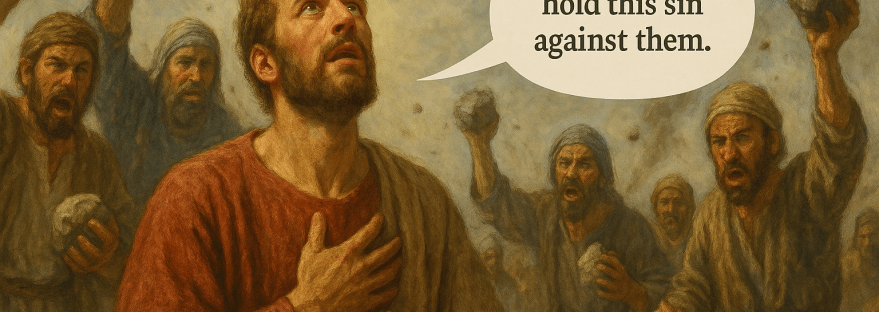
“Father, forgive them, for they know not what they do.”
Luke 23:34

They believed that if Jesus laid down His life, they must also be willing to lay down theirs—without compromise, without retaliation.


Martyrdom Was Victory, Not Defeat

Their willingness to die without violence was not a sign of failure, but a testimony of triumph. Their blood didn’t stain their testimony—it sealed it.

“The blood of the martyrs is the seed of the Church.”
Tertullian, Apology 50

Pagans and Roman authorities couldn’t understand how a people could face death so calmly—praying, forgiving, singing. Their love was louder than the roar of lions. Their peace silenced the jeers of crowds. Their lives and deaths proclaimed a Kingdom not of this world.


The Modern Church Has Forgotten This Witness

Today, many Christians justify war, violence, and retaliation in the name of freedom, justice, or self-preservation. But these early believers remind us: Christ did not die so we could defend our rights—He died so we could lay ours down.

Kingdom citizenship demands radical obedience to the law of Christ: love. This is not weakness. This is warfare of a different kind—the kind that overcomes evil not by force, but by forgiveness.


What We Can Learn Today

  1. Enemy love is the distinguishing mark of a true disciple.
  2. Killing, whether in retaliation or service to empire, contradicts the command of Christ.
  3. Martyrdom is not the loss of a life—it is the fulfillment of one.
  4. We must reclaim a theology of the cross—not just as a symbol, but as a way of life.

Sources:

  • The Holy Bible — Matthew 5:44; Luke 23:34
  • Tertullian, On Idolatry 19; Apology 50
  • Justin Martyr, First Apology 39
  • Origen, Against Celsus, Book 8
  • The Epistle to Diognetus, c. AD 130–200
2–3 minutes