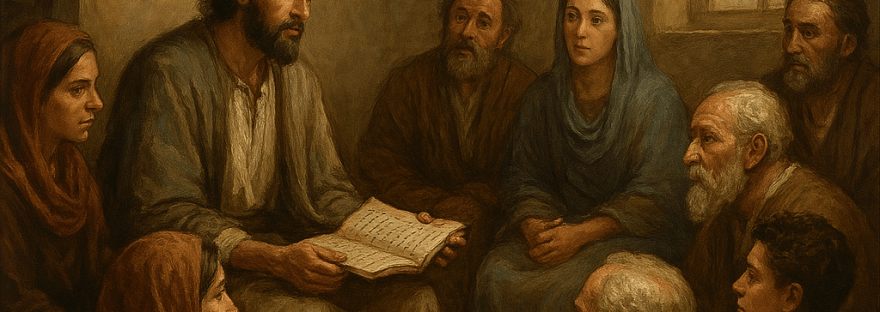
📖 “Peace I leave with you, My peace I give to you; not as the world gives do I give to you.” —John 14:27a (NKJV)
Peace in a family does not mean that problems never appear. Every household faces moments of stress, disagreement, and uncertainty. Jesus’ promise reminds families that true peace does not come from perfect circumstances but from His presence among them.
The peace Christ gives is different from what the world offers. The world looks for peace in comfort, control, or avoiding difficulty. Jesus gives peace that remains even when life feels unsettled. When a family trusts Him, His peace steadies hearts and helps everyone respond with patience and wisdom.
Families experience this peace when they turn to Christ together. Prayer, time in Scripture, and open conversations about faith help remind everyone that God is guiding the home. His truth helps calm fears and bring unity when emotions run high.
Parents can model this peace by trusting God openly during difficult situations. Children learn that peace grows when the family chooses faith instead of fear. Over time, Christ’s peace shapes how everyone speaks, listens, and responds to challenges.
Knowing Christ as a family means trusting His promise that He is present and faithful. When His peace fills the home, the family becomes a place where hearts can rest and grow together in faith.
Prayer: Jesus, thank You for the peace You give our family. Help us trust You when life feels uncertain. Fill our home with patience, unity, and calm as we follow You together. Amen.
📖 “Peace I leave with you, My peace I give to you; not as the world gives do I give to you.” —John 14:27a (NKJV)
Jesus’ promise of peace comes in the middle of uncertainty. In John 14, He is preparing His disciples for His departure and the challenges that will follow. Instead of removing the coming difficulty, He gives them something deeper—His peace.
The peace Christ offers differs from what the world defines as peace. Worldly peace often depends on stable circumstances, absence of conflict, or emotional comfort. Christ’s peace is rooted in His presence and authority. It remains steady even when life feels unsettled.
As a teenager navigating expectations, relationships, and future decisions, anxiety can easily surface. Questions about identity, direction, and belonging may weigh heavily. Christ’s peace addresses those inner tensions by anchoring your confidence in Him rather than in outcomes.
Through the Holy Spirit, His peace guards the heart and mind. It quiets the impulse to panic and redirects attention toward God’s faithfulness. This peace does not ignore real concerns; it steadies you while facing them.
Knowing Christ reshapes how you respond to pressure. Instead of being ruled by fear or uncertainty, you learn to rest in His sovereignty. His peace becomes the steady center when circumstances shift.
Peace from Christ is not temporary calm—it is confidence that the One who holds your future is present with you now.
Prayer: Jesus, thank You for giving a peace that the world cannot offer. When anxiety rises, remind me of Your presence and control. Guard my heart and mind so that I trust You in every situation. Amen.
📖 “Peace I leave with you, My peace I give to you; not as the world gives do I give to you.” —John 14:27a (NKJV)
Sometimes your heart can feel worried or upset. Maybe something scary happens, or maybe you feel nervous about something new. When those feelings come, Jesus promises to give you peace.
The peace Jesus gives is different from the peace the world talks about. The world’s peace comes and goes depending on what is happening. But Jesus’ peace stays with you because it comes from knowing He is in control.
When you pray and talk to Jesus, you can give Him your worries. He listens and helps calm your heart. Even when things around you feel confusing, His peace can make you feel safe.
Jesus wants your heart to rest in Him. When you trust Him, His peace fills you and reminds you that you are never alone.
Prayer: Jesus, thank You for giving me peace. When I feel worried or afraid, help me trust You. Fill my heart with Your calm and remind me that You are always with me. Amen.
📖 “Peace I leave with you, My peace I give to you; not as the world gives do I give to you.” —John 14:27a (NKJV)
Jesus spoke these words to His disciples as uncertainty approached. Their world was about to change dramatically, yet Christ did not promise the removal of difficulty. Instead, He gave them His peace—a peace rooted not in circumstances but in His presence.
As a woman navigating responsibilities, relationships, and shifting seasons of life, moments of anxiety can arise. Questions about the future, the well-being of loved ones, and the weight of daily responsibilities may press heavily on the heart. Christ’s promise reminds you that peace is not dependent on perfect outcomes.
The peace Jesus gives is different from what the world offers. The world seeks peace through control, security, or comfort. Christ’s peace flows from trust in the Father’s sovereignty. It steadies the heart even when circumstances remain unresolved.
Through the Holy Spirit, His peace guards your inner life. It quiets anxious thoughts and redirects focus toward God’s faithfulness. This peace does not deny the reality of hardship; it anchors you while you walk through it.
Knowing Christ transforms how you face uncertainty. Instead of striving to control every outcome, you learn to rest in the One who already holds the future. His presence becomes the source of calm when emotions feel unsettled.
Peace in Christ is not fragile. It is the quiet assurance that the Shepherd who leads you is faithful and near.
Prayer: Jesus, thank You for the peace You give that the world cannot offer. When my heart feels anxious, remind me of Your presence and sovereignty. Anchor my thoughts in Your faithfulness and help me rest in Your steady care. Amen.
The Ante-Nicene Christians were followers of Jesus who lived between AD 33 and AD 325, after Christ’s ascension and before Christianity became an official institution under Emperor Constantine at the Council of Nicaea. These believers formed the church at its most authentic, facing deep persecution while relying completely on the Holy Spirit. Although they are rarely mentioned in modern churches or Christian media, they played a vital role in keeping and sharing the gospel during difficult times. Their reliance on the Spirit and perseverance through hardship offer a powerful example for our faith journeys today. In a world where Christians may face unique challenges, the courage, unity, and dependence on God shown by these early believers can encourage us to trust the Holy Spirit’s guidance and remain faithful no matter our circumstances.
Instead of creating new traditions on their own, these Christians were direct spiritual descendants of the Apostles’ disciples. They followed the oral teachings and Scriptures passed down by leaders like Paul, Peter, and John. For example, Polycarp learned from the Apostle John, and Clement of Rome knew Paul. These early leaders shared not just the teachings of Scripture, but also examples of holy living, humility, and sacrificial love.
“Let us then draw near to Him in holiness of soul, lifting up pure and undefiled hands unto Him, loving our gracious and compassionate Father…” — Clement of Rome, 1 Clement 29
Scripture was at the heart of their lives, but they did not interpret it using man-made systems or changing theology. They believed the Holy Spirit, who inspired the Word, would also help them understand it. Through prayer, fasting, and faithful obedience, they looked to God for guidance to understand and live out Christ’s message (John 14:26; 1 John 2:27). Today, we can follow their example by praying before reading the Bible and asking the Spirit for insight. Discussing Scripture together as a group and listening for the Spirit’s direction in conversation are also ways we can invite His guidance. Setting aside quiet moments to reflect and share what God is teaching us, or even joining together in times of fasting and prayer, can help make our Bible study more Spirit-led and meaningful.
They did not focus on creating complex theological systems. Instead, they aimed to be faithful servants of Christ by obeying what had already been revealed.
The Ante-Nicene Christians spoke the same Koine Greek as the Apostles and shared a similar culture with the New Testament writers. They understood Scripture’s context through their daily lives in the first-century Roman world, not through academic study or archaeology. Their faith was not shaped by later philosophies. It was direct, practical, and full of life.
By the early 300s, Christianity had quietly reached almost every part of the Roman Empire and beyond. Small house churches appeared from North Africa to Gaul, and from Asia Minor to Rome, all without central leadership or political power. Without government support, church buildings, or legal protection, these communities depended only on their testimony, the Word of God, and the Spirit’s guidance.
“The doctrine of the apostles is known to all who wish to know the truth.” — Irenaeus, Against Heresies 1.10.2
Even though they were spread across large areas, these believers remained united in their beliefs. Their unity did not come from official creeds or councils, but from Scripture and the Holy Spirit living in them. They met in homes, shared what they had, prayed for each other, and lived in a sacrificial community. There were no denominations or hierarchy, just a shared devotion. Their strongest testimony was not in arguments or debates, but in how they loved each other and even those who persecuted them.
Take a moment to reflect as a group: How can we foster this kind of unity and sacrificial love in our own community today? What are practical ways we can support one another, break down barriers, and show Christ’s love to those around us? Consider sharing ideas or examples together, and encourage one another to put these principles into practice.
“See how they love one another… and how they are ready to die for each other.” — Tertullian, Apology 39
“They love one another… they do not hesitate to risk their lives for the name of their Messiah.” — Letter to Diognetus, c. 130–200 AD
They endured imprisonment, torture, loss of property, and even death for their faith. Yet they did not see themselves as victims, but as victors in Christ. Their joyful endurance during suffering showed the real power of the gospel to change lives. It is important to remember that the writings of these early Christians were not Scripture. As human authors, they could make mistakes, and their words do not carry the same authority as the Bible. However, their letters and teachings can still encourage us and offer valuable insight into how the early church lived out its faith. By reading their stories, we gain perspective on perseverance, unity, and practical devotion in challenging times. While we measure all things against Scripture, the example of these believers can help instruct and inspire us to remain faithful in our own walk with Christ. Yet their aim was not to create new systems, but to remain faithful to what had been handed down (2 Thessalonians 2:15). Their purpose was not innovation, but preservation of the faith.
They did not try to be heroes, but wanted to honor Christ. Their lives still inspire us today, showing what the Church can be when it fully depends on the Holy Spirit, is grounded in the Word, and is completely devoted to God’s Kingdom above everything else. As we reflect on their example, let us challenge ourselves to seek a deeper dependence on the Holy Spirit and a greater devotion to God’s Kingdom in our own lives. This week, consider setting aside intentional time for prayer, listening for the Spirit’s guidance, and finding practical ways to serve others as an expression of your faith. Together, let us encourage and support each other as we pursue a more authentic, Spirit-led community.
Sources:
Clement of Rome. 1 Clement. (c. AD 95)
Irenaeus. Against Heresies. (c. AD 180)
Letter to Diognetus. (c. AD 130–200)
Tertullian. Apology 39. (c. AD 197)
Eusebius of Caesarea. Church History
Scripture: John 14:26; 1 John 2:27; Acts 2:46; Romans 16:5; 2 Thessalonians 2:15
📖 “You are My friends if you do whatever I command you.” —John 15:14 (NKJV)
Jesus spoke these words to His disciples to show that their relationship with Him was personal and close. He is not only Lord and Savior, but He also invites His followers into friendship with Him. This friendship is built on trust, love, and obedience to His Word.
In a family, learning to walk with Jesus as a friend means spending time with Him together. When families pray, read Scripture, and talk about God’s truth, they grow in their relationship with Him. Just like friendships grow stronger through time spent together, your relationship with Jesus grows as you seek Him daily.
Jesus is a faithful friend. He listens when you pray, guides your decisions, and comforts you when life feels difficult. When family members remember that Christ is near, it brings peace and confidence to the home.
Following Jesus also means learning to obey His teachings. His commands guide families toward kindness, forgiveness, honesty, and love. As each member of the family learns to follow Him, the home becomes a place where His friendship is experienced together.
Knowing Christ as a family means walking closely with Him every day. In His friendship, families find guidance, comfort, and strength for every season.
Prayer: Jesus, thank You for being a faithful friend to our family. Help us walk closely with You and follow Your Word. Teach us to trust You, listen to Your guidance, and grow together in our friendship with You. Amen.
📖 “You are My friends if you do whatever I command you.” —John 15:14 (NKJV)
Jesus’ statement about friendship reveals something remarkable. The Creator of all things invites those who follow Him into relationship marked not only by authority but by closeness. In John 15, Jesus speaks to His disciples as friends, emphasizing transparency and shared purpose. This friendship is rooted in love and obedience.
Friendship with Christ is deeper than admiration or occasional prayer. It involves alignment with His will and attentiveness to His voice. Jesus explains that obedience is evidence of that relationship. Following His commands is not a condition for earning friendship but the natural expression of belonging to Him.
As a teenager, friendships strongly influence identity and direction. You may look for acceptance, loyalty, and understanding among peers. Christ offers a relationship that surpasses human limitations. He knows you fully—your strengths, struggles, and hidden thoughts—yet His invitation remains open.
Through the Holy Spirit, Christ’s friendship becomes present and active. He guides through Scripture, strengthens in temptation, and comforts in moments of loneliness. Unlike human relationships that may shift or fade, His faithfulness remains constant.
Knowing Christ as a friend transforms how you approach life. Decisions are shaped by His instruction, priorities reflect His values, and trust deepens through obedience. Friendship with Christ is not casual; it is covenantal.
The closer you walk with Him, the clearer His voice becomes.
Prayer: Jesus, thank You for inviting me into friendship with You. Help me follow Your commands and grow closer to You each day. Teach me to listen for Your guidance and trust Your faithfulness in every part of my life. Amen.
📖 “You are My friends if you do whatever I command you.” —John 15:14 (NKJV)
Friends are people who care about you, spend time with you, and help you when you need it. Jesus says that those who follow Him are His friends. That means He loves you and wants you close to Him.
Jesus is the best friend anyone could have. He listens when you talk to Him, cares about your worries, and helps you make good choices. You can tell Him anything—when you feel happy, sad, or afraid.
Being Jesus’ friend also means learning to follow what He teaches. When you obey Him, you grow closer to Him and learn to trust Him more.
Jesus will never stop being your friend. Even when you make mistakes, He is ready to forgive you and help you try again. His friendship is strong and faithful every day.
Prayer: Jesus, thank You for being my friend. Help me stay close to You and follow what You teach. Thank You for loving me and always being there for me. Amen.
📖 “You are My friends if you do whatever I command you.” —John 15:14 (NKJV)
In John 15, Jesus speaks to His disciples with remarkable tenderness. The One who holds all authority invites them into friendship. This statement does not diminish His lordship; rather, it reveals the depth of relationship available to those who follow Him. The Lord of all creation draws near with personal care.
Friendship with Christ is not casual familiarity. It is a relationship grounded in trust, obedience, and shared purpose. Jesus explains that those who keep His commands demonstrate that they belong to Him. Obedience becomes the evidence of love and loyalty within that friendship.
As a woman navigating responsibilities and relationships, the nearness of Christ’s friendship offers profound comfort. Human friendships can change with circumstances, misunderstandings, or distance. Christ’s friendship remains steady. He knows every detail of your life—your joys, your fears, your quiet prayers—and He remains present.
Through the Holy Spirit, His presence is not distant but personal. He guides through Scripture, strengthens when courage is needed, and comforts when burdens feel heavy. In moments when loneliness or discouragement surfaces, His companionship remains constant.
Knowing Christ as friend reshapes perspective. You are not walking through life alone. Every decision, every conversation, and every challenge unfolds under the care of One who knows you completely and remains faithful.
His friendship is both a privilege and an invitation—to walk closely, listen carefully, and follow willingly.
Prayer: Jesus, thank You for inviting me into friendship with You. Help me remain close to You through obedience and trust. Teach me to listen for Your voice and walk faithfully in the path You set before me. Amen.
📖 “I am the light of the world. He who follows Me shall not walk in darkness, but have the light of life.” —John 8:12 (NKJV)
Jesus described Himself as the light of the world, meaning He reveals truth and guides those who follow Him. In a family, His light helps everyone see clearly how to live, how to treat one another, and how to make wise decisions. When Christ is the light of a home, His truth shapes conversations, attitudes, and choices.
Every family faces moments of confusion or difficulty. There may be decisions that feel uncertain or situations that bring tension. When a household turns to Christ and His Word, His light brings clarity. Scripture helps reveal what is right and gives wisdom for the next step.
Walking in the light also means living honestly with one another. Darkness hides things, but light encourages truth and openness. When family members choose honesty, forgiveness, and kindness, the home becomes a place of safety and trust.
Through prayer and time in God’s Word together, Christ’s light continues to guide the family. His presence helps each person grow in faith and reminds everyone that they are not navigating life alone.
Knowing Christ as a family means choosing to follow His light every day. As His truth fills your home, peace and unity grow stronger.
Prayer: Jesus, thank You for being the light of our family. Help us follow Your truth and walk in honesty and love. Let Your light guide our home and help us grow closer to You and to each other. Amen.