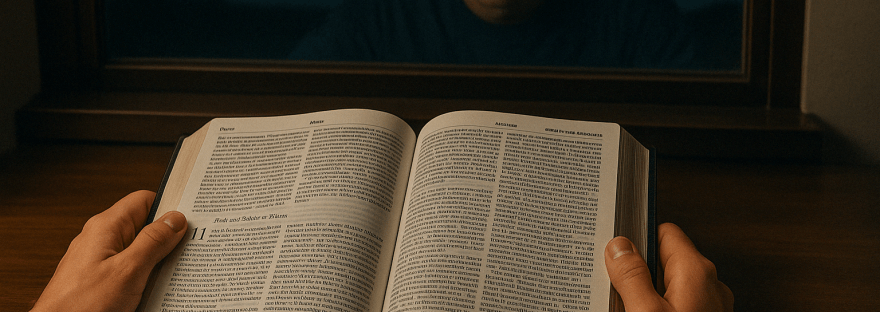
“For the one who sows to his own flesh will reap destruction from the flesh, but the one who sows to the Spirit will reap eternal life from the Spirit.” — Galatians 6:8 (NASB 1995) What we feed grows. If we sow to the flesh—self-indulgence, gossip, bitterness—we reap spiritual ruin. But if we sow to the Spirit—obedience, worship, truth—we reap life.
This is more than moral advice. It’s a spiritual law.
The Holy Spirit empowers us to live sowing to life, not death. It’s not always easy, but it is always fruitful.
Reflection: Am I feeding my spirit or my flesh? What needs to change?
Prayer: Holy Spirit, I choose to sow into what pleases You. Help me turn away from the flesh and pursue the life only You can give. Amen.
From the Series: The Ark of the Covenant as a Prophetic Game Changer
“Do not trust in these lying words, saying, ‘The temple of the Lord, the temple of the Lord, the temple of the Lord are these.’” — Jeremiah 7:4 (NKJV)
In Jeremiah’s day, Judah believed they were safe because the Temple of the Lord stood in their midst. As long as the Ark of the Covenant and the sacrifices continued, they assumed God’s protection was guaranteed. But their faith was misplaced. They trusted in symbols while rejecting the God who gave them meaning.
This same danger looms in the last days. If the Ark of the Covenant were rediscovered, many would place their trust in the artifact rather than in the Lord of glory.
The False Security of the Temple
Jeremiah warned Judah that the Temple was not a shield against judgment:
Sin remained unrepented — God called for obedience, not hollow ritual (Jeremiah 7:5–7).
The Ark did not guarantee safety — Shiloh once housed the Ark, but God allowed it to be destroyed because of Israel’s sin (Jeremiah 7:12–14).
God’s presence cannot be contained — His covenant was not a charm, but a call to holiness (Isaiah 66:1–2).
Their misplaced trust led to disaster. In 586 BC, Babylon destroyed the Temple and carried the people into exile.
The Same Deception in the End Times
Scripture warns of a coming day when Antichrist will sit in the temple of God, “showing himself that he is God” (2 Thessalonians 2:4). The danger is clear: people will once again trust in signs and symbols, rather than in the living Christ.
The Ark rediscovered — Many may see it as proof of divine favor, even without true repentance.
Temple worship restored — Sacrifices may resume, but without Christ they cannot save (Hebrews 10:1–4).
Antichrist’s deception — He will exploit misplaced trust to demand worship.
Just as in Jeremiah’s day, trusting in relics or institutions without obedience to God leads to judgment.
Where Our Trust Belongs
The Ark pointed forward to Christ:
The mercy seat foreshadowed His atoning blood (Romans 3:25).
The manna pointed to Him as the Bread of Life (John 6:48–51).
Aaron’s rod that budded pointed to His resurrection power (Hebrews 7:16).
The lesson is clear: trust not in the Ark, but in the God of the Ark.
Reflection Questions
In what ways do people today put their trust in symbols, rituals, or institutions rather than Christ?
How does Jeremiah’s warning about Shiloh (Jeremiah 7:12–14) prepare us for discerning the last days?
How can we keep our eyes fixed on Christ as the fulfillment of all the Ark represented?
Closing Prayer
Lord, protect us from trusting in signs and symbols instead of in You. Give us discernment to see through deception in these last days. May our faith rest in Christ alone, who fulfilled the covenant and reigns as King. Keep us steadfast in obedience, watching for His return. Amen
The Man of Lawlessness (Antichrist) is a prophetic certainty (2 Thessalonians 2:3–4; Daniel 9:27; Matthew 24:15). The Ark of the Covenant is seen in heaven (Revelation 11:19).
However, the role of the earthly Ark in end-times prophecy is a matter of theory, not doctrine. Its rediscovery could align with prophecy (Temple rebuilding, Antichrist’s deception, global conflict), but Scripture does not require this for God’s plan to unfold.
We handle prophecy with reverence:
Certainties we hold tightly.
Theories we explore carefully.
Speculation we avoid.
Let Scripture remain our anchor as we watch and wait for Christ’s return.
“The one who is taught the word is to share all good things with the one who teaches him.” — Galatians 6:6 (NASB 1995)
In a world quick to critique leaders, God calls us to honor those who labor in the Word. The Spirit cultivates gratitude in our hearts—and generosity in our actions.
Whether it’s your pastor, a mentor, or a faithful sister who disciples you, ask yourself: Have I encouraged her? Have I shared the fruit?
Spirit-led women are generous—especially toward those who pour into them spiritually.
Reflection: Who has sown into my walk with God? How can I share something good with them today?
Prayer: Holy Spirit, thank You for those who teach me truth. Help me honor them in love, generosity, and encouragement. Amen.
“The one who is taught the word is to share all good things with the one who teaches him.” — Galatians 6:6 (NASB 1995)
As we train our children in the Word, others often come alongside—teachers, pastors, mentors. God calls us to share all good things with those who teach.
This teaches our children to appreciate, not expect—to bless, not just benefit.
Let’s create rhythms of gratitude for those who faithfully sow spiritual seeds in our families.
Family Talk:
Who teaches us about Jesus outside our home?
What good thing can we share with them this week?
Prayer: Holy Spirit, thank You for the leaders who teach us Your Word. Help our family honor them with encouragement and good gifts. Amen.