Ark of the Covenant, The Last Days

The Final Mercy Seat: Why the Ark Will Not Return—But Christ Will

A conclusion to the series: The Ark of the Covenant as a Prophetic Game Changer

Longing for What Was—Revealing What Is

As we’ve explored in this series, the Ark of the Covenant has stirred the hearts and imaginations of believers, historians, and seekers alike. We’ve examined its biblical purpose, its centrality in Israel’s worship, and the prophetic possibilities tied to its rediscovery. We considered what it would mean for Israel’s national identity, for Temple worship, and for the watching world.

But now, we must come to the final and most important point in our journey—a truth not rooted in theory, speculation, or symbolism, but in the eternal, unchanging Word of God.

“Forever, O Lord, Your word is settled in heaven.” — Psalm 119:89 (NKJV)

And that Word declares something profound: The Ark is not coming back—but Christ is.


When God Departed from the Ark and the Temple

The Ark represented God’s throne on earth. It held the Ten Commandments, the manna, and Aaron’s rod that budded (Hebrews 9:4)—tokens of covenant, provision, and priestly authority. But when Israel rebelled and profaned the sanctuary, God’s glory departed from the Temple.

“Then the glory of the Lord departed from the threshold of the temple…” — Ezekiel 10:18
“And the glory of the Lord went up… and stood on the mountain…” — Ezekiel 11:23

From that moment, though the physical Temple remained for a time, God no longer dwelt among them. The Ark disappears from the biblical narrative, and despite the rebuilding efforts in the days of Zerubbabel and later Herod, the Ark of the Covenant never returned. There was no glory cloud, no visible presence, and no Ark behind the veil.

This absence was not accidental—it was judgment. Israel’s apostasy had driven out the glory of God, and the veil remained a barrier between a holy God and a rebellious people.


Herod’s Temple: Christ Among Them, Yet Rejected

In Herod’s Temple—magnificent though it was—there was still no Ark. But something greater than the Ark came:

“And the Word became flesh and dwelt among us, and we beheld His glory…” — John 1:14
“But I say to you, that in this place there is One greater than the temple.” — Matthew 12:6

Jesus Christ, the living Ark, the true Mercy Seat, stood in their midst. Yet He was rejected. And just as God’s glory once departed from Solomon’s Temple, so too did Jesus walk away from Herod’s:

“See! Your house is left to you desolate…” — Matthew 23:38

This was the final word on that Temple. Less than 40 years later, it would be destroyed by Rome. Still today, no Ark, no Temple, and no glory remains.


The Tribulation Temple: A Temple Without God

Scripture foretells that a Temple will be rebuilt during the Tribulation period (Daniel 9:27; Matthew 24:15; Revelation 11:1–2). But this Temple will not be filled with God’s presence. Instead, it will be:

  • A place of deception, where the Antichrist will declare himself to be God (2 Thessalonians 2:4).
  • A revived religious shell, built by a people still blind to their Messiah.
  • A final testing ground, before Israel’s national repentance.

There is no mention of the Ark in this future Temple. If it does resurface, it may be used as a religious relic—a tool to unite a fractured nation. But it will not carry the glory of God.

God will not give His glory to another (Isaiah 42:8), and He will not return to a box of gold, but to a people broken and repentant.


The Ark Was a Shadow—Christ Is the Substance

In the wilderness, the Ark was central. In the Temple, it was foundational. But in Christ, the shadow is surpassed by the reality.

  • The law in the Ark? Fulfilled in Christ (Matthew 5:17).
  • The manna in the Ark? Christ is the Bread of Life (John 6:48).
  • The rod of Aaron? Christ is the eternal High Priest (Hebrews 7:25).
  • The Mercy Seat? Christ is our propitiation (Romans 3:25, 1 John 2:2).

He is the true dwelling place of God (Colossians 2:9). He is the Temple not made with hands (Mark 14:58). And He will return—not in mystery, but in majesty.

“Behold, He is coming with clouds, and every eye will see Him…” — Revelation 1:7


The Longing of Israel Will Lead Them to Christ

God has not cast away His people forever (Romans 11:1). Their longing for the Ark, the Temple, and the glory will be used by God to awaken their hearts.

“Then they will look on Me whom they pierced. Yes, they will mourn for Him…” — Zechariah 12:10

At the appointed time, the veil will be lifted, and they will see that the glory they lost is the Glory of God in the face of Jesus Christ.


The Ark Is in Heaven—and So Is Our Hope

The final biblical reference to the Ark appears in Revelation 11:19:

“Then the temple of God was opened in heaven, and the ark of His covenant was seen in His temple…”

This is not an earthly recovery. This is not archaeology. This is the heavenly reality that the earthly Ark only foreshadowed. It is a sign that God’s covenant is everlasting—and that Christ is the fulfillment of it all.

“But I saw no temple in it, for the Lord God Almighty and the Lamb are its temple.” — Revelation 21:22


Final Word: From Symbol to Savior

This series began with curiosity, mystery, and the thrilling possibility that the Ark of the Covenant might return. And truly, many still wonder. But now we see—through the lens of Scripture—that the Ark served its purpose.

It is not the reappearance of the Ark that Israel needs. It is the return of the King.

“And so all Israel will be saved, as it is written:
‘The Deliverer will come out of Zion,
And He will turn away ungodliness from Jacob.’” — Romans 11:26

Let us not set our eyes on relics or shadows. Let us look for the One who sits between the cherubim, whose blood was poured out once for all, who will return in power and great glory.

Amen.

“Even so, come, Lord Jesus.” — Revelation 22:20.


Author’s Note: Why This Theory Was Written

Some may wonder why I spent time developing a theory about the possible return of the Ark of the Covenant—especially when the conclusion points clearly to the truth that the Ark may never return at all.

The answer is simple: because this question is already stirring in the hearts and minds of many.

People are asking:

  • Could the Ark be found again?
  • What role might it play in Israel’s future?
  • Is it tied to prophecy, the Third Temple, or the end times?

Rather than ignoring these questions or offering dismissive answers, I chose to walk through the possibilities honestly, prayerfully, and scripturally. I explored the “what if” scenario not to stir up sensationalism, but to present the best-case outcome based on prophetic patterns, historical truths, and current events.

But more importantly, I wrote this theory to lead us somewhere greater.

The conclusion is not built on speculation, but on revelation—God’s revealed Word. And it shows us something powerful:

Even if the Ark were found…
Even if it were restored and revered…
It would still fall short of the glory that has already come in the Person of Jesus Christ.


From Mystery to Messiah

In writing this theory, I wanted to meet readers where they are. To explore what captivates us, and then—by the Spirit and the Word—to guide us back to what truly matters.

Not the Ark.
Not the Temple.
Not the veil or the shadows.
But the Lamb.

And so, this journey ends not in mystery, but in majesty.
Not in speculation, but in Scripture.
Not with the Ark returning to Israel… but with Christ returning for His people.

I pray that every reader walks away not only informed—but transformed.
Looking no longer for relics… but for the glory of the coming King.

“The Ark of His Covenant Was Seen in Heaven” – Revelation 11:19


Ark of the Covenant, The Last Days

A New Hope — The Eternal Reign of Christ

From the Series: The Ark of the Covenant as a Prophetic Game Changer

“And I heard a loud voice from heaven saying, ‘Behold, the tabernacle of God is with men, and He will dwell with them, and they shall be His people. God Himself will be with them and be their God. And God will wipe away every tear from their eyes; there shall be no more death, nor sorrow, nor crying. There shall be no more pain, for the former things have passed away.’” — Revelation 21:3–4 (NKJV)

The Ark of the Covenant has stirred awe and anticipation for centuries. In this series, we have considered how its rediscovery could ignite prophecy, shape the rise of Antichrist, and fuel global conflict. We have followed the story through deception, war, judgment, and finally Christ’s victorious return.

But prophecy does not end with the defeat of evil. It ends with hope — the promise of God dwelling forever with His people.


The Millennial Kingdom (Revelation 20:1–6)

After His return, Christ will reign for a thousand years:

  • Satan will be bound, unable to deceive the nations.
  • Christ will rule from Jerusalem, fulfilling God’s promises to Israel.
  • Believers will reign with Him, a foretaste of the eternal kingdom.

The Ark once symbolized God’s throne. In the Millennium, His throne will be visible, and His reign undeniable.


The Final Judgment (Revelation 20:11–15)

After the Millennium, Satan is loosed briefly, then cast forever into the lake of fire. The Great White Throne judgment follows:

  • The dead stand before God.
  • Books are opened, and each is judged according to works.
  • Those not written in the Book of Life are cast into the lake of fire.

The Ark’s mercy seat foreshadowed Christ’s atonement. At this judgment, only those covered by His blood will stand secure.


The New Heaven and New Earth (Revelation 21:1–5)

John then sees a new creation:

  • The first heaven and earth pass away.
  • The holy city, the New Jerusalem, descends from heaven.
  • God Himself dwells with His people.

Here, the Ark is no longer needed. Its shadow gives way to reality:

  • No temple is seen, “for the Lord God Almighty and the Lamb are its temple” (Revelation 21:22).
  • No lamp or sun is required, “for the glory of God illuminated it. The Lamb is its light” (Revelation 21:23).

Our Eternal Hope

The story that began with the Ark ends with Christ — not hidden in a chamber or enthroned in a box, but reigning in glory.

  • Every tear wiped away.
  • Every sorrow ended.
  • Every promise fulfilled.

This is the new hope that anchors us: the Lamb who was slain now reigns, and His people dwell with Him forever.


Reflection Questions

  1. How does the Millennial reign of Christ fulfill God’s promises to Israel and the Church?
  2. Why is the Great White Throne judgment sobering yet necessary?
  3. How does the vision of the New Jerusalem strengthen your hope for the future?

Closing Prayer

Lord, thank You that the story of prophecy ends not in fear but in hope. Thank You for the promise of the new heaven and new earth, where You will dwell with Your people forever. Keep us faithful until that day, with our eyes fixed on Christ, the Lamb who is our light. Amen.


Note on Prophetic Theories

The Man of Lawlessness (Antichrist) is a prophetic certainty (2 Thessalonians 2:3–4; Daniel 9:27; Matthew 24:15). The Ark of the Covenant is seen in heaven (Revelation 11:19).

However, the role of the earthly Ark in end-times prophecy is a matter of theory, not doctrine. Its rediscovery could align with prophecy (Temple rebuilding, Antichrist’s deception, global conflict), but Scripture does not require this for God’s plan to unfold.

We handle prophecy with reverence:

  • Certainties we hold tightly.
  • Theories we explore carefully.
  • Speculation we avoid.

Let Scripture remain our anchor as we watch and wait for Christ’s return.


Leave a comment

Ark of the Covenant, The Last Days

Christ’s Return: From Deception to Dominion

From the Series: The Ark of the Covenant as a Prophetic Game Changer

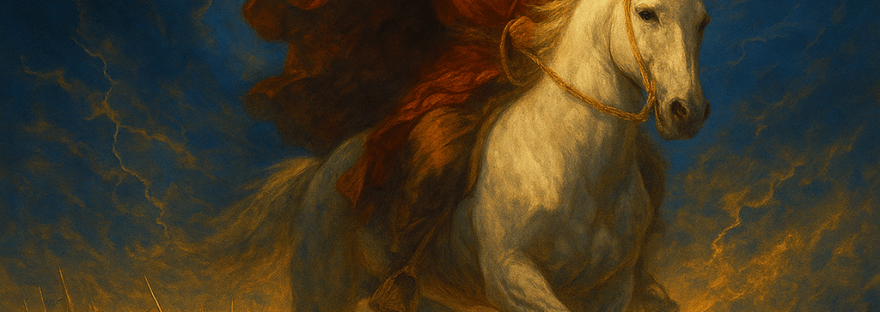
“Now I saw heaven opened, and behold, a white horse. And He who sat on him was called Faithful and True, and in righteousness He judges and makes war.” — Revelation 19:11 (NKJV)

The story of the end times does not end with Antichrist’s deception or the nations’ rage. It ends with the triumphant return of Jesus Christ. What begins with the Ark as a catalyst for conflict and deception culminates in Christ reclaiming His rightful throne. From false worship to true dominion, the end of the age belongs to Him.


The Nations Gather

Revelation 16:14–16 describes the kings of the earth being drawn to Armageddon. Fueled by deception, they unite against Israel and against Christ Himself. What the nations view as strength is in fact a setup for their final defeat.

Psalm 2 foretold this moment long ago: “The kings of the earth set themselves, and the rulers take counsel together, against the Lord and against His Anointed.” Yet God laughs at their rebellion and promises the Son will rule with a rod of iron (Psalm 2:1–9).


The King Appears

Revelation 19 gives us one of the most glorious pictures in Scripture:

  • Christ returns on a white horse, clothed in a robe dipped in blood.
  • He is called the Word of God, and armies of heaven follow Him.
  • From His mouth goes a sharp sword, striking the nations.
  • On His robe and thigh is written: KING OF KINGS AND LORD OF LORDS.

This is no hidden coming — it is visible, final, and victorious.


The End of Deception

The Antichrist, who once sat in the Temple and claimed to be God, is cast alive into the lake of fire (Revelation 19:20). Satan is bound for a thousand years (Revelation 20:2). The Ark, once exploited on earth, gives way to Christ Himself, the true throne of God with man.

What began as a season of false worship ends with the glory of the true King revealed.


Dominion and Kingdom Reign

Christ will reign from Jerusalem for a thousand years (Revelation 20:4–6). This fulfills:

  • God’s promises to Abraham of land and descendants.
  • God’s covenant with David of an eternal throne.
  • The prayers of the saints: “Your kingdom come, Your will be done on earth as it is in heaven.”

The Ark, which once symbolized God’s presence, yields to the reality: God Himself dwelling with His people.


Reflection Questions

  1. How does Christ’s return resolve the deception and rebellion of the nations?
  2. Why is the Millennial Kingdom essential to God’s covenant promises?
  3. How does this hope encourage you to remain faithful today?

Closing Prayer

Lord Jesus, You are King of kings and Lord of lords. We long for the day when You will come in power and glory, bringing justice, peace, and truth. Keep us steadfast in hope, faithful in witness, and ready for Your return. Amen.


Note on Prophetic Theories

The Man of Lawlessness (Antichrist) is a prophetic certainty (2 Thessalonians 2:3–4; Daniel 9:27; Matthew 24:15). The Ark of the Covenant is seen in heaven (Revelation 11:19).

However, the role of the earthly Ark in end-times prophecy is a matter of theory, not doctrine. Its rediscovery could align with prophecy (Temple rebuilding, Antichrist’s deception, global conflict), but Scripture does not require this for God’s plan to unfold.

We handle prophecy with reverence:

  • Certainties we hold tightly.
  • Theories we explore carefully.
  • Speculation we avoid.

Let Scripture remain our anchor as we watch and wait for Christ’s return.

Ark of the Covenant, The Last Days

The Heavenly Ark: God’s Throne Revealed

From the Series: The Ark of the Covenant as a Prophetic Game Changer

“Then the temple of God was opened in heaven, and the ark of His covenant was seen in His temple. And there were lightnings, noises, thunderings, an earthquake, and great hail.” — Revelation 11:19 (NKJV)

The Ark of the Covenant has always symbolized God’s throne and covenant presence. If rediscovered on earth, it would shake the world and become a flashpoint for war and deception. Yet in Revelation 11:19, John sees something far greater — the Ark revealed in heaven, in God’s true temple.

This heavenly unveiling reminds us that the Ark’s ultimate meaning is not found in wood and gold, but in the eternal covenant God keeps through Christ.


The Ark in Heaven

Revelation 11:19 shows the Ark at a climactic moment:

  • The seventh trumpet sounds, announcing the kingdom of Christ.
  • The temple in heaven is opened.
  • The Ark is revealed, accompanied by lightning, thunder, earthquake, and hail.

This vision is not just symbolic — it is a declaration that God’s covenant is unbroken and His throne unshaken.


Contrast with the Counterfeit

On earth, Antichrist will exploit the Temple and possibly the Ark to deceive nations. But in heaven, the true Ark is revealed:

  • Earthly Ark — a stage for deception, blasphemy, and false worship.
  • Heavenly Ark — a throne of judgment, glory, and covenant faithfulness.

This contrast exposes Satan’s lies and confirms God’s sovereignty.


Assurance for Believers

For those alive during the Tribulation, this vision will be a reminder that God’s covenant has not failed. For believers today, it points us back to Christ:

  • Christ is the true mercy seat (Romans 3:25).
  • Christ is the fulfillment of the Law, the bread of life, and the resurrection (John 6:35; Hebrews 9:11–12).
  • Christ is Emmanuel — God with us (Matthew 1:23).

The Ark in heaven declares that everything the earthly Ark pointed to is complete in Him.


Reflection Questions

  1. How does the heavenly Ark expose the futility of Antichrist’s deception?
  2. What comfort does Revelation 11:19 provide in a world filled with instability?
  3. How does Christ fulfill everything the Ark represented?

Closing Prayer

Lord, we thank You that Your covenant cannot be broken. Even as the nations rage, Your throne is secure in heaven. Fix our eyes on Christ, the true mercy seat, and give us confidence that Your kingdom will come, and Your will shall be done. Amen.


Note on Prophetic Theories

The Man of Lawlessness (Antichrist) is a prophetic certainty (2 Thessalonians 2:3–4; Daniel 9:27; Matthew 24:15). The Ark of the Covenant is seen in heaven (Revelation 11:19).

However, the role of the earthly Ark in end-times prophecy is a matter of theory, not doctrine. Its rediscovery could align with prophecy (Temple rebuilding, Antichrist’s deception, global conflict), but Scripture does not require this for God’s plan to unfold.

We handle prophecy with reverence:

  • Certainties we hold tightly.
  • Theories we explore carefully.
  • Speculation we avoid.

Let Scripture remain our anchor as we watch and wait for Christ’s return.

Ark of the Covenant, The Last Days

Witnesses, 144,000, and the Great Harvest

From the Series: The Ark of the Covenant as a Prophetic Game Changer

“These are the ones who come out of the great tribulation, and washed their robes and made them white in the blood of the Lamb.” — Revelation 7:14 (NKJV)

Though the Tribulation will be marked by deception and judgment, it will also be a time of unprecedented salvation. God will not leave Himself without a witness. Through His chosen messengers, He will bring multitudes from every tribe and nation to faith in Christ.


The Two Witnesses

Revelation 11 introduces two prophetic figures who will testify in Jerusalem for 1,260 days:

  • Their mission — to proclaim truth, call for repentance, and expose Antichrist’s lies.
  • Their power — to strike the earth with plagues, shut heaven, and consume enemies with fire.
  • Their martyrdom — they will be killed, their bodies displayed in Jerusalem, and the world will rejoice.
  • Their vindication — after three days, God will raise them to life and take them up in a cloud.

Their ministry will pierce the deception at the heart of Antichrist’s reign.


The 144,000

Revelation 7 and 14 describe 144,000 sealed servants of God — 12,000 from each tribe of Israel:

  • Their identity — Jewish believers, sealed for protection.
  • Their mission — to proclaim the gospel during the Tribulation.
  • Their fruit — through their witness, countless multitudes come to Christ.

This fulfills God’s covenant promise that Israel will one day be a light to the nations (Isaiah 49:6).


The Great Multitude

Revelation 7:9–14 paints one of the most hopeful pictures in all of Scripture:

  • A great multitude no one can number, from every nation.
  • Clothed in white robes, holding palm branches.
  • Crying out: “Salvation belongs to our God who sits on the throne, and to the Lamb!”
  • These are those who came out of the Great Tribulation — saved in the darkest hour of human history.

The Ark’s Ripple Effect

If the Ark of the Covenant’s discovery ignites the Tribulation sequence, its ripple effects will continue:

  • Antichrist’s betrayal will drive many Jews and Muslims to reconsider Christ.
  • The Witnesses and 144,000 will proclaim the truth with clarity and power.
  • The Great Harvest will be gathered, proving that even in judgment, God’s mercy abounds.

Reflection Questions

  1. How do the Witnesses and the 144,000 demonstrate God’s faithfulness to Israel?
  2. Why is it significant that multitudes will be saved during the Tribulation?
  3. How does this give us confidence in God’s power to save even now?

Closing Prayer

Lord, thank You that even in wrath You remember mercy. We praise You for the Witnesses, the 144,000, and the great multitude who will come to You in the last days. Give us courage to proclaim Christ now, while there is still time, and keep us looking for the day of His appearing. Amen.


Note on Prophetic Theories

The Man of Lawlessness (Antichrist) is a prophetic certainty (2 Thessalonians 2:3–4; Daniel 9:27; Matthew 24:15). The Ark of the Covenant is seen in heaven (Revelation 11:19).

However, the role of the earthly Ark in end-times prophecy is a matter of theory, not doctrine. Its rediscovery could align with prophecy (Temple rebuilding, Antichrist’s deception, global conflict), but Scripture does not require this for God’s plan to unfold.

We handle prophecy with reverence:

  • Certainties we hold tightly.
  • Theories we explore carefully.
  • Speculation we avoid.

Let Scripture remain our anchor as we watch and wait for Christ’s return.

Eschatology, The Last Days

A Watcher’s Window: Understanding the Times Without Setting Dates

From the series: Understanding the End Times — A Biblical Framework

“But concerning the times and the seasons, brethren, you have no need that I should write to you. For you yourselves know perfectly that the day of the Lord so comes as a thief in the night.” — 1 Thessalonians 5:1–2 (NKJV)

One of the greatest tensions in eschatology is this: we are told to watch for Christ’s return, yet we are forbidden to set dates. How do we live in that balance?

The Bible equips us with a concept I like to call a watcher’s window — a season of readiness shaped by Scripture and confirmed by the world’s unfolding events.


Not Date-Setting, But Season-Watching

Jesus said:

“But of that day and hour no one knows, not even the angels of heaven, but My Father only.” — Matthew 24:36

Date-setting has always led to disappointment and disillusionment. But in the very same chapter, Jesus rebuked His disciples not for watching, but for failing to discern the season:

“When you see all these things, know that it is near — at the doors!” — Matthew 24:33

We are not called to predict the calendar, but to recognize the signs.


Signs of the Season

Scripture gives clear markers of the last days:

  • Apostasy“The falling away comes first.” (2 Thessalonians 2:3)
  • Globalism“Authority was given him over every tribe, tongue, and nation.” (Revelation 13:7)
  • Surveillance and Control“That no one may buy or sell except one who has the mark.” (Revelation 13:17)
  • Middle East Conflict — Jerusalem as a “cup of trembling” to the nations (Zechariah 12:2).
  • Geopolitical Alignments — Nations of Ezekiel 38 moving into position.

These aren’t random trends. They are scaffolding for what Scripture says must come.


Why 2026 Matters

Without claiming to know the day or hour, some have noted that the convergence of events in the coming years forms a remarkable window of watchfulness:

  • Economic instability preparing for a global financial reset (Revelation 13:16–17).
  • Growing hostility against Israel, setting the stage for Zechariah 12 and Ezekiel 38.
  • Technological systems of surveillance maturing for Antichrist’s control.
  • A rapid increase in apostasy within churches, fulfilling 2 Thessalonians 2.

This does not mean we can circle a date. But it does mean we live with our eyes wide open.


The Comfort of Knowing

1 Thessalonians 5:4 encourages us: “But you, brethren, are not in darkness, so that this Day should overtake you as a thief.”

The world will be surprised. But faithful watchers will not. God calls us not to fear, but to readiness.


Reflection

The watcher’s window keeps us faithful without being foolish. We do not set dates, but we discern seasons. We do not predict, but we prepare. We do not fear, but we live in hope.

The point is not when Christ returns, but whether we are ready when He does.


Reflection Questions

  1. How do you guard against the dangers of both neglecting prophecy and obsessing over dates?
  2. Which signs of the season do you see most clearly today, and how do they stir your faith?
  3. How can you encourage others to watch with hope instead of fear?

Closing Prayer

Lord, thank You for revealing the times and seasons, even while keeping the exact day hidden. Teach us to live as faithful watchers, ready and alert, discerning the season without falling into speculation. Keep us from fear, and fix our hope on the return of Jesus Christ, our Blessed Hope. In His name, Amen.


References & Further Reading

Scripture:

  • Matthew 24:36 — “But of that day and hour no one knows…”
  • Acts 1:6–7 — the Father has set times and seasons in His own authority.
  • 1 Thessalonians 5:1–6 — believers are not in darkness; called to watch and be sober.
  • Luke 21:28 — “When these things begin to happen, look up… your redemption draws near.”
  • 2 Thessalonians 2:3–4 — the apostasy and man of sin precede the Day of the Lord.
  • Daniel 12:4, 9 — sealed prophecy until the time of the end, when knowledge shall increase.
  • Revelation 3:3 — call to watch lest Christ come as a thief.
  • Revelation 16:15 — “Blessed is he who watches.”

Early Church Witnesses:

  • Didache (ch. 16) — emphasizes vigilance, “watch for your life; let not your lamps be quenched.”
  • Clement of Rome (1 Clement 23) — exhorts readiness in light of Christ’s imminent return.
  • Hippolytus (Commentary on Daniel) — interprets signs of the end times with careful watchfulness.

Archaeological & Textual Evidence:

  • Dead Sea Scrolls — apocalyptic writings (e.g., War Scroll) reflecting a watchful community awaiting the end.
  • Catacomb inscriptions — “in peace, awaiting the Lord,” showing early believers’ posture of expectation.
  • Manuscript evidence — consistent preservation of eschatological texts across major codices (Sinaiticus, Vaticanus, Alexandrinus).

Extra-Biblical / Scholarly Notes:

  • Josephus, Wars of the Jews 6.5 — records celestial signs before Jerusalem’s destruction in AD 70, echoing prophetic watchfulness.
  • Eusebius, Ecclesiastical History 3.5 — documents the church fleeing Jerusalem before its fall, heeding Christ’s warnings.
  • Philip Schaff, History of the Christian Church — outlines the church’s watchfulness through history.
  • John Walvoord, Prophecy Knowledge Handbook (1990) — survey of signs of the times with biblical cautions against date-setting.
  • John MacArthur, Because the Time Is Near (2007) — clear exposition on Revelation, emphasizing vigilance without speculation.

Leave a comment

Ark of the Covenant, The Last Days

The Abomination of Desolation: False Worship Exposed

From the Series: The Ark of the Covenant as a Prophetic Game Changer

“Therefore when you see the ‘abomination of desolation,’ spoken of by Daniel the prophet, standing in the holy place (whoever reads, let him understand), then let those who are in Judea flee to the mountains.” — Matthew 24:15–16 (NKJV)

Midway through the seven-year Tribulation, the greatest betrayal in history will take place. Antichrist, once seen as a peacemaker, will reveal his true nature. Entering the newly rebuilt Temple, he will commit the abomination of desolation — declaring himself to be God, demanding worship, and desecrating the holy place.

This event will expose false worship for what it is and drive many to finally see the truth of Christ.


The Prophetic Foundation

The abomination of desolation is a thread woven through Scripture:

  • Daniel 9:27 — in the middle of the seventieth week, sacrifices are stopped.
  • Daniel 11:31; 12:11 — abominations are set up in defiance of God.
  • Matthew 24:15 — Jesus warns of this future desecration.
  • 2 Thessalonians 2:4 — the man of sin exalts himself as God in the temple.
  • Revelation 13:14–15 — an image of the beast is set up and worship demanded.

This is no vague symbol — it is a literal, climactic act of blasphemy.


The Role of the Ark

If the Ark of the Covenant has been rediscovered and placed in the Temple, Antichrist may exploit it:

  • As a stage of deception — presenting himself above the Ark as God enthroned.
  • As a counterfeit sign — twisting what was once holy into a prop for idolatry.
  • As bait for worship — leading people to trust in relics rather than the living God.

But just as Jeremiah warned that the Temple itself could not save without obedience (Jeremiah 7:4), so the Ark cannot save apart from Christ.


Rejection on Every Side

When Antichrist makes his claim:

  • Jews will recognize he cannot be the Messiah.
  • Muslims will see he cannot be the Mahdi.
  • Many will turn in disillusionment, opening the door for gospel proclamation.

At the same time, others will embrace the lie, receiving the mark of the beast and sealing their fate.


A Call to Endurance

Jesus warned believers in Judea to flee when they see this event (Matthew 24:16). For those alive during the Tribulation, it will mark the turning point — the great tribulation (Matthew 24:21) unlike anything before.

For us today, it is a call to vigilance. False worship may not yet stand in the Temple, but the spirit of Antichrist already tempts hearts to trust in signs, systems, and powers instead of Christ.


Reflection Questions

  1. What makes the abomination of desolation the central turning point of the Tribulation?
  2. How might the Ark of the Covenant be misused as part of this deception?
  3. Why is it vital to fix our eyes on Christ as the true Temple of God?

Closing Prayer

Lord, keep us from deception. Guard our hearts from false worship and counterfeit signs. May our eyes be fixed on Christ, who alone is worthy of all glory and honor. Give endurance to those who will face the tribulation, and keep us steadfast until the day of His return. Amen.


Note on Prophetic Theories

The Man of Lawlessness (Antichrist) is a prophetic certainty (2 Thessalonians 2:3–4; Daniel 9:27; Matthew 24:15). The Ark of the Covenant is seen in heaven (Revelation 11:19).

However, the role of the earthly Ark in end-times prophecy is a matter of theory, not doctrine. Its rediscovery could align with prophecy (Temple rebuilding, Antichrist’s deception, global conflict), but Scripture does not require this for God’s plan to unfold.

We handle prophecy with reverence:

  • Certainties we hold tightly.
  • Theories we explore carefully.
  • Speculation we avoid.

Let Scripture remain our anchor as we watch and wait for Christ’s return.


Ark of the Covenant, The Last Days

Wars on the Horizon: The Nations Rage Against Israel

From the Series: The Ark of the Covenant as a Prophetic Game Changer

“Behold, I will make Jerusalem a cup of drunkenness to all the surrounding peoples… And it shall happen in that day that I will make Jerusalem a very heavy stone for all peoples; all who would heave it away will surely be cut in pieces, though all nations of the earth are gathered against it.” — Zechariah 12:2–3 (NKJV)

The discovery of the Ark of the Covenant would not remain an isolated event. It would shake the political and spiritual foundations of the world, igniting conflicts foretold in Scripture. Nations would be forced to reckon with Israel’s covenant claims — and many would rage against them.


Prophecies of Conflict

The Bible describes escalating wars in the last days:

  • Psalm 83 — a confederacy of surrounding nations plots against Israel.
  • Ezekiel 38–39 — Gog and his allies launch a massive assault, only to be destroyed by God.
  • Zechariah 12:3 — all nations burden themselves with Jerusalem.
  • Revelation 16:14–16 — the kings of the earth gather at Armageddon.

Each passage points to Israel at the center of global upheaval.


The Ark as a Flashpoint

If the Ark were uncovered, especially near the Temple Mount, it would:

  • Unite Jewish fervor for rebuilding the Temple.
  • Enrage Muslim nations, who view the site as sacred to Islam.
  • Provoke global powers, who would fear instability in the region.

The Ark would not simply be a religious artifact — it would become the most politically charged object on earth.


Wars Before and During the Tribulation

The Ark could serve as the spark for wars that pave the way for Antichrist’s rise:

  • Early regional conflicts (Psalm 83) may embolden Israel.
  • A larger coalition (Ezekiel 38–39) could bring God’s dramatic intervention, showing His hand in Israel’s survival.
  • These wars destabilize the world, preparing the stage for a false peacemaker who seems to have the solution.

God’s Sovereign Hand

Even in chaos, God’s hand guides history. He promises to defend Jerusalem (Zechariah 12:8–9). These conflicts remind us that prophecy is not speculation but certainty — the nations rage, but the Lord reigns.


Reflection Questions

  1. How do current global tensions echo the prophecies of Psalm 83 and Ezekiel 38–39?
  2. Why might the Ark’s discovery intensify hostility against Israel?
  3. How does God’s sovereignty over these wars give us confidence today?

Closing Prayer

Lord, You are King over the nations. Though the world rages against Your people and Your city, Your purposes cannot fail. Teach us to trust in Your sovereignty, to watch for Your coming, and to stand firm in the hope of Christ’s return. Amen.


Note on Prophetic Theories

The Man of Lawlessness (Antichrist) is a prophetic certainty (2 Thessalonians 2:3–4; Daniel 9:27; Matthew 24:15). The Ark of the Covenant is seen in heaven (Revelation 11:19).

However, the role of the earthly Ark in end-times prophecy is a matter of theory, not doctrine. Its rediscovery could align with prophecy (Temple rebuilding, Antichrist’s deception, global conflict), but Scripture does not require this for God’s plan to unfold.

We handle prophecy with reverence:

  • Certainties we hold tightly.
  • Theories we explore carefully.
  • Speculation we avoid.

Let Scripture remain our anchor as we watch and wait for Christ’s return.


Eschatology, The Last Days

Living in Light of Christ’s Return

From the series: Understanding the End Times — A Biblical Framework

“And everyone who has this hope in Him purifies himself, just as He is pure.” — 1 John 3:3 (NKJV)

Eschatology isn’t just about future events. It’s about how those events shape the way we live today. The study of prophecy was never meant to stay on a chart or in a classroom. It was given to transform our daily walk with Christ.

If we believe Christ could return at any moment, how should that affect our lives right now?


Watchfulness

Jesus warned repeatedly:

“Watch therefore, for you do not know what hour your Lord is coming.” — Matthew 24:42

Watchfulness isn’t passive waiting. It’s active readiness — living each day as though Christ might come today. It changes how we prioritize time, relationships, and holiness.


Holiness

The hope of Christ’s return purifies us:

“Therefore, beloved, looking forward to these things, be diligent to be found by Him in peace, without spot and blameless.” — 2 Peter 3:14

If Christ could return today, would you want Him to find you clinging to sin? The promise of His coming is not just comfort — it is a call to holiness.


Urgency in Mission

Paul writes:

“Knowing the time, that now it is high time to awake out of sleep; for now our salvation is nearer than when we first believed.” — Romans 13:11

Prophecy sharpens our focus on the Great Commission. If the window is closing, then the time to share the gospel is now.


Comfort in Trials

The rapture isn’t just doctrine — it’s comfort.

“Therefore comfort one another with these words.” — 1 Thessalonians 4:18

Suffering and persecution may intensify, but the knowledge that Christ will soon gather His people brings strength to endure.


Perspective on Material Things

The world tells us to build bigger barns. But prophecy reminds us everything here is temporary:

“The day of the Lord will come as a thief in the night, in which the heavens will pass away with a great noise, and the elements will melt with fervent heat.” — 2 Peter 3:10

When we know this world is passing away, we live with looser hands — generous, focused on eternal treasures.


Reflection

Living in light of Christ’s return is about more than waiting. It’s about watching, walking in holiness, proclaiming the gospel, and finding comfort in trials. Prophecy was given not to make us fearful, but faithful.


Reflection Questions

  1. How does the truth of Christ’s imminent return affect the way you live daily?
  2. Which area do you feel most challenged to grow in: watchfulness, holiness, mission, or comfort?
  3. How can you encourage others with the hope of His coming this week?

Closing Prayer

Lord, thank You for the hope of Christ’s return. Teach us to live each day as though it were the day of His appearing. Make us watchful, holy, urgent in mission, and comforted in trials. Fix our eyes on eternal things, and help us to be faithful until the trumpet sounds. In Jesus’ name, Amen.


References & Further Reading

Scripture:

  • Titus 2:11–13 — “looking for the blessed hope and glorious appearing.”
  • 1 John 3:2–3 — hope of seeing Christ leads to purity.
  • 1 Thessalonians 5:4–6 — believers called to be watchful and sober.
  • Matthew 24:42–44 — command to watch, for the Son of Man comes at an hour not expected.
  • Luke 12:35–37 — blessed are those servants found watching when the Master returns.
  • Philippians 3:20–21 — our citizenship is in heaven; we eagerly await Christ.
  • Hebrews 10:24–25 — encouraging one another “as you see the Day approaching.”
  • Revelation 22:12, 20 — Christ promises, “I am coming quickly.”

Early Church Witnesses:

  • Didache (late 1st–early 2nd century), ch. 16 — urged readiness in light of Christ’s imminent return.
  • Polycarp (AD 69–155), Letter to the Philippians 7 — exhorted believers to stand firm in faith until Christ’s return.
  • Clement of Rome (c. AD 96), 1 Clement 23 — emphasized Christ’s imminent coming as motivation for holy living.

Archaeological & Textual Evidence:

  • Early Christian epitaphs — often included “expecting the resurrection” or “awaiting the Lord,” reflecting hope-driven living.
  • Catacomb art (2nd–4th centuries) — depictions of the Good Shepherd and Second Coming imagery used for encouragement.
  • Codex Sinaiticus & Alexandrinus — faithfully transmit exhortative NT texts regarding watchfulness.

Extra-Biblical / Scholarly Notes:

  • Josephus, Wars of the Jews — though Jewish, illustrates how hope in deliverance motivated endurance under trial.
  • Eusebius, Ecclesiastical History — documents martyrs’ confidence in eternal hope.
  • Richard Mayhue, Living in Hope of Future Glory (1997) — theological study on practical eschatology.
  • John Piper, Future Grace (1995) — emphasis on living daily in hope of what God has promised.

Leave a comment

Ark of the Covenant, The Last Days

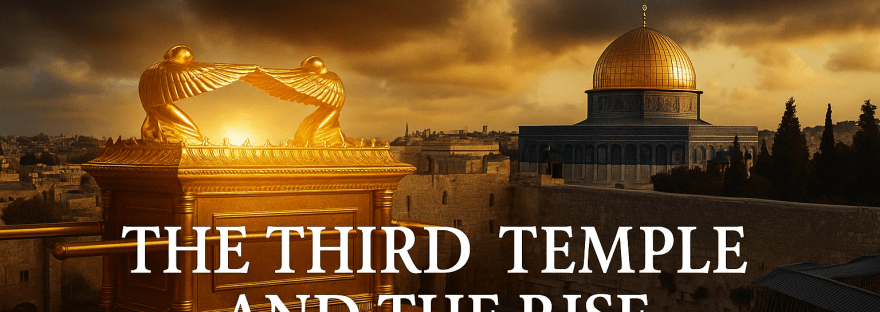
The Third Temple and the Rise of Antichrist

From the Series: The Ark of the Covenant as a Prophetic Game Changer

“Then he shall confirm a covenant with many for one week; but in the middle of the week he shall bring an end to sacrifice and offering. And on the wing of abominations shall be one who makes desolate.” — Daniel 9:27 (NKJV)

The Temple in Jerusalem has always been at the heart of God’s dealings with Israel. Twice destroyed in history, prophecy makes clear that a third temple will rise — and it will play a central role in the end times. If the Ark of the Covenant were rediscovered, it could provide the momentum for this long-awaited construction.

But this Temple will also become the stage for the greatest deception in human history — the rise of the Antichrist.


The Temple in Prophecy

The Scriptures speak plainly of a future temple:

  • Daniel 9:27 — Sacrifices and offerings restored, then halted.
  • Matthew 24:15 — Jesus warned of the “abomination of desolation” standing in the holy place.
  • 2 Thessalonians 2:4 — The man of sin sits in the temple of God, proclaiming himself to be God.
  • Revelation 11:1–2 — John is told to measure the temple of God, a vision yet to be fulfilled.

This means a physical temple must exist in the last days.


The Ark as Catalyst

For religious Jews, the Ark is the most sacred link to God’s covenant. If uncovered and authenticated, its presence would:

  • Validate the call to rebuild.
  • Provide spiritual legitimacy for renewed sacrifices.
  • Unite Jewish zeal with national identity.

No discovery could accelerate Temple reconstruction more.


The Rise of Antichrist

The Temple becomes the platform for a deceptive world leader:

  • At first: He confirms a covenant of peace (Daniel 9:27). Israel feels secure.
  • At midpoint: He enters the temple and declares himself to be God (2 Thessalonians 2:4).
  • Through deception: He exploits sacred symbols to demand global worship (Revelation 13:4).

What began as a place of renewed hope becomes the focal point of blasphemy.


God’s Warning

Jeremiah warned Israel not to trust in “the temple of the Lord” as a false refuge (Jeremiah 7:4). The same warning applies to the end times. Trusting in relics or rituals without repentance will lead many into deception.

Only those who know Christ, the true Temple (John 2:19–21), will see clearly through the lies.


Reflection Questions

  1. Why must a future Temple exist for prophecy to be fulfilled?
  2. How could the Ark accelerate this movement?
  3. What safeguards believers from being deceived by outward signs?

Closing Prayer

Lord, prepare us to discern truth in the midst of deception. Let our faith rest not in temples or symbols but in Christ, the true dwelling of God among us. Keep us steadfast until the day He returns. Amen.


Note on Prophetic Theories

The Man of Lawlessness (Antichrist) is a prophetic certainty (2 Thessalonians 2:3–4; Daniel 9:27; Matthew 24:15). The Ark of the Covenant is seen in heaven (Revelation 11:19).

However, the role of the earthly Ark in end-times prophecy is a matter of theory, not doctrine. Its rediscovery could align with prophecy (Temple rebuilding, Antichrist’s deception, global conflict), but Scripture does not require this for God’s plan to unfold.

We handle prophecy with reverence:

  • Certainties we hold tightly.
  • Theories we explore carefully.
  • Speculation we avoid.

Let Scripture remain our anchor as we watch and wait for Christ’s return.