God Is Love, Kingdom Discipleship

Love in Holiness: Set Apart by Love, Not Lawlessness

From the series “The Love of God: Revealed, Received, and Radiated”

Love is not permission to do what is right in our own eyes.
It is the power to do what is right in God’s.

The love of God is not passive. It is purifying.
It does not lower the standard—it fulfills it.
It does not ignore sin—it rescues from it.

If God is love, and that love now lives in us, then we must live as He lived—in holiness.

“Just as He who called you is holy, so be holy also in all your behavior; because it is written: ‘You shall be holy, for I am holy.’”
1 Peter 1:15–16

Holiness is not legalism. It is not asceticism.
Holiness is the character of God reflected through the life of a redeemed person.
And it is inseparable from love.


The Church was never meant to be known for compromise or cold religion. It was meant to be known by a love that obeys.

“For this is the love of God, that we keep His commandments; and His commandments are not burdensome.”
1 John 5:3

The love of God does not cancel the Word of God—it confirms it. It doesn’t reject commands; it makes them possible. Only a transformed heart can fulfill what God requires. That transformation is the work of His Spirit, not our self-discipline.

We don’t love God by dismissing His boundaries.
We love Him by walking in His ways.


“If you love Me, you will keep My commandments.”
John 14:15

These are the words of Jesus—not to enslave, but to awaken.
Holiness is not just abstaining from evil.
It is the pursuit of what is beautiful in God’s sight.

The early Church knew this. They rejected the world’s pleasures not out of pride, but out of devotion. They separated themselves from idolatry, immorality, and deceit—not because they were better, but because they had been born again.

Their love for God was visible in their choices.
Their desire for holiness was rooted in the cross.
They did not earn salvation—they walked in the salvation they had received.

The Didache (c. AD 50–100):
“There are two ways: one of life, and one of death… and this is the way of life: First, you shall love God who made you. Second, your neighbor as yourself… and whatsoever you do, do it in holiness and in the fear of God.”
Didache, Chapters 1–3


The love of God is not just a message to receive.
It is a life to be lived.

And if it is truly in us, we will hate what is evil and cling to what is good (Romans 12:9).
We will set aside every sin that entangles, because we have seen something better.
And we will walk in a purity that comes not from self-effort, but from surrender.

“Pursue peace with all men, and the sanctification without which no one will see the Lord.”
Hebrews 12:14


The Church today must remember what the Church once knew:
God’s love is holy.
It does not excuse sin—it delivers from it.
It does not affirm rebellion—it calls us into restoration.
It is not lawless—it is loyal to the heart of God.

To love Him is to walk as He walked.
To belong to Him is to be set apart.
And to be set apart is not to withdraw in pride—but to shine in purity.

We are not called to reflect the world.
We are called to reflect Christ.


Sources & References

Love in Holiness: Set Apart by Love, Not Lawlessness

Scripture (NASB 1995):

  • 1 Peter 1:15–16 – “Be holy, for I am holy.”
  • 1 John 5:3 – “This is the love of God, that we keep His commandments…”
  • John 14:15 – “If you love Me, you will keep My commandments.”
  • Romans 12:9 – “Abhor what is evil; cling to what is good.”
  • Hebrews 12:14 – “Pursue sanctification, without which no one will see the Lord.”

Ante-Nicene Source:

  • The Didache, Chapters 1–3.
    “There are two ways: one of life, and one of death… and whatsoever you do, do it in holiness…”
    [Available at: EarlyChristianWritings.com/didache.html]

3–4 minutes

Leave a comment

Kingdom Discipleship, Kingdom Living

The King Will Return

And Every Eye Will See Him

The return of Jesus is not symbolic, secret, or spiritualized—it is literal, visible, and global. Just as He ascended in the clouds, He will descend in power and glory. This is the climactic moment all of history moves toward.

“Behold, He is coming with the clouds, and every eye will see Him…”
Revelation 1:7


His Return Will Not Be Hidden

“This same Jesus… will come in the same way as you saw Him go into heaven.”
Acts 1:11

Jesus will not return in secret. He will return as King of kings and Judge of all, visible to all peoples, tribes, and nations. The early Church never doubted this—they declared it with certainty and hope.

“He shall come again in glory to judge the living and the dead.”
Apostles’ Creed


The Resurrection and the Gathering of the Saints

“The dead in Christ will rise first… then we who are alive… will be caught up together with them in the clouds…”
1 Thessalonians 4:16–17

This is the blessed reunion of the Bride and Bridegroom. Not mythology. Not metaphor. This is the long-awaited day when Christ returns for His own.


Every Knee Will Bow, Willingly or Not

“At the name of Jesus every knee should bow… and every tongue confess…”
Philippians 2:10–11

For some, it will be joy. For others, dread. The difference lies in whether we knew Him as Savior or rejected Him as Lord.


The Early Church Lived for This Day

“Let us not grow weary, for He will soon appear.”
Clement of Rome, 1 Clement 23

They didn’t speculate on the timing—they lived in readiness. They looked to the sky, not in fear, but in faith. Their hearts were anchored in the certainty that the King was coming.


What We Can Learn

  1. Jesus will return visibly, gloriously, and victoriously.
  2. All people will see Him—and respond with either joy or fear.
  3. The resurrection and gathering will be real and glorious.
  4. Readiness means living with our eyes and hearts lifted.

Sources:

  • The Holy Bible — Revelation 1:7; Acts 1:9–11; 1 Thessalonians 4:16–18; Matthew 24:27–31; Philippians 2:10–11
  • Clement of Rome, 1 Clement 23
  • Apostles’ Creed
  • Ignatius of Antioch, Letter to the Trallians
  • Didache, ch. 16

2–3 minutes

Leave a comment

Kingdom Discipleship, Kingdom Living

Not Appointed to Wrath

Hope in the Midst of Tribulation

The return of Christ is not just about what happens then—it’s about how we live now, especially in seasons of hardship and persecution. The early Church knew what it meant to suffer. But they held to a truth that sustained them: they were not appointed to wrath.

“For God has not destined us for wrath, but to obtain salvation through our Lord Jesus Christ.”
1 Thessalonians 5:9


Wrath Is God’s Judgment—Tribulation Is the World’s Hatred

Jesus warned that His followers would face tribulation (John 16:33), but He also promised they would not face the wrath of God. The early Church expected persecution from men, but deliverance from divine judgment.

“In the world you will have tribulation. But take heart; I have overcome the world.”
John 16:33


The Early Church Suffered, but Trusted in Rescue

They knew trials would come—but they looked beyond them. Their hope wasn’t in escaping all pain. It was in being preserved through it, and ultimately, delivered by Christ Himself.

“The faithful are not kept from the fire, but through it. The Lord knows how to rescue the godly.”
Clement of Rome, 1 Clement 55


Wrath Is for the Unrepentant, Not the Redeemed

“Much more then… shall we be saved by Him from the wrath of God.”
Romans 5:9

Jesus bore wrath once and for all on the cross. Those in Christ are covered. This promise gave the Church courage—even when Rome’s sword threatened them.


Enduring with Hope

Even in the fiercest trial, the early saints knew they were in the Lamb’s hands. Their hope was not shaken by what man could do. They feared no wrath, because they were sealed with love.

“The storm may rage, but it cannot breach the walls built by the blood of Christ.”
Hermas, Similitudes 9


What We Can Learn

  1. Believers are appointed to salvation, not wrath.
  2. Tribulation purifies the Church—wrath destroys the wicked.
  3. God promises presence in trial and rescue from judgment.
  4. Our security is rooted in Christ’s finished work.

Sources:

  • The Holy Bible — 1 Thessalonians 5:9; John 16:33; Romans 5:9; 2 Peter 2:9; Revelation 3:10
  • Clement of Rome, 1 Clement 55
  • Hermas, Similitudes 9
  • Didache, ch. 16
  • Ignatius of Antioch, Letter to the Magnesians

2–3 minutes

Leave a comment

Kingdom Discipleship, Kingdom Living

The Bride and the Blessed Hope

Why the Return of Christ Is the Longing of His People, Not Just a Doctrine to Debate

The Second Coming isn’t just a theological position—it’s the burning hope of the Bride. It’s not merely about being right on charts or views—it’s about being ready for the return of the One we love.

“Waiting for our blessed hope, the appearing of the glory of our great God and Savior Jesus Christ.”
Titus 2:13


Hope Is Not Passive—It’s Personal

“And everyone who thus hopes in Him purifies himself as He is pure.”
1 John 3:3

This hope transforms us. The Bride doesn’t sit idly; she prepares. She watches. She longs. She keeps her lamp full, not to escape the world, but to meet her Bridegroom with joy.


The Early Church Was a Watching Bride

They didn’t debate whether He would return—they lived as if He might come any day. Their gatherings, prayers, fastings, and writings reflected this urgency.

“Let your lamps be burning and your hearts pure, for you know not the hour.”
Didache, ch. 16

“They waited not with fear but with longing.”
Ignatius of Antioch, Letter to the Ephesians


The Blessed Hope Anchors Our Endurance

In persecution, they lifted their eyes. In suffering, they remembered the promise. They didn’t need every detail of end-times worked out—they needed to know the King was coming for them.

“Look up, for your redemption draws near.”
Luke 21:28


The Church Today Needs This Same Hope

Not to escape hardship, but to stay faithful in it. Not to speculate, but to stay ready. This hope is not meant to distract us—it’s meant to purify us.


What We Can Learn

  1. The Second Coming is a relationship, not a theory.
  2. The Bride watches, waits, and prepares with joy.
  3. The blessed hope produces holiness and courage.
  4. Longing for Christ keeps our hearts burning and focused.

Sources:

  • The Holy Bible — Titus 2:13; 1 John 3:2–3; Luke 21:28; Revelation 19:7–9
  • Didache, ch. 16
  • Ignatius of Antioch, Letter to the Ephesians
  • Clement of Rome, 1 Clement 23
  • Hermas, Mandate 11

1–2 minutes

Leave a comment

God Is Love, Kingdom Discipleship

The Early Church’s Witness of Love

From the series “The Love of God: Revealed, Received, and Radiated”

The Roman Empire didn’t fall to a revolution.
It wasn’t conquered by swords or silenced by riots.
It was pierced by love.

Long before Christianity became legal—before cathedrals rose, before councils met—the love of God spread from house to house, street to street, soul to soul.

It was not their arguments that made the early Church unstoppable.
It was their love.

They loved when hated.
They served when mocked.
They forgave when betrayed.
And they endured with joy, even when that love cost them their lives.


“By this all men will know that you are My disciples, if you have love for one another.”
John 13:35

This is how they lived—not because it was easy, but because it was the only way. They had no power, no political influence, no protected status. But they had the Holy Spirit. And the fruit of the Spirit is love (Galatians 5:22).

Their enemies saw it.
Their neighbors felt it.
Their persecutors couldn’t understand it.

Love didn’t make them weak—it made them unshakable.
They loved each other with radical generosity.
They loved outsiders with self-sacrifice.
They loved their enemies with unexplainable compassion.


Tertullian (Apology, Ch. 39):
“It is mainly the deeds of a love so noble that lead many to put a brand upon us. ‘See how they love one another,’ they say… ‘how they are ready even to die for one another.’”

In a world full of self-preservation, this kind of love was a threat.
In a society built on status and conquest, self-giving love disrupted the order.

They didn’t gather in stadiums. They met in homes.
They didn’t publish books. They memorized Scripture.
They didn’t fight back. They knelt down.

Their unity was not organizational—it was spiritual.
Their love was not emotional—it was cruciform.


During plagues, when the wealthy fled the cities, the Christians stayed behind. They cared for the dying—often catching the same illnesses that would kill them. And when their own bodies failed, they were remembered not for their protests, but for their love.

Even Rome’s enemies took note. The Emperor Julian (a pagan who tried to revive paganism and discredit Christianity) wrote with frustration:

“The impious Galileans support not only their poor, but ours as well. Everyone can see that our people lack aid from us.”
Letter to Arsacius, c. AD 362

The Church did not grow because it aligned with power.
It grew because it radiated the love of a crucified King.


The Epistle to Diognetus (2nd century):
“Christians dwell in the world, but are not of the world. They love all men, and are persecuted by all. They are unknown, and yet condemned; they are put to death, and yet restored to life.”
Epistle to Diognetus, Ch. 5–6

This was their witness. Not through debate or dominance, but through visible, supernatural love. A love that came from above. A love that had no worldly explanation.

They were not moved by the fear of man.
They were moved by the love of Christ.


The question is not whether this kind of love is possible.
The question is whether we believe in the same gospel they did.
Do we believe that the same Spirit who filled them fills us?

Because if we do, our love will not be optional.
It will be the evidence that Christ lives in us.
And the world will take notice—not because we demand it, but because they won’t be able to explain it.

This is the love that turned the world upside down.
And it’s still the only kind that can.

Sources & References

The Early Church’s Witness of Love

Scripture (NASB 1995):

  • John 13:35 – “By this all men will know that you are My disciples, if you have love for one another.”
  • Galatians 5:22 – “But the fruit of the Spirit is love…”

Ante-Nicene & Historical Sources:

  • Tertullian, Apology, Chapter 39.
    “See how they love one another… how they are ready even to die for one another.”
    [Available at: NewAdvent.org/fathers/0301.htm]
  • The Epistle to Diognetus, Chapters 5–6.
    “They love all men, and are persecuted by all…”
    [Available at: EarlyChristianWritings.com/diognetus.html]
  • Emperor Julian (Julian the Apostate), Letter to Arsacius (c. AD 362).
    “The impious Galileans support not only their poor, but ours as well…”
    [Referenced in: Rodney Stark, The Rise of Christianity, and other historical collections on late Roman correspondence.]
3–5 minutes

Leave a comment

Kingdom Discipleship, Kingdom Living

The Coming Kingdom

The Hope of the King’s Return

The story of the Kingdom doesn’t end at the cross—or even the resurrection. It points forward to the day when the King will return, visibly, bodily, and victoriously. This hope was the heartbeat of the early Church. They didn’t just believe in His return—they lived like it could happen any moment.

They were not caught up in timelines or speculation. Their focus was readiness, purity, and mission. Their eyes were lifted, their lamps were burning, and their hearts longed for the day when the King would come in glory.

This part of the series calls us back to that same eager expectation.

“Let your loins be girded and your lamps burning… for the Son of Man is coming at an hour you do not expect.”
Luke 12:35, 40


The Hope of His Return

Why the Early Church Lived Expectantly

The earliest believers believed Jesus’ return was imminent. Not because they calculated dates—but because He told them to watch and be ready.

“You turned to God… to wait for His Son from heaven…”
1 Thessalonians 1:9–10

Their hope wasn’t in reforming Rome—it was in the return of their King. Every day they lived was marked by that hope.


The Return of Jesus Was Central to Their Faith

“He shall come again in glory to judge the living and the dead, and His Kingdom shall have no end.”
Apostles’ Creed

This wasn’t a fringe belief. It was core to their message—taught by Jesus, confirmed by angels, and preached by the apostles.

“This Jesus… will come in the same way as you saw Him go into heaven.”
Acts 1:11


Why It Mattered to Them—and Should Matter to Us

  • It gave them courage in persecution
  • It shaped their view of justice
  • It purified their hearts and behavior
  • It gave urgency to the mission
  • It reminded them that this world is not our home

“Let us wait for our Savior with hearts unspotted, that He may not find us asleep.”
Hermas, Mandate 10


The Bride Longs for the Bridegroom

“The Spirit and the Bride say, ‘Come!’”
Revelation 22:17

The early Church wasn’t afraid of His return—they longed for it. They wanted to be found faithful, holy, and burning with love when He came.


What We Can Learn

  1. The return of Jesus is not secondary—it’s central.
  2. True hope isn’t in the world improving—but in the King returning.
  3. Eager expectation produces purity, perseverance, and passion.
  4. The Bride must not fall asleep—she must keep her lamp lit.

Sources:

  • The Holy Bible — 1 Thessalonians 1:9–10; Acts 1:11; Luke 12:35–40; Revelation 22:17; 1 John 3:2–3
  • Hermas, Mandate 10
  • Didache, ch. 16
  • Apostles’ Creed
  • Ignatius of Antioch, Letter to the Ephesians

2–3 minutes

Leave a comment

Kingdom Discipleship, Kingdom Living

Stand Firm and Finish Strong

Endurance and Perseverance in the Heat of Spiritual Battle

The war within is fierce. The opposition is real. But the victory is sure—and it belongs to those who don’t quit. Not those who are perfect, but those who endure, anchored in truth, empowered by the Spirit, and faithful to the end.

“Be watchful, stand firm in the faith, act like men, be strong.”
1 Corinthians 16:13


Standing Is Not Passive

“Therefore take up the whole armor of God, that you may be able to withstand in the evil day, and having done all, to stand firm.”
Ephesians 6:13

To stand means to resist temptation, reject compromise, and remain in Christ. It means not backing down when you are weary. The early Church faced death, rejection, and persecution—but they stood.

“Let us stand unmoved, rooted in Christ, knowing that no storm can shake those who are built upon the Rock.”
Ignatius of Antioch, Letter to the Smyrnaeans


Finishing Is the Goal

“I have fought the good fight, I have finished the race, I have kept the faith.”
2 Timothy 4:7

Faithfulness over time is what pleases God. The flesh may seek comfort, but the Spirit calls us to finish strong—to stay true when it’s hard, when it’s hidden, when no one sees but God.


The Spirit Sustains the Faithful

“He who endures to the end will be saved.”
Matthew 24:13

This isn’t about earning salvation. It’s about clinging to Christ, no matter what. The Spirit strengthens us to:

  • Hold fast to the Word
  • Persevere in love
  • Keep praying, even in pain
  • Trust in God’s promises when all else shakes

“The one who endures with joy will reign with Him in glory.”
Clement of Rome, 1 Clement 50


What We Can Learn

  1. Victory is not about perfection—it’s about perseverance.
  2. Spiritual battle is not won in moments but over a lifetime.
  3. We are sustained not by strength, but by the Spirit.
  4. The crown belongs to those who finish the race.

Sources:

  • The Holy Bible — 1 Corinthians 16:13; Ephesians 6:10–18; 2 Timothy 4:7; Matthew 24:13; Hebrews 10:23–25
  • Ignatius of Antioch, Letter to the Smyrnaeans
  • Clement of Rome, 1 Clement 50
  • Didache, ch. 16
  • Hermas, Similitudes 5

1–2 minutes

Leave a comment

God Is Love, Kingdom Discipleship

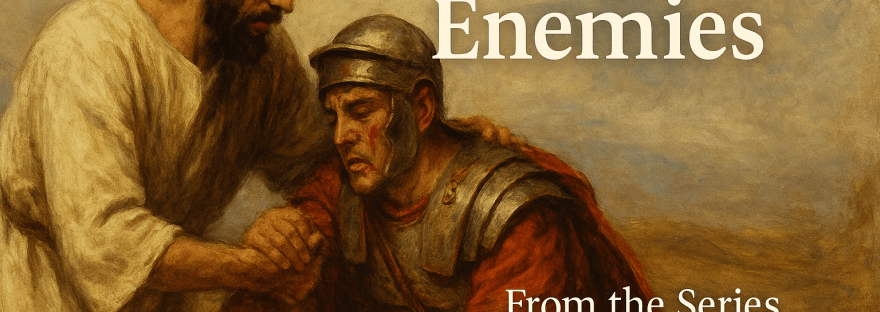
Love Your Enemies: The Forgotten Mark of Discipleship

From the series “The Love of God: Revealed, Received, and Radiated”

There is no clearer sign of Kingdom citizenship—and no more neglected command—than this: love your enemies.

Not tolerate them.
Not avoid them.
Not speak well of them when convenient.
Love them.

“But I say to you, love your enemies and pray for those who persecute you, so that you may prove yourselves to be sons of your Father who is in heaven…”
Matthew 5:44–45, NASB 1995

This is not hyperbole. This is not metaphor. It is the standard of the Kingdom, and it comes from the mouth of the King Himself.

To love those who are like us, who affirm us, who serve us—that requires no faith. But to love those who slander us, betray us, hurt us, or oppose us? That is a command that cannot be obeyed without the power of the Holy Spirit.


This kind of love is not natural. It is supernatural.
It cannot come from fallen flesh.
It must come from a heart renewed, crucified, and filled with the Spirit of Christ.

“Bless those who persecute you; bless and do not curse.”
Romans 12:14

“Do not be overcome by evil, but overcome evil with good.”
Romans 12:21

Enemy-love is not weakness.
It is not silence in the face of evil.
It is the refusal to let evil shape our response.
It is the choice to act in mercy even when justice is due, because God first showed us mercy.


We were all once enemies of God.

“While we were enemies, we were reconciled to God through the death of His Son…”
Romans 5:10

If we believe this, how can we hold hate in our hearts?
If we have received mercy while resisting Him, how can we withhold mercy from those who resist us?

This is not a peripheral issue.
This is not advanced Christianity.
This is basic obedience.

Jesus didn’t just teach it—He lived it.

He loved the ones who betrayed Him.
He forgave the ones who nailed Him to the cross.
He prayed for those who cursed Him with His final breath.

And He said: “Follow Me.”


The early Church did not soften this teaching. They embraced it. And they were known for it.

They refused to curse the emperors who fed them to beasts.
They did not raise swords against their persecutors.
They died praying for their murderers.
And the world took notice.

The Martyrdom of Polycarp (c. AD 155):
“We do not seek vengeance… but bless those who curse us, because Christ taught us to do so.”

Tertullian (Apology 37):
“We repay hatred with kindness, and injustice with mercy. We love those who kill us, because we follow One who was killed in love.”

They were not strong because they were admired.
They were strong because the love of God had broken them, remade them, and now shined through them.


If you love only those who love you, Jesus says you are no different from the world (Matthew 5:46–47).

Enemy-love is not optional.
It is not for the emotionally strong or spiritually elite.
It is for every citizen of Christ’s Kingdom.

And it is the clearest evidence that we belong to a different King.

This is not easy. It will cost your pride, your rights, your desire for retaliation. But it will also set you free.

Free from bitterness.
Free from the cycle of hatred.
Free to shine in a dark world that knows nothing of this kind of love.

This is the love that turned the world upside down once before.

It still can.

Sources & References

Love Your Enemies: The Forgotten Mark of Discipleship

Scripture (NASB 1995):

  • Matthew 5:44–45 – “Love your enemies and pray for those who persecute you…”
  • Matthew 5:46–47 – “If you love those who love you, what reward do you have?”
  • Romans 5:10 – “While we were enemies, we were reconciled to God…”
  • Romans 12:14 – “Bless those who persecute you…”
  • Romans 12:21 – “Do not be overcome by evil, but overcome evil with good.”

Ante-Nicene Sources:

  • The Martyrdom of Polycarp, Ch. 12–14.
    “We do not seek vengeance… but bless those who curse us, because Christ taught us to do so.”
    [Available at: EarlyChristianWritings.com or NewAdvent.org]
  • Tertullian, Apology, Ch. 37.
    “We repay hatred with kindness, and injustice with mercy. We love those who kill us…”
    [Available at: NewAdvent.org/fathers/0301.htm]
3–4 minutes

Leave a comment

Kingdom Discipleship, Kingdom Living

Crucifying the Flesh

Real Repentance and Lasting Freedom

The flesh is not reformed—it is crucified. Victory doesn’t come by negotiating with sin, but by putting it to death. The cross is not only where Jesus died—it’s where the believer dies daily to the desires that once ruled them.

“Those who belong to Christ Jesus have crucified the flesh with its passions and desires.”
Galatians 5:24


Repentance Is More Than Sorrow

True repentance is not just feeling bad about sin—it’s turning away from it. It’s not managing sin—it’s putting it to death. The early Church practiced repentance with tears, fasting, confession, and accountability.

“Let each one examine his deeds, and remove all that is dead, for no fruit can come from a rotting tree.”
Hermas, Mandate 3


Crucifixion Is Daily, Not Occasional

“If anyone would come after Me, let him deny himself and take up his cross daily…”
Luke 9:23

Crucifying the flesh is not a one-time act—it’s a daily choice. It means saying no to pride, lust, greed, bitterness, and fear—and yes to the Spirit.

  • We crucify the old self
  • We starve what once enslaved us
  • We choose obedience over impulse
  • We trust the Spirit’s power over our own strength

Freedom Comes Through Death to Self

“For you have died, and your life is hidden with Christ in God.”
Colossians 3:3

Death to the flesh is not loss—it’s liberation. When we die to sin, we come alive to God. The Holy Spirit brings lasting freedom—not by empowering our will, but by forming Christ in us.

“He who crucifies the flesh becomes a slave to righteousness and a friend of God.”
Didache, ch. 4


What We Can Learn

  1. The flesh must be crucified, not managed.
  2. Repentance is a turning, not just a feeling.
  3. Freedom comes through death to self and life in the Spirit.
  4. The cross is the path to true joy and holiness.

Sources:

  • The Holy Bible — Galatians 5:24; Luke 9:23; Colossians 3:3–10; Romans 6:6–14
  • Hermas, Mandate 3
  • Didache, ch. 4
  • Clement of Alexandria, Stromata
  • Ignatius of Antioch, Letter to the Romans

1–2 minutes

Leave a comment

Kingdom Discipleship, Kingdom Living

Walking by the Spirit

Daily Surrender and Supernatural Strength

Victory over the flesh doesn’t come from religious effort—it comes from walking with the Spirit. Not just believing in Him, but yielding to Him in daily dependence.

“Walk by the Spirit, and you will not gratify the desires of the flesh.”
Galatians 5:16

This isn’t occasional inspiration—it’s a way of life. The Spirit is not a visitor. He is the indwelling power by which we live, love, obey, and endure.


Walking Requires Surrender

To walk by the Spirit means to yield your will at every step. It means letting the Spirit lead—even when your feelings, fears, or desires pull in a different direction.

“If we live by the Spirit, let us also keep in step with the Spirit.”
Galatians 5:25

“He who walks with the Spirit walks the narrow path with strength not his own.”
Hermas, Mandate 11


Walking Produces Fruit

The Spirit doesn’t just keep us from sin—He produces godly character in us.

“The fruit of the Spirit is love, joy, peace, patience, kindness, goodness, faithfulness, gentleness, self-control…”
Galatians 5:22–23

The early Church did not impress the world with their numbers—but with their fruit. They bore visible evidence that they belonged to another Kingdom.

“Let the fruit of your walk be your defense against the world.”
Ignatius of Antioch, Letter to the Trallians


The Spirit Empowers Holiness and Mission

“You will receive power when the Holy Spirit has come upon you, and you will be My witnesses…”
Acts 1:8

He doesn’t just help us resist sin—He equips us for mission, strengthens us in weakness, convicts us in love, and comforts us in suffering. Everything in the Kingdom flows through the Spirit.


What We Can Learn

  1. Walking by the Spirit is a lifestyle of surrender.
  2. Victory comes not from striving, but abiding.
  3. The Spirit forms the character of Christ in us.
  4. Kingdom power flows from Spirit-led lives.

Sources:

  • The Holy Bible — Galatians 5:16–25; John 15:5; Acts 1:8; Romans 8:14; Ezekiel 36:27
  • Hermas, Mandate 11
  • Ignatius of Antioch, Letter to the Trallians
  • Didache, ch. 7

Clement of Alexandria, The Instructor

1–2 minutes

Leave a comment