
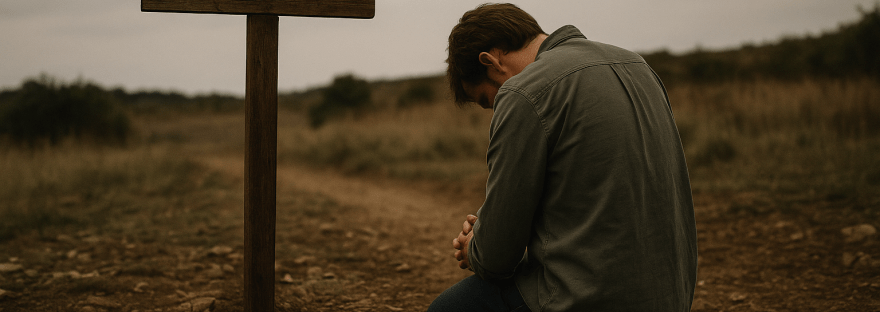
Real Repentance and Lasting Freedom
The flesh is not reformed—it is crucified. Victory doesn’t come by negotiating with sin, but by putting it to death. The cross is not only where Jesus died—it’s where the believer dies daily to the desires that once ruled them.
“Those who belong to Christ Jesus have crucified the flesh with its passions and desires.”
— Galatians 5:24
Repentance Is More Than Sorrow
True repentance is not just feeling bad about sin—it’s turning away from it. It’s not managing sin—it’s putting it to death. The early Church practiced repentance with tears, fasting, confession, and accountability.
“Let each one examine his deeds, and remove all that is dead, for no fruit can come from a rotting tree.”
— Hermas, Mandate 3
Crucifixion Is Daily, Not Occasional
“If anyone would come after Me, let him deny himself and take up his cross daily…”
— Luke 9:23
Crucifying the flesh is not a one-time act—it’s a daily choice. It means saying no to pride, lust, greed, bitterness, and fear—and yes to the Spirit.
- We crucify the old self
- We starve what once enslaved us
- We choose obedience over impulse
- We trust the Spirit’s power over our own strength
Freedom Comes Through Death to Self
“For you have died, and your life is hidden with Christ in God.”
— Colossians 3:3
Death to the flesh is not loss—it’s liberation. When we die to sin, we come alive to God. The Holy Spirit brings lasting freedom—not by empowering our will, but by forming Christ in us.
“He who crucifies the flesh becomes a slave to righteousness and a friend of God.”
— Didache, ch. 4
What We Can Learn
- The flesh must be crucified, not managed.
- Repentance is a turning, not just a feeling.
- Freedom comes through death to self and life in the Spirit.
- The cross is the path to true joy and holiness.
Sources:
- The Holy Bible — Galatians 5:24; Luke 9:23; Colossians 3:3–10; Romans 6:6–14
- Hermas, Mandate 3
- Didache, ch. 4
- Clement of Alexandria, Stromata
- Ignatius of Antioch, Letter to the Romans
Discover more from Rooted & Raised
Subscribe to get the latest posts sent to your email.


Leave a Reply