Kingdom Discipleship, Kingdom Living

Faithful in the Waiting

Perseverance and Hope in a Delaying World

The delay is not a denial.

Jesus told us that the Bridegroom would be delayed (Matthew 25:5), but He never told us to stop preparing. In the waiting, the Bride is not idle. She is being refined, proven, and strengthened.

“Blessed is that servant whom his master will find so doing when he comes.”
Luke 12:43

In a world of spiritual fatigue and cultural compromise, faithfulness becomes a prophetic witness. The one who endures in purity, hope, and trust—that one shines like a lamp in the dark.


Waiting Is Not Wasted

God uses delay to deepen devotion.

“For still the vision awaits its appointed time… If it seems slow, wait for it; it will surely come; it will not delay.”
Habakkuk 2:3

The early Church expected the Lord’s return, but they never let unmet expectations become spiritual apathy. They endured persecution, grief, injustice, and death—clinging to the hope of His appearing.

“Let us not grow weary or abandon our hope; the Lord is faithful and will come in His appointed time.”
Clement of Rome, 1 Clement 23


Faithfulness Means Obedience Over Time

“You have kept My word and have not denied My name. Because you have kept My word about patient endurance, I will keep you…”
Revelation 3:8–10

God is not looking for fast starters—but for faithful finishers. The Bride who will be ready is the one who:

  • Endures trials
  • Refuses compromise
  • Serves others in love
  • Stays rooted in the Word
  • Keeps her eyes on the King

Hope Strengthens the Heart

“Let us hold fast the confession of our hope without wavering, for He who promised is faithful.”
Hebrews 10:23

Hope is not wishful thinking—it is anchored in God’s faithfulness. It fuels perseverance. It reminds us that suffering is not the end. And it keeps the Bride looking up when the world tells her to give up.


What We Can Learn

  1. Waiting is not passive—it’s an active expression of trust.
  2. God refines us in delay, not just in deliverance.
  3. Faithfulness over time is the true measure of devotion.
  4. Hope is the anchor that keeps us rooted in love, not despair.

Sources:

  • The Holy Bible — Matthew 25:5; Luke 12:43; Habakkuk 2:3; Revelation 3:8–10; Hebrews 10:23; James 1:12
  • Clement of Rome, 1 Clement 23
  • Hermas, Mandate 9
  • Tertullian, On Patience
  • Didache, ch. 16

2–3 minutes

Leave a comment

Kingdom Discipleship, Kingdom Living

Keeping Our Lamps Lit

Watchfulness and Holiness in the Last Days

In Jesus’ parable of the ten virgins, only five were wise. Only five had oil in their lamps. Only five were ready when the Bridegroom came.

“But at midnight there was a cry, ‘Here is the bridegroom! Come out to meet him.’ Then all those virgins rose and trimmed their lamps.”
Matthew 25:6–7

This is not just a parable—it’s a warning. The call will come. And only those who have remained watchful and filled will rise to meet Him.


Watchfulness Is a Lifestyle

To keep your lamp lit is to live aware, alert, and attuned to the Spirit of God.

“Be dressed for action and keep your lamps burning…”
Luke 12:35

The early Church lived like this:

  • Expecting Christ’s return at any moment
  • Walking in holiness and self-control
  • Encouraging one another to stay faithful
  • Resisting the slumber of compromise

“Let us not be found drowsy or distracted, lest the King come suddenly and we are left outside.”
Hermas, Similitudes 9


Holiness Is the Oil of Readiness

“Without holiness no one will see the Lord.”
Hebrews 12:14

The foolish virgins were not immoral—they were unprepared. They didn’t value what mattered. The oil they lacked was the inward reality of a holy life, filled and sustained by the Spirit.

Holiness is not legalism—it is alignment with God’s heart, and the natural result of loving Him.

“He who walks in purity stores up oil for the day of His coming.”
Didache, ch. 16


The Bride Keeps Watch, Not Fear

We don’t prepare out of fear—we prepare out of love. The Bride is not panicked—she is pure, watching with joy, longing to see her Beloved.

She:

  • Repents quickly
  • Guards her heart and mind
  • Stays awake in prayer
  • Lives as a light to the world
  • Keeps her oil full through communion with Christ

What We Can Learn

  1. Readiness is revealed in how we live now, not what we say later.
  2. Watchfulness is a sign of love, not paranoia.
  3. Holiness is the oil that keeps our lamps burning.
  4. The wise prepare for what others ignore.

Sources:

  • The Holy Bible — Matthew 25:1–13; Luke 12:35–37; Hebrews 12:14; 1 Thessalonians 5:6; 1 Peter 1:13–16
  • Didache, ch. 16
  • Hermas, Similitudes 9
  • Clement of Alexandria, Stromata
  • Ignatius of Antioch, Letter to the Ephesians

2–3 minutes

Leave a comment

Kingdom Discipleship, Kingdom Living

The Spirit and the Bride Say ‘Come’

Awakening Love, Longing, and Preparation

The final cry of the Church in Scripture is not silence—it is a call. And that call is not solitary. It is the unified voice of the Spirit and the Bride, crying out together in holy longing:

“The Spirit and the Bride say, ‘Come.’”
Revelation 22:17

This is not a call of doctrine, but of devotion. It is not a theological statement—it is a bridal ache for the Bridegroom. The Church, filled with the Spirit, does not merely await the return of Christ—she cries for it. She prepares herself and calls others to come to Him.


The Spirit Awakens Love

“God’s love has been poured into our hearts through the Holy Spirit…”
Romans 5:5

The Spirit is not merely a power or influence. He is the living Person of God within us, igniting our hearts with love for Jesus and longing for His appearing.

  • He reminds us of the Bridegroom’s voice (John 14:26)
  • He stirs a deeper hunger for holiness
  • He quickens us to pray, worship, and obey
  • He prepares our hearts to love what Christ loves

The Bride Longs for His Return

“Our citizenship is in heaven, and from it we await a Savior…”
Philippians 3:20

The early Christians prayed, “Maranatha”—Come, Lord! Their love for Christ was greater than their love for comfort. Persecution did not weaken their cry—it purified it.

“Let us yearn for the day of His return, that we may be found ready, not resting.”
Clement of Rome, 1 Clement 23

They lived as those betrothed. They kept their lamps burning.


The Bride Calls Others to Come

“Let the one who hears say, ‘Come.’ And let the one who is thirsty come…”
Revelation 22:17

This cry is not just upward—it is outward. The Bride does not only long for the Groom—she invites others into the wedding feast.

  • Evangelism is a bridal call: Come to the King!
  • Discipleship is bridal preparation: Be made ready!
  • Worship is a bridal anthem: Even so, come!

What We Can Learn

  1. The Spirit awakens love and longing for Christ’s return.
  2. The Bride does not wait passively—she cries out actively.
  3. Our witness is not obligation—it is invitation.
  4. The call of the Spirit and the Bride is the same: Come.

Sources:

  • The Holy Bible — Revelation 22:17; Romans 5:5; Philippians 3:20; John 14:26
  • Clement of Rome, 1 Clement 23
  • Didache, ch. 10
  • Hermas, Similitudes 9
  • Ignatius of Antioch, Letter to the Romans

2–3 minutes

Leave a comment

Kingdom Discipleship, Kingdom Living

The Bride of Christ

Chosen, Cherished, and Called

You are not just saved from sin—you are called into covenant. Christ did not die simply to rescue you. He died to wed you to Himself in love, truth, and eternal communion.

The Bible begins with a marriage (Genesis 2) and ends with a wedding (Revelation 19). This is the divine story of redemption: a Bride prepared for the Lamb, purchased in blood, washed in the Word, and made one with the King.

“As the bridegroom rejoices over the bride, so shall your God rejoice over you.”
Isaiah 62:5


You Are Chosen by the King

“You did not choose Me, but I chose you…”
John 15:16

The Bride is not random or self-made. She is chosen in love, pursued by grace, and betrothed through covenant. This is not an invitation to pride, but to humble awe.


You Are Cherished, Not Tolerated

“Christ loved the Church and gave Himself up for her…”
Ephesians 5:25

You are not barely accepted. You are deeply desired. The Cross is proof that the Bride is treasured—not by merit, but by mercy.

The early Church lived in this reality. Their obedience was not driven by fear, but by love. They saw themselves as espoused to Christ, and longed to be found faithful.

“I have betrothed you to one Husband, to present you as a pure virgin to Christ.”
2 Corinthians 11:2


You Are Called to Prepare

The Bride doesn’t wait passively—she prepares actively:

  • Through repentance and purity
  • Through worship and devotion
  • Through good works and faithful witness
  • Through longing and watchfulness

“The one who is betrothed keeps herself pure, anticipating her Husband’s return.”
Tertullian, Exhortation to Chastity


What We Can Learn

  1. We are not just saved—we are espoused.
  2. The Church is not a building—it is a Bride.
  3. Our lives are to reflect the love we’ve been given.
  4. The Spirit is preparing us for union with Christ.

Sources:

  • The Holy Bible — Revelation 19:7–9; Isaiah 62:5; Ephesians 5:25–27; 2 Corinthians 11:2; John 15:16
  • Tertullian, Exhortation to Chastity
  • Ignatius of Antioch, Letter to Polycarp
  • Hermas, Similitudes 9
  • Didache, ch. 10

1–2 minutes

Leave a comment

Kingdom Discipleship, Kingdom Living

Part 5: The Bride Made Ready

The Spirit’s Work in Preparing the Church for Christ’s Return

The Church is not just a gathering of believers—it is the Bride of Christ, being purified, refined, and prepared for the return of the King. While the world drifts toward compromise, the Spirit is working to awaken the Bride to holiness, hope, and readiness.

This part of the series focuses on the final preparation of the Church—not through fear or end-time hype, but through devotion, purity, faithfulness, and mission. The Bride doesn’t wait passively—she prepares actively.

“Let us rejoice and exult and give Him the glory, for the marriage of the Lamb has come, and His Bride has made herself ready…”
Revelation 19:7


Post Index:

  1. The Bride of Christ — Chosen, Cherished, and Called
    Understanding the Church’s identity as the Bride of Jesus
  2. The Spirit and the Bride Say ‘Come’
    The Spirit’s work in awakening love, longing, and preparation
  3. Keeping Our Lamps Lit — Watchfulness and Holiness
    Living alert, consecrated, and filled with oil for the return of Christ
  4. Faithful in the Waiting — Perseverance and Hope
    Enduring through trials, keeping faith, and not losing heart
  5. Without Spot or Wrinkle — Purity and Repentance in the Last Days
    What it means to be sanctified and cleansed by the Word
  6. The Midnight Cry — Responding to the Call of the Bridegroom
    How the Church must arise and go out to meet Him
  7. Prepared People, Glorious King
    A vision of the ready Bride and the coming Kingdom

1–2 minutes

Leave a comment

Kingdom Discipleship, Kingdom Living

Priests on Mission

Living for the Glory of the King

A royal priest is not idle. They are not hidden behind temple walls. They are sent ones—ambassadors of the Kingdom, commissioned by the King to represent Him in the world.

“As the Father has sent Me, even so I am sending you.”
John 20:21

The mission of the Church is not survival—it is proclamation, compassion, and witness. And every priest in the Kingdom is part of that mission.


Priests Are Ambassadors, Not Tourists

“We are ambassadors for Christ, God making His appeal through us.”
2 Corinthians 5:20

The Kingdom of God is not something we escape into—it is something we carry with us. Priests are not tourists on earth. They are citizens of heaven, placed strategically by God in families, workplaces, neighborhoods, and nations to shine His light.

Wherever you are, you are on mission.


The Mission Is Local and Global

The early Church did not wait for a mission board or a conference. They carried the Gospel from house to house, from city to city, from nation to nation.

  • They planted churches
  • Served the poor
  • Preached boldly
  • Raised up disciples
  • Endured persecution with joy

“They go out not seeking glory, but seeking souls.”
Tertullian, Apology 50

The mission didn’t stop at conversion. It continued through discipleship, justice, and love.


The Mission Is Fueled by the Holy Spirit

Jesus told His disciples not to go until the Spirit came (Acts 1:4–8). Why? Because mission without the Spirit becomes mere activity. But when priests move in the power of the Holy Spirit, lives are transformed.

  • He gives boldness (Acts 4:31)
  • He gives direction (Acts 13:2–3)
  • He opens hearts (Acts 16:14)
  • He convicts and comforts (John 16:8)

What We Can Learn

  1. Every priest is called to mission—not just ministry leaders.
  2. Wherever you are, you are sent.
  3. The Spirit empowers the mission of the Church.
  4. Our lives, love, and labor reflect the glory of the King.

Sources:

  • The Holy Bible — John 20:21; 2 Corinthians 5:20; Acts 1:4–8; Acts 4:31; Acts 13:2–3; Acts 16:14; John 16:8
  • Tertullian, Apology 50
  • Didache, ch. 14
  • Clement of Alexandria, Who Is the Rich Man That Shall Be Saved?
  • Justin Martyr, First Apology

1–2 minutes

Leave a comment

Kingdom Discipleship, Kingdom Living

Bearing One Another’s Burdens

Intercession in Action

Priests don’t live for themselves. They carry the weight of others. In the Kingdom of God, one of the most powerful expressions of our priesthood is this: interceding for and supporting one another.

To intercede is to stand in the gap—not just in prayer, but in presence, compassion, and love. The royal priesthood is not about platform—it’s about bearing burdens with and for others.

“Bear one another’s burdens, and so fulfill the law of Christ.”
Galatians 6:2


Jesus, Our Great Intercessor

“He always lives to make intercession for them.”
Hebrews 7:25

Jesus not only bore our sin—He still bears our needs before the Father. As His followers, we reflect His priesthood when we lift others up in prayer, help the hurting, and walk alongside the weary.

We do not merely observe others’ pain—we enter into it, in love.


Intercession Is More Than Words

True intercession is:

  • Empathy that acts
  • Prayer that costs something
  • Sacrifice of time, comfort, and convenience
  • Standing with the broken, not just praying from afar

“When you see your brother in need, do not wait—run to him as if to Christ Himself.”
Hermas, Mandate 8

The early Christians met needs daily. They pooled their resources, fasted for one another, and took in the rejected. Their love was priestly and practical.


Burden-Bearing Requires Humility and Strength

“We who are strong have an obligation to bear with the failings of the weak…”
Romans 15:1

Burden-bearing isn’t always convenient. But it is always Kingdom. The Holy Spirit enables us to carry what we cannot carry alone. And in doing so, we become living expressions of Christ’s compassion.


What We Can Learn

  1. Priestly ministry includes practical love and intercession.
  2. To bear burdens is to imitate Christ.
  3. We serve best when we step into others’ pain, not around it.
  4. Every act of compassion is holy in the eyes of God.

Sources:

  • The Holy Bible — Galatians 6:2; Hebrews 7:25; Romans 15:1; 1 John 3:16–18; James 5:16
  • Hermas, Mandate 8
  • Didache, ch. 4
  • Clement of Rome, 1 Clement 38
  • Tertullian, Apology 39

1–2 minutes

Leave a comment

Kingdom Discipleship, Kingdom Living

Clean Hands, Pure Hearts

The Integrity of the Priest

God is not impressed by performance. He is not moved by appearance. He looks at the heart. For the priests of His Kingdom, integrity is not optional—it is foundational.

To live as a priest is to live set apart. Not just in public, but in private. Not just in doctrine, but in conduct. The power of our witness depends not on eloquence, but on the purity of our lives before God and others.

“Who shall ascend the hill of the Lord? And who shall stand in His holy place? He who has clean hands and a pure heart…”
Psalm 24:3–4


The Early Church Was Marked by Integrity

The strength of the early Christians was not in influence or wealth. It was in the consistency of their lives. They were trustworthy, generous, self-controlled, and faithful—even when no one was watching.

“Let your conduct be such that even your enemies may see the truth in your life.”
Ignatius of Antioch, Letter to the Smyrneans

They feared God more than man. They did not compromise with the world. They bore the Name of Christ with holy reverence.


Integrity Requires the Fear of the Lord

“The fear of the Lord is the beginning of wisdom…”
Proverbs 9:10

Priests walk before God. They minister in His presence. The fear of the Lord keeps them humble, honest, and wholly devoted. It protects against hypocrisy and empowers repentance when sin creeps in.


God Desires Holy Vessels

“If anyone cleanses himself from what is dishonorable, he will be a vessel for honorable use… set apart as holy…”
2 Timothy 2:21

The Holy Spirit cannot be quenched by sin and compromise. Priestly authority flows not from position but from purity.


Integrity Is Seen in How We…

  • Treat others behind closed doors
  • Speak when no one else hears
  • Handle money, power, and pain
  • Repent when we’ve sinned
  • Stay faithful when no one’s watching

What We Can Learn

  1. God desires purity, not performance.
  2. Priestly influence flows from personal holiness.
  3. Integrity is worship—it honors God in the unseen.
  4. The world is watching—so is the Lord.

Sources:

  • The Holy Bible — Psalm 24:3–4; 2 Timothy 2:21; Proverbs 9:10; 1 Peter 1:15–16; Matthew 5:8
  • Ignatius of Antioch, Letter to the Smyrneans
  • Didache, ch. 3–4
  • Clement of Alexandria, Stromata
  • Hermas, Mandate 4

2–3 minutes

Leave a comment

Kingdom Discipleship, Kingdom Living

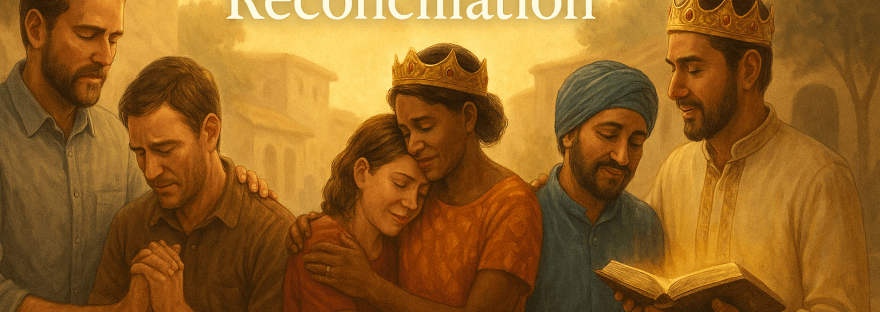
The Ministry of Reconciliation

Representing Christ to the World

Every priest of God serves with this sacred task: to reconcile people to their Creator.

In Christ, you are not just a forgiven sinner—you are a minister of reconciliation, appointed by God to reflect His mercy, grace, and truth to a broken world.

“All this is from God, who through Christ reconciled us to Himself and gave us the ministry of reconciliation…”
2 Corinthians 5:18

This ministry is not limited to pastors or missionaries. It belongs to every citizen of the Kingdom and every member of the royal priesthood. You are an ambassador for Christ.


What Does Reconciliation Mean?

To reconcile means to restore a broken relationship. Humanity’s relationship with God was severed by sin. Through Jesus, that relationship is made whole. And now, through the Church—through you—God invites the world to return to Him.

“We implore you on behalf of Christ, be reconciled to God.”
2 Corinthians 5:20

The early Church understood their role not just as saved ones, but as sent ones—messengers of peace, truth, and redemption.


Priests Stand in the Gap

In the Old Testament, priests stood between God and the people. They offered sacrifices and interceded for mercy. In the Kingdom of God, that image remains—but the sacrifice is already made.

Now, we:

  • Offer our lives in service
  • Extend God’s invitation through the Gospel
  • Live in a way that draws others toward the truth
  • Intercede in prayer for the lost and hurting

“Let your light shine before others, so they may see your good works and give glory to your Father…”
Matthew 5:16


The Early Church Embodied This Ministry

They didn’t wait for the world to come to them—they went to the world. They:

  • Cared for the poor and sick
  • Welcomed orphans and widows
  • Forgave their persecutors
  • Declared the Gospel without shame
  • Died in love, not in anger

“By their love and peaceable ways, they draw even their enemies into friendship with Christ.”
Tertullian, Apology 39


What We Can Learn

  1. The ministry of reconciliation is given to every believer.
  2. We represent Christ in word, deed, and attitude.
  3. Our lives should attract, not repel, the hurting and lost.
  4. The message of reconciliation is urgent and eternal.

Sources:

  • The Holy Bible — 2 Corinthians 5:18–20; Matthew 5:16; Colossians 1:19–22; Romans 10:14–15
  • Tertullian, Apology 39
  • Didache, ch. 1–2
  • Clement of Rome, 1 Clement 49
  • Justin Martyr, Dialogue with Trypho

2–3 minutes

Leave a comment

Kingdom Discipleship, Kingdom Living

Worship as a Way of Life

Living as a Daily Offering Before God

Worship is not music. Worship is not a Sunday event. Worship is not something we attend. Worship is a life surrendered—offered daily before the Lord.

In the Kingdom of God, priests don’t clock in once a week. They live in continual service. Everything they do, everything they give, everything they suffer, and everything they rejoice in can become worship when done unto the Lord.

“Present your bodies as a living sacrifice, holy and acceptable to God, which is your spiritual worship.”
Romans 12:1


Worship Begins with the Heart

God doesn’t want hollow songs or empty rituals. He wants your heart.

“These people honor Me with their lips, but their hearts are far from Me.”
Matthew 15:8

The early Church understood worship as more than external expression—it was an internal posture of humility, reverence, and joyful obedience. Their lives matched their words.

“Let your life be a hymn to God—pure in word, deed, and heart.”
Clement of Alexandria, The Instructor


All of Life Is Sacred When Offered to God

Whether working, serving, parenting, or suffering, the believer is never off-duty. Every action can be consecrated when done with a heart that says, “This is for You, Lord.”

  • Work becomes worship when done with honesty and excellence
  • Suffering becomes worship when borne with hope and praise
  • Rest becomes worship when received with gratitude
  • Generosity becomes worship when given in secret
  • Prayer becomes worship when we listen as well as speak

“In everything you do, do it heartily, as for the Lord…”
Colossians 3:23


The Early Church Worshiped in Spirit and in Truth

Their worship was marked by:

  • Simplicity
  • Scripture
  • Communion
  • Prayer
  • Song
  • Generosity
  • Obedience

And above all, they offered their lives, not just their voices.

“Their sacrifices were not bulls or goats, but thanksgiving, praise, and faithfulness.”
Justin Martyr, First Apology


What We Can Learn

  1. Worship is not an event—it is a lifestyle.
  2. God desires our hearts, not hollow rituals.
  3. Every action can be worship when done unto the Lord.
  4. Priests offer their entire lives as daily sacrifices.

Sources:

  • The Holy Bible — Romans 12:1; Colossians 3:23; Matthew 15:8; John 4:23–24
  • Clement of Alexandria, The Instructor
  • Justin Martyr, First Apology
  • Didache, ch. 9–10
  • Tertullian, On Prayer
2–3 minutes

Leave a comment