Biblical Interpretation, Kingdom Discipleship

Returning to the Early Church — Reading with Obedient Faith

How to Read the Bible Series

The early Church didn’t just study the Word—they lived it.
Long before creeds were formalized or theology was debated in ivory towers, believers gathered in homes with open scrolls and open hearts. They read to obey. They heard to follow. They studied not to speculate, but to surrender.

Today, much of modern Christianity reads Scripture for insight but not instruction—for debate, not discipleship. But the early believers, especially those in the Ante-Nicene period, show us a better way: the way of obedient faith.


Scripture Focus:

“But prove yourselves doers of the word, and not merely hearers who delude themselves.”
James 1:22, NASB1995


They Didn’t Just Know the Word—They Followed It

The early Church took Jesus at His Word. When He said, “Love your enemies,” they did. When He said, “Sell your possessions,” many did. When He said, “Take up your cross,” they carried it to death.

They didn’t look for loopholes or allegories. They read literally what Jesus commanded and built their lives around it. That’s not legalism—it’s love.


Faithful Obedience Over Doctrinal Complexity

These early believers weren’t systematic theologians. But they were faithful:

  • They forgave freely
  • They cared for orphans and widows
  • They rejected worldliness
  • They embraced suffering with joy

They didn’t always use the words we use today—but they walked in the truth of Scripture, led by the Spirit and grounded in love.


Reading to Live, Not Just to Learn

Too often, we approach the Bible as scholars rather than disciples. We underline and debate—but fail to obey. The early Church didn’t have commentaries or academic credentials. They had the Holy Spirit, the Word of God, and a willingness to follow Christ at all cost.

And the world saw their love—and believed (John 13:35).


How We Return to Their Way

  • Read slowly, letting Scripture examine you
  • Obey the commands of Christ, not just admire them
  • Choose faithfulness over intellectual pride
  • Be willing to suffer for truth
  • Let the Spirit convict, correct, and conform you to Christ

Let the Word Form Your Life

The Bible is not just a book to be studied—it’s a sword to pierce, a mirror to reveal, a lamp to guide, and a voice to follow. The early Church knew this. That’s why their faith shook the world.

Return to the Word—not just with your mind, but with your whole heart. Read it to obey. Read it to follow Jesus. And read it like the early Church—devoted, surrendered, and unshakably faithful.

2–3 minutes

Leave a comment

Biblical Interpretation, Kingdom Discipleship

Trusting the Holy Spirit — Our Teacher and Interpreter

How to Read the Bible Series

The Bible was written by the Spirit—and must be read by the Spirit.
Too often, believers are taught to depend on scholars, pastors, or historical frameworks to understand Scripture. But while godly teaching is valuable, it is not the source of truth. The Author of Scripture is the One who teaches it best. The Holy Spirit is not a background figure in Bible reading—He is the divine Interpreter.

The Bereans didn’t just search the Scriptures—they did so prayerfully, humbly, and under the guidance of the Spirit. The early Church didn’t lean on seminary systems or institutional approval. They trusted the Spirit to guide them into truth—as Jesus promised He would.


Scripture Focus:

“But when He, the Spirit of truth, comes, He will guide you into all the truth…”
John 16:13, NASB1995


The Spirit Is the True Teacher

Human teachers can help. But only the Holy Spirit reveals truth in a way that transforms the heart. Jesus said the Spirit would:

  • Teach all things (John 14:26)
  • Guide into all truth (John 16:13)
  • Disclose what is to come (John 16:14)

The Spirit knows the mind of God (1 Corinthians 2:10–12). No one else can claim that.


You Have the Anointing

“You have no need for anyone to teach you; but as His anointing teaches you about all things…”
1 John 2:27

This isn’t a rejection of fellowship or learning—it’s a reminder that the Spirit Himself teaches every believer. The early Christians relied on this. They didn’t have study Bibles or commentaries. They had the Word and the Spirit—and it was enough.


Why This Matters Today

  • Many read through the lens of tradition, not truth
  • Some fear they can’t understand without formal education
  • Others rely more on their pastor’s sermon than on the Spirit’s voice

But Jesus promised the Spirit would teach us. God is not hiding truth from His people. He delights to reveal it to those who ask (Luke 11:13).


How the Early Church Was Taught

The Ante-Nicene believers lived by the Spirit. They didn’t dissect the Word with systems—they obeyed it with hearts yielded to the Spirit. They viewed the Spirit as:

  • The Giver of understanding
  • The Power to obey
  • The Unifier of the body
  • The Guardian of truth

When heresies arose, it was those anchored in the Spirit and Scripture who stood firm.


Return to the Spirit. Read with Him Beside You.

The Holy Spirit is not a theological concept. He is your Guide, your Comforter, your Teacher. To open the Bible without Him is to miss the voice of its Author.

So ask. Invite Him. Trust Him. And let Him teach you as He taught the early Church—through the living Word, into transforming truth.

2–3 minutes

Leave a comment

Biblical Interpretation, Kingdom Discipleship

Testing Every Teaching — Holding Fast to What Is Good

How to Read the Bible Series

Not all who teach the Bible teach the truth.
In every generation, voices rise with persuasive speech, passion, and promises—but not all speak for God. Scripture warns of false teachers and doctrines of demons (1 Timothy 4:1). The solution isn’t suspicion, but testing.

The Bereans weren’t skeptical; they were faithful. They received Paul’s message eagerly—then examined the Scriptures daily to see if what he said was true (Acts 17:11). They didn’t test to reject; they tested to follow rightly. That’s the posture God honors.


Scripture Focus:

“But examine everything carefully; hold fast to that which is good.”
1 Thessalonians 5:21, NASB1995


Teaching Must Be Tested, Not Trusted Blindly

It doesn’t matter who’s preaching. If it contradicts the Word, it must be rejected. Scripture is the standard—not popularity, credentials, or tradition.

Jesus warned of wolves in sheep’s clothing (Matthew 7:15). Paul told the Galatians that even if an angel from heaven preached a different gospel, it was to be accursed (Galatians 1:8). We test everything—not to be critical, but to be careful.


Examine Carefully, Not Casually

Testing is not passive—it’s diligent. The Greek for “examine” (dokimazō) implies testing metals, proving what is genuine. That means:

  • Searching the Scriptures in full context
  • Letting the Spirit confirm or correct
  • Asking questions of the text, not just the teacher

The Bereans searched daily. They let the Word be their filter.


What to Hold Fast To

Once tested, truth must be held tightly. Truth isn’t a buffet—it’s a foundation. The Bereans clung to what aligned with Scripture. Today, we must:

  • Hold fast to what the Bible plainly teaches
  • Let go of what’s built on inference, tradition, or system
  • Walk in obedience to what is clear

How the Early Church Modeled Discernment

The Ante-Nicene believers weren’t easily swayed by clever speech. They weighed everything against the apostles’ teachings, preserved in the Scriptures. When heresies arose, they stood firm—not with arrogance, but with conviction rooted in the Word.

They were not passive hearers. They were active testers.


Today’s Urgent Need: A Berean Heart

We are flooded with podcasts, sermons, and books. Not all are evil—but not all are true. The Church doesn’t need louder voices. It needs sharper listeners.

God still honors those who examine everything and hold fast to what is good.


Return to the Word. Test What You Hear.

Not everything that sounds biblical is. Test it. Search it. Compare it. And when it proves good, cling to it like treasure.

Be discerning. Be devoted. And let the Holy Spirit and the Word be your guide in every teaching you receive.

2–3 minutes

Leave a comment

Biblical Interpretation, Kingdom Discipleship

The Dangers of Adding Philosophy or Tradition — Let No One Take You Captive

How to Read the Bible Series

Not every lofty thought is holy.
From the Garden to today, human reasoning has sought to elevate itself above God’s voice. The enemy’s first question—“Did God really say?”—was not just about doubt. It was a subtle appeal to human logic over divine instruction. Today, that same spirit persists through philosophies, traditions, and theological systems that shape how many read Scripture.

The early Church faced this challenge head-on. So did the Bereans. What made them noble was their refusal to let even an apostle’s message go untested. They measured every teaching against the Word, not the other way around. Theirs was a Scripture-first lens, not a system-first one.


Scripture Focus:

“See to it that no one takes you captive through philosophy and empty deception, according to the tradition of men, according to the elementary principles of the world, rather than according to Christ.”
Colossians 2:8, NASB1995


Philosophy Can Cloud the Word

Greek thought exalted the mind and devalued the body. It shaped Origen, influenced Augustine, and laid the foundation for much of Western theology. But it also introduced abstract categories foreign to Scripture—ideas like:

  • Dualism between physical and spiritual (as if the body were inherently evil)
  • Predetermined fate masquerading as sovereignty
  • Truth measured by logic rather than revelation

These ideas didn’t originate in God’s Word, yet they became the lens through which many began to read it.


Traditions Can Override the Text

“You are experts at setting aside the commandment of God in order to keep your tradition.” — Mark 7:9

Tradition can preserve wisdom—or perpetuate error. When tradition becomes the standard by which we interpret Scripture, it becomes an idol.

The Bereans didn’t rely on rabbinical traditions or creeds. They had Scripture and the Spirit. That was enough. If a teaching couldn’t be confirmed by the Word, it was rejected—no matter how ancient, respected, or widely held.


What Happens When Man’s Wisdom Replaces God’s Voice

  • The clear becomes confused
  • The Spirit’s role is replaced by scholars
  • Doctrines of men replace doctrines of Christ
  • Allegory replaces literal meaning
  • Unity in the Spirit is lost in division over systems

God’s Word loses its authority when it’s filtered through frameworks never given by God. Yet this is the very thing the early Church resisted.


How the Early Church Kept Scripture Central

The Ante-Nicene Church didn’t build doctrine on abstract categories. They preached Christ crucified. They obeyed the plain reading of the Word. And they refused to bend truth to fit philosophical trends or cultural pressures.

Their worship was Scripture-saturated. Their theology was born of obedience, not speculation. They let God’s Word speak—and they followed.


A Word for Today

If your theology comes more from a system than from Scripture, pause. Ask: Am I being taught by the Spirit—or by the traditions of men?

God doesn’t need philosophy to defend truth. He needs disciples willing to obey it.


Return to the Word. Refuse to Be Captive.

Tradition is not the enemy—but it is not the authority. Philosophy is not always wrong—but it is never the standard.

Scripture alone is God-breathed. Let no one take you captive. Let Christ—through His Spirit and His Word—be your Teacher.

2–3 minutes

Leave a comment

Biblical Interpretation, Kingdom Discipleship

Avoiding Allegory — Letting the Text Speak for Itself

How to Read the Bible Series

When God speaks plainly, we should listen plainly.
The Bible contains poetry, parables, and prophecy—but not every passage is symbolic. When we  turn literal truths into allegory without textual reason, we silence the Spirit’s intent and risk distorting God’s Word. The early Church feared this. So should we.

The Bereans searched the Scriptures daily—not for hidden meanings, but for the truth plainly revealed. The early believers, especially in the Ante-Nicene period, read the Word as it was written: historically, contextually, and with reverence. They didn’t spiritualize promises to Israel or reinterpret prophecy through philosophical systems. They let God say what He meant.


Scripture Focus:

“Every word of God is tested; He is a shield to those who take refuge in Him. Do not add to His words or He will reprove you, and you will be proved a liar.”
Proverbs 30:5–6, NASB1995


What Is Allegorizing?

Allegorizing is taking a clear, literal statement of Scripture and replacing it with a symbolic meaning not indicated by the text itself. It often stems from:

  • Philosophical systems (like those influenced by Greek thought)
  • Preconceived doctrines trying to fit the text
  • Attempts to “deepen” the meaning beyond what is written

While allegory is used in Scripture (see Galatians 4:24), it’s the exception—not the rule—and it’s always declared plainly.


When the Plain Sense Makes Sense

The Reformation principle holds true: when the plain sense makes sense, seek no other sense. God is not unclear. He doesn’t bury truth in riddles. Jesus taught in parables to conceal from the proud, but when asked, He explained them clearly to His disciples (Matthew 13:10–17).

When prophecy says Messiah will come from Bethlehem, we take it literally—because it happened literally (Micah 5:2). When the text says Israel will be restored, we should not assume “Israel” now means the Church—unless Scripture tells us so.


The Danger of Allegorical Interpretation

  • It opens the door to subjective meaning—what the passage “means to me”
  • It removes accountability to the actual words of Scripture
  • It elevates the interpreter over the Author
  • It can strip God’s promises of their faithfulness and precision

Many doctrines today—like Amillennialism, Replacement Theology, or covenantal reinterpretations—rest on allegory, not exegesis. That’s not how the Bereans or the early Church read.


How the Early Church Handled the Text

The Ante-Nicene believers read the text plainly. They looked for Christ in the Old Testament—but they did not spiritualize historical events. They held to:

  • Literal interpretation unless the genre demanded otherwise (e.g., apocalyptic visions)
  • A future hope based on real promises
  • Reverence for God’s Word without inserting their own speculation

They didn’t assume metaphors unless the text led them there. And when symbolism was present, it was anchored in the rest of Scripture.


Read as a Berean, Not as an Origenist

Origen made allegory popular. Augustine expanded it. But neither approach reflects the Berean model. The Bereans didn’t search for hidden meanings. They searched for truth.

Let the Word speak. Don’t add layers that God didn’t place there. Don’t spiritualize what the Spirit wrote in plain terms. Read with humility, not imagination.


Return to the Word. Trust What Is Written.

We are not called to be mystical interpreters—we are called to be faithful ones. God’s Word is clear. The Spirit is our Teacher. And Jesus meant what He said.

Return to the plain meaning. Reject allegory unless the text demands it. And let God’s promises stand as He gave them—sure, specific, and Spirit-breathed.

2–4 minutes

Leave a comment

Biblical Interpretation, Kingdom Discipleship

Comparing Scripture with Scripture — Letting the Word Confirm the Word

How to Read the Bible Series

God’s Word speaks with one voice because it has one Author.
Across 66 books, written over centuries, by prophets, shepherds, kings, fishermen, and apostles—there is perfect harmony. Why? Because the Holy Spirit, who inspired the writing, does not contradict Himself. And this is why Scripture must be used to interpret Scripture.

The early Church, especially the Bereans and the Ante-Nicene believers, knew this instinctively. They didn’t build doctrines on isolated verses or clever analogies. They let the Word confirm the Word. When they tested Paul’s teaching, they didn’t reach for tradition or speculation—they searched the scrolls. If he preached Christ, they would find Him in Moses and the Prophets.


Scripture Focus:

“But the natural man does not accept the things of the Spirit of God, for they are foolishness to him; and he cannot understand them, because they are spiritually appraised.”
1 Corinthians 2:14, NASB1995

“On the testimony of two or three witnesses every matter shall be confirmed.”
Deuteronomy 19:15b, NASB1995


The Word is Its Own Witness

The Holy Spirit uses Scripture to explain Scripture. A truth is never established by a single verse taken out of context. Just as God required two or three witnesses in legal matters, He often confirms doctrine through multiple voices in His Word.

When Jesus spoke of Himself, He showed how the Law, the Prophets, and the Psalms all testified to Him (Luke 24:44). The early Church followed this same pattern, checking that every teaching aligned with the totality of God’s revealed truth.


Don’t Build a Doctrine on One Verse

It is dangerous to establish beliefs from isolated texts:

  • A single verse on baptism does not teach the full meaning of baptism.
  • A poetic phrase in Psalms isn’t a license for doctrine if it contradicts apostolic teaching.
  • A vision in Revelation must be interpreted in light of clear prophetic Scripture.

When we let Scripture interpret Scripture, the Spirit brings balance, clarity, and unity to our understanding.


How the Early Church Applied This

The Bereans didn’t have systematic theology textbooks. They had the Hebrew Scriptures and the Holy Spirit. When Paul taught salvation through Christ, they searched for those threads in Genesis, Isaiah, and the Psalms. Their faith was not blind—it was grounded in revealed truth.

The Ante-Nicene believers quoted Scripture often and widely, drawing connections across books to test false teaching. They didn’t elevate clever analogies or speculative ideas. They let the Word speak for itself.


Practical Ways to Let the Word Interpret the Word

  • Cross-reference similar passages to see the full picture.
  • Look for patterns: does this principle appear consistently?
  • Consider the whole counsel of God (Acts 20:27), not just selected parts.
  • Let clear passages interpret unclear ones—not the reverse.

Return to the Word. Let It Speak for Itself.

2–3 minutes

Leave a comment

Biblical Interpretation, Kingdom Discipleship

Culture and Language — Reading as the First Audience Heard It

How to Read the Bible Series

We often forget: the Bible wasn’t written to us—but it was written for us.
Every book of the Bible was penned in a time, place, and culture vastly different from our own. The original readers understood idioms, customs, and references that are foreign to modern ears. If we ignore this, we risk reshaping God’s Word in our own image.

The early Church didn’t have this problem. They lived closer to the language, the land, and the worldview of Scripture. They heard it in its original echo, not through centuries of translation, philosophy, or tradition. To read as they did is to get closer to the heart of God’s message.


Scripture Focus:

“For whatever was written in earlier times was written for our instruction, so that through perseverance and the encouragement of the Scriptures we might have hope.”
Romans 15:4, NASB1995


Language Shapes Meaning

Scripture was written primarily in Hebrew, Aramaic, and Greek—languages rich with idiom, poetry, and concrete imagery. Many truths get lost in translation. For example:

  • “To bind and loose” (Matthew 18:18) was a known rabbinic phrase meaning to forbid or permit.
  • “Hating your father and mother” (Luke 14:26) reflects a Hebraic contrast in loyalty, not emotional hatred.

The Bereans and early disciples didn’t need these things explained—they lived them. But we must be students, not just of the text, but of its language.


Culture Illuminates the Message

To understand the Bible, we must step into sandals, not sneakers. That means:

  • Understanding first-century Jewish customs around marriage, covenant, or synagogue life
  • Recognizing Roman occupation and its impact on Jesus’ teachings
  • Seeing agricultural metaphors as more than symbolic—they were everyday realities

When Jesus said, “My sheep hear My voice,” His hearers knew exactly what shepherding looked like. When He spoke of seeds, vineyards, and leaven, these weren’t abstract—they were familiar, lived-in truths.


Mistaking the Culture Can Distort the Message

When we read Scripture as Western thinkers without reference to the original context, we risk:

  • Making allegory where God gave literal promises
  • Confusing metaphors with doctrine
  • Misinterpreting commands meant for a specific people and time

The Holy Spirit does not lead us into cultural ignorance. He brings clarity—but He does not override the setting of the Word He authored.


How the Early Church Understood Scripture

The Ante-Nicene believers received the Word in a cultural context still tied to its roots. Many were Jewish believers or Gentiles discipled by them. Their understanding flowed from:

  • The Septuagint (Greek translation of the Hebrew Scriptures)
  • Oral traditions from apostolic teaching
  • A lifestyle steeped in biblical rhythms (feasts, fasts, Scripture memorization)

They interpreted the Word in step with its meaning, not outside of it.


A Return to Biblical Hearing

We are not disconnected from Scripture, but we must admit our distance from its original setting. To be faithful readers, we must:

  • Learn the meanings behind expressions and customs
  • Avoid imposing our culture on the text
  • Invite the Holy Spirit to bridge the gap

Return to the Word. Hear It Anew.

God’s Word is timeless, but it came through time, culture, and language. When we listen with Berean hearts and an Ante-Nicene posture, we don’t just read the Bible—we hear it.Step into their world. Let the Spirit teach you through the culture and language He originally chose. And you’ll find the voice of Jesus, not just in your language, but in His.

2–4 minutes

Leave a comment

Biblical Interpretation, Kingdom Discipleship

Understanding Context — Who Speaks, Who Hears, and Why It Matters

How to Read the Bible Series


The Bible never changes, but our understanding can be flawed.

Every verse has a voice, but it speaks within a larger conversation. Pull a passage from its setting, and you risk misrepresenting what God has said. Yet how often do we hear teachings built on partial readings, system-driven assumptions, or verses lifted from their covenant, people, or purpose?

Context isn’t optional—it’s essential. And the early Church knew it. The Bereans didn’t just search the Scriptures; they searched them rightly. They considered the setting, the speaker, and the storyline. Their hearts were open, but their discernment was sharp. So must ours be today.


📖 Scripture Focus

“Be diligent to present yourself approved to God as a workman who does not need to be ashamed, accurately handling the word of truth.”
2 Timothy 2:15, NASB1995


Every Verse Has a Home

A passage has a home. It belongs to a book, a chapter, a historical setting, and a covenantal framework. The Bereans didn’t apply New Covenant teachings to Old Covenant warnings. They didn’t extract verses about Israel and reinterpret them through a Roman lens.

They let the text speak for itself.

Today, many misread Scripture by ignoring who is being addressed. Are the words meant for Israel under the Law? For the Church under grace? For the nations under judgment? God’s Word is true in all times, but it must be read in its time to be rightly understood.


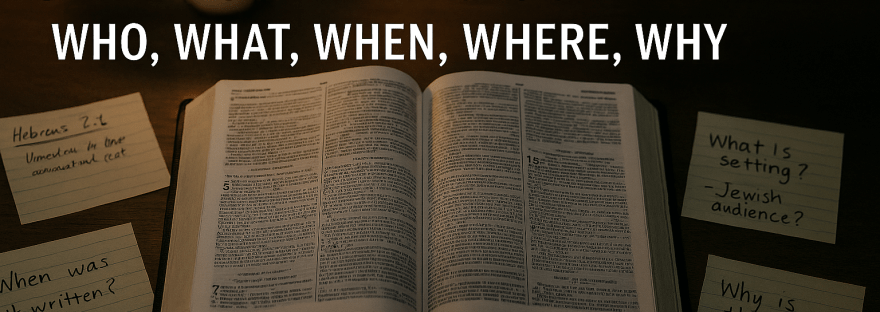
🧭 Ask the Right Questions

  • Who is speaking? Who is being addressed?
  • What is happening in the story or letter?
  • When in redemptive history is this taking place?
  • Where is the setting: Israel? Babylon? The early Church?
  • Why was this written? What prompted it?

These questions don’t complicate Scripture—they clarify it. And they help keep us from projecting our own ideas into the text.


Context Guards Truth

“You are mistaken, not understanding the Scriptures nor the power of God.”
Matthew 22:29, NASB1995

Jesus rebuked those who misapplied Scripture because they misunderstood its context. The same danger exists today.

Misunderstanding Scripture leads to misrepresenting God. It opens the door to false doctrines, misplaced hope, and corrupted worship. The Holy Spirit, who authored the Word, does not confuse His message. He leads us to truth when we seek it in context.


Closing Thought

Reading in context is not a scholarly burden—it is a spiritual act of worship. When we care about what God meant, not just what we want it to say, we honor His voice. The Bereans modeled this well, and the early Church held fast to it under persecution, pressure, and pretense.

Let us read with reverence. Let us ask the hard questions. And let us yield to the Holy Spirit who helps us rightly handle the Word of Truth.

2–3 minutes

Leave a comment

Biblical Interpretation, Kingdom Discipleship

The Example of the Bereans — Testing All Things by the Word

How to Read the Bible Series

You’ve heard the message before.
A respected teacher, a moving sermon, a popular quote—sometimes repeated so often it feels like Scripture itself. But something unsettles your spirit. You don’t reject it outright, but you also can’t move on. You open your Bible, eyes scanning the text—not to be combative, but to be faithful. That’s the posture of the Bereans.

In a world full of noise, the Bereans teach us how to listen. They show us how to search—not for confirmation bias, but for truth. In Acts 17:11, their approach is honored by the Holy Spirit as “more noble-minded.” Why? Because they searched the Scriptures daily to see if what Paul said was true.


Scripture Focus:

“Now these were more noble-minded than those in Thessalonica, for they received the word with great eagerness, examining the Scriptures daily to see whether these things were so.”
Acts 17:11, NASB1995


Noble-Minded: Humble, Not Gullible

The Bereans weren’t suspicious; they were eager. They wanted truth. But they also understood that truth must be tested. They didn’t elevate Paul’s reputation or passion over the written Word. They weighed every teaching against what God had already spoken. That’s humility. That’s nobility.

And unlike modern approaches that rely on theological labels or commentaries, the Bereans didn’t have creeds, councils, or catechisms. They had the Scriptures—and they had the Spirit.


They Searched Daily

This wasn’t a surface reading or proof-texting session. The Greek term anakrinontes implies a careful, judicial inquiry—testing evidence, like a courtroom. They examined the Scriptures every day, not because they were uncertain of God, but because they wanted to be certain they were following Him. That level of discernment is not suspicion—it’s devotion.


Scripture Above All

If the Bereans tested Paul—an apostle who performed miracles and was personally commissioned by Christ—should we not test every preacher, author, and influencer today?

Even Jesus rebuked religious leaders for not knowing the Scriptures (Matthew 22:29). The early Church never placed man’s words above God’s. For them, Scripture wasn’t just a guide—it was the authority. And it still is.


Fruit of Berean Faithfulness

“Therefore many of them believed…” — Acts 17:12

Notice the fruit: belief. Not skepticism, not endless debate—but genuine, Spirit-born faith. Truth examined led to truth embraced.


What This Means for Us Today

  • Don’t treat Scripture like a filter; treat it like a foundation.
  • Don’t elevate personality over truth.
  • Don’t accept or reject based on tradition—test it all.
  • And don’t stop searching. The Holy Spirit loves to reveal what He has already spoken.

Return to the Word. Return to Discernment.

The Bereans weren’t exceptional because they had more access or intelligence. They were exceptional because they were faithful. Their nobility wasn’t in status—it was in submission to Scripture. This is how the early Church stayed grounded. This is how the remnant remains faithful today.

Be a Berean. Test everything. Cling to truth. And let the Spirit illuminate the Word—daily.

2–3 minutes

Leave a comment

Biblical Interpretation, Kingdom Discipleship

The Role of the Holy Spirit in Reading Scripture

How to Read the Bible Series

You open your Bible, and the words lie before you.
But without the Author beside you, the meaning remains hidden. The Word is alive (Hebrews 4:12), yet it breathes only when the Spirit breathes into us. Many read the Bible as information; few read it as revelation. The early Church knew the difference—and their lives reflected it.

The Ante-Nicene believers didn’t read Scripture through systems. They weren’t led by councils or creeds. They were led by the Spirit of Truth. The Bereans searched daily, but they did not search alone. The Spirit was their Teacher—and He must be ours.


Scripture Focus:

“But when He, the Spirit of truth, comes, He will guide you into all the truth…”
John 16:13, NASB1995


The Spirit Is the Teacher

The Lord never left His people with a book and no Guide. Jesus promised that the Spirit would lead us into all truth—not through mystical experiences, but through the Word He authored. As Paul wrote:

“We have received… the Spirit who is from God, so that we may know the things freely given to us by God.”
1 Corinthians 2:12

The Spirit does not give new revelation but illumines what has already been given. He opens our eyes to behold (Psalm 119:18), convicts us of truth, and teaches with clarity. No theologian or denomination can replace His voice.


The Anointing That Abides

“You have no need for anyone to teach you… but His anointing teaches you about all things…”
1 John 2:27

This doesn’t reject godly teachers—it rejects dependence on man. The Bereans didn’t check with Paul’s résumé; they tested his message with Scripture, led by the Spirit. The early Church walked in the same pattern, trusting the Spirit’s conviction above the authority of men.


The Spirit Knows the Mind of God

He is not merely a Helper; He is God. He searches the deep things of God (1 Corinthians 2:10–11), and He helps us pray, read, and discern according to the will of the Father (Romans 8:27). When we read Scripture with the Spirit, we’re not just gathering knowledge—we are encountering the very thoughts of God.


The Spirit and the Word Are One

“The words that I have spoken to you are spirit and are life.”
John 6:63

The Holy Spirit will never contradict the written Word because He authored it. If a “revelation” or interpretation conflicts with Scripture, it is not from the Spirit. The Spirit always leads us back to Jesus, the Word made flesh, and He always glorifies the Father through obedience and truth.


Walking in Spirit-Led Reading

  • Pray before reading. Invite the Spirit to teach, correct, and reveal.
  • Read with surrender. Revelation follows obedience (John 7:17).
  • Let Scripture interpret Scripture. The Spirit wrote a unified message.
  • Test all things. Even beloved teachings must align with the Spirit’s Word.

Return to the Spirit. Return to Illumination.

We do not open the Bible to master it—we open it to be mastered by Christ through the Spirit. The early Church knew this. They did not walk by the traditions of men but by the illumination of the Holy Spirit through the Scriptures.

Let us walk as they walked. Let us read with the Author as our Teacher.

Return to the Word. Return to the Spirit. And find truth that transforms.


2–3 minutes

Leave a comment