Kingdom Discipleship, The Whole Counsel of God

Man-Made Systems vs. Apostolic Simplicity

From the Series: The Gospel According to the Whole Counsel of God

“Beware lest anyone cheat you through philosophy and empty deceit, according to the tradition of men, according to the basic principles of the world, and not according to Christ.”
—Colossians 2:8 (NKJV)

From the beginning, the gospel was a simple and powerful message: Christ died for our sins, was buried, and rose again the third day (1 Corinthians 15:3–4). This was the truth preached by the apostles, believed by the early Church, and confirmed by the Spirit. Yet, as time passed, men began to surround this message with philosophies, traditions, and systems that complicated what God had made plain.

The apostles were clear: anything that shifts the focus away from Christ alone is a danger to the soul. Paul’s warning in Colossians 2:8 echoes through history, reminding us that clever frameworks, whether ancient or modern, cannot replace the living Word of God.

Apostolic Simplicity

The gospel is not bound in riddles. It is not hidden in secret decrees or reserved for the intellectual. Jesus said that unless we become like little children, we will by no means enter the kingdom of heaven (Matthew 18:3). The message is clear enough for the humble and dependent heart.

The apostles lived this simplicity. They prayed, they taught the Scriptures, they broke bread together, and they proclaimed Christ crucified and risen. Their power was not in systems of thought but in the Spirit and truth.

The Witness of the Early Church

The Ante-Nicene believers followed this same path. They had no elaborate frameworks to explain away God’s promises or to restrict His call. They lived by faith, walked in holiness, and loved one another with sincerity. Their writings urge us again and again to hold fast to “the rule of faith”—Christ Himself as revealed in Scripture.

Irenaeus warned of those who twisted Scripture with elaborate ideas and philosophies, while the true Church held fast to the apostolic teaching. Tertullian mocked the philosophers of Rome who prided themselves on speculation while missing the truth plainly revealed in Christ.

Their strength lay in simplicity. They knew the gospel, they clung to the Scriptures, and they trusted the Spirit to guide them.

Returning to the Foundation

The Church in every age must resist the temptation to replace God’s revelation with man’s reasoning. Systems and philosophies may appear wise, but they cannot save. The simplicity of Christ is enough.

As Paul wrote to the Corinthians, “I determined not to know anything among you except Jesus Christ and Him crucified” (1 Corinthians 2:2). That simplicity remains the foundation for true faith.


Reflection Questions

  1. How does Colossians 2:8 challenge the pull of man-made philosophies and systems today?
  2. What does it mean to return to “apostolic simplicity” in your faith and practice?
  3. How can the example of the Ante-Nicene Church encourage you to trust more fully in Scripture and the Spirit?

Closing Prayer

Lord, guard my heart from being led astray by human systems and philosophies. Keep me anchored in the simplicity of Christ and the truth of Your Word. Thank You for the witness of the early believers who clung to apostolic teaching and endured with faith. Help me to walk in that same simplicity, trusting in Christ alone. Amen.

Kingdom Discipleship, The Whole Counsel of God

Perseverance: God’s Keeping and Our Faithfulness

From the Series: The Gospel According to the Whole Counsel of God

“My sheep hear My voice, and I know them, and they follow Me. And I give them eternal life, and they shall never perish; neither shall anyone snatch them out of My hand.”
—John 10:27–28 (NKJV)

The promise of Christ is certain: those who belong to Him are secure in His hand. Yet Scripture also contains sober warnings not to drift, not to harden our hearts, and not to turn away. The balance is clear. God is faithful to keep His people, and His people are called to abide in Christ.

Paul expressed this assurance when he wrote, “He who has begun a good work in you will complete it until the day of Jesus Christ” (Philippians 1:6). At the same time, the writer of Hebrews warned that those who have tasted the heavenly gift and then fall away face severe consequences (Hebrews 6:4–6). Both truths stand side by side: the keeping power of God and the responsibility of man to continue in faith.

The Call to Continue

Peter urged believers to make their calling and election sure by adding to their faith virtue, knowledge, self-control, perseverance, godliness, brotherly kindness, and love (2 Peter 1:5–10). His words remind us that assurance is not passive. We are called to walk daily in the faith we have received, pressing on in obedience and trust.

Jesus Himself told His disciples, “Abide in Me, and I in you” (John 15:4). Perseverance is not merely a doctrine; it is a relationship of ongoing dependence on Christ.

The Witness of the Early Church

Irenaeus, writing in the second century, emphasized the need for believers to remain faithful to the apostolic teaching. He warned that those who departed from the truth were deceived by human inventions and empty words. For the early Church, perseverance was not an abstract idea—it was a lived reality. To follow Christ in their day often meant facing ridicule, loss of property, imprisonment, or even death.

Their endurance was not in their own strength but in their confidence that Christ would never leave them nor forsake them. And their warnings against falling away were urgent, reminding all believers to continue steadfastly in prayer, holiness, and love.

The Balance of Promise and Warning

God’s Word gives both the comfort of His keeping and the caution of His warnings. Together they teach us that true assurance is found in Christ as we remain in Him. We need not fear being abandoned, for He holds us securely. Yet we dare not grow careless, for Scripture calls us to faithfulness.

The promise and the warning work hand in hand, leading us to a living perseverance that is both confident and vigilant.


Reflection Questions

  1. How do John 10:27–28 and Hebrews 6:4–6 together give us a balanced view of perseverance?
  2. What does it mean in your daily life to “abide in Christ”?
  3. How does the example of the early Church encourage you to remain steadfast under pressure or trial?

Closing Prayer

Lord, thank You that You are faithful to keep those who are Yours. Thank You for the promise that no one can snatch us from Your hand. Keep me watchful and humble, abiding in Christ each day. Help me to follow the example of the early believers who endured with faith and courage. Strengthen me to persevere to the end, not by my own strength, but by Your keeping power. Amen.

Kingdom Discipleship, The Whole Counsel of God

The Gospel’s Power to Save All Who Believe

From the Series: The Gospel According to the Whole Counsel of God

“For I am not ashamed of the gospel of Christ, for it is the power of God to salvation for everyone who believes, for the Jew first and also for the Greek.”
—Romans 1:16 (NKJV)

The gospel is not an idea, not a philosophy, and not a system. It is the power of God to save all who believe. When Paul wrote to the Romans, he declared with boldness that the gospel reaches Jew and Gentile alike. Its scope is as wide as the world, and its power is as deep as the human heart.

Faith is always at the center. Paul writes that the righteousness of God is revealed “from faith to faith” (Romans 1:17). Salvation is not imposed; it is received through believing. The Word is near, in our mouth and in our heart, and with confession and belief comes salvation (Romans 10:8–10).

The Necessity of Hearing

The gospel must be proclaimed, and people must hear it in order to believe. “How shall they believe in Him of whom they have not heard? And how shall they hear without a preacher?” (Romans 10:14). God has entrusted His people with this message so that the world might be confronted with the truth of Christ’s death and resurrection.

At Pentecost, when Peter preached, the people were “cut to the heart” (Acts 2:37). The gospel pierced them, and the Spirit confirmed the truth. Some believed, others resisted, but the power was in the Word proclaimed.

The Witness of the Early Church

Tertullian, one of the bold voices of the second century, understood this power well. Writing to the Roman authorities who mocked the Christians, he said, “The blood of the martyrs is the seed of the Church.” Rome wielded the sword, but it could not silence the gospel. The more they tried to destroy it, the more it spread.

The early believers had no armies, no wealth, and no political power. What they had was the Word of God and the Spirit of God—and this was enough to overturn an empire. They did not rely on systems of men but on the gospel itself, and it proved to be the power of God to salvation.

The Gospel’s Power for You

The same gospel that saved men and women in the first century still saves today. It is not weakened by time or opposition. It is not dependent on culture, intellect, or position. It is the simple truth of Christ crucified and risen, proclaimed to all, and received by faith.

If you have believed, then you have tasted its power firsthand. And if you have not yet believed, the same Word that cut hearts at Pentecost can cut yours today.


Reflection Questions

  1. Why is it important to remember that the gospel itself—not human systems—carries the power of salvation?
  2. How does Romans 10 remind us of the responsibility we have to share the gospel?
  3. What can Tertullian’s testimony about persecution teach us about the unstoppable power of the gospel?

Closing Prayer

Father, thank You that the gospel is Your power to save all who believe. Thank You that it reached me and that it still reaches hearts today. Strengthen me not to be ashamed of this message but to proclaim it with boldness, as the early believers did. Let me trust in Your Word, not in the systems of men, and may my life reflect the transforming power of the gospel. Amen.

Kingdom Discipleship, The Whole Counsel of God

The Spirit’s Work in Conviction and New Birth

From the Series: The Gospel According to the Whole Counsel of God

“And when He has come, He will convict the world of sin, and of righteousness, and of judgment.”
—John 16:8 (NKJV)

The work of salvation does not rest in human wisdom or effort. It is the Spirit of God who opens blind eyes, convicts hearts, and gives new life. Jesus promised His disciples that the Spirit would come to guide them into truth, glorify Christ, and testify of Him (John 15:26; 16:13–14).

From the beginning, salvation has been Spirit-wrought. Titus writes that we are saved not by works of righteousness which we have done, but by the washing of regeneration and renewing of the Holy Spirit (Titus 3:5). Peter adds that we are born again through the living and abiding Word of God (1 Peter 1:23). The Spirit never bypasses the Word; He works through it, making it alive in the hearts of those who hear.

Conviction, Not Coercion

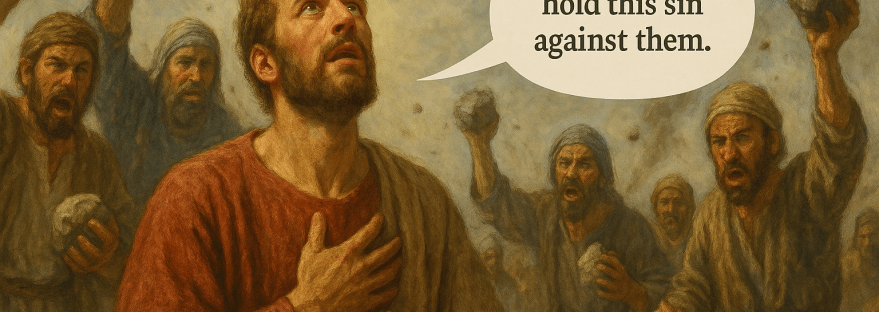
The Spirit convicts, but He does not coerce. We see in Acts 7:51 that Stephen rebuked the Sanhedrin for always resisting the Holy Spirit. This means that God’s Spirit deals with men, calls them, pricks their hearts (Acts 2:37), and yet they may resist Him. The Spirit does not override human responsibility but works to bring sinners face to face with truth.

This reality destroys the idea that salvation is mechanical or forced. The Spirit is not an impersonal power that sweeps men irresistibly into the kingdom. He is the living God, working personally in hearts, illuminating Christ, and calling people to repentance and faith.

The Witness of the Early Church

The early believers knew the Spirit’s presence firsthand. Tertullian, writing in the late second century, spoke of the Spirit as the One who empowered Christians to stand firm under persecution and to live holy lives. Their strength was not in clever reasoning but in the Spirit’s comfort and courage.

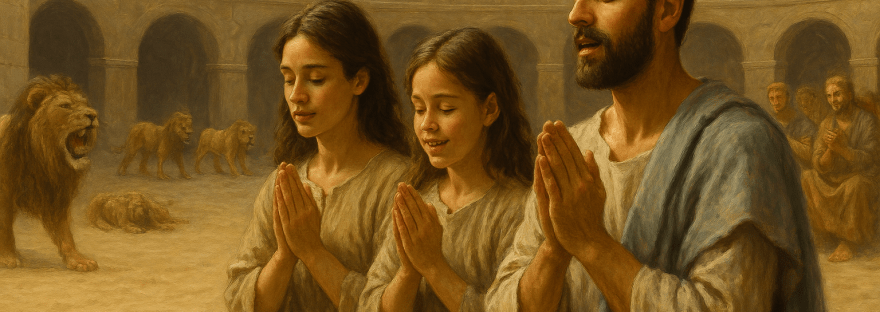
When martyrs faced wild beasts in the arenas, it was the Spirit who gave them peace. When ordinary men and women turned from idols to serve the living God, it was the Spirit who had pricked their conscience and drawn them to Christ.

The Spirit’s Work in You

The Spirit has not changed. He still convicts the world of sin, righteousness, and judgment. He still shines the light of Christ into the hearts of sinners. He still regenerates and renews those who respond to God’s call.

If you are in Christ, it is because the Spirit opened your eyes and heart to the truth. And if you are still uncertain, the Spirit is at work even now—calling you to believe, to turn, and to live.

“The Spirit Himself bears witness with our spirit that we are children of God.” (Romans 8:16)


Reflection Questions

  1. How have you experienced the Spirit’s conviction of sin, righteousness, or judgment in your own life?
  2. Why is it important to remember that the Spirit convicts but does not coerce?
  3. What can the courage of the early Church teach you about relying on the Spirit in daily life?

Closing Prayer

Holy Spirit, thank You for convicting me of sin and leading me to Christ. Thank You for bringing new birth through the Word of God. Keep me tender to Your voice, and strengthen me to walk in truth as the early believers did. May my life testify of Christ, and may I never resist Your work in me. Amen.

Kingdom Discipleship, The Whole Counsel of God

Christ: The Word Made Flesh for All

From the Series: The Gospel According to the Whole Counsel of God

“And the Word became flesh and dwelt among us, and we beheld His glory, the glory as of the only begotten of the Father, full of grace and truth.”
—John 1:14 (NKJV)

When God revealed His plan of salvation, He did not do so through an idea, a philosophy, or a hidden decree. He revealed it in a Person. The eternal Word, who was with God and was God (John 1:1), became flesh and walked among us. In Jesus Christ, the fullness of God’s heart was displayed, and the door of salvation was opened wide to the world.

The apostle John wrote that Jesus is the atoning sacrifice not for our sins only, but also for the whole world (1 John 2:2). The writer of Hebrews declares that Christ tasted death for everyone (Hebrews 2:9). Paul affirms that God reconciled the world to Himself in Christ, not imputing their trespasses against them (2 Corinthians 5:19). Scripture never narrows the reach of the cross. Instead, it magnifies the sufficiency of Christ’s sacrifice for all who will believe.

An Open Invitation

Throughout His ministry, Jesus invited people from every background to come to Him. “Come to Me, all you who labor and are heavy laden, and I will give you rest” (Matthew 11:28). On the last day of the feast in Jerusalem, He cried out, “If anyone thirsts, let him come to Me and drink” (John 7:37).

His words leave no room for exclusion. The gospel call is not a whisper for the few but a shout for the nations. Whoever comes to Christ by faith will not be cast out (John 6:37).

The Witness of the Early Church

Polycarp of Smyrna, a disciple of the apostle John, wrote to the Philippians, urging them to remain steadfast in Christ. His letter reflects the same open gospel we see in Scripture: a call to faith, repentance, and perseverance. He reminded them that Jesus bore our sins in His own body on the tree and that those who believe in Him shall live forever.

The early Church did not preach a narrow salvation. Under persecution and hardship, they proclaimed a gospel that could reach every slave, soldier, merchant, widow, and child. Their confidence was not in a system but in the Savior who died and rose again for the whole world.

The Word Made Flesh for You

The incarnation of Christ is God’s testimony that He desires to be known. He drew near, clothed Himself in human flesh, and walked among us so that no one could say, “God is too far off, too hidden, too unreachable.” In Jesus, we see the Father’s glory, His compassion, and His truth revealed.

If Christ is the atonement for the whole world, then He is sufficient for you. His invitation is open, His call is clear: Come, believe, and live.


Reflection Questions

  1. How does the truth that Jesus died for the whole world shape the way you see God’s love for you personally?
  2. What do Christ’s open invitations (“Come to Me, all…” and “If anyone thirsts…”) reveal about His heart?
  3. How might the testimony of Polycarp and the early believers encourage you to trust Christ more fully?

Closing Prayer

Lord Jesus, thank You for coming in the flesh to reveal the Father’s heart. Thank You for dying not for a few, but for the world, and for inviting all who are weary to find rest in You. Help me to believe Your words without doubt and to share Your open invitation with others. Strengthen me, as You did the early believers, to stand firm in the truth that You are the Savior of all who will come. Amen.

Kingdom Discipleship, The Whole Counsel of God

The Father’s Heart: Salvation Purposed Before Time

From the Series: The Gospel According to the Whole Counsel of God

“Blessed be the God and Father of our Lord Jesus Christ, who has blessed us with every spiritual blessing in the heavenly places in Christ.”
—Ephesians 1:3 (NKJV)

From the opening of Scripture to the final pages of Revelation, God’s heart for redemption is not hidden. He is not a God of confusion or secrecy, but of revelation and truth. He has spoken plainly through His Word so that we might know Him, trust Him, and walk with Him.

Paul writes that before the foundation of the world, God purposed salvation in Christ (Ephesians 1:4–6). Peter reminds us that Christ, the spotless Lamb, was foreordained before time began, but made manifest in these last times for us (1 Peter 1:18–21). This is not a hidden plan known only to a few. It is the very heart of God revealed for all to see in His Son.

Scripture could not be clearer: God desires all men to be saved and to come to the knowledge of the truth (1 Timothy 2:3–4). He is not willing that any should perish, but that all should come to repentance (2 Peter 3:9). These verses pull back the curtain on God’s will. His heart is wide, His invitation is open, and His grace is sufficient for every sinner who will turn and believe.

Not Hidden in Philosophy or Systems

From the earliest days, men have been tempted to reduce the mystery of God into philosophies, categories, or systems. The apostle Paul warned against being taken captive through philosophy and empty deceit, according to the tradition of men, and not according to Christ (Colossians 2:8). When we replace God’s living Word with a framework of our own making, we end up with something less than truth.

The Scriptures do not give us a closed circle of logic. They give us a living Savior who reveals the Father. Jesus Himself said, “He who has seen Me has seen the Father” (John 14:9). If we want to know God’s will and heart, we look to Christ, not to the cleverness of men.

The Witness of the Early Church

The first generations of believers knew this well. Clement of Rome, writing to the Corinthians near the end of the first century, called the church back to faith and obedience. His appeal was simple: return to the humility, repentance, and love that Christ and the apostles had taught. He did not appeal to speculation or hidden decrees, but to the revealed truth of Scripture and the example of Christ.

The Ante-Nicene Church flourished under persecution because they clung to this simplicity. They trusted that God’s promises were true for all who believed. They proclaimed the gospel freely, knowing that anyone who heard and repented could be saved.

God’s Heart for You

The Father’s plan of salvation is not something you must puzzle out through human reasoning. It is revealed in Christ and illuminated by the Spirit. The question is not whether you are counted in some hidden decree, but whether you have heard His voice and believed His Son.

“Most assuredly, I say to you, he who hears My word and believes in Him who sent Me has everlasting life, and shall not come into judgment, but has passed from death into life.” (John 5:24)

This is the promise of God: eternal life in Christ for all who believe. It was His plan before time began, revealed in His Word, and testified to by the earliest believers. It is His heart toward you today.


Reflection Questions

  1. When you think about God’s eternal plan, do you picture it as hidden and exclusive, or revealed and open through Christ?
  2. How do the Scriptures we read today shape your view of God’s heart toward the lost?
  3. What keeps you from resting fully in the simplicity of God’s revealed Word instead of human systems?

Closing Prayer

Father, thank You for revealing Your heart through Christ. Thank You that Your desire is for all to be saved and that You have made the way clear in Your Word. Keep me from being distracted by the systems of men, and help me to hold fast to the truth that You have shown. May my life reflect the same faith and obedience that the early believers lived out, and may I rest in Your promise of salvation through Christ alone. Amen.

Biblical Interpretation, Kingdom Discipleship

Returning to the Early Church — Reading with Obedient Faith

How to Read the Bible Series

The early Church didn’t just study the Word—they lived it.
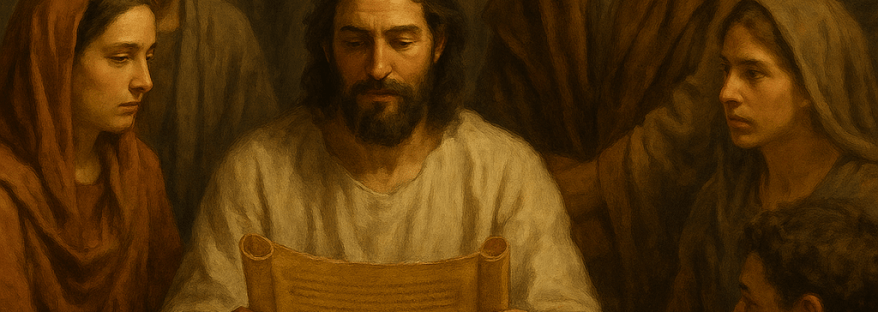
Long before creeds were formalized or theology was debated in ivory towers, believers gathered in homes with open scrolls and open hearts. They read to obey. They heard to follow. They studied not to speculate, but to surrender.

Today, much of modern Christianity reads Scripture for insight but not instruction—for debate, not discipleship. But the early believers, especially those in the Ante-Nicene period, show us a better way: the way of obedient faith.


Scripture Focus:

“But prove yourselves doers of the word, and not merely hearers who delude themselves.”
James 1:22, NASB1995


They Didn’t Just Know the Word—They Followed It

The early Church took Jesus at His Word. When He said, “Love your enemies,” they did. When He said, “Sell your possessions,” many did. When He said, “Take up your cross,” they carried it to death.

They didn’t look for loopholes or allegories. They read literally what Jesus commanded and built their lives around it. That’s not legalism—it’s love.


Faithful Obedience Over Doctrinal Complexity

These early believers weren’t systematic theologians. But they were faithful:

  • They forgave freely
  • They cared for orphans and widows
  • They rejected worldliness
  • They embraced suffering with joy

They didn’t always use the words we use today—but they walked in the truth of Scripture, led by the Spirit and grounded in love.


Reading to Live, Not Just to Learn

Too often, we approach the Bible as scholars rather than disciples. We underline and debate—but fail to obey. The early Church didn’t have commentaries or academic credentials. They had the Holy Spirit, the Word of God, and a willingness to follow Christ at all cost.

And the world saw their love—and believed (John 13:35).


How We Return to Their Way

  • Read slowly, letting Scripture examine you
  • Obey the commands of Christ, not just admire them
  • Choose faithfulness over intellectual pride
  • Be willing to suffer for truth
  • Let the Spirit convict, correct, and conform you to Christ

Let the Word Form Your Life

The Bible is not just a book to be studied—it’s a sword to pierce, a mirror to reveal, a lamp to guide, and a voice to follow. The early Church knew this. That’s why their faith shook the world.

Return to the Word—not just with your mind, but with your whole heart. Read it to obey. Read it to follow Jesus. And read it like the early Church—devoted, surrendered, and unshakably faithful.

2–3 minutes

Leave a comment

Biblical Interpretation, Kingdom Discipleship

Trusting the Holy Spirit — Our Teacher and Interpreter

How to Read the Bible Series

The Bible was written by the Spirit—and must be read by the Spirit.
Too often, believers are taught to depend on scholars, pastors, or historical frameworks to understand Scripture. But while godly teaching is valuable, it is not the source of truth. The Author of Scripture is the One who teaches it best. The Holy Spirit is not a background figure in Bible reading—He is the divine Interpreter.

The Bereans didn’t just search the Scriptures—they did so prayerfully, humbly, and under the guidance of the Spirit. The early Church didn’t lean on seminary systems or institutional approval. They trusted the Spirit to guide them into truth—as Jesus promised He would.


Scripture Focus:

“But when He, the Spirit of truth, comes, He will guide you into all the truth…”
John 16:13, NASB1995


The Spirit Is the True Teacher

Human teachers can help. But only the Holy Spirit reveals truth in a way that transforms the heart. Jesus said the Spirit would:

  • Teach all things (John 14:26)
  • Guide into all truth (John 16:13)
  • Disclose what is to come (John 16:14)

The Spirit knows the mind of God (1 Corinthians 2:10–12). No one else can claim that.


You Have the Anointing

“You have no need for anyone to teach you; but as His anointing teaches you about all things…”
1 John 2:27

This isn’t a rejection of fellowship or learning—it’s a reminder that the Spirit Himself teaches every believer. The early Christians relied on this. They didn’t have study Bibles or commentaries. They had the Word and the Spirit—and it was enough.


Why This Matters Today

  • Many read through the lens of tradition, not truth
  • Some fear they can’t understand without formal education
  • Others rely more on their pastor’s sermon than on the Spirit’s voice

But Jesus promised the Spirit would teach us. God is not hiding truth from His people. He delights to reveal it to those who ask (Luke 11:13).


How the Early Church Was Taught

The Ante-Nicene believers lived by the Spirit. They didn’t dissect the Word with systems—they obeyed it with hearts yielded to the Spirit. They viewed the Spirit as:

  • The Giver of understanding
  • The Power to obey
  • The Unifier of the body
  • The Guardian of truth

When heresies arose, it was those anchored in the Spirit and Scripture who stood firm.


Return to the Spirit. Read with Him Beside You.

The Holy Spirit is not a theological concept. He is your Guide, your Comforter, your Teacher. To open the Bible without Him is to miss the voice of its Author.

So ask. Invite Him. Trust Him. And let Him teach you as He taught the early Church—through the living Word, into transforming truth.

2–3 minutes

Leave a comment

Kingdom Discipleship, The Six Solas

This Ancient Path — A Call to Return to the Faith Once Delivered

“Thus says the Lord, ‘Stand by the ways and see and ask for the ancient paths, where the good way is, and walk in it; and you will find rest for your souls.’”
— Jeremiah 6:16 (NASB1995)


Returning to the Roots

We’ve walked through the Six Solas—not as distant doctrines, but as living truths anchored in Scripture and embodied by the early Church.

From the days of Pentecost through the fires of persecution, the Ante-Nicene believers lived with unwavering devotion:

  • Rooted in Sola Scriptura—holding fast to God’s Word alone
  • Empowered by Solo Spiritu Sancto—taught and led by the Spirit
  • Redeemed by Sola Gratia—transformed by grace, not license
  • Faithful through Sola Fide—a faith proven in obedience and endurance
  • Centered on Solus Christus—Christ alone, without mediators or politics
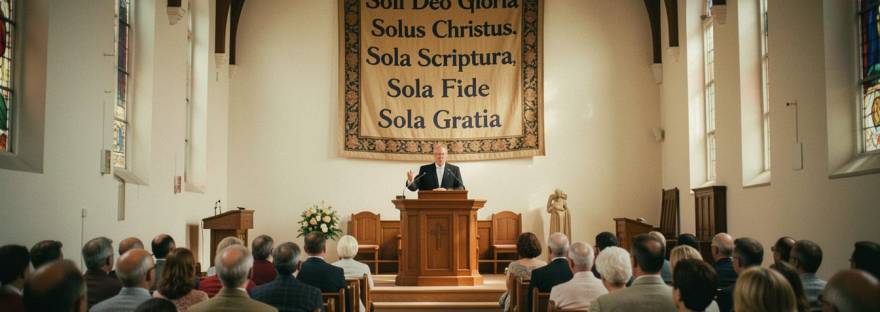
  • Living for Soli Deo Gloria—in life, death, and every ordinary moment

This wasn’t theory for them. It was Kingdom reality.

And it can be ours too.


The Church Before the Systems

Before councils. Before creeds. Before theology became divided by men.

There was a Church that:

  • Feared God more than Caesar
  • Knew the Word by heart
  • Followed the Spirit without apology
  • Loved one another with sacrificial joy
  • Rejected the world’s approval
  • Refused to compromise Christ

They were unknown on earth, but honored in heaven.

They had no denominations. No seminaries. No political clout.
Yet the gates of hell could not prevail against them.


A Call to Us Today

This series was never about information—it was always about invitation.

To return.
To rebuild.
To resist what is man-made.
To rediscover what is Spirit-led.

To ask:

“Is my faith shaped by the Word and Spirit—or by the systems of man?”
“Is Christ central in my life—or simply included?”
“Does my life glorify God—or merely reflect religious culture?”


Walk the Ancient Path

This is a call to:

  • Open your Bible and believe it as written
  • Invite the Holy Spirit to be your teacher, not your backup
  • Let grace train you—not excuse you
  • Walk in faith that obeys and endures
  • Exalt Christ—not platforms or personalities
  • Live to glorify God in the hidden places, not just the public ones

The early Church walked this path.
So must we.

“Beloved, while I was making every effort to write you about our common salvation, I felt the necessity to write to you appealing that you contend earnestly for the faith which was once for all handed down to the saints.”
— Jude 3


Kingdom Discipleship Reflection

  • Which of the Six Solas challenged me most? Why?
  • How am I living differently because of what I’ve seen in Scripture and the early Church?
  • What systems, assumptions, or comforts is the Spirit asking me to lay down?

This week, go before the Lord with empty hands and a ready heart. Ask:

“Lord, lead me back to what is true, pure, and eternal. Show me how to live the faith once delivered, by the power of Your Spirit.”

Let the ancient path become your daily walk.

“Now to the King eternal, immortal, invisible, the only God, be honor and glory forever and ever. Amen.”
— 1 Timothy 1:17

2–3 minutes

Leave a comment

Kingdom Discipleship, The Six Solas

Soli Deo Gloria – Part 3: Living Daily for the Glory of God

“Whether, then, you eat or drink or whatever you do, do all to the glory of God.”
— 1 Corinthians 10:31 (NASB1995)


Worship Beyond the Walls

Glorifying God isn’t limited to Sunday worship or public prayer. For the early Church, every part of life was an offering:

  • Labor done with integrity
  • Meals shared with thankfulness
  • Persecution endured with joy
  • Relationships marked by purity and love

Their daily lives echoed a single aim: Soli Deo Gloria—to God alone be the glory.

“We glorify God not only when we speak, but when we suffer, work, give, and forgive.”
Tertullian, c. AD 200


Faithfulness in the Ordinary

The Ante-Nicene Christians glorified God by how they:

  • Worked with honesty and diligence
  • Refused to cut corners or join corrupt guilds
  • Respected masters and rulers—even unjust ones
  • Raised children in holiness
  • Loved their neighbors and enemies alike

They weren’t seeking attention. They were seeking to reflect Christ.

Their daily obedience made the invisible God visible.

“Our way of life is our testimony. We are His image in the world. Let us reflect His glory with humility.”
The Epistle to Diognetus, c. AD 130


Glorifying God in Suffering

One of the most powerful ways the early Church glorified God was through suffering with joy:

  • They forgave those who tortured them
  • They sang in prison and praised in death
  • They counted it an honor to suffer for His name

“They glorify God with their blood, as others do with their lips.”
The Martyrdom of Polycarp, c. AD 155

Their courage wasn’t self-made. It came from knowing that Christ had already won. Their suffering was not wasted—it was worship.


Whole-Life Worship

Today, we must ask: is our faith confined to services and sayings, or does it shape our daily living?

To glorify God is to:

  • Speak truth in love
  • Honor Him in your thoughts and motives
  • Choose holiness over popularity
  • Love sacrificially
  • Serve humbly and faithfully—when no one sees

The early Church lived as if everything belonged to God—because it did.


Kingdom Discipleship Reflection

  • Is the glory of God the goal of my decisions, actions, and relationships?
  • Do I glorify God in secret, or only when others are watching?
  • Does my work, speech, family life, and endurance reflect His goodness?

This week, reflect on 1 Peter 4:11–14 and Romans 12:1–2. Ask:

“Lord, how can I glorify You today—in the small things, the hard things, and the unseen things?”

Then live it out.

“Let your light shine before men in such a way that they may see your good works, and glorify your Father who is in heaven.”
— Matthew 5:16

2–3 minutes

Leave a comment