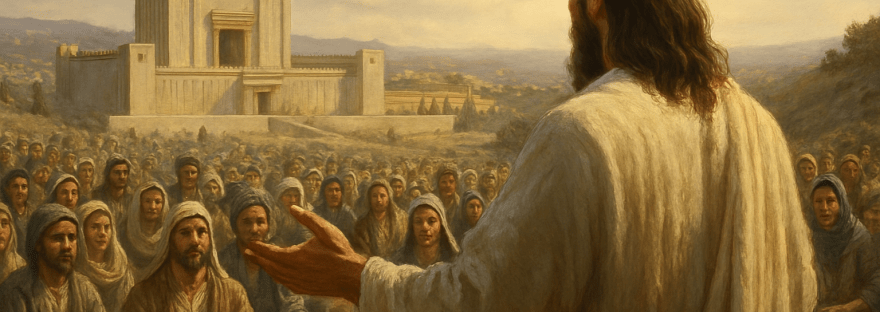
📖 “You call Me Teacher and Lord, and you say well, for so I am.” —John 13:13 (NKJV)
Jesus is the perfect Teacher. He not only spoke truth, but He also lived it. When He taught His disciples, He showed them how to love, serve, forgive, and obey God. His words and His actions matched perfectly.
In a family, learning from Jesus means making His Word the guide for daily life. When families read the Bible together, talk about what it means, and apply it to their choices, they are learning directly from Him. His teaching brings clarity, wisdom, and direction.
Parents help lead the way by showing what it looks like to follow Christ’s teaching. When children see adults listening to God’s Word and living it out, they learn that Jesus is not just a teacher to hear, but one to follow.
Learning from Jesus also means being willing to grow. Sometimes His teaching corrects us or shows us a better way. When families respond with humility and obedience, they grow stronger in faith together.
Knowing Christ as a family means sitting under His teaching every day. As each member listens, learns, and follows, the home becomes a place where truth is lived and faith continues to grow.
Prayer: Jesus, thank You for being our Teacher. Help our family listen to Your Word and follow what You teach. Give us humble hearts that are willing to learn and grow together in You. Amen.
The Holy Spirit is neither a force nor a mere concept. He cannot be reduced to a feeling or regarded as a theological accessory to Christian life. Rather, the Holy Spirit is God, the third Person of the Trinity, eternal, holy, and present throughout every stage of redemptive history. He constitutes the very life of the Church. Without Him, the Church cannot exist.
Despite this, confusion about the Holy Spirit persists in many Christian communities. Some misunderstand His role, substituting His influence for intellectual theology or confining Him to emotional experiences lacking biblical grounding. Others nearly ignore Him altogether.
This was not the case in the early Church, where the role of the Spirit was both clear and central.
“In the beginning… the Spirit of God was hovering over the face of the waters.” — Genesis 1:2
From creation, the Holy Spirit was present: active, powerful, and creative. Throughout the Old Testament, He empowered judges, prophets, and kings. The prophets also anticipated a future time when the Spirit would be poured out on all people, regardless of age or status (Joel 2:28).
This promise was fulfilled on the day of Pentecost, marking a pivotal transition in redemptive history.
“You will receive power when the Holy Spirit has come upon you, and you will be My witnesses…” — Acts 1:8
The Church did not originate from a strategy meeting. Instead, its birth occurred during a prayer gathering, marked by the arrival of the Spirit. Tongues of fire rested upon the believers, who then spoke boldly and preached with conviction. Thousands responded in faith. The Holy Spirit accomplished what human effort could not: He imparted life to the Body of Christ.
From that day forward, the Holy Spirit filled believers with courage and joy. He provided strength and boldness amid persecution and uncertainty. He convicted hearts of sin and revealed truth. He opened eyes to God’s holiness and the necessity of repentance. The Spirit guided decisions and enabled the planting of churches. Through His wisdom, He shaped the direction of the early Christian movement. The Spirit spoke through ordinary individuals, empowering them to proclaim the gospel and minister beyond their natural abilities. He comforted the persecuted, offering solace and hope during suffering and trials. The Spirit led discipleship, mission, and unity, forming a community that demonstrated Christ’s love and purpose to the world. Early believers did not merely believe in the Spirit; they depended on Him. They lacked seminaries, creeds, or commentaries, but possessed Scripture, prayer, and the indwelling presence of God.
They didn’t ask: “What do the theologians say?” They asked:
“What is the Spirit saying to the churches?” — Revelation 2:7
Over the centuries, significant transitions occurred within church life. The Church increasingly prioritized hierarchy, tradition, and intellectual systems, often replacing the living voice of the Spirit. While doctrine was debated in councils, personal reliance on the Spirit frequently diminished.
This situation persists today. Some regard the Spirit merely as a theological label rather than as a present and active Person. Others reduce His role to mystical experiences that lack discernment, valuing experience over truth. Still others ignore Him entirely, prioritizing academic clarity or tradition above the Spirit’s living presence. A church without the Holy Spirit is comparable to a body without breath. Nevertheless, even in our shortcomings, God graciously invites us to return to Him. The Spirit is not distant, and God desires to renew His presence among us. Regardless of our past neglect or misunderstanding of the Spirit, He is ready to revive, restore, and guide us forward. As we seek Him, there is hope for spiritual renewal and growth both individually and collectively as Christ’s Church.
He is God, as affirmed in Acts 5:3–4, and shares in the divine nature of the Triune God. He is a Person, not a force or impersonal power, as described by Jesus in John 14:16–17. He is also identified as the Spirit of Truth (John 16:13), guiding believers into all truth and illuminating the Scriptures. The Holy Spirit teaches, guides, convicts, comforts, speaks, and empowers believers for life and ministry. He is the indwelling presence of Christ within each believer, as stated in Romans 8:9–11, making God’s life real and personal.
Our relationship with the Holy Spirit is intended to be dynamic, personal, and ongoing. Believers can cultivate this relationship through prayer, inviting the Spirit to guide their thoughts and decisions daily. Engaging with Scripture with an open heart and asking the Spirit to reveal truth and provide understanding draws us closer to Him. By listening during moments of quiet and remaining attentive to His promptings, we become more sensitive to His guidance. As we act in faith and obedience, the Spirit deepens our connection with God, bringing transformation, comfort, and strength. The Holy Spirit is neither distant nor abstract; He desires fellowship with us and seeks to make Christ known in our daily lives.
The Church cannot function authentically without the Holy Spirit, who is essential to its existence and purpose. We must come to know the Holy Spirit as a Person, not merely as an abstract idea or doctrine. The Spirit leads us into truth, never contradicting the Scriptures, and consistently confirms and illuminates the Word. We are commanded to walk by the Spirit, rather than by our own desires or intellect, and to entrust ourselves to His guidance daily.
How can we practice this daily? Begin with prayer, inviting the Spirit to guide, correct, and encourage you throughout the day. Engage with Scripture, asking the Spirit to open your understanding and apply truth to your life. Learn to listen during moments of quiet, allowing space for the Spirit to speak to your heart and conscience. When facing decisions, seek His wisdom and remain attentive to His promptings. Make it a consistent practice to pause and seek His presence, whether during routine tasks or new challenges. Through these practices, we grow in relationship with the Holy Spirit and learn to walk more closely by His guidance.
Select Scriptures:
“Now the Lord is the Spirit; and where the Spirit of the Lord is, there is liberty.” (2 Corinthians 3:17)
“And the Spirit of God was hovering over the face of the waters.” (Genesis 1:2)
“And it shall come to pass afterward that I will pour out My Spirit on all flesh…” (Joel 2:28)
“But you shall receive power when the Holy Spirit has come upon you; and you shall be My witnesses…” (Acts 1:8)
“And when He has come, He will convict the world of sin, and of righteousness, and of judgment.” (John 16:8)
“He will guide you into all truth… He will take of what is Mine and declare it to you.” (John 16:13-14)
“He who has an ear, let him hear what the Spirit says to the churches.” (Revelation 2:7)
“Sanctify them by Your truth. Your word is truth.” (John 17:17)
“But if anyone does not have the Spirit of Christ, he is not His.” (Romans 8:9)
“Your word is a lamp to my feet and a light to my path.” (Psalm 119:105)
“Walk in the Spirit, and you shall not fulfill the lust of the flesh.” Galatians 5:16)
“But the fruit of the Spirit is love, joy, peace, longsuffering…” (Galatians 5:22-23)
“But one and the same Spirit works all these things, distributing to each one individually as He wills.” (1 Corinthians 12:11)
Sources:
The Holy Bible — Genesis 1:2; Joel 2:28; Acts 1:8; Acts 5:3–4; John 14:16–17; John 16:13; Romans 8:9–11; Revelation 2:7
The Didache, ch. 10 (Spirit-led worship and teaching)
The Shepherd of Hermas, Similitude 9
Clement of Rome, 1 Clement 63 (Spirit speaks through prophets and teachers)
📖 “And He has on His robe and on His thigh a name written: KING OF KINGS AND LORD OF LORDS.” —Revelation 19:16 (NKJV)
Jesus Christ is not only Savior—He is King. This title speaks of absolute authority, not partial influence. His rule is not symbolic or optional; it is rightful and complete. To know Him fully is to recognize both His saving grace and His sovereign lordship.
As a woman navigating responsibilities, decisions, and relationships, there can be a quiet tendency to retain control—over plans, outcomes, or expectations. Yet acknowledging Christ as King calls for a different posture. It calls for surrender, not as loss, but as alignment with the One who governs perfectly.
His kingship is marked by righteousness, wisdom, and unchanging truth. Unlike human leadership, which can falter or shift, His authority remains steady. When you yield your life to Him, you are entrusting it to One who sees the whole path and leads without error.
Submission to Christ is lived out in daily decisions. It is choosing obedience when it is difficult, trusting His Word above personal reasoning, and allowing His truth to shape your responses. Through the Holy Spirit, He enables this surrender—not as a burden, but as a transformation of the heart.
There may be moments when yielding feels challenging, especially when circumstances are unclear or outcomes uncertain. Yet His authority is not harsh—it is good. The King who rules over all is the same Savior who gave His life for you.
Knowing Christ as King brings both reverence and rest. Reverence, because He is sovereign over all things. Rest, because the One who rules is faithful and just.
To yield to the King is to place your life in the hands of perfect authority.
Prayer: Jesus, You are the King of kings and Lord of lords. Help me surrender every area of my life to Your authority. Teach me to trust Your rule and follow Your ways with a willing heart each day. Amen.
📖 “And He has on His robe and on His thigh a name written: KING OF KINGS AND LORD OF LORDS.” —Revelation 19:16 (NKJV)
A king is someone who rules and leads. Jesus is not just any king—He is the King of kings. That means He is above every ruler and has all authority.
Jesus is a good and perfect King. He leads with truth, love, and justice. He knows what is best and cares for His people. When you follow Jesus, you are choosing to trust His rule in your life.
Sometimes you may want to do things your own way. But Jesus, as King, knows the right way. When you obey Him, you are showing that you trust Him as your King.
One day, everyone will see that Jesus is King. Until then, you can choose to follow Him, love Him, and live the way He teaches.
Prayer: Jesus, thank You for being my King. Help me trust You and follow Your ways. Teach me to obey You and remember that You are in control of everything. Amen.
📖 “And He has on His robe and on His thigh a name written: KING OF KINGS AND LORD OF LORDS.” —Revelation 19:16 (NKJV)
The title “King of kings and Lord of lords” reveals the absolute authority of Jesus Christ. This is not symbolic language meant to inspire—it is a declaration of His rightful rule over all creation. Every authority, whether earthly or spiritual, is ultimately subject to Him.
Recognizing Christ as King has personal implications. It means your life is not self-governed in the ultimate sense. You are not the final authority over your identity, decisions, or direction. Christ’s lordship calls for submission—not as oppression, but as alignment with truth.
As a teenager, the desire for independence is natural. You are forming identity, making choices, and stepping into responsibility. Yet Scripture reframes independence through the lens of authority. True freedom is not found in self-rule but in living under the rule of Christ, who governs perfectly.
Christ’s kingship is marked by righteousness, justice, and truth. Unlike human authority, His rule is not flawed or inconsistent. He leads with complete knowledge and perfect wisdom. Submitting to His authority means trusting that His commands are for your good.
Through the Holy Spirit, Christ enables you to live under His lordship. This involves daily decisions—choosing obedience over preference, truth over compromise, and faithfulness over convenience. Each act of submission shapes your life according to His kingdom.
Knowing Christ as King transforms your perspective. You are not navigating life aimlessly. You are living under the authority of the One who holds all things together and directs history toward His purpose.
To live under Christ as King is not to lose control—it is to be guided by perfect authority.
Prayer: Jesus, You are the King of kings and Lord of lords. Help me submit my life to Your authority and trust Your leadership. Teach me to follow Your ways daily and live in alignment with Your truth. Amen.
📖 “And He has on His robe and on His thigh a name written: KING OF KINGS AND LORD OF LORDS.” —Revelation 19:16 (NKJV)
Jesus is not only Savior—He is King. This means He has authority over all things, including every part of a family’s life. When a home recognizes Christ as King, it chooses to follow His leadership in how it lives, speaks, and makes decisions.
In a family, this begins with understanding that God’s Word is the standard for truth. Parents and children alike learn to look to Scripture for guidance rather than relying only on personal opinions or emotions. When Christ is honored as King, His truth shapes the direction of the home.
Living under Jesus’ authority also affects how family members treat one another. His commands lead to love, patience, forgiveness, and kindness. When each person chooses to follow Him, the home becomes a place where His character is reflected in everyday actions.
There may be times when following Jesus feels difficult, especially when it means choosing obedience over personal preference. But trusting Him as King means believing that His ways are always right and good.
Knowing Christ as a family means placing Him at the center. When Jesus is recognized as King over the home, there is clarity, unity, and confidence in the direction He leads.
Prayer: Jesus, You are the King of kings, and we want You to be King over our family. Help us follow Your Word and trust Your leadership in everything we do. Teach us to live in a way that honors You each day. Amen.
The return of Christ is not a legend or a symbol; it is the Church’s blessed hope. For centuries, believers have grounded their faith in His promise. In uncertainty, they find strength in this hope. The King will return, not for the perfect, but for the prepared: vigilant and wholehearted in devotion.
“Behold, I am coming soon. Blessed is the one who keeps the words of the prophecy of this book.” — Revelation 22:7
History does not descend into chaos; rather, it progresses with purpose toward a divine wedding and the establishment of a Kingdom. Every event, including those that appear random or challenging, serves God’s ultimate plan. The Bride who waits in purity will be adorned in glory, and the sovereign King will dwell with His people eternally, fulfilling ancient promises.
“But you are not in darkness… for that day to surprise you like a thief.” — 1 Thessalonians 5:4
Although the faithful do not know the appointed hour, they remain vigilant and alert, actively preparing within the ordinary rhythms of life. We ready ourselves by nurturing a vibrant relationship with God: daily prayer, watchfulness, repentance, self-examination, service, Scripture reading, and worship all illuminate a darkening world. Consistent repentance and regular self-examination keep our hearts tender and receptive to the Spirit. We also practice obedience through loving our neighbors, seeking justice, showing mercy, and serving others as Christ did. Cultivating gratitude and watchfulness transforms routine moments into opportunities for faithfulness. Each day, we take another step toward readiness. Preparation is not passive; it involves daily decisions to love God and others, to pursue justice, to walk in humility, and to remain steadfast during trials. When we anticipate Christ’s return, even ordinary days become opportunities for worship and testimony.
“Let us be found ready, so that when the King appears, we will not shrink back in shame.” — Hermas, Mandate 9
“When Christ, who is your life, appears, then you also will appear with Him in glory.” — Colossians 3:4
Every tear, every loss, and each moment of faithful waiting will be overcome by His glory. He will remove all sorrow and establish His reign; His people will reign with Him. The suffering of the present age—genuine and painful though it is—is incomparable to the glory that is to come. On that day, questions will be resolved, wounds healed, and joy will abound as the faithful behold the King.
“The coming of the King will make radiant all who have kept the faith.” — Clement of Rome, 1 Clement 50
Those who are prepared are not merely spectators; they are heirs. Vigilance and hope thrive in community. As a church, we gather regularly for worship, prayer, and teaching to recall God’s promises. In these gatherings, sharing testimonies of faith and endurance inspires others to persevere. Through small groups and intentional friendships, we gain accountability, encouragement, and prayer. Furthermore, acts of service, both within and beyond the Church, help us embody Christ’s love and keep our eyes fixed on His return. Together, encouragement, shared burdens, and mutual celebration of God’s
faithfulness create a culture where hope is contagious. Importantly, this inheritance is not reserved solely for the future; it also transforms present conduct. Believers are thus called to live as citizens of the coming Kingdom, embodying love, mercy, and righteousness. Ultimately, the prepared will inherit the Kingdom and shine like the sun, reflecting His light to the world until His return.
“Then the righteous will shine like the sun in the Kingdom of their Father.” — Matthew 13:43
The imminent return of the King calls for unwavering hope and continual readiness. Those who prepare their hearts will be adorned in eternal glory. The Kingdom is reserved for those who remain faithful. Hope is not mere wishful thinking but a certainty grounded in promise. Feeling unprepared or wrestling with doubt is a common part of the journey of faith. The good news is that our hope does not rest on our perfection but on Christ’s finished work. When doubts arise, returning to God’s promises in Scripture brings reassurance. He is faithful even when we are weak. Honest conversations with trusted believers can offer perspective and prayer. Remember, readiness is not about having all the answers, but about trusting Jesus and responding to His invitation daily. His grace is sufficient, and He delights to meet us right where we are, offering peace and the assurance that we belong to Him. The wedding feast approaches. Until that day, the faithful are exhorted to encourage one another, remain steadfast in their confession, and live in a manner that directs others to the hope found in Christ. The narrative is ongoing, and its conclusion will be glorious for all who await and long for His appearing.
📖 “And He has on His robe and on His thigh a name written: KING OF KINGS AND LORD OF LORDS.” —Revelation 19:16 (NKJV)
Jesus Christ is not only Savior—He is King. This title speaks of absolute authority, not partial influence. His rule is not symbolic or optional; it is rightful and complete. To know Him fully is to recognize both His saving grace and His sovereign lordship.
As a woman navigating responsibilities, decisions, and relationships, there can be a quiet tendency to retain control—over plans, outcomes, or expectations. Yet acknowledging Christ as King calls for a different posture. It calls for surrender, not as loss, but as alignment with the One who governs perfectly.
His kingship is marked by righteousness, wisdom, and unchanging truth. Unlike human leadership, which can falter or shift, His authority remains steady. When you yield your life to Him, you are entrusting it to One who sees the whole path and leads without error.
Submission to Christ is lived out in daily decisions. It is choosing obedience when it is difficult, trusting His Word above personal reasoning, and allowing His truth to shape your responses. Through the Holy Spirit, He enables this surrender—not as a burden, but as a transformation of the heart.
There may be moments when yielding feels challenging, especially when circumstances are unclear or outcomes uncertain. Yet His authority is not harsh—it is good. The King who rules over all is the same Savior who gave His life for you.
Knowing Christ as King brings both reverence and rest. Reverence, because He is sovereign over all things. Rest, because the One who rules is faithful and just.
To yield to the King is to place your life in the hands of perfect authority.
Prayer: Jesus, You are the King of kings and Lord of lords. Help me surrender every area of my life to Your authority. Teach me to trust Your rule and follow Your ways with a willing heart each day. Amen.
📖 “And He has on His robe and on His thigh a name written: KING OF KINGS AND LORD OF LORDS.” —Revelation 19:16 (NKJV)
A king is someone who rules and leads. Jesus is not just any king—He is the King of kings. That means He is above every ruler and has all authority.
Jesus is a good and perfect King. He leads with truth, love, and justice. He knows what is best and cares for His people. When you follow Jesus, you are choosing to trust His rule in your life.
Sometimes you may want to do things your own way. But Jesus, as King, knows the right way. When you obey Him, you are showing that you trust Him as your King.
One day, everyone will see that Jesus is King. Until then, you can choose to follow Him, love Him, and live the way He teaches.
Prayer: Jesus, thank You for being my King. Help me trust You and follow Your ways. Teach me to obey You and remember that You are in control of everything. Amen.
📖 “And He has on His robe and on His thigh a name written: KING OF KINGS AND LORD OF LORDS.” —Revelation 19:16 (NKJV)
The title “King of kings and Lord of lords” reveals the absolute authority of Jesus Christ. This is not symbolic language meant to inspire—it is a declaration of His rightful rule over all creation. Every authority, whether earthly or spiritual, is ultimately subject to Him.
Recognizing Christ as King has personal implications. It means your life is not self-governed in the ultimate sense. You are not the final authority over your identity, decisions, or direction. Christ’s lordship calls for submission—not as oppression, but as alignment with truth.
As a teenager, the desire for independence is natural. You are forming identity, making choices, and stepping into responsibility. Yet Scripture reframes independence through the lens of authority. True freedom is not found in self-rule but in living under the rule of Christ, who governs perfectly.
Christ’s kingship is marked by righteousness, justice, and truth. Unlike human authority, His rule is not flawed or inconsistent. He leads with complete knowledge and perfect wisdom. Submitting to His authority means trusting that His commands are for your good.
Through the Holy Spirit, Christ enables you to live under His lordship. This involves daily decisions—choosing obedience over preference, truth over compromise, and faithfulness over convenience. Each act of submission shapes your life according to His kingdom.
Knowing Christ as King transforms your perspective. You are not navigating life aimlessly. You are living under the authority of the One who holds all things together and directs history toward His purpose.
To live under Christ as King is not to lose control—it is to be guided by perfect authority.
Prayer: Jesus, You are the King of kings and Lord of lords. Help me submit my life to Your authority and trust Your leadership. Teach me to follow Your ways daily and live in alignment with Your truth. Amen.