
From the Series: Ordinary Saints: Lessons from the Ante-Nicene Church
Scripture quotations are from the New King James Version®.
Copyright © 1982 by Thomas Nelson. Used by permission. All rights reserved.
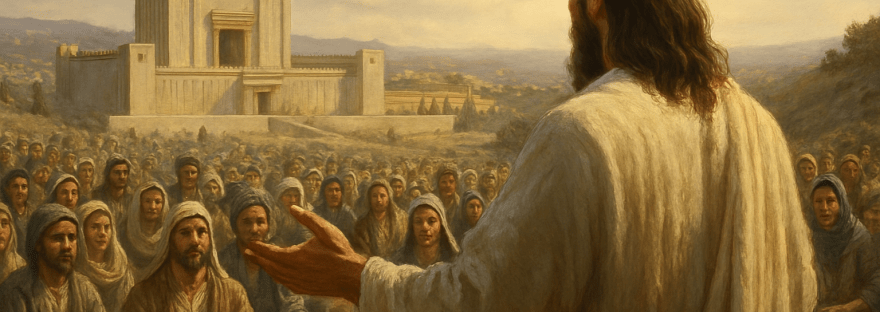
When approaching the Bible, it is essential to allow the text to speak for itself, free from modern preferences, cultural accommodations, or allegorical interpretations. For example, when reading “love your enemies” in Matthew 5:44, rather than explaining the instruction away or adapting it to fit personal comfort, a consistent hermeneutic would prompt us to consider how we might actively bless those who oppose us in daily life. This principle is especially evident in Jesus’ Sermon on the Mount (Matthew 5–7). Contrary to interpretations that regard these teachings as mere ideals or poetic encouragements, Jesus was presenting the constitution of His Kingdom. He established a blueprint for a radically different way of life, in which the King’s standards and values govern every citizen’s conduct.
The early Church, particularly the Ante-Nicene Christians, exemplified literal obedience. They did not reinterpret Jesus’ commands; they structured their lives around them. For these believers, the Sermon on the Mount was not optional; it constituted the law of the Kingdom. Holiness, humility, mercy, justice, and love were regarded as essential. This form of discipleship influenced their relationships, responses to suffering, and treatment of adversaries. Concrete practices included refusing to swear oaths, declining military service, pooling and sharing possessions to care for those in need, rejecting lawsuits against fellow believers, and greeting one another with a holy kiss as a sign of peace. They were known for praying for their enemies, offering hospitality to strangers, and refusing to participate in violence even under persecution.
Consider the Beatitudes. Jesus blesses the meek, merciful, persecuted, and pure in heart, rather than the powerful. He defines the character of all Kingdom citizens. “Blessed are the peacemakers, for they shall be called sons of God” (Matthew 5:9) is not merely a slogan but a divine expectation. Early Christians interpreted this literally, blessing persecutors, refusing retaliation, giving generously, speaking truthfully, turning the other cheek, and rejecting violence, even at personal cost.
This obedience influenced their public life. They abstained from military service, capital punishment, and professions that required causing harm. Their ultimate allegiance was to the Kingdom of God. Their convictions were explicit: Christ was their King, the Church their nation, and the Sermon on the Mount their law. Their citizenship was in heaven (Philippians 3:20), and they lived as ambassadors of a foreign Kingdom (2 Corinthians 5:20).
This commitment frequently resulted in their marginalization. They declined political power, avoided civil offices that required judgment or violence, and obeyed authorities only when such obedience did not conflict with Christ’s commands. When compelled to choose, they echoed the apostles: “We must obey God rather than men” (Acts 5:29). Their obedience cost them status, employment, homes, and sometimes their lives, yet they did not exchange Kingdom loyalty for personal security.
In contrast, the modern Church frequently discusses the Kingdom but often neglects its practical application. We defend our rights, pursue comfort, and oppose perceived adversaries, even when such actions contradict Christ’s commands. Yet Jesus warns: “Not everyone who says to Me, ‘Lord, Lord,’ will enter the Kingdom of Heaven, but the one who does the will of My Father…” (Matthew 7:21). Even as we recognize these challenges, we are not left to strive alone. God’s grace meets us in our weakness, and the Holy Spirit empowers us to walk in obedience and become more like Christ. With confidence in God’s faithfulness, we can pursue genuine Kingdom living, trusting that His help is present for all who seek to follow Him.
Living according to a consistent hermeneutic and strict exegesis requires that we embody the values of the Kingdom, rather than simply admire them. Let us move beyond passive acknowledgment and commit to visible, costly allegiance to the King and His commands in the present. Choose today to practice the Sermon on the Mount with unwavering faithfulness.
To begin, choose one person who has been difficult for you and pray for them each day this week, asking God to bless them. Additionally, find a practical way to show generosity, such as sharing a meal, time, or resources, with someone in need. These simple steps move Christ’s teachings from theory to action in daily life.
What We Must Recover
- A literal commitment to the Sermon on the Mount
- An identity rooted in the Kingdom of God, not the kingdoms of men
- An allegiance to Christ that shapes all relationships, actions, and responses
- A visible difference that causes the world to take notice
Sources:
- The Holy Bible — Matthew 5–7; Philippians 3:20; 2 Corinthians 5:20; Acts 5:29
- Letter to Diognetus, c. AD 130–200
- Origen, Against Celsus (on refusal to join the military)
- Justin Martyr, First Apology (on obedience to Christ over Caesar)
Discover more from Rooted & Raised
Subscribe to get the latest posts sent to your email.

