
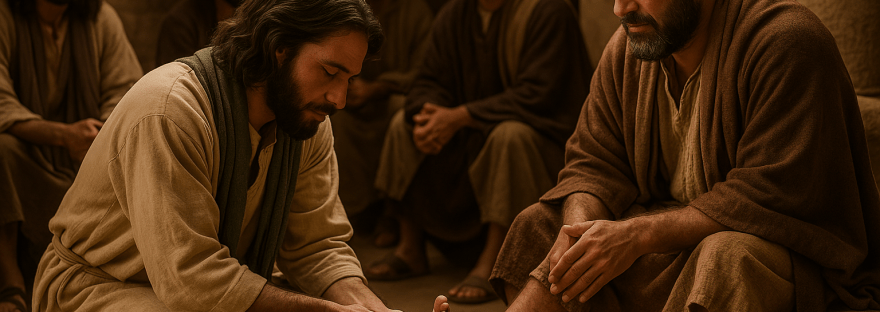
From the Series: Ordinary Saints: Lessons from the Ante-Nicene Church
Scripture quotations are from the New King James Version®.
Copyright © 1982 by Thomas Nelson. Used by permission. All rights reserved.
Today, many churches see titles, leadership roles, and hierarchies as signs of faithfulness. But the first Christians, from AD 33 to AD 325, followed a different approach. Their leaders focused on serving Christ with humility instead of seeking authority over others.
For early Christians, being a leader meant showing self-denial and humility and guiding others by example rather than holding official positions. For example, when the apostle Paul traveled and established new communities, he often supported himself by working as a tentmaker instead of drawing on church resources (Acts 18:3). This choice signaled to others that leadership was about service and sacrifice, not personal gain or status.
Jesus articulated this principle in the following statement:
“The greatest among you shall be your servant. Whoever exalts himself will be humbled, and whoever humbles himself will be exalted.”
— Matthew 23:11–12
For the early church, these words described how they actually lived. Leaders stayed close to the community, sharing meals, burdens, prayers, and even facing persecution together. Titles like “Reverend,” “Most Holy,” or “Bishop” in the formal sense were unknown to the first believers.
Paul called himself a servant of Christ (Romans 1:1), not someone above others. In the same way, Peter described himself as a fellow elder (1 Peter 5:1), not as someone who ruled over the group.
The early church recognized elders and deacons, but saw them as roles of service rather than official titles. Elders led by example (1 Peter 5:2–3), taught others, and protected the group from false teachings. Deacons took care of the church’s practical needs (Acts 6:1–6). Today, many churches have leaders with similar roles, such as pastors, board members, or ministry coordinators, but these positions can sometimes shift away from their original spirit of humble service. By remembering the example of the early church, modern leaders can reclaim a focus on serving others, guiding by example, and caring for both spiritual and practical needs with humility.
These leaders did not set themselves apart with special clothing or higher status, nor did they live separately from others. Instead, they worked with their hands and often faced poverty and hardship together with the rest of the church.
“We do not speak great things—we live them.”
— Cyprian, c. AD 250
As the church became more influential, especially after Constantine, some leaders started to accept support from the state, as well as wealth and power. Before this change, most early leaders did not seek status.
Many early leaders turned down positions of authority or stayed out of the spotlight. They saw leadership not as something to chase, but as a duty assumed by those who had already shown strong character.
“Let no one exalt himself… let the honor be given by others, not seized for oneself.” These leaders knew their own limits and avoided anything that might distract them from serving Christ and the community.
Early Christians kept things simple and met in homes to worship. Their meetings were guided by the Spirit, not by performance. There were no stages, lights, or platforms. Instead, they focused on Scripture, prayer, encouraging each other, and sharing bread together (Acts 2:42).
This simplicity did not equate to poverty, but to freedom. It was not about being poor, but about freedom from systems and showy religion, so they could focus fully on Christ and being together. Over time, leadership has become professionalized, physical structures have replaced home gatherings, and formal titles have replaced close relationships. This shift has frequently resulted in a diminished witness to society at large.
To recapture the spirit of the early church, leaders today can take practical steps such as creating space for informal gatherings in homes, sharing meals and honest conversations, and emphasizing service and relationship over titles and positions. By inviting input from others and modeling humility in everyday actions, modern leaders can guide their communities back to simplicity, authenticity, and a deeper sense of shared purpose.
Still, the early church’s example reminds us to return to serving others, living simply, and seeking a real spiritual life, rather than just looking back with nostalgia. No matter where you are on your leadership journey, remember that every act of humility, service, and genuine care makes a real difference. Be encouraged—your example can inspire others and help build a stronger, more authentic community rooted in the spirit of Christ.
What We Can Learn
- True leadership is service.
- Simplicity fosters authenticity.
- The body of Christ thrives when every member is honored.
- We must guard against the temptation to elevate systems over Spirit-led relationships.
Sources:
- The Holy Bible — Matthew 23:11–12; Romans 1:1; 1 Peter 5:1–3; Acts 2:42; Acts 6:1–6
- Cyprian, Epistles, c. AD 250
- Didache, ch. 15
Discover more from Rooted & Raised
Subscribe to get the latest posts sent to your email.

