
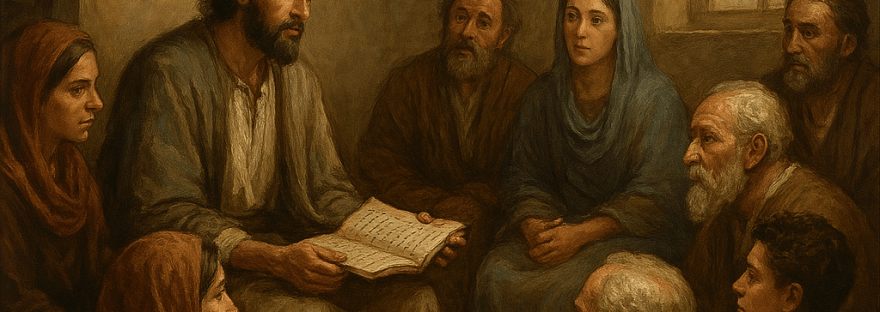
From the Series: Ordinary Saints: Lessons from the Ante-Nicene Church
Scripture quotations are from the New King James Version®.
Copyright © 1982 by Thomas Nelson. Used by permission. All rights reserved.
The Ante-Nicene Christians were followers of Jesus who lived between AD 33 and AD 325, after Christ’s ascension and before Christianity became an official institution under Emperor Constantine at the Council of Nicaea. These believers formed the church at its most authentic, facing deep persecution while relying completely on the Holy Spirit. Although they are rarely mentioned in modern churches or Christian media, they played a vital role in keeping and sharing the gospel during difficult times. Their reliance on the Spirit and perseverance through hardship offer a powerful example for our faith journeys today. In a world where Christians may face unique challenges, the courage, unity, and dependence on God shown by these early believers can encourage us to trust the Holy Spirit’s guidance and remain faithful no matter our circumstances.
Instead of creating new traditions on their own, these Christians were direct spiritual descendants of the Apostles’ disciples. They followed the oral teachings and Scriptures passed down by leaders like Paul, Peter, and John. For example, Polycarp learned from the Apostle John, and Clement of Rome knew Paul. These early leaders shared not just the teachings of Scripture, but also examples of holy living, humility, and sacrificial love.
“Let us then draw near to Him in holiness of soul, lifting up pure and undefiled hands unto Him, loving our gracious and compassionate Father…”
— Clement of Rome, 1 Clement 29
Scripture was at the heart of their lives, but they did not interpret it using man-made systems or changing theology. They believed the Holy Spirit, who inspired the Word, would also help them understand it. Through prayer, fasting, and faithful obedience, they looked to God for guidance to understand and live out Christ’s message (John 14:26; 1 John 2:27). Today, we can follow their example by praying before reading the Bible and asking the Spirit for insight. Discussing Scripture together as a group and listening for the Spirit’s direction in conversation are also ways we can invite His guidance. Setting aside quiet moments to reflect and share what God is teaching us, or even joining together in times of fasting and prayer, can help make our Bible study more Spirit-led and meaningful.
They did not focus on creating complex theological systems. Instead, they aimed to be faithful servants of Christ by obeying what had already been revealed.
The Ante-Nicene Christians spoke the same Koine Greek as the Apostles and shared a similar culture with the New Testament writers. They understood Scripture’s context through their daily lives in the first-century Roman world, not through academic study or archaeology. Their faith was not shaped by later philosophies. It was direct, practical, and full of life.
By the early 300s, Christianity had quietly reached almost every part of the Roman Empire and beyond. Small house churches appeared from North Africa to Gaul, and from Asia Minor to Rome, all without central leadership or political power. Without government support, church buildings, or legal protection, these communities depended only on their testimony, the Word of God, and the Spirit’s guidance.
“The doctrine of the apostles is known to all who wish to know the truth.”
— Irenaeus, Against Heresies 1.10.2
Even though they were spread across large areas, these believers remained united in their beliefs. Their unity did not come from official creeds or councils, but from Scripture and the Holy Spirit living in them. They met in homes, shared what they had, prayed for each other, and lived in a sacrificial community. There were no denominations or hierarchy, just a shared devotion. Their strongest testimony was not in arguments or debates, but in how they loved each other and even those who persecuted them.
Take a moment to reflect as a group: How can we foster this kind of unity and sacrificial love in our own community today? What are practical ways we can support one another, break down barriers, and show Christ’s love to those around us? Consider sharing ideas or examples together, and encourage one another to put these principles into practice.
“See how they love one another… and how they are ready to die for each other.”
— Tertullian, Apology 39
“They love one another… they do not hesitate to risk their lives for the name of their Messiah.”
— Letter to Diognetus, c. 130–200 AD
They endured imprisonment, torture, loss of property, and even death for their faith. Yet they did not see themselves as victims, but as victors in Christ. Their joyful endurance during suffering showed the real power of the gospel to change lives. It is important to remember that the writings of these early Christians were not Scripture. As human authors, they could make mistakes, and their words do not carry the same authority as the Bible. However, their letters and teachings can still encourage us and offer valuable insight into how the early church lived out its faith. By reading their stories, we gain perspective on perseverance, unity, and practical devotion in challenging times. While we measure all things against Scripture, the example of these believers can help instruct and inspire us to remain faithful in our own walk with Christ. Yet their aim was not to create new systems, but to remain faithful to what had been handed down (2 Thessalonians 2:15). Their purpose was not innovation, but preservation of the faith.
They did not try to be heroes, but wanted to honor Christ. Their lives still inspire us today, showing what the Church can be when it fully depends on the Holy Spirit, is grounded in the Word, and is completely devoted to God’s Kingdom above everything else. As we reflect on their example, let us challenge ourselves to seek a deeper dependence on the Holy Spirit and a greater devotion to God’s Kingdom in our own lives. This week, consider setting aside intentional time for prayer, listening for the Spirit’s guidance, and finding practical ways to serve others as an expression of your faith. Together, let us encourage and support each other as we pursue a more authentic, Spirit-led community.
Sources:
- Clement of Rome. 1 Clement. (c. AD 95)
- Irenaeus. Against Heresies. (c. AD 180)
- Letter to Diognetus. (c. AD 130–200)
- Tertullian. Apology 39. (c. AD 197)
- Eusebius of Caesarea. Church History
- Scripture: John 14:26; 1 John 2:27; Acts 2:46; Romans 16:5; 2 Thessalonians 2:15
Discover more from Rooted & Raised
Subscribe to get the latest posts sent to your email.

