
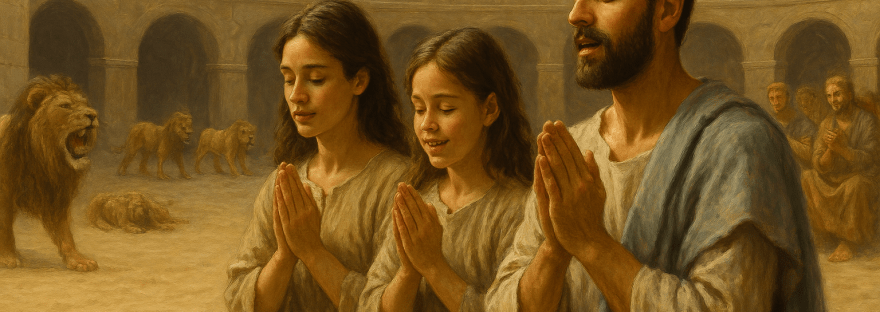
From the Series: Ordinary Saints: Lessons from the Ante-Nicene Church
Scripture quotations are from the New King James Version®.
Copyright © 1982 by Thomas Nelson. Used by permission. All rights reserved.
The Ante-Nicene Christians, who lived from AD 33 to 325, demonstrate how ordinary individuals can be profoundly transformed by authentic faith in Christ. Their courage, love, and commitment to Jesus’ teachings arose not from privilege or esoteric knowledge, but from lives wholly devoted to following Him. As successors to the first disciples, they significantly influenced their world and established a compelling model for contemporary Christians.
To understand their influence, it is important to examine who the Ante-Nicene Christians were and how their historical context shaped their faith.
Ante-Nicene Christians lived prior to the Council of Nicaea in AD 325. Their faith developed amid hardship and persecution rather than comfort. They did not rely on seminaries or formal church structures. Instead, they adhered to the Bible, the teachings transmitted from the Apostles, and the guidance of the Holy Spirit (John 14:26; 1 John 2:27).
They were:
- Disciples of disciples: They received instruction from individuals who had learned directly from the Apostles.
- Anchored in Scripture: They regarded the Bible as complete and sufficient. They sought understanding from the Holy Spirit rather than altering human traditions.
- Fluent in context: They lived within the Greco-Roman world, spoke Koine Greek, and engaged with Scripture directly, without the necessity of bridging significant historical or cultural gaps.
- Unified and scattered: They assembled in homes rather than cathedrals, yet sustained profound unity in faith across diverse regions. Their solidarity was grounded in trust in the Word and the Spirit, rather than in centralized authority or ecclesiastical council. By the early fourth century, Christianity had spread to nearly every province of the Roman Empire and beyond. Eusebius, an early church historian, documented that the message of Christ had reached “all the nations” prior to Constantine’s reign (Eusebius, Ecclesiastical History, 3.1).
With this background, it is valuable to consider how others perceived them and what they were recognized for.
Notably, some of the most compelling testimony originates not from Christians themselves, but from their Roman persecutors.
Tertullian, writing around AD 197, defended Christians against Roman accusations in his work Apologeticus.“It is mainly the deeds of a love so noble that lead many to put a brand upon us. ‘See,’ they say, ‘how they love one another.'” This statement was not Tertullian boasting; rather, he conveyed the perspective of non-Christians regarding believers. Persecutors expressed astonishment at their love, which included care for orphans, the poor, and abandoned infants (Justin Martyr, First Apology, 67; Aristides, Apology). Roman Emperor Julian the Apostate, a later critic of Christianity, reluctantly acknowledged in the fourth century:
“It is disgraceful that the impious Galileans support not only their own poor but ours as well; all men see that our people lack aid from us.”
— Letter to Arsacius, c. AD 362
Even when maligned or martyred for their faith, the early Church was recognized for a love that originated from transformed hearts.
Beyond their reputation, it is important to consider what truly distinguished these believers from the society that surrounded them.
These believers did not identify as ‘theologians’ or pursue titles, separation, or elaborate leadership structures. Instead, they embodied humility, holiness, and service. They regarded themselves as:
- Slaves of Christ (Romans 6:22),
- Aliens and strangers in this world (1 Peter 2:11),
- Ambassadors of a Kingdom not of this earth (2 Corinthians 5:20).
They refused to kill, even in war, or to protect themselves. They would not worship Caesar or offer incense, even if it involved losing their lives. Why? Because they believed Jesus’ words in Matthew 5 to 7 were not just a beautiful sermon, but the true standard of Heaven.
In contrast, the modern Church, particularly in the West, often struggles to demonstrate the same vibrant faith as the Ante-Nicene Christians.
This is because many have exchanged Kingdom living for cultural conformity, regarding the Sermon on the Mount as a recommendation rather than as a standard.
If we truly belong to Christ as His servants and children, we must return to the radical, holy, and love-filled way of life that characterized the early believers. Our admiration should not be directed toward them, but rather toward the God who empowered them.
“They overcame him because of the blood of the Lamb and because of the word of their testimony, and they did not love their life even unto death.” I do not glorify these early Christians; God has already done so, calling them “those of whom the world was not worthy” (Hebrews 11:38). They did not merely die for Jesus; they lived entirely for Him.
What’s Ahead
In the coming weeks, I will examine their writings, their stories, and, most importantly, the Scriptures that shaped them. Together, we will evaluate all things, both past and present, by the Word of God, seeking the Holy Spirit’s interpretation rather than relying solely on human opinions.
Let us commit together to studying their lives, their writings, and God’s Word. Begin this journey by reading the Scriptures referenced above and reflecting on how you might embody the faith of the early believers in your daily life. Please share your perspectives or questions as we continue this conversation and grow together.
📚 Sources & References
· Scripture:
- John 14:26
- 1 John 2:27
- Jude 3
- Hebrews 11:38–40
- Revelation 12:11
- Romans 6:22
- 1 Peter 2:11
- 2 Corinthians 5:20
- Matthew 5–7
· Historical & Early Church Writings:
- Tertullian, Apology, ch. 39 (c. AD 197)
- Eusebius, Ecclesiastical History, 3.1
- Justin Martyr, First Apology, ch. 67
- Aristides, Apology
- Emperor Julian, Letter to Arsacius (c. AD 362)
- Rodney Stark, The Rise of Christianity, HarperOne, 1996
Discover more from Rooted & Raised
Subscribe to get the latest posts sent to your email.

