Eschatology, From the Archives, The Last Days

Why Eschatology Matters

From the series: Understanding the End Times — A Biblical Framework

“All Scripture is given by inspiration of God, and is profitable for doctrine, for reproof, for correction, for instruction in righteousness.” — 2 Timothy 3:16 (NKJV)

When you hear the word eschatology, it may sound intimidating, even academic. But in simple terms, eschatology means “the study of last things.” It’s about what God has revealed in His Word concerning the future — the return of Christ, the resurrection of the dead, the final judgment, and the new heavens and earth.

The question is: does this matter for our daily lives? According to Scripture, it matters more than we often realize. Eschatology shapes the way we live in the present, strengthens our faith, and calls us to walk as watchful disciples.


What Is Eschatology?

The word comes from two Greek terms:

  • eschatos = “last” or “final”
  • logos = “word, discourse, or study”

So eschatology simply means the study of the last things. Scripture uses this framework to reveal God’s purposes: the kingdom of Christ, the judgment of the nations, the resurrection of the dead, and the restoration of all creation.

Along the way, you’ll encounter key words like:

  • Millennium (Revelation 20:1–6) — Christ’s 1,000-year reign.
  • Tribulation (Matthew 24:21) — a unique time of distress and judgment.
  • Rapture (1 Thessalonians 4:16–17) — the church caught up to meet Christ.
  • Apostasy (2 Thessalonians 2:3) — the great falling away before the man of sin is revealed.

Don’t let these terms overwhelm you. They are simply markers that help us explore what God has already revealed.


Why Study Prophecy?

Some Christians avoid prophecy, thinking it’s too divisive or complicated. But God says otherwise:

  • Hope“Looking for the blessed hope and glorious appearing of our great God and Savior Jesus Christ.” (Titus 2:13)
  • Holiness“Everyone who has this hope in Him purifies himself, just as He is pure.” (1 John 3:3)
  • Mission“This gospel of the kingdom will be preached in all the world as a witness to all the nations, and then the end will come.” (Matthew 24:14)
  • Comfort“Therefore comfort one another with these words.” (1 Thessalonians 4:18)

Far from being speculative, prophecy is intensely practical. It strengthens our endurance, calls us to holy living, fuels our urgency for the gospel, and comforts us with the promise of Christ’s return.


Can We Trust the Bible’s Prophecy?

Skeptics often ask: “How do you know these ancient texts haven’t been corrupted?” The evidence is overwhelming:

  • The Dead Sea Scrolls (dated ~150 BC) show Isaiah’s words copied with astonishing accuracy for over 1,000 years.
  • The New Testament is preserved in more than 5,800 Greek manuscripts — more than any other ancient document.
  • Archaeology repeatedly confirms Scripture:
    • The Cyrus Cylinder validates Isaiah’s prophecy of Cyrus by name (Isaiah 44:28).
    • The Tel Dan Stele confirms the dynasty of King David.
    • The Pilate Inscription affirms Pontius Pilate as prefect in Judea.

Even more compelling is fulfilled prophecy itself:

  • Messiah’s birth in Bethlehem (Micah 5:2; Matthew 2:1).
  • His entry into Jerusalem on a donkey (Zechariah 9:9; Matthew 21:4–5).
  • His piercing and suffering (Isaiah 53; Psalm 22).

If God has been this precise in what’s already fulfilled, we can trust Him for what is yet to come.


Apostasy — The Last Days Backdrop

Before the glory of Christ’s return, Scripture warns of a great departure from truth:

  • “Let no one deceive you by any means; for that Day will not come unless the falling away comes first, and the man of sin is revealed.” (2 Thessalonians 2:3)
  • “Now the Spirit expressly says that in latter times some will depart from the faith, giving heed to deceiving spirits and doctrines of demons.” (1 Timothy 4:1)
  • “Because lawlessness will abound, the love of many will grow cold.” (Matthew 24:12)

This isn’t mere personal struggle. Apostasy is a deliberate turning away from God’s truth — and it is the hallmark of the last days.


Watchfulness, Not Date-Setting

There is a danger on both sides:

  • Neglect — ignoring prophecy altogether.
  • Speculation — trying to set dates, which Jesus forbids (Matthew 24:36).

Instead, Christ commands: “Watch therefore, for you do not know what hour your Lord is coming.” (Matthew 24:42)

The call is to watchfulness, not panic. We may not know the exact day or hour, but we are called to recognize the season (1 Thessalonians 5:4–6).


Reflection

Eschatology is not meant to confuse us but to anchor us. God has given prophecy not to entertain our curiosity but to equip our faith. To ignore it is to ignore part of His Word. To abuse it is to twist His truth. But to embrace it rightly is to live with hope, holiness, mission, and comfort.


Reflection Questions

  1. When you think of prophecy, do you feel overwhelmed, skeptical, or encouraged? Why?
  2. Which of the four purposes of prophecy (hope, holiness, mission, comfort) do you most need to strengthen in your life right now?
  3. How can you practice watchfulness without slipping into fear or speculation?

Closing Prayer

Father, thank You that You have revealed the end from the beginning. Thank You for the hope of Christ’s return, the call to holiness, the urgency of mission, and the comfort of Your promises. Guard us from deception in these last days. Teach us to live as watchful disciples, ready for the return of our Lord. In Jesus’ name, Amen.


References & Further Reading

Scripture:

  • Titus 2:13 — the “blessed hope.”
  • Matthew 24:42 — command to watch.
  • 2 Timothy 4:8 — crown for those who love His appearing.
  • Revelation 1:3 — blessing for reading prophecy.

Early Church Witnesses:

  • Papias (AD 60–130), fragment recorded by Eusebius, affirming a literal 1,000-year reign.
  • Justin Martyr (Dialogue with Trypho, ch. 80) — affirms premillennial hope.

Archaeological & Textual:

  • Dead Sea Scrolls (1947–) — confirming OT prophetic manuscripts preserved with high accuracy.
  • Codex Sinaiticus (c. AD 350) — one of the oldest complete NT manuscripts.

Extra-Biblical Sources:

  • Josephus, Wars of the Jews (Book 6) — description of Jerusalem’s fall in AD 70.
  • Tacitus, Annals (Book 15) — Roman historian noting early Christians and persecution.
Leave a comment

Apostacy, The Last Days

The Modern Echo — Has the Reformation Been Reversed?


(The Great Falling Away, Part 9)

“For they exchanged the truth of God for a lie, and worshiped and served the creature rather than the Creator…”
— Romans 1:25, NASB1995


What Was Recovered… Is Being Replaced

The Reformation gave God’s people back what had been stolen:

  • The Word of God in their language
  • The freedom to approach God directly
  • The assurance of salvation by grace through faith

But in recent decades, that truth has begun to fade—not by force, but by neglect, compromise, and distraction.


How Is the Modern Church Reversing the Reformation?

1. Scripture is No Longer Central (Sola Scriptura Reversed)

  • Sermons are motivational, not expository
  • Human wisdom is blended with theology
  • The Bible is treated as optional—or reinterpreted to fit culture

2. Faith Becomes Performance (Sola Fide Reversed)

  • Salvation is portrayed as try harder rather than trust Christ
  • Obedience is confused with earning
  • People question if they’re ever “doing enough”

3. Church Becomes Institution Again

  • Mega structures and leadership hierarchies resemble Rome
  • Spiritual authority is centralized
  • Programs replace prayer and presence

4. Christ is Replaced by Systems (Solus Christus Reversed)

  • Counseling replaces discipleship
  • Strategy replaces the Spirit
  • Pastors and theologians become mediators of truth

5. God’s Glory is Shared with Man (Soli Deo Gloria Reversed)

  • Ministries are built around personalities
  • Celebrity culture thrives in pulpits
  • The applause of man is mistaken for the blessing of God

From Remnant to Routine

“Having a form of godliness, but denying its power…”
— 2 Timothy 3:5

We may use biblical language… but lack biblical substance.
We may sing of surrender… but live in self.
We may look alive… but be lukewarm.


The Call Remains: Come Out. Return. Remain.

“Hold fast what you have, so that no one will take your crown.”
— Revelation 3:11

The Reformation must not be remembered—it must be revived.


Application for Today

  • Is my life shaped by Scripture—or opinion?
  • Do I live in faith—or performance?
  • Am I following a system—or Christ?
  • Do I want God’s glory—or man’s approval?

Revelation 18:4

“Come out of her, My people…”

Leave a comment

Apostacy, The Last Days

The Cry for Reformation — When Light Broke Through Again


(The Great Falling Away, Part 8)

“Your word is a lamp to my feet and a light to my path.”
— Psalm 119:105, NASB1995


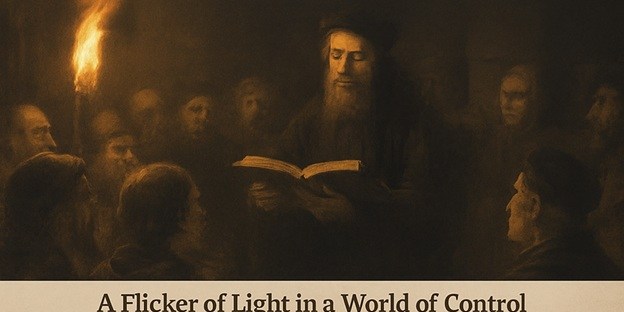
A Flicker of Light in a World of Control

For centuries, the Word of God had been kept from the people. The Church governed with fear, tradition, and political power.
But God was not silent.

He raised up voices across Europe—men who dared to challenge religious tyranny and call the Church back to Scripture, faith, and freedom in Christ.

These weren’t perfect men. But they ignited a return to the Word that would shake nations.


The Early Reformers and Pre-Reformers

John Wycliffe (c. 1320s–1384)

  • Translated the Bible into English
  • Declared Scripture as the final authority
  • Rejected transubstantiation and papal supremacy
  • Called the Pope the “antichrist”

Jan Hus (c. 1372–1415)

  • Preached against indulgences and corrupt clergy
  • Influenced by Wycliffe’s writings
  • Burned at the stake for refusing to recant

Martin Luther (1483–1546)

  • Nailed the 95 Theses to the church door in 1517
  • Denounced the sale of indulgences
  • Declared salvation is by grace through faith, not works
  • Translated the Bible into German for the people

William Tyndale (c. 1494–1536)

  • Translated the New Testament into English
  • Declared that even a plowboy should know the Word
  • Hunted, betrayed, and burned alive for giving the people Scripture

The Price of Truth

These reformers didn’t seek rebellion—they sought restoration.
They paid dearly:

  • Excommunication
  • Torture
  • Martyrdom
  • Misrepresentation

But they feared God more than man.


What Did the Reformation Restore?

  1. Sola Scriptura — Scripture alone is our authority
  2. Sola Fide — Justification by faith alone
  3. Sola Gratia — Salvation by grace alone
  4. Solus Christus — Christ alone is mediator
  5. Soli Deo Gloria — All glory to God alone

These weren’t slogans—they were cries of the heart.


Application for Today

Ask yourself:

  • Have I taken the Bible for granted?
  • Do I trust tradition—or test all things by the Word?
  • Would I still stand if it cost me everything?

Revelation 3:2–3

“Wake up, and strengthen the things that remain… Remember what you have received and heard; and keep it, and repent.”

Leave a comment

Apostacy, The Last Days

The Rise of Human Authority — From Priesthood of Believers to Control of Conscience


(The Great Falling Away, Part 7)

“You are not to be called Rabbi; for One is your Teacher, and you are all brothers.”
— Matthew 23:8, NASB1995


From Shared Priesthood to Religious Tyranny

In the earliest Church, all believers were priests—filled with the Spirit, taught by Christ, and united in fellowship (1 Peter 2:9).

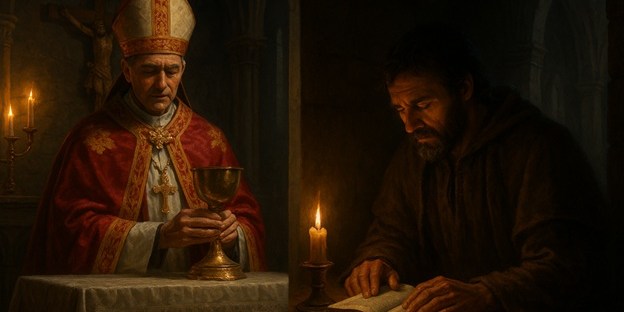
But as the centuries progressed, that shared spiritual authority was replaced by hierarchies, titles, and layers of control.

The goal became obedience to the Church, not obedience to Christ.


How Conscience Was Captured

1. Clerical Elevation

  • Bishops were elevated above the congregation
  • Priests became intermediaries between God and man
  • The laity were considered spiritually dependent and unqualified

2. Tradition Over Scripture

  • Church tradition was declared equal (or superior) to Scripture
  • Papal decrees became law
  • Scripture was locked in Latin and guarded by clergy

3. Confession and Penance

  • Believers were required to confess sins to a priest
  • Penance (works) replaced repentance and grace
  • Assurance of salvation became impossible without priestly involvement

4. The Eucharist and Transubstantiation

  • Only priests could perform the “miracle” of turning bread and wine into Christ
  • The Mass became a daily sacrifice for sin—controlled by clergy

5. Censorship and Persecution

  • Anyone who interpreted Scripture differently was labeled a heretic
  • Bibles were burned. Voices were silenced.
  • Fear replaced freedom

But Christ’s Word Still Stands:

“You shall know the truth, and the truth will make you free.”
— John 8:32, NASB1995

The Holy Spirit never relinquished His role. He still convicts, teaches, and leads every believer who abides in Christ.


Reclaiming the Priesthood of All Believers

“But you are a chosen race, a royal priesthood… so that you may proclaim the excellencies of Him…”
— 1 Peter 2:9, NASB1995

The early Church didn’t rely on religious elites:

  • They met in homes
  • Taught one another in love
  • Relied on the Spirit—not a central authority

What Was Lost?

  • Freedom of Conscience
  • Access to God through Christ alone
  • Confidence in salvation through faith—not sacraments

Instead, man’s word became binding, and Christ’s words became buried.


Application for Today

Ask yourself:

  • Do I rely on a religious system more than the Spirit of God?
  • Am I personally seeking, reading, and obeying the Word?
  • Have I allowed someone else to rule my conscience?

Hebrews 4:16

“Let us draw near with confidence to the throne of grace…”

Leave a comment

Devotions, Family Devotionals

👩‍👧 Family Devotional — Day 68

Teaching Our Children to Stand in Grace

“Who will bring charges against God’s elect? God is the one who justifies;”Romans 8:33 (NASB 1995)

Children need to know: their worth isn’t in being perfect—it’s in being chosen and justified by God.

The Spirit equips us as mothers to gently correct, yet continually affirm their identity in Christ. Even when we discipline, we do it from a place of grace—not guilt.

Family Talk:

  • What does it mean that God says we’re “justified”?
  • How can we remind each other of that when we mess up?

Prayer:
Lord, thank You that no one can accuse what You’ve already forgiven. Help our family live from Your grace, not guilt. Amen.

Devotions, Women's Devotionals

👩‍🦰 Women’s Devotional — Day 68

No Condemnation Sticks

“Who will bring charges against God’s elect? God is the one who justifies;”Romans 8:33 (NASB 1995)

The enemy accuses. Your own heart sometimes joins him. But heaven has already ruled: justified.

You are God’s elect, and the verdict is final—not because of your performance, but because of Christ’s righteousness. The Holy Spirit reminds you of this truth, especially when shame tries to resurface.

Don’t entertain accusations God has already silenced. You stand cleared, cleansed, and clothed in Christ.

Reflection:
Do you live more aware of your justification—or your failures?

Prayer:
Holy Spirit, when accusations come, remind me of the truth: I am justified by God. Amen.

Children's Devotionals, Devotions

🧒 Children’s Devotional — Day 68

God Says I’m Right With Him!

“Who will bring charges against God’s elect? God is the one who justifies;”Romans 8:33 (NASB 1995)

Sometimes we mess up. But if you love Jesus, God says, “You’re forgiven—and you’re Mine!”

Nobody can tell God that you don’t belong to Him. He already said “yes!” and the Holy Spirit helps you remember that.

Try This:
Draw a big heart and write: “God chose me. I belong to Him!”

Prayer:
Thank You, God, that I belong to You. Help me remember that when I feel bad or someone says mean things. Amen.

Devotions, Teen Devotions

😎 Teen Devotional — Day 68

God Already Said ‘Not Guilty’

“Who will bring charges against God’s elect? God is the one who justifies;”Romans 8:33 (NASB 1995)

The world might label you. The enemy will accuse you. But God already spoke: “Justified.”

You’re not walking under judgment—you’re walking in freedom. The Spirit won’t let condemnation stick, because the blood of Jesus already washed it away.

Don’t let the voice of accusation be louder than the voice of your Defender.

Challenge:
Write down the negative label you’ve believed about yourself. Then write over it in bold: “JUSTIFIED.”

Prayer:
Holy Spirit, silence every false charge. I stand forgiven and free in Christ. Amen.

Devotions, Women's Devotionals

👩‍🦰 Women’s Devotional — Day 67

God Gives Freely, Not Sparingly

“He who did not spare His own Son, but delivered Him over for us all, how will He not also with Him freely give us all things?”Romans 8:32 (NASB 1995)

The Father gave what was most precious—His own Son. If He didn’t withhold Jesus, do you think He’ll withhold anything you truly need?

The Spirit reminds you of this when fear whispers “you’re lacking,” or comparison says “you’re behind.” The Cross is proof of abundance, not scarcity.

You are not forgotten. You are not begging crumbs. In Christ, you are loved extravagantly—and the Spirit is the down payment of all that’s still to come.

Reflection:
What need are you hesitant to bring to God? Why?

Prayer:
Holy Spirit, remind me today of the generosity of God. Help me trust that You supply all I truly need. Amen.

Children's Devotionals, Devotions

🧒 Children’s Devotional — Day 67

God Gave Me Jesus—He’ll Give Me What I Need!

“He who did not spare His own Son, but delivered Him over for us all, how will He not also with Him freely give us all things?”Romans 8:32 (NASB 1995)

God gave the biggest gift ever—His Son Jesus! That means He loves you a lot.

And if He gave you Jesus, He’ll take care of everything else too. You don’t have to worry—God knows what you need!

Try This:
Draw a big gift box and write “Jesus” inside. Around it, write or draw other good things God gives—like love, family, and help.

Prayer:
Thank You, God, for giving me Jesus. Help me trust You for everything else I need too. Amen.