Devotions, Family Devotionals

🏡 Kingdom Family Devotional — Day 4

Day 4

“Blessed are the gentle, for they shall inherit the earth.”

Matthew 5:5, NASB1995

🧭 A Kingdom Posture for the Home

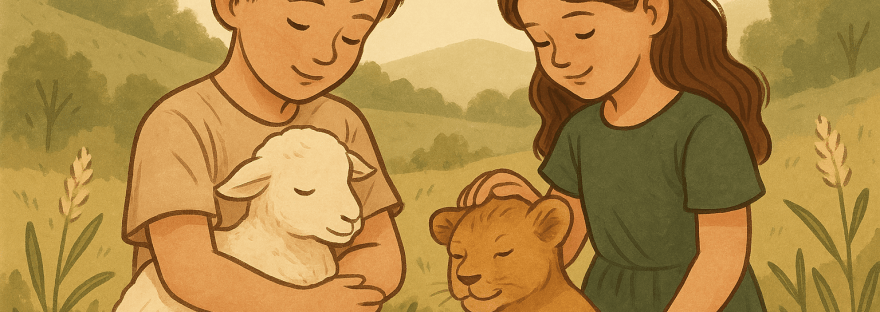
Gentleness is not weakness—it’s strength restrained. It’s patience when you could snap, mercy when you could demand, and grace when you could criticize. Jesus says the gentle will inherit the earth. Not the loudest voice or strongest opinion—but the one who trusts God enough to lay down the need to control.

As a mother raising older children in this crucial season before adulthood, your example of gentleness becomes a guiding light. Whether through quiet correction, soft responses to tension, or prayerful endurance, you are helping shape their view of what it means to walk in the character of Christ.

🕯 A Mother’s Influence

In the early church, godly women cultivated peace in their homes—not through passivity, but through Spirit-filled strength. Their meekness reflected trust in the Lord, not fear of man. Their influence helped prepare sons and daughters to stand firm in a hostile world. Like them, you are forming future disciples—not by force, but by faithfully living what you teach.

📖 Talk About It with Your Children:

  • What is gentleness? Is it hard or easy for us to live it out?
  • Can you think of a recent time you could have reacted but instead responded with kindness?
  • How does Jesus treat us gently, even when we mess up?

🧱 Kingdom Practice

Pick a specific time this week to talk about emotional triggers in your home—stress, attitude, conflict—and how each person (including mom) can invite Jesus into those moments to respond gently. Use the phrase: “Jesus, help me be gentle,” as a reset.

🙏 Prayer for the Home

Lord, help me lead my children with quiet strength. Let gentleness fill our home—not because we’re perfect, but because You are patient with us. Shape my children into men and women who know how to yield, trust, and reflect the meekness of Christ. In Jesus’ name, Amen.
1–2 minutes

Leave a comment

Kingdom Discipleship, Kingdom Living

Servant Leadership and Simplicity

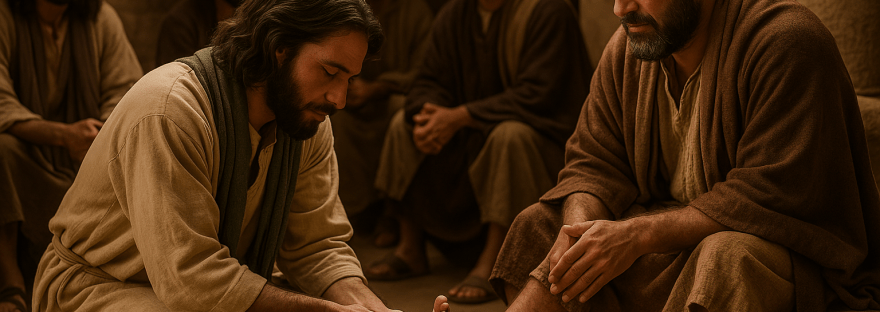
In today’s church culture, titles, leadership platforms, and structured hierarchies are often assumed to be part of faithful church practice. But the early Christians—those who lived between AD 33 and AD 325—embraced a radically different model of leadership. Their lives were marked not by authority over others, but by servanthood under Christ.

Leadership, to them, meant dying to self, living in humility, and shepherding others through example—not position.


They Followed the Example of Christ and the Apostles

Jesus said:

“The greatest among you shall be your servant. Whoever exalts himself will be humbled, and whoever humbles himself will be exalted.”
Matthew 23:11–12

This wasn’t a metaphor to them—it was a way of life. The early church imitated this model. Leaders weren’t elevated above the body but walked among them, sharing meals, burdens, prayers, and persecution. Titles like “Reverend,” “Most Holy,” or even “Bishop” in the later sense were foreign to the earliest believers.

Paul referred to himself as a slave of Christ (Romans 1:1), not a spiritual elite. Peter called himself a fellow elder (1 Peter 5:1), not a ruling overseer.


Elders and Deacons, Not Religious Offices

The early church recognized elders and deacons, but these were functions, not formal offices. Elders were to shepherd the flock by example (1 Peter 5:2–3), teach faithfully, and guard the body from false teaching. Deacons served the practical needs of the church (Acts 6:1–6).

They did not wear robes, sit on thrones, or live apart from the people. They labored with their hands, often poor and persecuted alongside the rest of the church.

“We do not speak great things—we live them.”
Cyprian, c. AD 250


They Rejected the Pursuit of Status

As the church began to gain influence, especially after Constantine, some leaders accepted state favor, wealth, and power. But before this shift, the Ante-Nicene leaders refused to chase status.

Many actively rejected positions of authority or fled from recognition. Leadership was not sought after but reluctantly accepted, and only by those proven faithful in character.

“Let no one exalt himself… let the honor be given by others, not seized for oneself.”
Didache, ch. 15

They were deeply aware of their weaknesses, and they didn’t want anything that would distract from serving Christ or His people.


Simplicity in Life and Worship

These believers lived simply. They gathered in homes. Their worship wasn’t performance-driven but Spirit-led. There were no stages, lighting, or platforms—only Scripture, prayer, mutual edification, and the breaking of bread (Acts 2:42).

This simplicity wasn’t poverty—it was freedom. Free from systems. Free from religious show. Free to focus on Christ and one another.


Why This Matters Today

The Church has often drifted from the humility of its beginnings. Leadership has become professionalized. Buildings have replaced homes. Titles have overtaken relationships. And the result? A weakened witness to the world.

But the example of the early church calls us back—not to romanticize the past, but to recover a posture of servanthood, simplicity, and spiritual power.


What We Can Learn

  1. True leadership is service.
  2. Simplicity fosters authenticity.
  3. The body of Christ thrives when every member is honored.
  4. We must guard against the temptation to elevate systems over Spirit-led relationships.

Sources:

  • The Holy Bible — Matthew 23:11–12; Romans 1:1; 1 Peter 5:1–3; Acts 2:42; Acts 6:1–6
  • Cyprian, Epistles, c. AD 250
  • Didache, ch. 15

2–3 minutes

Leave a comment

Devotions, Teen Devotions

😎 Kingdom Teen Devotional —Day 4

“Blessed are the gentle, for they shall inherit the earth.”

Matthew 5:5 NASB1995

🐎 Strength Isn’t Always Loud

Let’s be real—online, the loudest and most aggressive people usually get the most attention. But Jesus flips that. He says the gentle are the ones who will inherit the earth.

Gentleness doesn’t mean you let people walk all over you. It means having strength, but keeping it under control. It’s choosing to walk away from drama. It’s staying kind when you’re misunderstood. It’s trusting God to fight for you instead of proving yourself online or in real life.

This kind of strength takes more courage than clapping back ever will.

🔊 Real Talk:

  • When was the last time you had the chance to be gentle but chose to react instead?
  • How do people online define strength—and how is that different from what Jesus says?

✨ Try This:

Think of one situation where you’ve been tempted to respond harshly (DMs, arguments, school stress). Write down what a gentle, Jesus-like response would look like. Practice it before the moment comes.

1–2 minutes

Leave a comment

Devotions, Women's Devotionals

🌿 Kingdom Living Devotional — Day 4

Day 4 — Strength in Submission

“Blessed are the gentle, for they shall inherit the earth.”
Matthew 5:5, NASB1995

🌾 The Quiet Strength of Meekness

Meekness is not weakness. In fact, it takes greater strength to remain gentle when provoked, to trust God when wronged, and to resist fighting for your own way. The world values boldness, assertion, and dominance—but Jesus blesses the gentle.

The word “gentle” here also translates as meek—a word that means power under control. It’s like a bridled horse, strong and mighty but submitted to its Master’s hand. This kind of heart doesn’t demand its rights but yields to God’s rule and trusts in His justice.

It is the meek, not the proud, who will inherit the earth when Christ returns to reign. The Kingdom is for those who walk humbly now, believing their reward is not in this world but in the one to come.

🕯 Ante-Nicene Reflection

Gentle women shaped the early Church. They visited the sick, served the poor, and prayed for their persecutors. Their power wasn’t in status or speech, but in sacrificial love and humility. Women like Marcella of Rome gave up wealth to live in simplicity, ministering with quiet dignity—gentle, yet unshakable in devotion to Christ.

💭 Reflect

  • Do I see gentleness as a Kingdom virtue—or something to apologize for?
  • In what areas of my life is God asking me to lay down control?

🙏 Prayer

Lord, teach me the strength of meekness. Help me not to fight for recognition or control, but to rest in Your plan. Shape in me the gentleness of Christ, and let my life be surrendered to Your hand. Amen.

1–2 minutes

Leave a comment

Children's Devotionals, Devotions

👑 Kingdom Kids Devotional — Day 4

Day 4

“Blessed are the gentle, for they shall inherit the earth.”— Matthew 5:5

🐑 Strong and Gentle
Being gentle doesn’t mean being weak. Jesus was gentle—and He’s the strongest person ever! When you’re gentle, you’re kind and patient, even when it’s hard. You’re like a superhero who knows when not to fight.

God loves when we are gentle with our words, our hands, and our hearts. He says that kids who live this way will be part of His Kingdom forever!

🏠 What About Long Ago?
The first Christian kids learned to be gentle in hard times. Sometimes they were teased or even hurt for loving Jesus—but they didn’t fight back. They showed the love of Christ with their actions, and many people came to believe in Jesus because of their quiet courage.

💡 Think About It:
When is it hard to be gentle?

Can you think of a time when you chose kindness over being mean?

🙏 Let’s Pray:
Jesus, help me to be strong and gentle, like You. I want to use my words and actions to show Your love to others. Teach me to trust You instead of always trying to get my way. Amen.

1–2 minutes

Leave a comment

Devotions, Women's Devotionals

🌿 Kingdom Living Devotional — Day 3

Day 3 — The Blessing in Brokenness

“Blessed are those who mourn, for they shall be comforted.”
Matthew 5:4, NASB1995

💔 Mourning with Hope

This is not the kind of mourning the world understands. Jesus isn’t speaking of a vague sadness or simply grieving loss—though He meets us there too. This is mourning over sin. It’s the kind of grief that comes when we realize how deeply we’ve rebelled against a holy God. It’s the weeping of the woman who washed Jesus’ feet with her tears (Luke 7:38). The sorrow of a heart pierced by the weight of its own fallenness.

And yet—this mourning is called blessed.

Why? Because when we bring our tears of repentance to Jesus, He meets us not with shame but with comfort. Not surface-level peace, but deep soul-rest. It is in this holy sorrow that we are made ready to receive mercy, and through it, we are drawn nearer to the heart of Christ.

🕯 Ante-Nicene Reflection

Early Christian women lived lives marked by repentance and holiness. They mourned not only their own sins but the spiritual darkness in their cities. Some fasted regularly, others ministered to the poor or buried the persecuted—all flowing from a heart broken over the world’s sin and filled with longing for God’s Kingdom. They lived with eyes fixed on eternity and hearts softened by grace.

💭 Reflect

  • Do I mourn over my sin the way Jesus calls me to?
  • Am I quick to run to His comfort, or do I hide behind distractions?

🙏 Prayer

Father, break my heart for what breaks Yours. Let me not be numb to sin—my own or the world’s. Teach me to mourn rightly, and meet me there with Your promised comfort. In Jesus’ name, Amen.


1–2 minutes

Leave a comment

Children's Devotionals, Devotions

👑 Kingdom Kids Devotional — Day 3

Day 3 — “Blessed are those who mourn, for they shall be comforted.”Matthew 5:4

😢 Tears that Jesus Sees

Have you ever cried when you did something wrong? Or felt really sorry when someone got hurt because of what you did? That’s a little like what Jesus is talking about.

When we mourn, we are sorry for sin—not just because we got caught, but because we know it hurts God and others. Jesus says that when we come to Him with those kinds of tears, He comforts us. He doesn’t push us away—He hugs us close.

🏠 What About Long Ago?

Early Christian children learned to follow Jesus with soft hearts. They saw their families cry over sin and pray with deep love for others. Even when times were hard, they knew Jesus was their comfort and strength.

💡 Think About It:

  • Can you think of something you’ve done that made you feel sad inside?
  • Did you tell Jesus about it?

🙏 Let’s Pray:

Jesus, I’m sorry for the things I’ve done wrong. Thank You for loving me and always forgiving me. Help me have a soft heart like Yours. Amen.


1–2 minutes

Leave a comment

Devotions, Family Devotionals

🏡 Kingdom Family Devotional — Day 3

Day 3

— “Blessed are those who mourn, for they shall be comforted.”

Matthew 5:4 NASB1995

🌬 A Home that Grieves Righteously

To mourn in this verse is to grieve over sin—our own, and the brokenness around us. It’s not surface sadness; it’s the ache of a heart awakened to God’s holiness. And in that grief, Jesus promises comfort.

In this season with older children, you have the privilege of guiding their conscience. Help them see sin not as mere rule-breaking, but as something that wounds relationship with God. Let your own mourning over sin lead them to understand both the seriousness of sin and the beauty of God’s mercy.

🕯 A Mother’s Role

Don’t hide your sorrow over sin. Let your children see the tears that come from a tender heart. But also let them see the joy of restoration. You are shaping how they will handle conviction—with avoidance or with repentance and hope.

📖 Talk About It:

  • What kind of mourning do you think Jesus is talking about?
  • When have you felt truly sorry before God? What happened next?

🧰 Kingdom Practice

Set aside time to read Psalm 51 together. Invite your children to quietly reflect and journal a prayer of confession. Afterwards, read 1 John 1:9 aloud as a reminder of God’s promise to forgive.

✍️ Prayer

Lord, teach us to mourn over sin, not with despair, but with hope. Let our home be a place where repentance is real and comfort is received. Shape my children to hate sin and love righteousness. In Jesus’ name, Amen

1–2 minutes

Leave a comment

Kingdom Discipleship, Kingdom Living

The Spread of the Gospel Before Nicaea

How did the gospel go from a small band of disciples in Jerusalem to a global movement spanning empires—all without political power, printing presses, or large buildings? Before the Council of Nicaea in AD 325, Christianity had already spread like wildfire across the known world. But it didn’t spread the way religions do today—it spread through persecution, love, and uncompromising obedience to Christ.

From Jerusalem to the Ends of the Earth

Jesus’ final command was clear:

“You will be my witnesses in Jerusalem, and in all Judea and Samaria, and to the ends of the earth.”
Acts 1:8

By the end of the book of Acts, the gospel had already reached Rome. But that was only the beginning. The first three centuries of Christianity were marked by relentless expansion—not through organized missions boards or campaigns, but through ordinary believers living out their faith in the marketplaces, fields, prisons, and homes of the Roman Empire.


Evangelism Through Persecution

Persecution was fierce and constant in many regions during this period. Yet this didn’t slow the gospel—it accelerated it.

“The blood of the martyrs is the seed of the church.”
Tertullian, Apology 50

Rather than scare believers into silence, persecution emboldened them. Their courage, joy, and refusal to recant made the world take notice. Many came to faith after watching Christians face lions, fire, and swords with peace on their faces and forgiveness on their lips.


House to House, Village to Village

The church grew underground, yet it wasn’t hidden. Christians met in homes (Romans 16:5), shared meals, and welcomed strangers. As they traveled for work or trade, they carried the gospel with them. No church buildings. No budgets. Just transformed lives and the Word of God.

Eusebius writes that churches could be found in nearly every city and village of the empire by the early 300s:

“The word of salvation was zealously preached… churches were multiplied and grew from small beginnings.”
Eusebius, Church History 8.1


Geographical Reach by the 3rd Century

Here’s a glimpse of how widespread the Church became by AD 300:

  • Italy & Rome – thriving despite intense persecution
  • North Africa – home to Tertullian, Cyprian, and others
  • Egypt & Alexandria – a major center of early Christian teaching
  • Asia Minor – vibrant churches from Paul’s time, many still active
  • Gaul (modern France) – early martyrdoms like those in Lyon
  • Germany & Britain – evidence of Christian communities by late 2nd to 3rd centuries
  • Persia, Armenia, and beyond – reaching into the East before Rome ever recognized Christianity

The gospel was already global before it was ever legal.


Carried by the Faithful, Not the Famous

The Church’s expansion wasn’t led by celebrity pastors or state-sponsored missionaries. It was carried on the backs of slaves, merchants, mothers, soldiers, and widows—men and women who understood they were part of something eternal.

“Christians are not distinguished from the rest of mankind by country, language, or customs… yet they display to us a wonderful and confessedly striking method of life.”
Letter to Diognetus, c. AD 130–200

They preached by their actions. They discipled by example. And they evangelized by love.


What We Learn Today

  1. You don’t need a platform to spread the gospel. You need obedience.
  2. The Spirit leads the willing. Many early Christians didn’t plan to evangelize—they simply refused to hide Christ.
  3. The gospel is not bound by borders. Even in places where persecution raged, the church thrived.
  4. We must recover the simplicity and power of everyday witness. Before there were systems, there were saints who walked with Christ and changed the world.

Sources:

  • The Holy Bible — Acts 1:8; Romans 16:5
  • Tertullian, Apology 50
  • Eusebius of Caesarea, Church History, Book 8
  • Letter to Diognetus, c. AD 130–200
  • Stark, R. (1996). The Rise of Christianity. HarperOne
3–4 minutes

Leave a comment

Devotions, Teen Devotions

😎 Kingdom Teen Devotional — Day 3

“Blessed are those who mourn, for they shall be comforted.”

Matthew 5:4 NASB1995

🤔 When Sin Actually Hurts

This kind of mourning isn’t about losing your favorite hoodie. It’s the sorrow that hits when you realize your sin has hurt your relationship with God.

Sometimes it’s easier to scroll past conviction. But Jesus says those who actually feel their sin, who don’t numb it or brush it off, will be comforted by Him. When your heart breaks for what breaks His, He doesn’t reject you—He wraps you in mercy.

🔊 Real Talk:

  • When was the last time you felt truly sorry for something wrong you did?
  • What did you do with that feeling? Did you talk to God about it?

✨ Try This:

Read Psalm 51. Highlight anything that stands out. Then write a short confession prayer to God. Don’t be afraid of honesty—He’s already waiting.

✍️ Prayer:

God, I don’t want to ignore my sin. Teach me to care about what You care about. Thank You for comforting me when I come to You with a broken heart. Amen.

1–2 minutes

Leave a comment