

Subscribe to continue reading
Subscribe to get access to the rest of this post and other subscriber-only content.

Subscribe to get access to the rest of this post and other subscriber-only content.

Subscribe to get access to the rest of this post and other subscriber-only content.

Subscribe to get access to the rest of this post and other subscriber-only content.

Subscribe to get access to the rest of this post and other subscriber-only content.

Subscribe to get access to the rest of this post and other subscriber-only content.
Intimacy, Intercession, and Warfare
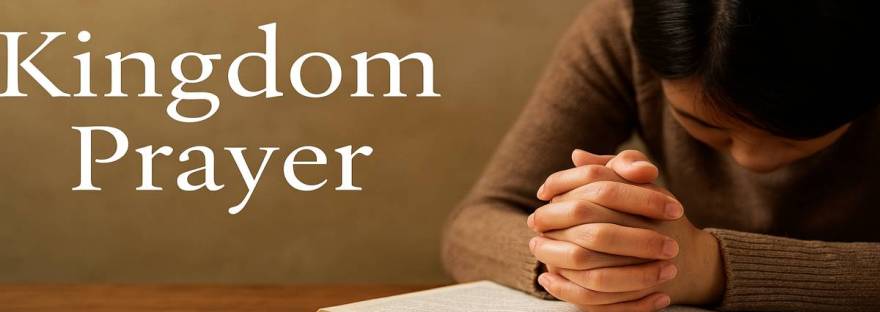
The prayer life of a Kingdom citizen is not a religious routine—it is the lifeline of communion with the King. In prayer, we do more than speak; we listen, intercede, battle, repent, and rest. Prayer is not a discipline we master—it’s a relationship we pursue.
To the early Church, prayer was oxygen. It wasn’t optional. It was essential. Their prayers moved cities, shook prisons, healed the sick, and emboldened the fearful. Why? Because their prayers were Spirit-led, Scripture-shaped, and Kingdom-driven.
Prayer Is Intimacy with God
“When you pray, go into your room and shut the door and pray to your Father who is in secret.”
— Matthew 6:6
True prayer is relational. Jesus did not teach formulas—He invited intimacy. The early believers prayed daily, not because of duty, but because they longed for God’s presence.
They were not performing. They were seeking.
“Let your prayer be frequent, but not filled with empty words. Pray as one who speaks with the Father who hears.”
— Didache, ch. 8
Prayer Is Intercession for Others
“I urge… that petitions, prayers, intercessions, and thanksgivings be made for all people…”
— 1 Timothy 2:1
Kingdom prayer is not self-centered—it is others-focused. The Church prayed for:
They prayed like watchmen, alert and burdened. When one suffered, all felt it. When one was in chains, all pleaded for release.
“They prayed unceasingly for those in danger, and rejoiced when they returned, whether from death or prison.”
— Eusebius, Church History
Prayer Is Spiritual Warfare
“We do not wrestle against flesh and blood… but against spiritual forces of evil in the heavenly places.”
— Ephesians 6:12
The early Christians saw prayer as battle, not ritual. They were in a war, not against people, but against the schemes of the enemy. Their weapons were not swords, but truth, righteousness, faith, and prayer (Eph. 6:18).
Prayer was not the last resort—it was their first weapon.
What We Can Learn
Sources:

Hearing God Through Scripture and Conviction
The same Spirit who hovered over creation, who filled the prophets, and who raised Jesus from the dead—now dwells within believers. He has not gone silent. He still speaks.
But many ask, “How do I hear God’s voice?”
The answer is not found in spiritual tricks, mystical formulas, or emotional hype. It begins with this: the Holy Spirit speaks through the Word of God, and He confirms it through conviction, counsel, and fruit.
The Spirit and the Word Are Never in Conflict
“All Scripture is breathed out by God…”
— 2 Timothy 3:16
“The Spirit of truth… will guide you into all truth.”
— John 16:13
The Spirit is the author of Scripture. He is also its interpreter. He doesn’t give new truth that contradicts the old. He brings light to what’s already been spoken.
Any voice, prompting, or “revelation” that contradicts Scripture is not from the Holy Spirit. The Spirit leads us to Christ, not away from Him. He exalts the written Word because He authored it.
Conviction: The Spirit’s Internal Witness
“When He comes, He will convict the world concerning sin and righteousness and judgment.”
— John 16:8
Conviction is not the same as guilt. Guilt pushes us away from God. Conviction draws us back. The Spirit convicts to correct, not to condemn (Romans 8:1).
In the early Church:
Hearing God through Scripture
When believers open the Bible, they do not read alone. The Spirit brings the words to life, making them clear, personal, and powerful.
“The natural person does not accept the things of the Spirit… but the spiritual person discerns all things.”
— 1 Corinthians 2:14–15
The early Christians didn’t need theology degrees to understand truth. They had the Scriptures and the Spirit—and that was enough.
“If the Lord dwells in us, His Spirit will speak in us, and His truth will guide us.”
— Hermas, Mandate 11
False Voices and the Need for Discernment
The Spirit speaks—but so does the flesh, the world, and the enemy. We must:
The Spirit of God is not confusing, not manipulative, and never contradicts the character of Christ.
What We Can Learn
Sources:

Subscribe to get access to the rest of this post and other subscriber-only content.

Subscribe to get access to the rest of this post and other subscriber-only content.

Subscribe to get access to the rest of this post and other subscriber-only content.

Leave a comment