

Subscribe to continue reading
Subscribe to get access to the rest of this post and other subscriber-only content.

Subscribe to get access to the rest of this post and other subscriber-only content.

Subscribe to get access to the rest of this post and other subscriber-only content.
Subscribe to get access to the rest of this post and other subscriber-only content.
Subscribe to get access to the rest of this post and other subscriber-only content.

Subscribe to get access to the rest of this post and other subscriber-only content.

Living as a Daily Offering Before God
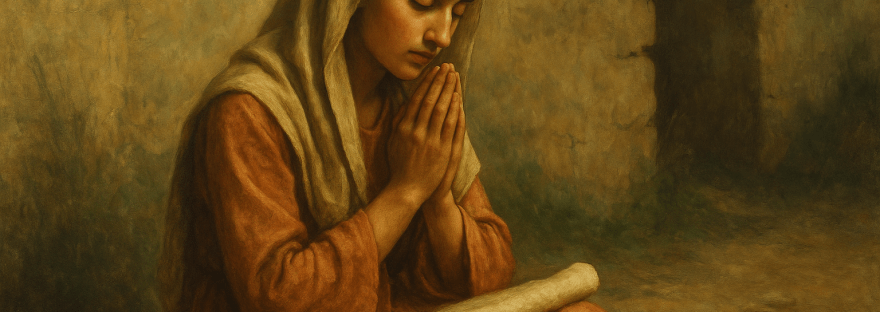
Worship is not music. Worship is not a Sunday event. Worship is not something we attend. Worship is a life surrendered—offered daily before the Lord.
In the Kingdom of God, priests don’t clock in once a week. They live in continual service. Everything they do, everything they give, everything they suffer, and everything they rejoice in can become worship when done unto the Lord.
“Present your bodies as a living sacrifice, holy and acceptable to God, which is your spiritual worship.”
— Romans 12:1
Worship Begins with the Heart
God doesn’t want hollow songs or empty rituals. He wants your heart.
“These people honor Me with their lips, but their hearts are far from Me.”
— Matthew 15:8
The early Church understood worship as more than external expression—it was an internal posture of humility, reverence, and joyful obedience. Their lives matched their words.
“Let your life be a hymn to God—pure in word, deed, and heart.”
— Clement of Alexandria, The Instructor
All of Life Is Sacred When Offered to God
Whether working, serving, parenting, or suffering, the believer is never off-duty. Every action can be consecrated when done with a heart that says, “This is for You, Lord.”
“In everything you do, do it heartily, as for the Lord…”
— Colossians 3:23
The Early Church Worshiped in Spirit and in Truth
Their worship was marked by:
And above all, they offered their lives, not just their voices.
“Their sacrifices were not bulls or goats, but thanksgiving, praise, and faithfulness.”
— Justin Martyr, First Apology
What We Can Learn
Sources:

Subscribe to get access to the rest of this post and other subscriber-only content.

Subscribe to get access to the rest of this post and other subscriber-only content.
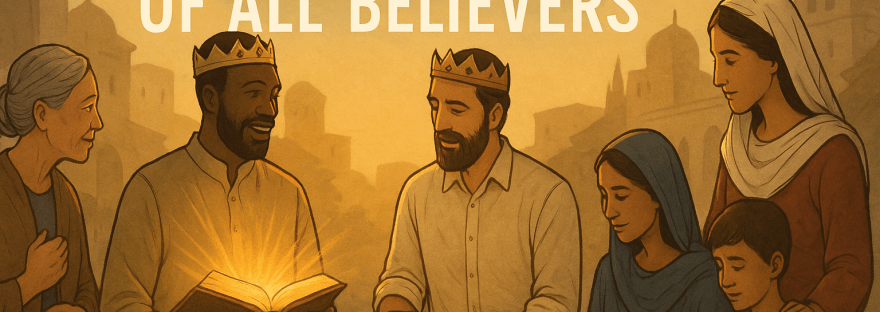
Beyond the Pulpit
When most people hear the word “ministry,” they think of pulpits, platforms, or pastoral titles. But in the Kingdom of God, every believer is a priest, and every follower of Jesus is in ministry.
The early Church didn’t operate with a clergy-laity divide. There were spiritual leaders, yes—but leadership was functional, not hierarchical. Ministry belonged to the whole Body. Everyone served. Everyone gave. Everyone prayed. Everyone witnessed. Everyone was a priest.
“To each is given the manifestation of the Spirit for the common good.”
— 1 Corinthians 12:7
Every Believer Has Access to God
In the Old Covenant, only the high priest could enter the Holy of Holies—and only once a year. But now, through Christ:
“We have confidence to enter the holy places by the blood of Jesus…”
— Hebrews 10:19
You don’t need a mediator to go to God—you have one: Jesus. And through Him, the Spirit dwells in you, making every moment and every space sacred.
Every Believer Is Gifted for Ministry
“As each has received a gift, use it to serve one another…”
— 1 Peter 4:10
The gifts of the Spirit weren’t just for apostles or elders—they were distributed across the whole Body:
The Church grew not because a few did much, but because everyone did their part.
“All of you together are Christ’s body, and each of you is a part of it.”
— 1 Corinthians 12:27
The Early Church Was Mobilized, Not Spectating
“Let no one be idle in the church, for the Spirit gives to all their part in Christ’s body.”
— Clement of Rome, 1 Clement 44
There were no pew-warmers in the early Church. Every member was a minister, every home a place of worship, every gathering a time of edification and sending.
This priesthood wasn’t based on knowledge—it was based on surrender. The uneducated served alongside the wise. The poor gave what they had. Women prophesied, prayed, and served. Children praised.
The Spirit equipped the Body, and the Body walked in obedience.
What We Can Learn
Sources:
Subscribe to get access to the rest of this post and other subscriber-only content.

Leave a comment